Peptides
Les peptides sont des chaînes courtes d'acides aminés liées par des liaisons peptidiques, jouant un rôle essentiel en tant que molécules biologiques dans divers processus cellulaires. Ils fonctionnent comme hormones, neurotransmetteurs et molécules de signalisation, et sont largement utilisés dans les applications thérapeutiques et diagnostiques. Les peptides sont également cruciaux dans la recherche pour étudier les interactions protéiques, les activités enzymatiques et les voies de signalisation cellulaire. Chez CymitQuimica, nous proposons une large sélection de peptides de haute qualité pour soutenir vos besoins en recherche et développement en biotechnologie et en pharmacie.
Sous-catégories appartenant à la catégorie "Peptides"
30159 produits trouvés pour "Peptides"
Trier par
Degré de pureté (%)
0
100
|
0
|
50
|
90
|
95
|
100
GM CSF Mouse
GM-CSF is a cytokine that stimulates the production of neutrophils, macrophages, and other cells of the immune system. GM-CSF is a glycoprotein with a molecular weight of about 26 kD. It has been purified from human blood by RP-HPLC and found to have a sequence of 551 amino acids. The protein is active as freeze dried material or after desiccation at -70°C for 12 months. GM-CSF is commercially available in lyophilized form (Cytokine) or as recombinant proteins (Proteins).Degré de pureté :Min. 95%H-MDYKDHDGDYKDHDIDYKDDDDK-OH
<p>3x DYKDDDDK peptide, also called 3x FLAG peptide, is a 23 aa length peptide used for the competitive elution of DYKDDDDK-tag fusion proteins (with excess of free 3x DYKDDDDK peptide) under non-denaturing conditions, especially when a DYKDDDDK-tagged protein is sensitive to low pH.</p>Anti Gonadotropin-Releasing Hormone-Associated Peptide (GAP) (34-56), humanSerum
<p>GAP is a natural peptide that has been found to bind to the G protein coupled receptor (GPCR) known as gonadotropin-releasing hormone receptor (GnRH-R). This receptor is linked to ion channels and plays a role in many different biological processes, including cell division and growth. GAP can be used as a research tool for studying how cells work. It can also be used in pharmacology studies, such as determining the effect of GAP on the activity of ion channels or protein interactions.</p>Degré de pureté :Min. 95%Anti Luminal Cholecystokinin-Releasing Factor (LCRF) (Rat) Serum
<p>Anti-Luminal Cholecystokinin Releasing Factor (LCRF) is a protein that binds to the LCRF receptor. It is a research tool that can be used in immunohistochemistry and Western blotting. This antibody can be used as a marker of LCRF, which is involved in regulating intestinal motility and gastric emptying.</p>Degré de pureté :Min. 95%Anti Gonadotropin-Releasing Hormone-Associated Peptide (GAP) (28-56) (Rat) Serum
Anti Gonadotropin-Releasing Hormone-Associated Peptide (GAP) (28-56) (Rat) Serum is a research tool used in the study of ion channels, receptor interactions, and cell biology. GAP binds to the GRP receptor and activates the release of gonadotropin-releasing hormone from the hypothalamus. The purified antibody specifically binds to GAP with high affinity and specificity. This antibody can be used for Western blotting, immunoprecipitation, immunohistochemical staining, or ELISA. Anti Gonadotropin-Releasing Hormone-Associated Peptide (GAP) (28-56) (Rat) Serum is a highly purified protein that can be used in many applications including pharmacology and peptides.Degré de pureté :Min. 95%Bioreactor Media (exosome rich positive control)
<p>The exosome positive control is a component of our Exosome Kits , products ME-020 and ME-020P and consists of exosomes purified from HEK293 cells. This can also be purchased as a standalone research tool for studying exosomes and their role in regulating cellular function.</p>Degré de pureté :Min. 95%Z-Pyr-Gly-Arg-AMC
CAS :<p>Z-Pyr-Gly-Arg-AMC is an inhibitor of protein interactions. It binds to the peptide receptor and blocks the activation of the receptor. This product is a research tool in cell biology, pharmacology, and proteomics.</p>Formule :C31H35N7O8Degré de pureté :Min. 95%Masse moléculaire :633.65 g/molCyclo(Lys-Pro)
CAS :<p>Cyclo(Lys-Pro) is a cyclic peptide that is stabilized by hydrogen bonding. Cyclo(Lys-Pro) binds to the active site of protein kinase A, which prevents the phosphorylation and activation of other proteins. Cyclo(Lys-Pro) has been shown to stabilize proteins and inhibit the formation of amyloid plaques in Alzheimer's disease. The 6-Fluoro-3-indoxyl-beta-D-galactopyranoside is an antituberculosis drug that belongs to the class of rifamycins. It is the most active of the rifamycins for the treatment of tuberculosis. Rifapentine inhibits bacterial growth by binding to DNA dependent RNA polymerase, thereby preventing transcription and replication. The high frequency of human activity has been shown using a patch clamp technique on human erythrocytes. This active form is metabolized through a number of metabolic transformations,</p>Formule :C11H19N3O2Degré de pureté :Min. 95%Masse moléculaire :225.29 g/molCalcitonin, humanAntiserum
<p>Calcitonin is a peptide hormone that is involved in the regulation of calcium and phosphate levels. It is used as a research tool to study ion channels, protein interactions, and receptor-ligand interactions. Calcitonin has been shown to inhibit the release of neurotransmitters from nerve cells and to activate certain types of receptors, such as the calcitonin receptor. Calcitonin is a polypeptide that consists of 33 amino acids residues. It binds to the calcitonin receptor with high affinity, but does not activate it.</p>Degré de pureté :Min. 95%Ac-Glu-Ser-Glu-Asn-AMC
CAS :Ac-Glu-Ser-Glu-Asn-AMC is an inhibitor of Protein interactions, which are involved in many biological processes. This compound has been shown to be a high affinity ligand for the Activator receptor and is used as a research tool to study the activation of this protein. Ac-Glu-Ser-Glu-Asn-AMC is also an inhibitor of ion channels, which are membrane proteins that control the flow of ions across cell membranes. Acetylcholine receptors (AChR) have been found to be inhibited by Ac-Glu-Ser-Glu-Asn-AMC, but it does not inhibit nicotinic acetylcholine receptors (nAChR).Formule :C29H36N6O13Degré de pureté :Min. 95%Masse moléculaire :676.63 g/molSuc-D-Asp-AMC
CAS :Suc-D-Asp-AMC is a peptide that mimics the endogenous amino acid L-glutamate. It has been shown to inhibit ion channels and ligand-gated receptors, as well as to act as an activator of G protein coupled receptors. Suc-D-Asp-AMC is a high purity and research grade product that can be used in cell biology and pharmacology research. This product is not intended for use in humans or animals, and should only be handled by qualified individuals wearing protective gear.Formule :C18H18N2O8Degré de pureté :Min. 95%Masse moléculaire :390.34 g/molBradykinin (Human, Bovine, Rat, Mouse)
<p>Bradykinin is a peptide that is generated by the breakdown of kininogen, a protein found in the blood. Bradykinin is an important mediator of inflammation and vasodilation. It also has many other functions, such as the regulation of tissue fluid homeostasis, pain perception, and the release of hormones from endocrine glands. The human form of bradykinin is derived from the precursor molecule kininogen through proteolytic cleavage by kallikrein or kallidin and subsequent conversion to bradykinin by either carboxypeptidases A or B. The bovine form arises from proteolysis at Arg-Arg-Lys-Arg sites whereas rat bradykinin arises from Arg-Lys sites in kininogen. Mouse bradykinin arises primarily from Arg-Arg sites in kininogen.</p>Formule :C50H73N15O11•2CH3COOH•3H2ODegré de pureté :Min. 95%Masse moléculaire :1,234.35 g/molMet-Leu-AMC
CAS :Met-Leu-AMC is a fluorescent analogue of the amino acid methionine. It is used for cell biology, research, and detection of ligands that bind to ion channels or receptors. Met-Leu-AMC can be used as a high purity reagent for peptide synthesis and as an inhibitor in receptor binding assays. This product has CAS No. 1009549-31-8 and can be used in antibody production, cell biology, and pharmacology studies.Formule :C21H29N3O4SDegré de pureté :Min. 95%Masse moléculaire :419.54 g/molBoc-Gly-Lys-Arg-AMC
CAS :Boc-Gly-Lys-Arg-AMC is a peptide that is used as a research tool to study the interactions between proteins. It binds to ion channels, receptors, and ligands, and can be used to study protein interactions. It has been reported that Boc-Gly-Lys-Arg-AMC is an activator of acetylcholine receptor and nicotinic acetylcholine receptor. The specificity of this ligand for different ion channels is not known.Formule :C29H44N8O7Degré de pureté :Min. 95%Masse moléculaire :616.71 g/molBoc-Glu(OBzl)-Gly-Arg-AMC
CAS :Boc-Glu(OBzl)-Gly-Arg-AMC is a peptide that can be used as a research tool. It has been shown to bind to the nicotinic acetylcholine receptor, which is found in the central and peripheral nervous systems. Boc-Glu(OBzl)-Gly-Arg-AMC has also been shown to inhibit ion channels, such as the voltage gated potassium channel.Formule :C35H45N7O9Degré de pureté :Min. 95%Masse moléculaire :707.77 g/molBoc-Gln-Gly-Arg-AMC
CAS :Boc-Gln-Gly-Arg-AMC is a cell permeable, fluorescent ligand that can activate or inhibit ion channels and receptors. It has been shown to act as an inhibitor of the nicotinic acetylcholine receptor (nAChR) in rat brain synaptosomes. Boc-Gln-Gly-Arg-AMC is used as a research tool in pharmacology, protein interactions, and cell biology. This compound binds to antibodies and can be used as a target for antibody production. Boc-Gln-Gly-Arg-AMC has high purity and is available at low cost.Formule :C28H40N8O8Degré de pureté :Min. 95%Masse moléculaire :616.67 g/molAc-Asp-Gln-Thr-Asp-AMC
<p>Ac-Asp-Gln-Thr-Asp-AMC is a synthetic peptide that is used as a research tool for the study of protein interactions and protein function. It can be used to inhibit the activity of ion channels, such as potassium channels, and to activate cell surface receptors. Ac-Asp-Gln-Thr-Asp-AMC has an amino acid sequence that resembles peptides found in naturally occurring proteins. Ac-Asp-Gln-Thr-Asp-AMC also has a molecular weight of 333.6 daltons and a CAS number of 125094–99–0.</p>Formule :C29H36N6O13Degré de pureté :Min. 95%Masse moléculaire :676.63 g/molIberiotoxin
CAS :Iberiotoxin is a neurotoxin that is synthesized by the bacterium Clostridium botulinum. It inhibits the activity of a number of enzymes, including protein kinase C and cyclase, but has no effect on phosphatases. Iberiotoxin has been shown to be effective against models systems of bowel disease, such as colonic inflammation and ulceration. Iberiotoxin binds to specific neuronal receptors in the central nervous system, leading to inhibition of intracellular calcium levels, which may play an important role in the mechanisms of action for this toxin.Formule :C179H274N50O55S7Degré de pureté :Min. 95%Masse moléculaire :4,230.86 g/molUbiquitin-AMC
Ubiquitin-AMC is a fluorogenic substrate targeting the deubiquitinating enzymeDegré de pureté :Min. 95%CCK-33 (Porcine) Antiserum
CCK-33 is a peptide that belongs to the family of CCK peptides. It is an inhibitor of the CAS protein, which is involved in cell growth and differentiation. CCK-33 has been shown to inhibit the activation of cells by binding to the receptor sites on the cell membrane. CCK-33 also binds to receptors that are involved in ion channels, such as NMDA receptors and alpha adrenergic receptors. This can be used as a research tool for studying protein interactions and receptor sites. The antibody forms of CCK-33 are widely used in research laboratories because they can be used to block or activate specific proteins or receptors on cells.Degré de pureté :Min. 95%RS 09
CAS :RS09/Toll Like Receptor (TLR) 4 agonist – APPHALSFormule :C31H49N9O9Degré de pureté :Min. 95%Masse moléculaire :691.78 g/molα-2-antiplasmin Light Tryptic Peptide Standard (4nmol)
An Alpha-2-antiplasmin light tryptic peptide standard for protein identification and quantitation studies. Alpha-2-antiplasmin is a serine protease inhibitor of plasmin, an enzyme involved in fibrinolysis.Degré de pureté :Min. 95%Snakin-1
CAS :Snakin-1 is a peptide that interacts with the nicotinic acetylcholine receptor (nAChR). It is a high purity, potent and selective inhibitor of nAChRs.Degré de pureté :Min. 95%Nucleoside Diphosphate Kinase E.coli (recombinant)
Nucleoside Diphosphate Kinase E.coli (recombinant) is a research peptide that belongs to the group of protein kinases. It is used in scientific studies and experiments to investigate various cellular processes and signaling pathways. This recombinant protein kinase has been shown to play a crucial role in the phosphorylation of nucleoside diphosphates, which are important molecules involved in energy metabolism and cell signaling. By catalyzing the transfer of phosphate groups, Nucleoside Diphosphate Kinase E.coli regulates the balance of nucleotide triphosphates, which are essential for DNA replication, RNA synthesis, and protein synthesis. Its unique properties make it an invaluable tool for researchers studying cellular mechanisms and developing new therapeutic strategies.Degré de pureté :Min. 95%[Sar1,Ile8]-Angiotensin II
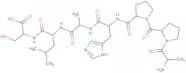
Angiotensin II is a peptide that acts as an agonist of the angiotensin receptors. It is a hormone that regulates blood pressure and fluid balance. The antagonist can block the effects of the peptide, which may be useful in treating cardiovascular diseases such as hypertension and congestive heart failure.Formule :C46H73N13O10•CH3COOH•4H2ODegré de pureté :Min. 95%Masse moléculaire :1,100.26 g/molAnti LH-RH (Human, Rat) Serum
Anti LH-RH (Human, Rat) Serum is a serum that inhibits the binding of LHRH to its receptor. This serum has been shown to be an effective inhibitor of LH-RH binding in both human and rat systems. Anti LH-RH (Human, Rat) Serum is also a research tool used to study the effects of peptides on cells, as well as the interactions between proteins. The high purity and low endotoxin levels make this serum suitable for use in life science and cell biology experiments.Degré de pureté :Min. 95%Vn96 scramble peptide (negative control)
<p>Vn96 scramble peptide is a negative control peptide that is used in pharmacological and cell biology research. It is an inhibitor of protein interactions and can also be used as a research tool for identifying the ligand or receptor of a protein. Vn96 scramble peptide has been shown to inhibit ion channels, including potassium channels, which are involved in nerve transmission.</p>Degré de pureté :Min. 95%Bromoacetamido-dPEG®24-TFP Ester
Bromoacetamido-dPEG®24-TFP Ester is a PEG compound with two different functional groups (also known as heterobifunctional). Unlike homobifunctional PEG compounds (same functional group on both ends), this type of compounds are more versatile as have two different anchor points. Bromoacetamido-dPEG®24-TFP Ester is used as a linker and spacer to add a PEG moiety, via pegylation (a bioconjugation technique) to proteins, peptides, oligonucleotides, small molecules and nanoparticles.Degré de pureté :Min. 95%Masse moléculaire :1,415.35 g/molDermcidin- 1L, human
Dermcidin-1L is a protein that belongs to the family of ion channels. It is a ligand for the receptor DCC. Dermcidin-1L has been shown to activate the receptor and induce chemotaxis in human neutrophils, which is mediated via activation of phospholipase C and elevation of intracellular calcium levels. This peptide also binds to the receptor LRP6 and inhibits Wnt signaling by competitively binding with LRP6-ligand complexes. Dermcidin-1L has been shown to inhibit proliferation of various cell lines, including pancreatic cancer cells, breast cancer cells, and leukemia cells.Formule :C210H359N57O71Degré de pureté :Min. 95%Masse moléculaire :4,818.4 g/molNHS-m-dPEG®
NHS-m-dPEG® is a PEG compound with two different functional groups (also known as heterobifunctional). Unlike homobifunctional PEG compounds (same functional group on both ends), this type of compounds are more versatile as have two different anchor points. NHS-m-dPEG® is used as a linker and spacer to add a PEG moiety, via pegylation (a bioconjugation technique) to proteins, peptides, oligonucleotides, small molecules and nanoparticles.Degré de pureté :Min. 95%Masse moléculaire :861.97 g/molMART-1 (26-35) (human) trifluoroacetate salt
CAS :Native Melan-A (26-35) decapeptide derives from the melanocyte lineage-specific protein Melan-A/MART-1, which is expressed in almost 75-100% of primary and metastatic melanomas. The region 26-35 of Melan-A protein acts as an antigenic peptide that is recognized by CD8+ tumor-reactive cytolytic T lymphocytes (CTLs) for designing antigen-specific cancer vaccines1. It has been shown that CD8+ Melan-A-specific CTLs isolated from melanoma patients efficiently lyse the Melan-A-expressing HLA-A*0201+ melanoma cell line. However, CTLs preferentially recognize the Melan-A (26-35) peptide as compared with the Melan-A (27-35) peptide. Moreover, the Melan-A (26-35) A27L analog (ELAGIGILTV) has a higher binding affinity to HLA-A*0201 than the native Melan-A (26-35) peptide (EAAGIGILTV), and consequently displays more potent antigenicity and immunogenicity. It has been reported that the concentration of Melan-A (26-35) A27L analog required to obtain 50% of maximal antigenic activity (EC50) is 0.01nM, whereas that of the native Melan-A (26-35) peptide is 0.25nM1. Therefore, the relative activity of Melan-A (26-35) A27L analog is 25 fold higher than that of the native Melan-A (26-35) peptide. Furthermore, functional competition assay has shown that the concentration of Melan-A (26-35) A27L analog required to achieve 50% inhibition (IC50) of tumor lysis is 2nM, which is 10 fold lower than that of the native Melan-A (26-35) peptide. Regarding peptide stability in human serum, the half-lifes (t1/2) of the native Melan-A (26-35) peptide and the A27L analog are quite similar (45 and 40min, respectively) as measured by HPLC-ESI-MS, but much higher than that of the Melan-A (27-35) nonapeptide (5min).Formule :C42H74N10O14Degré de pureté :Min. 95%Masse moléculaire :943.1 g/molAnti ACTH (1-23) (Rat) Serum
<p>Anti ACTH (1-23) (Rat) Serum is a recombinant peptide that is an activator of the hypothalamus. It has been shown to have a high affinity for the receptor, and it can be used as a research tool in cell biology and pharmacology. Anti ACTH (1-23) (Rat) Serum is used in the study of ion channels, ligands, and antibodies. This peptide has been used to inhibit the release of ACTH from the pituitary gland and can be used to study the effects of anti-ACTH on other hormones. Anti ACTH (1-23) (Rat) Serum is purified from E. coli cells with a CAS number of 58612-37-8.</p>Degré de pureté :Min. 95%Human GIP (Active) ELISA (1ea)
Human GIP (Active) ELISA (1ea) is a human GIP ELISA kit that detects the presence of active human GIP in a sample. This kit is designed to detect human GIP in serum, plasma, and urine. The assay has been validated for the quantitative measurement of active human GIP in samples from healthy subjects and patients with type 2 diabetes mellitus.Degré de pureté :Min. 95%Pneumadin (rat)
CAS :Please enquire for more information about Pneumadin (rat) including the price, delivery time and more detailed product information at the technical inquiry form on this pageFormule :C47H74N12O15Masse moléculaire :1,047.18 g/molSimian Virus 40 Large Tumor Antigen Amino-Terminal Peptide
CAS :<p>Please enquire for more information about Simian Virus 40 Large Tumor Antigen Amino-Terminal Peptide including the price, delivery time and more detailed product information at the technical inquiry form on this page</p>Formule :C46H76N14O14SMasse moléculaire :1,080 g/molCaspase 3 Substrate 1m (Apopain), fluorogenic
CAS :<p>Please enquire for more information about Caspase 3 Substrate 1m (Apopain), fluorogenic including the price, delivery time and more detailed product information at the technical inquiry form on this page</p>Formule :C30H37N5O13Masse moléculaire :675.65 g/molCharybdotoxin
CAS :Charybdotoxin is a peptide toxin that is found in scorpion venom. It acts as a potent inhibitor of the adenylyl cyclase, which is an enzyme that catalyzes the formation of cAMP from ATP. Charybdotoxin binds to the cavity of the enzyme and blocks access to ATP, preventing the accumulation of cAMP. This inhibition leads to a decrease in calcium ions in cells, and thus causes relaxation of smooth muscle tissue. Charybdotoxin has been shown to cause relaxation of bowel disease in mice by inhibiting contraction of intestinal muscle tissue. Charybdotoxin also has been shown to have therapeutic effects on pluripotent cells such as miapaca-2 cells by increasing their ability to form new blood vessels.Formule :C176H277N57O55S7Degré de pureté :Min. 95%Masse moléculaire :4,295.9 g/molCalcitonin, rat
CAS :<p>Please enquire for more information about Calcitonin, rat including the price, delivery time and more detailed product information at the technical inquiry form on this page</p>Formule :C148H228N40O46S3Lymphocyte Activating Pentapeptide
CAS :<p>Please enquire for more information about Lymphocyte Activating Pentapeptide including the price, delivery time and more detailed product information at the technical inquiry form on this page</p>Formule :C25H44N8O7Masse moléculaire :568.67 g/mol[Gln18]-Platelet Factor 4 (15-22) (human)
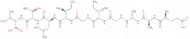
CAS :Please enquire for more information about [Gln18]-Platelet Factor 4 (15-22) (human) including the price, delivery time and more detailed product information at the technical inquiry form on this pageFormule :C38H69N15O13Masse moléculaire :944.06 g/molAtrial Natriuretic Peptide (126-150) (rat)
CAS :<p>Please enquire for more information about Atrial Natriuretic Peptide (126-150) (rat) including the price, delivery time and more detailed product information at the technical inquiry form on this page</p>Formule :C113H177N39O35S2TFF1 Human
<p>TFF1 is a protein that belongs to the TNF family of cytokines. It is a homodimer with two identical chains that are linked by disulfide bonds at specific positions. TFF1 has been shown to be secreted by monocytes, macrophages, and lymphocytes in response to LPS stimulation. TFF1 binds to the cell membrane of target cells and induces proinflammatory responses such as cytokine production and the activation of NF-κB. These effects are mediated through its ability to activate the transcription factor nuclear factor-κB (NF-κB) which regulates gene expression in immune cells.<br>DISULFIDE BONDS: The covalent linkage between two polypeptide chains or between two amino acid residues <br>CHROMATOGRAPHY: A process for separating mixtures based on molecular weight, size, shape, or other physical properties <br>RECOMBINANT: Produced by recombining genetic material from different</p>Degré de pureté :Min. 95%CEF4
CAS :<p>Portion of Influenza NP</p>Formule :C53H93N15O13Degré de pureté :Min. 95%Masse moléculaire :1,148.4 g/molHSP-70 Cofactor (HSP24) E.coli (recombinant)
HSP-70 Cofactor (HSP24) E.coli (recombinant) is a recombinant protein that can be used as a research tool to investigate protein interactions, receptor binding, and peptide activation. HSP-70 Cofactor (HSP24) E.coli (recombinant) binds to the N terminus of Hsp70, which is involved in the chaperone cycle and facilitates the folding of newly synthesized proteins. It also activates peptides by binding to them and stabilizing their tertiary structure. The protein also plays a role in ion channel activity and ligand binding, thereby affecting cellular processes such as receptor signaling, neurotransmitter release, or memory formation. This product has a CAS number of 628255-27-4.END>>Degré de pureté :Min. 95%SARS-CoV-2 Spike protein (674-689)
Please enquire for more information about SARS-CoV-2 Spike protein (674-689) including the price, delivery time and more detailed product information at the technical inquiry form on this pageMasse moléculaire :1,922.9 g/mol[Ser25]-PKC (19 - 31), biotinylated
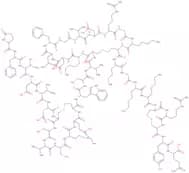
CAS :<p>Please enquire for more information about [Ser25]-PKC (19 - 31), biotinylated including the price, delivery time and more detailed product information at the technical inquiry form on this page</p>Formule :C83H144N30O20SMasse moléculaire :5,174 g/molTentaGel® Macrobead-SH Resin
<p>TentaGel; is a gelatinous resin, an important support for solid phase synthesis. TentaGel; resins are constructed with a backbone of low crosslinked polystyrene grafted with polyoxyethylene (polyethylene glycol) as shown below. The typical chain length of POE (n) is approximately 68 ethylene oxide units or an average MW of 3000. This long chain creates a spacer that effectively separates the reactive site (X) from the crosslinked backbone matrix.<br>These resins are designed for single bead synthesis and single bead analysis (mean particle size 280-320 µm: capacity 02-03 meq/g) and substitutional functional group: -CH2-CH2-SH.</p>Degré de pureté :Min. 95%Protein Kinase C (530-558)
CAS :Please enquire for more information about Protein Kinase C (530-558) including the price, delivery time and more detailed product information at the technical inquiry form on this pageFormule :C148H220N34O51S2Chlorotoxin from Leiurus quinquestriatus (north Africa)
CAS :Chlorotoxin is a neurotoxic peptide that belongs to the class of macrocyclic lactones. It was originally isolated from the venom of the deathstalker scorpion, Leiurus quinquestriatus, which is found in North Africa. Chlorotoxin has potent immunosuppressive and cytotoxic effects that are mediated by its ability to bind to ion channels in cell membranes through disulfide bonds. This peptide induces apoptosis and inhibits tumor growth in mice by targeting cancer cells and inducing cell death. The chlorotoxin molecule is conjugated with a variety of molecules to increase its stability and bioavailability for delivery into cells.Formule :C158H256N52O48S11Degré de pureté :Min. 95%Masse moléculaire :4,004.76 g/molTentaGel® R PHB Resin (90 um)
<p>TentaGel® R PHB Resin (90 um) can be used for the preparation of peptide acids; particle size 90 µm; capacity: 018-023 meq/g and is specially designed for difficult and long sequences.<br>TentaGel, is a gelatinous resin, an important support for solid phase synthesis. TentaGel resins are constructed with a backbone of low crosslinked polystyrene grafted with polyoxyethylene (polyethylene glycol) as shown below. The typical chain length of POE (n) is approximately 68 ethylene oxide units or an average MW of 3000. This long chain creates a spacer that effectively separates the reactive site (X) from the crosslinked backbone matrix.</p>Degré de pureté :Min. 95%

















![[Sar1,Ile8]-Angiotensin II](/_next/image/?url=https%3A%2Fstatic.cymitquimica.com%2Fproducts%2F3D%2Fthumb-webp%2FPAN-4016.webp&w=3840&q=75)









![[Gln18]-Platelet Factor 4 (15-22) (human)](/_next/image/?url=https%3A%2Fstatic.cymitquimica.com%2Fproducts%2F3D%2Fthumb-webp%2FVAC-00001.webp&w=3840&q=75)




![[Ser25]-PKC (19 - 31), biotinylated](/_next/image/?url=https%3A%2Fstatic.cymitquimica.com%2Fproducts%2F3D%2Fthumb-webp%2FVAC-00002.webp&w=3840&q=75)