


Peptides
Sous-catégories appartenant à la catégorie "Peptides"
29874 produits trouvés pour "Peptides"
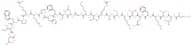
Xenin-25 (Human)
CAS :Xenin-25 is a peptide that is an activator of ion channels. It is used as a research tool and in antibody production to study the binding of antibodies to their receptors. Xenin-25 can be used to inhibit protein interactions, such as receptor-ligand or enzyme-substrate interactions. It has been shown to have pharmacological effects on ligand binding and ion channel activation, which may be due to its ability to bind to proteins with high affinity and specificity.
Formule :C139H224N38O32SDegré de pureté :Min. 95%Masse moléculaire :2,971.6 g/molBis-dPEG®3-PFP Ester
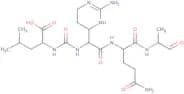
CAS :Bis-dPEG®3-PFP Ester is a PEG polymer categorised as homobifunctional PEG (X-PEG X). Used as a linker, bis-dPEG®3-PFP Ester is used to attached PEG to proteins, peptides, oligonucleotides, nanoparticles and small molecules via pegylation, a bioconjugation technique.Formule :C22H16F10O7Degré de pureté :Min. 95%Masse moléculaire :582.34 g/molElastatinal
CAS :Elastatinal is a research tool that is used to activate cells by binding to a receptor on the cell surface. Elastatinal belongs to the Ligand class of compounds and has been shown to bind to various ion channels and receptors, including cell surface receptors. This ligand binds with high affinity to the α-adrenergic receptor (α-AR) and activates cells that express this receptor. It also inhibits the binding of other ligands, such as bradykinin, which may be useful in pharmacology. Elastatinal is an inhibitor of protein interactions, which can be used in Cell Biology studies.Formule :C21H36N8O7Degré de pureté :Min. 95%Masse moléculaire :512.56 g/molGlucagon-like Peptide 1 (Human, 7-36 Amide)
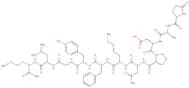
CAS :Glucagon-like peptide 1 (GLP-1) is a peptide hormone that belongs to the glucagon family. It is a 36 amino acid polypeptide and is naturally synthesized in the ileum of humans, pigs, and cows. GLP-1 is an activator of ion channels, which are protein structures that regulate the flow of ions across cell membranes. This hormone also has been shown to inhibit the activity of protein interactions at the cell membrane or ligand binding to receptors.Formule :C149H226N40O45Degré de pureté :Min. 95%Masse moléculaire :3,297.6 g/molNPY (Human, Rat)
CAS :NPY is a potent inhibitor of the ion channel TRPM2. This protein has been shown to be involved in a variety of physiological functions, including regulation of body weight and food intake, sleep-wake cycles, and pain perception. It is also an important regulator of neuronal excitability. NPY (Human) can be used as a research tool for studying protein interactions or investigating the function of ion channels in cellular systems. NPY (Rat) can be used as an antibody for immunohistochemistry or Western blotting experiments.Formule :C189H285N55O57SDegré de pureté :Min. 95%Masse moléculaire :4,271.7 g/molSubstance P (Human, Bovine, Rat, Mouse)
CAS :Substance P is a member of the tachykinin neuropeptide family which is produced in the central nervous system (CNS) and acts through its specific receptor neurokinin 1 receptor (NK-1R). NK-1R is present in neurons and on glial cell types. Substance P is involved in: pain perceptions as a neurotransmitter; gut motility; increased inflammation in the lungs, gastrointestinal tract and the skin and neuroinflammation. Interestingly the levels of Substance P are raised in inflammatory bowel diseases and through its involvement in cytokine release, it contributes to asthma pathology. These diverse selection of functions makes substance P a target for therapeutic research. This product is available as a 0.5 mg vial.Formule :C63H98N18O13SDegré de pureté :Min. 95%Masse moléculaire :1,347.6 g/molAmino-dPEG®8-t-butyl ester
CAS :Amino-dPEG®8-t-butyl ester is a PEG compound with two different functional groups (also known as heterobifunctional). Unlike homobifunctional PEG compounds (same functional group on both ends), this type of compounds are more versatile as have two different anchor points. Amino-dPEG®8-t-butyl ester is used as a linker and spacer to add a PEG moiety, via pegylation (a bioconjugation technique) to proteins, peptides, oligonucleotides, small molecules and nanoparticles.
Formule :C32H58N2O15Degré de pureté :Min. 95%Masse moléculaire :710.81 g/molNHS-dPEG®4-Biotin
CAS :NHS-dPEG®4-Biotin is a PEG compound with two different functional groups (also known as heterobifunctional). Unlike homobifunctional PEG compounds (same functional group on both ends), this type of compounds are more versatile as have two different anchor points. NHS-dPEG®4-Biotin is used as a linker and spacer to add a PEG moiety, via pegylation (a bioconjugation technique) to proteins, peptides, oligonucleotides, small molecules and nanoparticles.
Formule :C22H32N2O13Degré de pureté :(%) Min. 98%Masse moléculaire :532.5 g/molEndothelin-3 (Human)
CAS :Endothelin-3 (ET-3) is a protein that belongs to the large family of endothelin peptides which activate the G-protein coupled receptors ETA and ETB. However ET-3 has lower affinity for the ETA receptors compared to Endothelin-1 (ET-1) and Endothelin-2 (ET-2), whereas all three endothelins have similar affinity for ETB receptors. As ETB receptors make up around 90% of the endothelin receptors found in the cerebral cortex in humans, ET-3 can be nicknamed the ‘brain endothelin’. Also through ET-3’s activation of ETB receptors, ET-3 is involved in the development of the enteric nervous system which controls within the gut, blood flow, secretion and intestinal motility. This product has disulfide bonds between Cys1-Cys and Cys3-Cys11, is sourced from Porcine, Rat and Rabbit and is available as a 0.1mg vial. It can be use as a research tool for studying the function of endothelin receptors.
Formule :C121H168N26O33S4Degré de pureté :Min. 95%Masse moléculaire :2,643 g/molBis-dPEG®21-PFP Ester
CAS :Bis-dPEG®21-PFP Ester is a PEG polymer categorised as homobifunctional PEG (X-PEG X). Used as a linker, bis-dPEG®21-PFP Ester is used to attached PEG to proteins, peptides, oligonucleotides, nanoparticles and small molecules via pegylation, a bioconjugation technique.Formule :C58H88F10O25Degré de pureté :Min. 95%Masse moléculaire :1,375.29 g/molNeuromedin C (Human, Porcine, Canine)
CAS :Neuromedin C (NMC) is a peptide that belongs to the family of neuromedin and is a potent activator of ion channels. It has been shown to be a ligand for opioid receptors, which may be due to its ability to inhibit the release of neurotransmitters such as acetylcholine and noradrenaline. Neuromedin C has also been shown to inhibit the binding of morphine-6 beta-glucuronide in rat brain synaptosomes. In addition, NMC has been reported as an inhibitor of cell proliferation and induce apoptosis in various cancer cells including colon and prostate cancers.
Formule :C50H73N17O11SDegré de pureté :Min. 95%Masse moléculaire :1,120.3 g/molBiotin-dPEG®7-Azide
CAS :Biotin-dPEG®7-Azide is a PEG compound with two different functional groups (also known as heterobifunctional). Unlike homobifunctional PEG compounds (same functional group on both ends), this type of compounds are more versatile as have two different anchor points. Biotin-dPEG®7-Azide is used as a linker and spacer to add a PEG moiety, via pegylation (a bioconjugation technique) to proteins, peptides, oligonucleotides, small molecules and nanoparticles.
Formule :C26H48N6O9SDegré de pureté :Min. 95%Masse moléculaire :620.32 g/molCbz-N-Amido-dPEG®6-Acid
CAS :Cbz-N-Amido-dPEG®6-Acid is a PEG compound with two different functional groups (also known as heterobifunctional). Unlike homobifunctional PEG compounds (same functional group on both ends), this type of compounds are more versatile as have two different anchor points. Cbz-N-Amido-dPEG®6-Acid is used as a linker and spacer to add a PEG moiety, via pegylation (a bioconjugation technique) to proteins, peptides, oligonucleotides, small molecules and nanoparticles.Degré de pureté :Min. 95%Masse moléculaire :487.54 g/molParathyroid Hormone (Human, 1-44)
CAS :Amino acids 1-44 of the Parathyroid Hormone (PTH) which is a peptide hormone that is secreted from the parathyroid gland in the event of abnormal serum calcium levels and it ultimately regulates calcium and phosphate levels in the body. The PTH exerts its activity through binding to the G-protein coupled receptor type 1 PTH receptor, which activates adenylate cyclase or phospholipase C thus activating pathways involved in the mediation of bone resorption and bone formation. This product is suitable for life science applications and is available as a 0.5mg vial.
Formule :C225H366N68O61S2Degré de pureté :Min. 95%Masse moléculaire :5,063.9 g/molPHM-27 (Human)
CAS :PHM-27 is a peptide that is used as a research tool in the fields of cell biology, pharmacology and immunology. It is also used to study protein interactions and receptor/ligand interactions.
Formule :C135H214N34O40SDegré de pureté :Min. 95%Masse moléculaire :2,985.4 g/molPhysalaemin
CAS :Physalaemin is a peptide that has been found to be an activator of the G-protein coupled receptor. Physalaemin has been shown to inhibit ion channels, such as potassium channels and calcium channels. Physalaemin may also inhibit the activity of certain ligands, such as bradykinin and substance P. This peptide can also act as a research tool for pharmacology and cell biology.
Formule :C58H84N14O16SDegré de pureté :Min. 95%Masse moléculaire :1,265.4 g/molt-boc-N-Amido-dPEG®36-Acid
CAS :t-boc-N-Amido-dPEG®36-Acid is a PEG compound with two different functional groups (also known as heterobifunctional). Unlike homobifunctional PEG compounds (same functional group on both ends), this type of compounds are more versatile as have two different anchor points. t-boc-N-Amido-dPEG®36-Acid is used as a linker and spacer to add a PEG moiety, via pegylation (a bioconjugation technique) to proteins, peptides, oligonucleotides, small molecules and nanoparticles.Formule :C80H159NO40Degré de pureté :Min. 95%Masse moléculaire :1,775.1 g/molLipoamido-dPEG®4-TFP Ester
CAS :Lipoamido-dPEG®4-TFP Ester is a PEG molecule conjugated with a lipid moiety. Lipoamido-dPEG®4-TFP Ester, conjugated to this lipid constituent, is very important especially in drug delivery and vaccine development as it helps improve the stability and circulation time of lipid nanoparticles (LNPs) and liposomes.
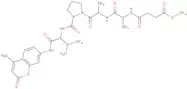
Formule :C31H62O15Degré de pureté :Min. 95%Masse moléculaire :674.81 g/molSuc(OMe)-Ala-Ala-Pro-Val-AMC
CAS :Suc(OMe)-Ala-Ala-Pro-Val-AMC is an activator ligand that binds to the receptor. It is a research tool and is used in cell biology, antibody production, ion channels and pharmacology. This compound can be used as an inhibitor for protein interactions. Suc(OMe)-Ala-Ala-Pro-Val-AMC has high purity and is a peptide. The CAS number of this compound is 72252-90-5.Formule :C31H41N5O9Degré de pureté :Min. 95%Masse moléculaire :627.69 g/molAzido-dPEG® 8-NHS ester
CAS :Azido-dPEG® 8-NHS ester is a PEG compound with two different functional groups (also known as heterobifunctional). Unlike homobifunctional PEG compounds (same functional group on both ends), this type of compounds are more versatile as have two different anchor points. Azido-dPEG® 8-NHS ester is used as a linker and spacer to add a PEG moiety, via pegylation (a bioconjugation technique) to proteins, peptides, oligonucleotides, small molecules and nanoparticles.Degré de pureté :Min. 95%Masse moléculaire :564.58 g/molAmino-dPEG®4-t-boc-hydrazide
CAS :Amino-dPEG®4-t-boc-hydrazide is a PEG compound with two different functional groups (also known as heterobifunctional). Unlike homobifunctional PEG compounds (same functional group on both ends), this type of compounds are more versatile as have two different anchor points. Amino-dPEG®4-t-boc-hydrazide is used as a linker and spacer to add a PEG moiety, via pegylation (a bioconjugation technique) to proteins, peptides, oligonucleotides, small molecules and nanoparticles.Formule :C16H33N3O7Degré de pureté :Min. 95%Masse moléculaire :379.45 g/molZ-Gly-Pro-Arg-AMC
CAS :Z-Gly-Pro-Arg-AMC is a synthetic peptide that can inhibit the activity of various enzymes. It has been shown to be an inhibitor of protein interactions, activator of ligand, and receptor. This peptide is used as a research tool in cell biology and pharmacology studies. Z-Gly-Pro-Arg-AMC is also used in high purity applications (e.g., ion channels) and antibody production.
Formule :C31H37N7O7Degré de pureté :Min. 95%Masse moléculaire :619.67 g/mol[D-Ala2,Met5]-Enkephalin
CAS :[D-Ala2,Met5]-Enkephalin is a peptide. It is a potent and specific activator of opioid receptors. It has been used to study the effects of opioid peptides on ion channels and receptor interactions, as well as for research into protein interactions and pharmacology.Formule :C28H37N5O7SDegré de pureté :Min. 95%Masse moléculaire :587.69 g/molTFP-dPEG®4-( m-dPEG®24)3-Ester
CAS :TFP-dPEG®4-( m-dPEG®24)3-Ester is a research tool that can be used as an activator or ligand for cell biology, antibody characterization, ion channels, and protein interactions. This product may also be used in pharmacology and peptide synthesis. TFP-dPEG®4-( m-dPEG®24)3-Ester is also an inhibitor of CAS No. 1108750-59-9.
Formule :C31H56N4O16Degré de pureté :Min. 95%Masse moléculaire :740.79 g/molAmino-dPEG®2-t-butyl ester
CAS :Amino-dPEG®2-t-butyl ester is a PEG compound with two different functional groups (also known as heterobifunctional). Unlike homobifunctional PEG compounds (same functional group on both ends), this type of compounds are more versatile as have two different anchor points. Amino-dPEG®2-t-butyl ester is used as a linker and spacer to add a PEG moiety, via pegylation (a bioconjugation technique) to proteins, peptides, oligonucleotides, small molecules and nanoparticles.Formule :C42H65NO16Degré de pureté :Min. 95%Masse moléculaire :839.96 g/molCbz-N-Amido-dPEG®12-Acid
CAS :Cbz-N-Amido-dPEG®12-Acid is a PEG compound with two different functional groups (also known as heterobifunctional). Unlike homobifunctional PEG compounds (same functional group on both ends), this type of compounds are more versatile as have two different anchor points. Cbz-N-Amido-dPEG®12-Acid is used as a linker and spacer to add a PEG moiety, via pegylation (a bioconjugation technique) to proteins, peptides, oligonucleotides, small molecules and nanoparticles.
Degré de pureté :Min. 95%Masse moléculaire :751.86 g/molMorphine Tolerance Peptide
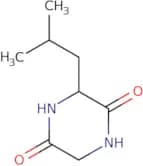
CAS :Morphine tolerance peptide is a cyclic peptide analog of morphine. It has been shown to have an affinity for the kappa-opioid receptor that is similar to that of morphine, but it has a higher potency and a longer duration of action. The molecular modeling study indicates that the analog interacts with the receptor in a similar manner as morphine and exhibits high selectivity for this receptor. The analog also shares many of the same features as morphine in terms of depressant effect and locomotor activity, but does not produce any kind of withdrawal syndrome.
Formule :C8H14N2O2Degré de pureté :Min. 95%Masse moléculaire :170.21 g/molAzido-dPEG®7-Amine
CAS :Azido-dPEG®7-Amine is a PEG compound with two different functional groups (also known as heterobifunctional). Unlike homobifunctional PEG compounds (same functional group on both ends), this type of compounds are more versatile as have two different anchor points. Azido-dPEG®7-Amine is used as a linker and spacer to add a PEG moiety, via pegylation (a bioconjugation technique) to proteins, peptides, oligonucleotides, small molecules and nanoparticles.
Degré de pureté :Min. 95%Masse moléculaire :394.46 g/mol[Met(O)12]-ANP (Human, 1-28)
CAS :[Met(O)12]-ANP (Human, 1-28) is a peptide that activates the guanylate cyclase. It has been shown to bind to the receptor for ANP, which is present in many cell types. The binding of [Met(O)12]-ANP (Human, 1-28) to its receptor leads to an increase in intracellular cGMP levels and consequently an increase in intracellular cAMP levels. This product is a research tool for protein interactions and can be used as an inhibitor or activator. The purity of this product is >98%.
Formule :C127H203N45O40S3Degré de pureté :Min. 95%Masse moléculaire :3,096.4 g/molm-dPEG®12-Lipoamide
CAS :m-dPEG®12-Lipoamide is a PEG molecule conjugated with a lipid moiety. m-dPEG®12-Lipoamide, conjugated to this lipid constituent, is very important especially in drug delivery and vaccine development as it helps improve the stability and circulation time of lipid nanoparticles (LNPs) and liposomes.Degré de pureté :Min. 95%[Nle8,18,Tyr34]-Parathyroid Hormone (Human, 1-34)
CAS :Peptide product related to the 1-34 amino acids of the Parathyroid Hormone (PTH) and available as a 0.5mg vial. PTH is a peptide hormone that is secreted from the parathyroid gland in the event of abnormal serum calcium levels and it ultimately regulates calcium and phosphate levels in the body. The PTH exerts its activity through binding to the G-protein coupled receptor type 1 PTH receptor, which activates adenylate cyclase or phospholipase C thus activating pathways involved in the mediation of bone resorption and bone formation. This product is suitable for life science applications.Formule :C183H295N55O52Degré de pureté :Min. 95%Masse moléculaire :4,097.6 g/moldPEG®12 Biotin Acid
CAS :dPEG®12 Biotin Acid is a PEG compound with two different functional groups (also known as heterobifunctional). Unlike homobifunctional PEG compounds (same functional group on both ends), this type of compounds are more versatile as have two different anchor points. dPEG®12 Biotin Acid is used as a linker and spacer to add a PEG moiety, via pegylation (a bioconjugation technique) to proteins, peptides, oligonucleotides, small molecules and nanoparticles.
Degré de pureté :Min. 95%Masse moléculaire :844.02 g/molm-dPEG®12-TFP Ester
CAS :m-dPEG®12-TFP Ester is a PEG compound with two different functional groups (also known as heterobifunctional). Unlike homobifunctional PEG compounds (same functional group on both ends), this type of compounds are more versatile as have two different anchor points. m-dPEG®12-TFP Ester is used as a linker and spacer to add a PEG moiety, via pegylation (a bioconjugation technique) to proteins, peptides, oligonucleotides, small molecules and nanoparticles.
Formule :C60H118O32Degré de pureté :Min. 95%Masse moléculaire :1,395.61 g/molEndothelin-3 (Human)
CAS :Endothelin-3 (ET-3) is a protein that belongs to the large family of endothelin peptides which activate the G-protein coupled receptors ETA and ETB. However ET-3 has lower affinity for the ETA receptors compared to Endothelin-1 (ET-1) and Endothelin-2 (ET-2), whereas all three endothelins have similar affinity for ETB receptors. As ETB receptors make up around 90% of the endothelin receptors found in the cerebral cortex in humans, ET-3 can be nicknamed the ‘brain endothelin’. Also through ET-3’s activation of ETB receptors, ET-3 is involved in the development of the enteric nervous system which controls within the gut, blood flow, secretion and intestinal motility. This product has disulfide bonds between Cys1-Cys and Cys3-Cys11, is sourced from Porcine, Rat and Rabbit and is available as a 0.5mg vial
Formule :C121H168N26O33S4Degré de pureté :Min. 95%Masse moléculaire :2,643 g/molBNP-32 (Rat)
CAS :BNP-32 is a peptide that is an activator of the B2 receptor. It has been shown to inhibit the ion channels in cells, which may be due to its binding to the ligand-binding site on the receptor. BNP-32 has also been shown to bind to antibodies and can be used as a research tool for cell biology or other areas of life science. BNP-32 is a high purity product with CAS No. 123337-89-3.
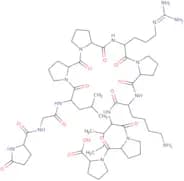
Formule :C146H239N47O44S3Degré de pureté :Min. 95%Masse moléculaire :3,452.9 g/molBradykinin-Potentiator B
CAS :Bradykinin-potentiator B is a peptide that belongs to the group of activators. It has been shown to activate ion channels and is used as a research tool for studying protein interactions, receptor pharmacology, and ligand binding. Bradykinin-potentiator B can be used in cell biology for studying protein interactions with antibodies or receptors. Bradykinin potentiator B binds to the receptor site and activates it by changing its conformation. This leads to changes in the cell's behavior, such as increased secretion of hormones or neurotransmitters.
Formule :C56H91N15O13Degré de pureté :Min. 95%Masse moléculaire :1,182.4 g/molE-64-c
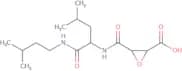
CAS :E-64-c is a research tool that is used to activate the receptor of a cell. This ligand can bind to the receptor and form a complex, which will then be able to interact with other proteins in the cell. This process can lead to changes in ion channel activity, protein synthesis, or gene expression. E-64-c has been shown to inhibit the activity of ion channels such as calcium channels and potassium channels, as well as protein synthesis. It also binds to antibodies and blocks their binding sites on cells.br>
E-64-c is a high purity ligand that can be used for studying protein interactions or pharmacological purposes. The potency of this ligand has been tested by measuring its ability to inhibit the binding of various peptides such as vasopressin and angiotensin II.Formule :C15H26N2O5Degré de pureté :Min. 95%Masse moléculaire :314.38 g/mol[Asn1,Val5]-Angiotensin II
CAS :[Asn1,Val5]-Angiotensin II is a peptide that is used as a research tool to study the effects of angiotensin II on ion channels, ligand-receptor interactions and protein interactions. It is also used as an antibody to measure the level of angiotensin II in cells. This peptide has been shown to be an activator of potassium channels and inhibits calcium channels. The high purity of this product makes it suitable for use in pharmacology and cell biology research.
Formule :C49H70N14O11Degré de pureté :Min. 95%Masse moléculaire :1,031.2 g/molMAL-dPEG®4-(m-dPEG®24)3
CAS :MAL-dPEG®4-(m-dPEG®24)3 is a PEG compound with two different functional groups (also known as heterobifunctional). Unlike homobifunctional PEG compounds (same functional group on both ends), this type of compounds are more versatile as have two different anchor points. MAL-dPEG®4-(m-dPEG®24)3 is used as a linker and spacer to add a PEG moiety, via pegylation (a bioconjugation technique) to proteins, peptides, oligonucleotides, small molecules and nanoparticles.Formule :C23H40N4O12Degré de pureté :Min. 95%Masse moléculaire :564.58 g/molZ-Gly-Phe
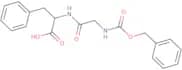
CAS :Z-Gly-Phe is a peptide that inhibits protein synthesis by binding to the reactive site of a pancreatic enzyme. This site is normally occupied by a hydrogen bond and the compound binds to it by occupying this space, resulting in the inhibition of enzyme activity. Z-Gly-Phe has been shown to inhibit insulin-stimulated glucose uptake in rats, which may be due to its ability to bind with sodium carbonate. The binding constants of Z-Gly-Phe and its inhibitors have been determined using an analytical method that measures changes in pH. The optimum pH for Z-Gly-Phe is 8.5, which corresponds with the optimal pH for human pancreatic enzymes.Formule :C19H20N2O5Degré de pureté :Min. 95%Masse moléculaire :356.37 g/molß-Alanyl-L-Histidine [Carnosine]
CAS :ß-Alanyl-L-Histidine is a dipeptide that is naturally occurring in the human body and is involved in many biochemical processes. It is a precursor of carnosine, which can be found in muscle and brain tissue. Carnosine has been shown to have antioxidant properties and has been used as a supplement for those who are at risk of developing diabetes. Carnosine supplementation has also been shown to improve exercise performance by increasing muscle strength and improving the function of muscle cells. ß-Alanyl-L-Histidine may also have metal chelate properties due to its ability to bind metals such as iron and copper.
Formule :C9H14N4O3Degré de pureté :Min. 95%Masse moléculaire :226.23 g/molFmoc-N-Amido-dPEG®4-NHS Ester
CAS :Fmoc-N-Amido-dPEG®4-NHS Ester is a PEG compound with two different functional groups (also known as heterobifunctional). Unlike homobifunctional PEG compounds (same functional group on both ends), this type of compounds are more versatile as have two different anchor points. Fmoc-N-Amido-dPEG®4-NHS Ester is used as a linker and spacer to add a PEG moiety, via pegylation (a bioconjugation technique) to proteins, peptides, oligonucleotides, small molecules and nanoparticles.Formule :C30H36N2O10Degré de pureté :Min. 95%Masse moléculaire :584.24 g/molm-dPEG®-Acid (MW = 412)
CAS :m-dPEG®-Acid (MW = 412) is a PEG compound with two different functional groups (also known as heterobifunctional). Unlike homobifunctional PEG compounds (same functional group on both ends), this type of compounds are more versatile as have two different anchor points. m-dPEG®-Acid (MW = 412) is used as a linker and spacer to add a PEG moiety, via pegylation (a bioconjugation technique) to proteins, peptides, oligonucleotides, small molecules and nanoparticles.
Degré de pureté :Min. 95%Masse moléculaire :412.47 g/molAzido-dPEG®4-Alcohol
CAS :Azido-dPEG®4-Alcohol is a PEG polymer categorised as monofunctional (OH-PEG-X). Used as a linker, azido-dPEG®4-Alcohol is used to attached PEG to proteins, peptides, oligonucleotides, nanoparticles and small molecules via pegylation, a bioconjugation technique.Degré de pureté :Min. 95%Masse moléculaire :219.24 g/molδ Sleep-Inducing Peptide (DSIP)
CAS :The Delta Sleep-Inducing Peptide (DSIP) is a neuropeptide which is found in plasma, peripheral organs and neurons. It has been found to induce delta sleep in mammals and have the ability to cross the blood-brain barrier as well as be absorbed from the gut. Studies have shown that DSIP plasma concentration and the human circadian rhythm are correlated and that DSIP concentrations are dependent on the initiation of sleep. DSIP has also demonstrated its ability to affect levels of hormones, neurotransmitters and psychological performance. In patients with schizophrenia and depression levels of DSIP in the cerebrospinal fluid and plasma were found to be lower compared to healthy controls. Clinically DFSIP has already been used to treat opioid and alcohol withdrawal in reducing symptoms felt by patients. This product is available as a 0.5mg vial.Formule :C35H48N10O15Degré de pureté :Min. 95%Masse moléculaire :848.81 g/mol[Tyr8]-Substance P (0.5 mg vial)
CAS :Substance P is a neuropeptide that is synthesized from the precursor protein pro-opiomelanocortin (POMC). Substance P has been shown to be a potent inhibitor of the synthesis of proteins that are necessary for cell division. It also stimulates the release of inflammatory mediators and has been shown to have an activator effect on receptors. This product is used as a research tool in cell biology, biochemistry, and pharmacology.
Formule :C63H98N18O14SDegré de pureté :Min. 95%Masse moléculaire :1,363.6 g/molAc-Asp-Asn-Leu-Asp-H (aldehyde)
CAS :Ac-Asp-Asn-Leu-Asp-H (aldehyde) is a peptide that is an agonist of the ion channels. It can be used as a research tool in studies on protein interactions and receptor pharmacology. Ac-Asp-Asn-Leu-Asp-H (aldehyde) binds to the ligand binding site of ion channels, which activates or inhibits their function. This peptide has been shown to inhibit the activity of potassium channels and glutamate receptors, and it can be used as an antibody for cell biology and immunology experiments.
Formule :C20H31N5O10Degré de pureté :Min. 95%Masse moléculaire :501.49 g/molBis-dPEG®13-NHS Ester
CAS :Bis-dPEG®13-NHS Ester is a PEG polymer categorised as homobifunctional PEG (X-PEG X). Used as a linker, bis-dPEG®13-NHS Ester is used to attached PEG to proteins, peptides, oligonucleotides, nanoparticles and small molecules via pegylation, a bioconjugation technique.
Formule :C38H64N2O21Degré de pureté :Min. 95%Masse moléculaire :884.92 g/molFmoc-N-Amido-dPEG®36-Acid
CAS :Fmoc-N-Amido-dPEG®36-Acid is a PEG compound with two different functional groups (also known as heterobifunctional). Unlike homobifunctional PEG compounds (same functional group on both ends), this type of compounds are more versatile as have two different anchor points. Fmoc-N-Amido-dPEG®36-Acid is used as a linker and spacer to add a PEG moiety, via pegylation (a bioconjugation technique) to proteins, peptides, oligonucleotides, small molecules and nanoparticles.
Formule :C90H161NO40Degré de pureté :Min. 95%Masse moléculaire :1,897.22 g/molAmino-dPEG®12-OH
CAS :Amino-dPEG®12-OH is a PEG polymer categorised as monofunctional (OH-PEG-X). Used as a linker, amino-dPEG®12-OH is used to attached PEG to proteins, peptides, oligonucleotides, nanoparticles and small molecules via pegylation, a bioconjugation technique.
Formule :C24H51NO12Degré de pureté :Min. 95%Masse moléculaire :545.66 g/mol








![[D-Ala2,Met5]-Enkephalin](/_next/image/?url=https%3A%2Fstatic.cymitquimica.com%2Fproducts%2F3D%2Fthumb-webp%2FPEK-4116-V.webp&w=3840&q=75)



![[Met(O)12]-ANP (Human, 1-28)](/_next/image/?url=https%3A%2Fstatic.cymitquimica.com%2Fproducts%2F3D%2Fthumb-webp%2FPAF-4145-V.webp&w=3840&q=75)

![[Nle8,18,Tyr34]-Parathyroid Hormone (Human, 1-34)](/_next/image/?url=https%3A%2Fstatic.cymitquimica.com%2Fproducts%2F3D%2Fthumb-webp%2FPTH-4129-V.webp&w=3840&q=75)


![[Asn1,Val5]-Angiotensin II](/_next/image/?url=https%3A%2Fstatic.cymitquimica.com%2Fproducts%2F3D%2Fthumb-webp%2FPAN-4036-V.webp&w=3840&q=75)

![ß-Alanyl-L-Histidine [Carnosine]](/_next/image/?url=https%3A%2Fstatic.cymitquimica.com%2Fproducts%2F3D%2Fthumb-webp%2FOAH-3085.webp&w=3840&q=75)



![[Tyr8]-Substance P (0.5 mg vial)](/_next/image/?url=https%3A%2Fstatic.cymitquimica.com%2Fproducts%2F3D%2Fthumb-webp%2FPSP-4059-V.webp&w=3840&q=75)


