Peptides
Sous-catégories appartenant à la catégorie "Peptides"
29633 produits trouvés pour "Peptides"
MiniAp-4 peptide
MiniAP-4 peptide is a short nontoxic derivative of apamin (a neurotoxin from bee venom) used as a blood-brain barrier (BBB) shuttle peptide.
GsMTx4
CAS :GsMTx4 is a ryanodine receptor agonist that binds to the ryanodine receptor and activates signal pathways. It has been shown to activate mechanosensitive channels and regulate intracellular Ca2+ levels by inducing an increase in Ca2+ release from the endoplasmic reticulum. GsMTx4 has also been shown to have pharmacological effects on cells, as well as physiological effects on Grammostola spatulata, such as inhibition of locomotion and increased mortality. GsMTx4 has also been shown to have antiviral properties against infectious diseases such as influenza, herpes simplex virus-1, and West Nile virus.Formule :C185H273N49O45S6Degré de pureté :Min. 95%Masse moléculaire :4,101.89 g/molACTB MS Calibrator (25nmol)
High quality, quantitated heavy/light peptide calibrator for actin beta in Mass Spectroscopy research. Actin beta is an actin isoform and is one of two non-muscle cytoskeletal actins. Actins play roles in cell integrity, structure and motility.Degré de pureté :Min. 95%Lysyl-[Hyp3]-Bradykinin, human
Lysyl-bradykinin is a potent activator of human bradykinin receptors. It is an inhibitor of protein interactions and has a high purity with CAS number 59814-34-8.Formule :C56H85N17O13Degré de pureté :Min. 95%Masse moléculaire :1,204.4 g/molNH2-dPEG®4-Glu(OH)-NH-dPEG®4-Glu(OH)-NH-m-dPEG®24
NH2-dPEG®4-Glu(OH)-NH-dPEG®4-Glu(OH)-NH-m-dPEG®24 is a peptide containing polyethylene glycol (PEG) as spacer to alter their pharmacokinetic properties and pharmodynamics.Formule :C81H157N5O40Degré de pureté :Min. 95%Masse moléculaire :1,841.12 g/molCystatin C Heavy Tryptic Peptide Standard (4nmol)
Cystatin C Heavy Tryptic Peptide Standard for use in protein identification and quantitation studies. Cystatin C is a non-glycosylated, basic protein which can be used as a biomarker to determine kidney function.Degré de pureté :Min. 95%Thymosin-b4 Human Recombinant
Please enquire for more information about Thymosin-b4 Human Recombinant including the price, delivery time and more detailed product information at the technical inquiry form on this pageDegré de pureté :Min. 95%GRP, Human Antiserum
GRP is a protein that belongs to the G-protein-coupled receptor family. It is activated by the ligand ghrelin and has been shown to be involved in the regulation of food intake, energy expenditure, gastric acid secretion and other physiological processes. GRP is also expressed in various types of cells including neurons, pancreatic beta cells, and cardiac myocytes. The antibody against GRP recognizes human GRP with high purity. This antibody can be used as a research tool for studying the functions of GRP or for immunohistochemistry to study the distribution of GRP in tissues.Degré de pureté :Min. 95%Anti Substance P Serum
Anti-Substance P Serum is a high purity protein that specifically binds to the receptor for substance P, which is a peptide hormone. This product has an affinity for the high affinity binding site of the receptor and inhibits the activity of substance P. Anti-Substance P Serum is used as a research tool in pharmacology and cell biology, as well as in antibody production.Degré de pureté :Min. 95%Amino-dPEG®4-t-Butyl Ester
CAS :Amino-dPEG®4-t-Butyl Ester is a PEG compound with two different functional groups (also known as heterobifunctional). Unlike homobifunctional PEG compounds (same functional group on both ends), this type of compounds are more versatile as have two different anchor points. Amino-dPEG®4-t-Butyl Ester is used as a linker and spacer to add a PEG moiety, via pegylation (a bioconjugation technique) to proteins, peptides, oligonucleotides, small molecules and nanoparticles.
Formule :C22H42O13Degré de pureté :Min. 95%Masse moléculaire :514.56 g/molAzido-dPEG®4-Acid
CAS :Azido-dPEG®4-Acid is a PEG compound with two different functional groups (also known as heterobifunctional). Unlike homobifunctional PEG compounds (same functional group on both ends), this type of compounds are more versatile as have two different anchor points. Azido-dPEG®4-Acid is used as a linker and spacer to add a PEG moiety, via pegylation (a bioconjugation technique) to proteins, peptides, oligonucleotides, small molecules and nanoparticles.Formule :C11H21N3O6Degré de pureté :Min. 95%Masse moléculaire :291.3 g/molPoly-L-lysine hydrochloride
CAS :Poly-L-Lysine Hydrochloride is a synthetic polymer that has been shown to inhibit the growth of cancer cells. It has also been shown to be effective in preventing neuronal cell death, as well as toxicity caused by exposure to high levels of water vapor. Poly-L-Lysine Hydrochloride can be used as an anticancer agent and has a synergistic effect with other drugs. This polymer is thought to work by blocking the synthesis of DNA, RNA, and proteins, which are vital for the cell's survival.
Formule :(C6H14N2O2•HCl)xDegré de pureté :Min. 95%TFP-dPEG®12-Biotinidase Resistant Biotin
CAS :TFP-dPEG®12-Biotinidase Resistant Biotin is a PEG compound with two different functional groups (also known as heterobifunctional). Unlike homobifunctional PEG compounds (same functional group on both ends), this type of compounds are more versatile as have two different anchor points. TFP-dPEG®12-Biotinidase Resistant Biotin is used as a linker and spacer to add a PEG moiety, via pegylation (a bioconjugation technique) to proteins, peptides, oligonucleotides, small molecules and nanoparticles.
Formule :C14H26O9Degré de pureté :Min. 95%Masse moléculaire :338.35 g/molAminooxy-dPEG®12-amido-dPEG®12-(m-dPEG®11)3
CAS :Aminooxy-dPEG®12-amido-dPEG®12-(m-dPEG®11)3 is a PEG compound with two different functional groups (also known as heterobifunctional). Unlike homobifunctional PEG compounds (same functional group on both ends), this type of compounds are more versatile as have two different anchor points. Aminooxy-dPEG®12-amido-dPEG®12-(m-dPEG®11)3 is used as a linker and spacer to add a PEG moiety, via pegylation (a bioconjugation technique) to proteins, peptides, oligonucleotides, small molecules and nanoparticles.
Formule :C19H37N3O10Degré de pureté :Min. 95%Masse moléculaire :467.51 g/molDes-Acyl Ghrelin (Human)
CAS :Des-Acyl Ghrelin (Human) is a Des-Octanoylated Ghrelin product available in the Trifluoroacetate Salt form and as a 0.1mg vial. Ghrelin is a peptide horone which plays a role in regulating energy balance, stimulating appetite, nutrient sensing and meal initiation. It influences bodily functions through associating with growth hormone secretagogue receptors (GHS-R) through its unique N-octanoyl group which is linked to its serine 3 residue covalently. It wider functions are in the regulation of insulin resistance, diabetes and obesity. On top of this Ghrelin is also found to be involved with glucose homeostasis, energy homeostasis, cardio-protective effects, bone metabolism and is a potential target for cancer. Therefore it can be used to develop therapies for a whole spectrum of diseases. This molecule is used as a research tool for studying cell biology and pharmacology.Formule :C141H235N47O41Degré de pureté :Min. 95%Masse moléculaire :3,244.7 g/molUrotensin II-Related Peptide (Human, Rat)
CAS :Urotensin II-related peptide (URP) is a potent, selective, nonpeptide antagonist of the calcitonin gene-related peptide receptor. URP inhibits the binding of calcitonin gene-related peptide to its receptor and blocks the effects of this peptide on a variety of cell types. In addition, URP suppresses the release of substance P from sensory neurons in rat skin and blocks neurogenic inflammation. This product is purified by HPLC and has an analytical purity of >95%.Formule :C49H64N10O10S2Degré de pureté :Min. 95%Masse moléculaire :1,017.2 g/molAzido-dPEG® 12-NHS ester
CAS :Azido-dPEG® 12-NHS ester is a PEG compound with two different functional groups (also known as heterobifunctional). Unlike homobifunctional PEG compounds (same functional group on both ends), this type of compounds are more versatile as have two different anchor points. Azido-dPEG® 12-NHS ester is used as a linker and spacer to add a PEG moiety, via pegylation (a bioconjugation technique) to proteins, peptides, oligonucleotides, small molecules and nanoparticles.Degré de pureté :Min. 95%Masse moléculaire :740.79 g/molSalusin-β (Human)
CAS :Salusin-Beta is a peptide that belongs to the group of activators. It has been shown to inhibit the activity of ion channels. Salusin-Beta (Human) is an antibody that can be used for research purposes. Salusin-Beta (Human) has been shown to have high purity and it can be used as a reagent for research and development in Cell Biology and Pharmacology.Formule :C115H176N32O21Degré de pureté :Min. 95%Masse moléculaire :2,342.8 g/molBis-dPEG®17-NHS Ester
CAS :Bis-dPEG®17-NHS Ester is a PEG polymer categorised as homobifunctional PEG (X-PEG X). Used as a linker, bis-dPEG®17-NHS Ester is used to attached PEG to proteins, peptides, oligonucleotides, nanoparticles and small molecules via pegylation, a bioconjugation technique.
Formule :C46H80N2O25Degré de pureté :Min. 95%Masse moléculaire :1,061.13 g/molSARS Spike (408-470, 540-573)
The SARS Spike peptide is a research tool that can be used as an activator and an antibody. It has a high purity and is contained in a CAS number. This peptide can be used for the study of protein interactions, receptor binding, ligand binding, and pharmacology.Degré de pureté :Min. 95%Bis-dPEG®17-PFP Ester
CAS :Bis-dPEG®17-PFP Ester is a PEG polymer categorised as homobifunctional PEG (X-PEG X). Used as a linker, bis-dPEG®17-PFP Ester is used to attached PEG to proteins, peptides, oligonucleotides, nanoparticles and small molecules via pegylation, a bioconjugation technique.Formule :C50H72F10O21Degré de pureté :Min. 95%Masse moléculaire :1,199.08 g/molL-685,458
CAS :L-685,458 is a peptide that is used as a research tool to study protein interactions and the role of ion channels in cell biology. It binds to the receptor site and inhibits the binding of natural ligands. L-685,458 is an inhibitor of ion channels and acts by blocking the voltage-dependent activation of sodium channels. It also blocks potassium channels, which are responsible for regulating membrane potentials and controlling nerve impulses. L-685,458 has been shown to inhibit protein interactions in pharmacology studies with receptor binding assays.Formule :C39H52N4O6Degré de pureté :Min. 95%Masse moléculaire :672.85 g/molCl-Ac-(OH)Leu-Ala-Gly-NH2
CAS :Cl-Ac-(OH)Leu-Ala-Gly-NH2 is a peptide with an amino acid composition of Cl-Ac-(OH)Leu-Ala-Gly. It is synthesized by the chemical reaction of hydrochloric acid and L-alanine. This peptide has been shown to be an irreversible inhibitor of metalloendopeptidase, preventing the breakdown of proteins in the stomach. The pH profile for this peptide is acidic and its molecular weight is approximately 1296 daltons.Formule :C13H23N4O5ClDegré de pureté :Min. 95%Masse moléculaire :350.8 g/molMelanin-Concentrating Hormone (Human)
CAS :Melanin-concentrating hormone (MCH) is a neuropeptide that is used to study the regulation of food intake and body weight. MCH binds to its receptor, the melanocortin-4 receptor (MC4R), which is coupled to an ion channel. This binding causes the release of potassium ions from cells, leading to depolarization and increased neuronal excitability. It has been shown that MCH can be used as a research tool for studying ion channels, ligand-receptor interactions, and cell biology.
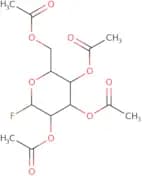
Formule :C105H160N30O26S4Degré de pureté :Min. 95%Masse moléculaire :2,386.8 g/mol2,3,4,6-Tetra-O-Acetyl-α-D-Mannopyranosyl Fluoride
CAS :2,3,4,6-Tetra-O-acetyl-α-D-mannopyranosyl fluoride is a fluorinated glycoside that is used as a reagent in organic synthesis to fluorinate alcohols and amines. It selectively reacts with primary and secondary alcohols to give the corresponding fluorides. The product can be used for the synthesis of carboxylic acids and esters. 2,3,4,6-Tetra-O-acetyl-α-D-mannopyranosyl fluoride is also used in biochemistry research as a substrate for oligosaccharide synthesis. This product has been shown to react with proteins to form peptides and with DNA to form nucleosides.Formule :C14H19O9FDegré de pureté :Min. 95%Masse moléculaire :350.29 g/molSecretin (Human)
CAS :Secretin (human) is a peptide hormone that is produced in the duodenum and is involved in the regulation of pancreatic bicarbonate, gastric acid and osmoregulation. Secretin binds to secretin receptors which are G-protein coupled receptors and are expressed in pancreatic centroacinar cells. Secretin binds to these receptors and activates adenylate cyclase which converts ATP into cAMP which results in the secretion of bicarbonate from the pancreas. Secretin plays a role in osmoregulation through its effects on the kidney, pituitary gland and the hypothalamus. This product is available as a 0.5mg vial.
Formule :C130H220N44O40Degré de pureté :Min. 95%Masse moléculaire :3,039.4 g/molSomatostatin (Human, Ovine, Porcine, Rat, Mouse)
CAS :Somatostatin is a peptide hormone that has been found to inhibit pituitary growth hormone release as well as endocrine, pancreatic and GI secretions. It is widely expressed throughout the body for example in the gastrointestinal (GI) tract, hypothalamus, pancreas and the central nervous system. In the central nervous system somatostatin plays a role in neurotransmission modification and it has also demonstrated to be effective against a number of cancers such as squamous carcinoma. This product contains disulfide bonds between Cys3-Cys14 and is available as a 0.5mg vial.
Formule :C76H10N18O19S2Degré de pureté :Min. 95%Masse moléculaire :1,637.9 g/molAngiotensin IV acetate
CAS :Angiotensin IV (Human) is a peptide hormone and peptidase inhibitor that belongs to the family of angiotensins. It is produced by the renin-angiotensin system and inhibits the action of angiotensin converting enzyme, an enzyme that converts angiotensin I into angiotensin II. Angiotensin IV has been used for research purposes as well as for therapeutic applications in cardiovascular diseases, hypertension, and congestive heart failure. Angiotensin IV is a high purity product with a purity greater than 99%.
Formule :C40H54N8O8Degré de pureté :Min. 95%Masse moléculaire :774.91 g/molAc-Gly-Lys-OMe • AcOH [AGLME]
CAS :Ac-Gly-Lys-OMe • AcOH is a synthetic substrate that is used in enzymatic reactions. This product is a peptide that contains an amide bond and a disulfide bond. It has been shown to be inactive when exposed to human serum for up to 30 minutes. Ac-Gly-Lys-OMe • AcOH has been shown to have inhibitory effects on the activity of monoclonal antibodies as well as dodecyl, which belongs to the group of lipids found in blood plasma. The rate of this reaction increases with increasing temperature and pH, but decreases with increasing concentrations of AGLME or dodecanol.Formule :C11H21N3O4•CH3COOHDegré de pureté :Min. 95%Masse moléculaire :319.35 g/molLipoamido-dPEG®8-Acid
CAS :Lipoamido-dPEG®8-Acid is a PEG molecule conjugated with a lipid moiety. Lipoamido-dPEG®8-Acid, conjugated to this lipid constituent, is very important especially in drug delivery and vaccine development as it helps improve the stability and circulation time of lipid nanoparticles (LNPs) and liposomes.
Formule :C41H67F4NO15S2Degré de pureté :Min. 95%Masse moléculaire :954.09 g/molAmyloid Beta-Protein (42-1)
CAS :Amyloid Beta-Protein (42-1) is a recombinant form of the protein, amyloid beta-protein, that is relevant to Alzheimer's disease. It is used as a research tool and for pharmacological studies. Amyloid Beta-Protein (42-1) has been shown to bind to ion channels and activate them. This product can be used as an antibody or cell biology research tool.
Formule :C203H311N55O60SDegré de pureté :Min. 95%Masse moléculaire :4,514 g/molMOCAc-Arg-Pro-Lys-Pro-Val-Glu-Nva-Trp-Arg-Lys(Dnp)-NH₂
CAS :MOCA-Arg-Pro-Lys-Pro-Val-Glu-Nva-Trp-Arg-Lys(Dnp)-NH2 is a synthetic peptide that interacts with the nicotinic acetylcholine receptor and is a potent agonist. MOCA was found to be a potent activator of the nicotinic acetylcholine receptor, as well as an inhibitor of ligand binding. The affinity for binding to the receptor was found to be high, with an inhibition constant (Ki) of 0.06 μM. It has been shown to inhibit ion channels and ligand binding in cell biology experiments. MOCA can also be used as a research tool for studying protein interactions and receptors.
Formule :C78H110N22O20Degré de pureté :Min. 95%Masse moléculaire :1,675.8 g/molAzido-dPEG®4-acid
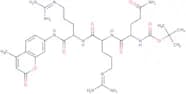
CAS :Azido-dPEG®4-acid is a PEG compound with two different functional groups (also known as heterobifunctional). Unlike homobifunctional PEG compounds (same functional group on both ends), this type of compounds are more versatile as have two different anchor points. Azido-dPEG®4-acid is used as a linker and spacer to add a PEG moiety, via pegylation (a bioconjugation technique) to proteins, peptides, oligonucleotides, small molecules and nanoparticles.Formule :C51H101N3O26Degré de pureté :Min. 95%Masse moléculaire :1,172.35 g/molBoc-Gln-Arg-Arg-AMC
CAS :Boc-Gln-Arg-Arg-AMC is a Research Tool that is used to study the interactions of protein ligands with receptor and ion channels. It has been shown to inhibit the activity of ion channels, such as calcium and potassium channels.Formule :C32H49N11O8Degré de pureté :Min. 95%Masse moléculaire :715.8 g/molBradykinin-Potentiator C
CAS :Bradykinin-Potentiator C is a peptide that can act as an activator or inhibitor of ion channels. It has been used in research for pharmacology, protein interactions, cell biology, and antibody production. Bradykinin-Potentiator C is purified from rabbit lung and has a CAS number of 30953-20-9.Formule :C51H77N11O13Degré de pureté :Min. 95%Masse moléculaire :1,052.2 g/molVirus Replication Inhibiting Peptide
CAS :The virus replication-inhibiting peptide is a fatty acid that inhibits the replication of viruses. It has been shown to inhibit the growth of the bacteria Stenotrophomonas maltophilia and other bacteria, which causes infectious diseases. The peptide also has a diagnostic use for detecting viral infections in cells. The peptide was found to up-regulate genes in response to infection by pandemic influenza, which may be due to its ability to bind receptors on cells and also interfere with inflammatory responses. The virus replication-inhibiting peptide has been shown to be effective against influenza virus and other viruses, as well as against chronic inflammatory diseases such as lung damage caused by β-amino acids.
Formule :C28H29N3O6Degré de pureté :Min. 95%Masse moléculaire :503.55 g/molBoc-Gln-Pro
CAS :Boc-Gln-Pro is a peptide that can be used as a substrate for peptidoglutaminase.
Formule :C15H25N3O6Degré de pureté :Min. 95%Masse moléculaire :343.38 g/molGRF (Human)
CAS :Growth hormone-releasing factor (GRF) or GHRH (growth hormone-releasing hormone).Binds to the growth hormone-releasing hormone receptor (GHRH-R), causing growth hormone secretion.porcine: H-YADAIFTNSYRKVLGQLSARKLLQDIMSRQQGERNQEQGARVRL-NH2bovine: H-YADAIFTNSYRKVLGQLSARKLLQDIMNRQQGERNQEQGAKVRL-NH2ovine: H-YADAIFTNSYRKILGQLSARKLLQDIMNRQQGERNQEQGAKVRL-NH2human: H-YADAIFTNSYRKVLGQLSARKLLQDIMSRQQGESNQERGARARL-NH2Formule :C215H358N72O66SDegré de pureté :Min. 95%Masse moléculaire :5,039.7 g/molFmoc-Ser[Ac4Galß(1- >3)Ac2GalNAcα(1- >O)]-OH
CAS :Fmoc-Ser[Ac4Galß(1- >3)Ac2GalNAcα(1- >O)]-OH is a peptide that belongs to the group of carbohydrate derivatives. It has been shown to inhibit the growth of bacteria and fungi by inhibiting protein synthesis. The amino acid sequence is Ser-Gly-Gly-Gly-Ala-Ser, which has a high affinity for bacterial cell walls. Fmoc-Ser[Ac4Galß(1- >3)Ac2GalNAcα(1- >O)]-OH binds to bacterial cell walls by competitive inhibition of the enzyme D, L aminopimelate aminotransferase (EC 2.6.1.19). This binding prevents the formation of an antibiotic inhibitor complex with the enzyme that is required for cell wall biosynthesis, inhibiting protein synthesis and cell division.Formule :C44H52N2O21Degré de pureté :Min. 95%Masse moléculaire :944.88 g/molMAL-dPEG®4-(m-dPEG®12)3
CAS :MAL-dPEG®4-(m-dPEG®12)3 is a PEG compound with two different functional groups (also known as heterobifunctional). Unlike homobifunctional PEG compounds (same functional group on both ends), this type of compounds are more versatile as have two different anchor points. MAL-dPEG®4-(m-dPEG®12)3 is used as a linker and spacer to add a PEG moiety, via pegylation (a bioconjugation technique) to proteins, peptides, oligonucleotides, small molecules and nanoparticles.Formule :C84H158N6O40Degré de pureté :Min. 95%Masse moléculaire :1,892.17 g/molTuftsin
CAS :Produit contrôléTuftsin is a cyclic peptide that has been shown to have various biological properties, including anti-inflammatory and immunosuppressive activity. Tuftsin has been shown to inhibit the production of proinflammatory cytokines such as IL-10 by T cells in vitro. Tuftsin also inhibits the activation of toll-like receptors (TLR) and may have a role in inhibiting mycobacterial infection. This drug was found to be well tolerated in humans with congestive heart failure, and is currently being evaluated for its potential use as an adjunct therapy for inflammatory bowel disease. It has also been shown to be effective against opportunistic fungal infections, such as Candida albicans, Cryptococcus neoformans, and Aspergillus fumigatus. Tuftsin can be measured using analytical methods such as titration calorimetry or polymerase chain reaction (PCR).Formule :C21H40N8O6•2CH3COOH•4H2ODegré de pureté :Min. 95%Masse moléculaire :692.75 g/molFmoc-N-Amido-dPEG®6-Acid
CAS :Fmoc-N-Amido-dPEG®6-Acid is a PEG compound with two different functional groups (also known as heterobifunctional). Unlike homobifunctional PEG compounds (same functional group on both ends), this type of compounds are more versatile as have two different anchor points. Fmoc-N-Amido-dPEG®6-Acid is used as a linker and spacer to add a PEG moiety, via pegylation (a bioconjugation technique) to proteins, peptides, oligonucleotides, small molecules and nanoparticles.Degré de pureté :Min. 95%Masse moléculaire :575.65 g/mol[Tyr34]-Parathyroid Hormone (Bovine, 7-34 amide)
CAS :[Tyr34]-Parathyroid Hormone (Bovine, 7-34 amide) is a product sourced from bovine, is available as a 0.5mg vial and is related to the peptide hormone Parathyroid Hormone (PTH). During abnormal serum calcium levels PTH is secreted from the parathyroid gland, thus regulating calcium and phosphate levels in the body. PTH binds to its PTH receptor which is a G-protein coupled receptor that activated adenylate cyclase or phospholipase C to activate pathways involved in the mediation of bone resorption and bone formation.
Formule :C156H244N48O40S2Degré de pureté :Min. 95%Masse moléculaire :3,496 g/molUrocortin (Rat)
CAS :Urocortin is a peptide that is also known as corticotropin-releasing factor (CRF). It is an inhibitor of the protein phosphatase 1 and protein phosphatase 2A, which are enzymes that regulate the activity of other proteins. Urocortin also has the ability to bind to receptors for glucocorticoid hormones, such as GRP and MR, in a manner that activates them. This peptide is used in research studies to study ion channels, neuronal excitability, and other aspects of cell biology. Urocortin has been shown to be a high purity reagent with no detectable impurities.Formule :C206H338N62O64Degré de pureté :Min. 95%Masse moléculaire :4,707.3 g/molm-dPEG®4-Thiol
CAS :m-dPEG®4-Thiol is a PEG compound with two different functional groups (also known as heterobifunctional). Unlike homobifunctional PEG compounds (same functional group on both ends), this type of compounds are more versatile as have two different anchor points. m-dPEG®4-Thiol is used as a linker and spacer to add a PEG moiety, via pegylation (a bioconjugation technique) to proteins, peptides, oligonucleotides, small molecules and nanoparticles.Formule :C57H113NO25S2Degré de pureté :Min. 95%Masse moléculaire :1,276.63 g/molAzido-dPEG®35-Amine
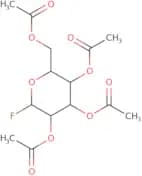
CAS :Azido-dPEG®35-Amine is a PEG compound with two different functional groups (also known as heterobifunctional). Unlike homobifunctional PEG compounds (same functional group on both ends), this type of compounds are more versatile as have two different anchor points. Azido-dPEG®35-Amine is used as a linker and spacer to add a PEG moiety, via pegylation (a bioconjugation technique) to proteins, peptides, oligonucleotides, small molecules and nanoparticles.Degré de pureté :Min. 95%Masse moléculaire :1,627.94 g/mol2,3,4,6-Tetra-O-Acetyl-α-D-Galactopyranosyl Fluoride
CAS :2,3,4,6-Tetra-O-acetyl-α-D-galactopyranosyl fluoride (TATA) is a fluorinated sugar that is used as a building block for the synthesis of peptides and other biochemicals. TATA has been shown to be an inhibitor of bacterial growth in medium containing glycosyl residues. This product has also been shown to have anti-inflammatory properties in animal models.
Formule :C14H19O9FDegré de pureté :Min. 95%Masse moléculaire :350.29 g/molAmino-dPEG®12-t-Butyl Ester
CAS :Amino-dPEG®12-t-Butyl Ester is a PEG compound with two different functional groups (also known as heterobifunctional). Unlike homobifunctional PEG compounds (same functional group on both ends), this type of compounds are more versatile as have two different anchor points. Amino-dPEG®12-t-Butyl Ester is used as a linker and spacer to add a PEG moiety, via pegylation (a bioconjugation technique) to proteins, peptides, oligonucleotides, small molecules and nanoparticles.Formule :C31H63NO14Degré de pureté :Min. 95%Masse moléculaire :673.83 g/molPropargyl-dPEG®1-NHS Ester
CAS :Propargyl-dPEG®1-NHS Ester is a PEG compound with two different functional groups (also known as heterobifunctional). Unlike homobifunctional PEG compounds (same functional group on both ends), this type of compounds are more versatile as have two different anchor points. Propargyl-dPEG®1-NHS Ester is used as a linker and spacer to add a PEG moiety, via pegylation (a bioconjugation technique) to proteins, peptides, oligonucleotides, small molecules and nanoparticles.Formule :C48H98N4O23Degré de pureté :Min. 95%Masse moléculaire :1,099.3 g/molParathyroid Hormone (Human, 1-34)
CAS :This product which is available as a 0.1mg vial is amino acids 1-34 of the 84 amino acid parathyroid hormone (PTH) and can be used as an adenylate cyclase and bone growth stimulating peptide. It is also an effective anabolic agent used in the treatment of some forms of Osteoporosis. PTH is a peptide hormone that is secreted from the parathyroid gland in the event of abnormal serum calcium levels and it ultimately regulates calcium and phosphate levels in the body. The PTH exerts its activity through binding to the G-protein coupled receptor type 1 PTH receptor, which activates adenylate cyclase or phospholipase C thus activating pathways involved in the mediation of bone resorption and bone formation. This product is suitable for life science applications.Formule :C181H291N55O51S2Degré de pureté :Min. 95%Masse moléculaire :4,117.7 g/mol



![Lysyl-[Hyp3]-Bradykinin, human](/_next/image/?url=https%3A%2Fstatic.cymitquimica.com%2Fproducts%2F3D%2Fthumb-webp%2FPBK-4191-V.webp&w=3840&q=75)








![Ac-Gly-Lys-OMe • AcOH [AGLME]](/_next/image/?url=https%3A%2Fstatic.cymitquimica.com%2Fproducts%2F3D%2Fthumb-webp%2FSGK-3058.webp&w=3840&q=75)






![Fmoc-Ser[Ac4Galß(1- >3)Ac2GalNAcα(1- >O)]-OH](/_next/image/?url=https%3A%2Fstatic.cymitquimica.com%2Fproducts%2F3D%2Fthumb-webp%2FCAR-22103.webp&w=3840&q=75)


![[Tyr34]-Parathyroid Hormone (Bovine, 7-34 amide)](/_next/image/?url=https%3A%2Fstatic.cymitquimica.com%2Fproducts%2F3D%2Fthumb-webp%2FPTH-4185-V.webp&w=3840&q=75)