Peptides
Sous-catégories appartenant à la catégorie "Peptides"
29729 produits trouvés pour "Peptides"
Melanocyte Associated Antigen gp 100 (17-25)
Custom research peptide; min purity 95%.Formule :C38H70N10O11Degré de pureté :Min. 95%Masse moléculaire :843.04 g/molSIVmac239-1
Custom research peptide; min purity 95%.
Formule :C65H115N21O23S1Degré de pureté :Min. 95%Masse moléculaire :1,590.83 g/molGlucagon (1-29), bovine, human, porcine
CAS :Glucagon (1-29), bovine, human, porcine, is a peptide hormone, which is derived from bovine, human, and porcine sources. It comprises 29 amino acids and functions as a crucial regulator of glucose metabolism by promoting the increase of blood glucose levels. The mode of action involves binding to receptors on liver cells, activating adenylate cyclase, and subsequently increasing intracellular cyclic AMP. This cascade triggers glycogenolysis and gluconeogenesis, leading to elevated blood glucose.In scientific research, Glucagon (1-29), bovine, human, porcine, is utilized to study metabolic pathways and the regulation of glucose homeostasis. Its applications extend to diabetes research, where it serves as a model for understanding glucagon's role in insulin resistance and pancreatic beta-cell dysfunction. Furthermore, this product is employed in the development of therapeutic strategies for hypoglycemic events experienced by diabetic patients. It also serves as a tool in pharmacological studies to elucidate receptor-ligand interactions and signaling mechanisms in different species.Formule :C153H225N43O49SDegré de pureté :Min. 95%Masse moléculaire :3,482.78 g/molMelanocyte Protein PMEL 17 (185-193) (human, bovine, mouse)
Custom research peptide; min purity 95%.Formule :C46H72N10O15Degré de pureté :Min. 95%Masse moléculaire :1,005.14 g/molMet-Enkephalin
Custom research peptide; min purity 95%.Formule :C27H35N5O7SDegré de pureté :Min. 95%Masse moléculaire :573.67 g/mol[Tyr34]-Parathyroid Hormone (Bovine, 1-34 Amide)
Amino acids 1-34 of the Pararthyroid Hormone (PTH) containing a tyrosine residue and disulfide bonds between Cys3-Cys14. This product is of Bovine source and available as a 0.5mg vial. Parathyroid hormone (PTH) is a peptide hormone that regulates calcium and phosphate homeostasis. PTH stimulates the production of active vitamin D, which increases calcium absorption from the gut and promotes reabsorption of calcium in the kidney. The inhibitory effect of PTH on renal phosphate excretion causes hyperphosphatemia and hypocalcemia. PTH also stimulates osteoblasts to produce more bone matrix, resulting in increased bone mineralization and density. It is used as a research tool to study protein interactions, activation, ligand binding, receptor regulation and ion channels. It has been shown to have effects on some cell types such as T-cells, B-cells, neutrophils and mast cells. In addition to its effects on bone metabolism, PTH also has many other functions including vasoconstriction, inhibition of food intake and stimulation of glucose production by the liver.Formule :C183H289N55O50S2Degré de pureté :Min. 95%Masse moléculaire :4,123.7 g/moldPEG®24-SATA (S-Acetyl-dPEG®24-NHS Ester)
dPEG®24-SATA (S-Acetyl-dPEG®24-NHS Ester) is a PEG compound with two different functional groups (also known as heterobifunctional). Unlike homobifunctional PEG compounds (same functional group on both ends), this type of compounds are more versatile as have two different anchor points. dPEG®24-SATA (S-Acetyl-dPEG®24-NHS Ester) is used as a linker and spacer to add a PEG moiety, via pegylation (a bioconjugation technique) to proteins, peptides, oligonucleotides, small molecules and nanoparticles.Degré de pureté :(%) Min. 97%Masse moléculaire :1,302.51 g/molArphamenine B
CAS :Arphamenine B is a potent, selective, and reversible inhibitor of the protein tyrosine phosphatase 1B (PTP1B). Arphamenine B binds to PTP1B with high affinity and specificity. It is a useful tool for studying protein-protein interactions and protein function. Arphamenine B can also be used as an activator or ligand for receptors, especially G-protein coupled receptors. This peptide has been shown to inhibit ion channels such as calcium channels, potassium channels, and sodium channels.
Formule :C16H24N4O4Degré de pureté :Min. 95%Masse moléculaire :336.39 g/molSPDP-dPEG®8-NHS Ester
SPDP-dPEG®8-NHS Ester is a PEG compound with two different functional groups (also known as heterobifunctional). Unlike homobifunctional PEG compounds (same functional group on both ends), this type of compounds are more versatile as have two different anchor points. SPDP-dPEG®8-NHS Ester is used as a linker and spacer to add a PEG moiety, via pegylation (a bioconjugation technique) to proteins, peptides, oligonucleotides, small molecules and nanoparticles.
Degré de pureté :Min. 95%Exendin (5-39)
Exendin (5-39) is a synthetic Mexican beaded lizard venom-derived peptide and is available as a 0.5mg vial. This product has has a GLP-1 Receptor antagonist application..Formule :C169H262N44O54SDegré de pureté :Min. 95%Masse moléculaire :3,806.2 g/molAmino-dPEG®12-Tris (-dPEG®24-t-butyl ester)3
Amino-dPEG®12-Tris (-dPEG®24-t-butyl ester)3 is a PEG compound with two different functional groups (also known as heterobifunctional). Unlike homobifunctional PEG compounds (same functional group on both ends), this type of compounds are more versatile as have two different anchor points. Amino-dPEG®12-Tris (-dPEG®24-t-butyl ester)3 is used as a linker and spacer to add a PEG moiety, via pegylation (a bioconjugation technique) to proteins, peptides, oligonucleotides, small molecules and nanoparticles.Formule :C205H403N5O97Degré de pureté :Min. 95%Masse moléculaire :4,490.37 g/molBiotin-dPEG®3-TFPA
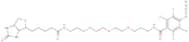
CAS :Biotin-dPEG®3-TFPA is a PEG compound with two different functional groups (also known as heterobifunctional). Unlike homobifunctional PEG compounds (same functional group on both ends), this type of compounds are more versatile as have two different anchor points. Biotin-dPEG®3-TFPA is used as a linker and spacer to add a PEG moiety, via pegylation (a bioconjugation technique) to proteins, peptides, oligonucleotides, small molecules and nanoparticles.Formule :C27H37F4N7O6SDegré de pureté :Min. 95%Masse moléculaire :663.69 g/molAmino-dPEG®11-ONH-t-boc
Amino-dPEG®11-ONH-t-boc is a PEG compound with two different functional groups (also known as heterobifunctional). Unlike homobifunctional PEG compounds (same functional group on both ends), this type of compounds are more versatile as have two different anchor points. Amino-dPEG®11-ONH-t-boc is used as a linker and spacer to add a PEG moiety, via pegylation (a bioconjugation technique) to proteins, peptides, oligonucleotides, small molecules and nanoparticles.
Formule :C29H60N2O14Degré de pureté :Min. 95%Masse moléculaire :660.79 g/molMethoxytrityl-S-dPEG®4-Acid
CAS :Methoxytrityl-S-dPEG®4-Acid is a PEG compound with two different functional groups (also known as heterobifunctional). Unlike homobifunctional PEG compounds (same functional group on both ends), this type of compounds are more versatile as have two different anchor points. Methoxytrityl-S-dPEG®4-Acid is used as a linker and spacer to add a PEG moiety, via pegylation (a bioconjugation technique) to proteins, peptides, oligonucleotides, small molecules and nanoparticles.
Formule :C51H103NO26Degré de pureté :Min. 95%Masse moléculaire :1,146.35 g/molHyaluronidase
Hyaluronidase is a glycosaminoglycan that is synthesized by the cells of the synovial membrane, and is used in the treatment of osteoarthritis. It has been shown to be potent inducers of apoptosis in cancer cell lines, with a high percentage of caspase-3 activation. Hyaluronidase also inhibits angiogenesis and induces cell death through an unknown mechanism. This enzyme functions as an extracellular matrix-degrading enzyme and has been shown to have anti-inflammatory properties.Degré de pureté :Min. 95%FRETS-25Pro (1 umol) (1umol)
FRETS-25Pro (1 umol) is a peptide that belongs to the group of activator. It has been shown to inhibit ion channels and protein interactions, as well as receptor and ligand. FRETS-25Pro (1 umol) has high purity, which will be useful in research tools such as antibody or cell biology.Degré de pureté :Min. 95%FGF 19 Human
FGF-19 is a protein that has been shown to be an activator of the FGF receptor. It also has been shown to act as a ligand for the FGF receptor, which is a cell surface-bound protein. This protein is involved in the regulation of ion channels and other cellular processes that are important for growth and development. Recent studies have demonstrated that FGF-19 can inhibit the binding of peptides to antibodies, which may have an effect on pharmacology and immunology.Degré de pureté :Min. 95%Prolactin Human
Prolactin is a protein that is secreted by the anterior pituitary gland. It has many functions, including the stimulation of milk production and the regulation of other hormones. Prolactin Human contains purified human prolactin in a lyophilized powder form. It can be reconstituted with sterile water for injection or bacteriostatic water for injection for use in research or therapeutic applications.Degré de pureté :Min. 95%Secretogranin III, human, recombinant
Secretogranin III, human, recombinant is a research peptide that is produced using Escherichia Coli. This protein is involved in various physiological processes and has been widely studied in the field of neuroscience. Secretogranin III plays a crucial role in the regulated secretion of hormones and neuropeptides. It is also involved in the formation and trafficking of secretory granules within cells. The recombinant form of Secretogranin III offers researchers a valuable tool for studying its functions and mechanisms in different biological systems.Degré de pureté :Min. 95%MAL-dPEG®12-Tris(-TFP Ester)3
MAL-dPEG®12-Tris(-TFP Ester)3 is a PEG compound with two different functional groups (also known as heterobifunctional). Unlike homobifunctional PEG compounds (same functional group on both ends), this type of compounds are more versatile as have two different anchor points. MAL-dPEG®12-Tris(-TFP Ester)3 is used as a linker and spacer to add a PEG moiety, via pegylation (a bioconjugation technique) to proteins, peptides, oligonucleotides, small molecules and nanoparticles.
Formule :C65H81F12N3O25Degré de pureté :Min. 95%Masse moléculaire :1,532.32 g/molATIII Light Tryptic Peptide Standard (4nmol)
Antithrombin III light tryptic peptide standard for protein identification and quantitation studies. Antithrombin III is a glycoprotein found in blood plasma and is involved in the regulation of the coagulation process.Degré de pureté :Min. 95%MAL-dPEG®24-Amido-dPEG®24-TFP Ester
MAL-dPEG®24-Amido-dPEG®24-TFP Ester is a PEG compound with two different functional groups (also known as heterobifunctional). Unlike homobifunctional PEG compounds (same functional group on both ends), this type of compounds are more versatile as have two different anchor points. MAL-dPEG®24-Amido-dPEG®24-TFP Ester is used as a linker and spacer to add a PEG moiety, via pegylation (a bioconjugation technique) to proteins, peptides, oligonucleotides, small molecules and nanoparticles.Formule :C115H209F4N3O54Degré de pureté :Min. 95%Masse moléculaire :2,573.87 g/molCIF1
CIF1 is a protein that in humans is encoded by the CIF1 gene. It belongs to the family of ion channels and ligand-gated ion channels. The channel is activated by acetylcholine, a neurotransmitter, and mediates fast synaptic transmission at neuromuscular junctions. CIF1 has been shown to bind to the nicotinic acetylcholine receptor (nAChR) subunit alpha-4/beta-2. This binding leads to inhibition of nAChR function, which may be useful for treatments of conditions such as Parkinson's disease or Alzheimer's disease.
Degré de pureté :Min. 95%Methoxytrityl-S-dPEG®8 Acid
CAS :Methoxytrityl-S-dPEG®8 Acid is a PEG compound with two different functional groups (also known as heterobifunctional). Unlike homobifunctional PEG compounds (same functional group on both ends), this type of compounds are more versatile as have two different anchor points. Methoxytrityl-S-dPEG®8 Acid is used as a linker and spacer to add a PEG moiety, via pegylation (a bioconjugation technique) to proteins, peptides, oligonucleotides, small molecules and nanoparticles.
Degré de pureté :Min. 95%Masse moléculaire :730.91 g/molTGF b 1, human, recombinant
TGF b 1 is a member of the transforming growth factor family and is a potent inhibitor of cell proliferation. Recombinant human TGF b 1 has been shown to inhibit the proliferation of various cell types in culture, including fibroblasts, endothelial cells, and smooth muscle cells. It also inhibits tumor growth in vivo. The binding site for TGF b 1 on target cells has been localized to the extracellular domain of type II receptor kinase, which is composed of three immunoglobulin-like domains. This protein can be used as an antibody or ligand to study protein interactions.Degré de pureté :>95% By Sds-Page.Des-Arg9-Bradykinin
Des-Arg9-Bradykinin is a peptide that is structurally related to bradykinin. It is synthesized by removing the first two amino acids from the N terminus of bradykinin and replacing them with an acetyl group. It has been shown to have potent activity against inflammatory cells in vitro, including mast cell degranulation and histamine release. Des-Arg9-Bradykinin also inhibits the production of nitric oxide, which may be responsible for its anti-inflammatory effects.Formule :C44H61N11O10•CH3COOH•3H2ODegré de pureté :Min. 95%Masse moléculaire :1,018.12 g/molG CSF Mouse
G CSF Mouse is a recombinant protein that is an inhibitor of the G-CSF receptor. It has been shown to inhibit the activity of ion channels in cells. G CSF Mouse is a research tool that can be used to study the biology of proteins and peptides. This product can also be used for antibody production and as a reagent for cell biology and pharmacology experiments.
Degré de pureté :Min. 95%Human s-IgA (Saliva) ELISA (1ea)
Human s-IgA (Saliva) ELISA (1ea) is a human IgA immunoglobulin that is found in saliva. It is used to detect the presence of antibodies against specific substances such as drugs, food, and other allergens.
Degré de pureté :Min. 95%IL 9 Mouse
IL-9 is a cytokine that is involved in the regulation of immune system. IL-9 signaling is essential for the induction of B cell responses and mast cell activation, and IL-9 is also expressed in epithelial cells. The IL-9 Mouse (CAS No. 207870-05-2) antibody reacts with IL-9 protein, which has a molecular weight of 18 kDa. This antibody detects an epitope corresponding to amino acids 1 to 13 of human Interleukin 9 (IL-9).
Degré de pureté :Min. 95%Hirudin Recombinant
Hirudin is a protein that has been isolated from the salivary gland of the medicinal leech. It is used to treat thrombosis, or blood clots, and works by neutralizing the activity of thrombin. Hirudin is an enzyme that contains a peptide sequence that binds to thrombin and prevents it from activating other factors in the blood clotting process. The recombinant form of hirudin is produced in Escherichia coli and can be purified using chromatographic techniques. This form of hirudin has increased biological activity than native hirudin due to its higher stability and solubility.Degré de pureté :>96% By Sds-Page And Rp-Hplc.Bis-dPEG®9-NHS Ester
CAS :Bis-dPEG®9-NHS Ester is a PEG polymer categorised as homobifunctional PEG (X-PEG X). Used as a linker, bis-dPEG®9-NHS Ester is used to attached PEG to proteins, peptides, oligonucleotides, nanoparticles and small molecules via pegylation, a bioconjugation technique.Formule :C34H46N4O7SDegré de pureté :(%) Min. 97%Masse moléculaire :654.82 g/molTFF3 Human
TFF3 is a human protein that is encoded by the TFF3 gene. The TFF3 protein binds to the TGF-β1 receptor and activates it, which causes downstream signaling in cells. It is also a ligand for the activator protein 2 (AP-2) transcription factor, which regulates cell proliferation and differentiation. TFF3 has been shown to inhibit ion channels and may play a role in regulating cellular functions such as metabolism, growth, or apoptosis.Degré de pureté :Min. 95%Insulin II (Mouse)
Insulin II is a peptide hormone that is secreted by the pancreas in response to elevated blood glucose levels. The insulin II receptor is a G protein-coupled receptor that binds insulin II and mediates its effects. Insulin II has been shown to inhibit ion channels, such as potassium channels, and activate other proteins, such as phospholipase C. Insulin II is used as a research tool for investigating protein interactions, receptor pharmacology, and ligand binding.Degré de pureté :Min. 95%Triosephosphate Isomerase 1 , human, recombinant
Triosephosphate isomerase 1 (TPI1) is a cytosolic enzyme that catalyzes the conversion of dihydroxyacetone phosphate and glyceraldehyde-3-phosphate to erythrose-4-phosphate and phosphoenolpyruvate. TPI1 has been shown to be an important regulator of glycolysis and gluconeogenesis, as well as in the maintenance of cellular redox state. This protein can act as both an inhibitor and activator depending on its interaction with other proteins. TPI1 has been implicated in the development of cancer, diabetes, Alzheimer's disease, Parkinson's disease, and atherosclerosis. TPI1 is also a research tool for studies into ion channels, receptor binding, and antibodies.Degré de pureté :Min. 95%Joining Peptide (Rat)
CAS :Joining peptide is a peptide that activates the receptor. It consists of two parts: a receptor-binding domain and a cell-penetrating domain. The receptor-binding domain is designed to bind to specific receptors on cells, while the cell-penetrating domain allows the peptide to cross the plasma membrane and penetrate into the cytoplasm. Joining peptide is used as an activator for ion channels and ligands for antibodies or receptors. Joining peptide can be used in research as a tool for investigating protein interactions, pharmacology, and cell biology.
Formule :C75H119N25O32Degré de pureté :Min. 95%Masse moléculaire :1,882.9 g/molAnti Galanin (15-29) (Rat) Serum
Anti Galanin (15-29) (Rat) Serum is a recombinant protein that is used as a research tool and has been shown to inhibit the activity of ion channels. It has been used to study the interactions between proteins, peptides, and receptors. This product has not been evaluated by the FDA for use in humans.
Degré de pureté :Min. 95%CNP-22, Human Antiserum
CNP-22 is a peptide that is an inhibitor of the protein interactions between the potassium channel Kv1.3 and its natural ligand, CNP-23, which is a member of the guanylate cyclase family of proteins. It has been shown to activate the potassium channel Kv1.2 in rat neurons, leading to increased neuronal excitability. CNP-22 has been used as a research tool for studying ion channels and receptors. The purified antibody can be used as an immunogen in preparing polyclonal or monoclonal antibodies against CNP-22.Degré de pureté :Min. 95%m-dPEG®12-DSPE
m-dPEG®12-DSPE is a PEG compound with two different functional groups (also known as heterobifunctional). Unlike homobifunctional PEG compounds (same functional group on both ends), this type of compounds are more versatile as have two different anchor points. m-dPEG®12-DSPE is used as a linker and spacer to add a PEG moiety, via pegylation (a bioconjugation technique) to proteins, peptides, oligonucleotides, small molecules and nanoparticles.Formule :C67H132NO21PDegré de pureté :Min. 95%Masse moléculaire :1,318.73 g/molSalusin-Beta, Human Antiserum
Salusin-beta is a peptide that is used as a research tool for the study of ion channels and protein interactions. Salusin-beta inhibits potassium currents in cells, which may be due to its ability to bind to receptor sites on the cell membrane. It also inhibits the activity of protein kinase C and calcium channels. Salusin-beta has been shown to be an inhibitor of protein interactions, such as those between α-synuclein and synaptotagmin, which are involved in Parkinson's disease.
Degré de pureté :Min. 95%BMP 2 Human, Monomer
BMP 2 is a member of the TGF-β superfamily and is a potent activator of bone morphogenetic protein receptors. It is a ligand for type I and II receptor complexes. BMPs play a crucial role in embryonic development, tissue repair, and maintenance of cartilage. BMP 2 has been shown to inhibit ion channels such as calcium-activated potassium channels. It also inhibits protein synthesis by inhibiting the activation of transcription factors like CREB, c-Jun N-terminal kinase (JNK), and p38 mitogen activated protein kinase (MAPK). BMP 2 also binds to antibodies that are specific for phosphorylated receptor tyrosine residues, which can be used as research tools in immunohistochemistry experiments or other applications.Degré de pureté :Min. 95%C-Peptide I (Mouse)-EIA Kit (1ea)
C-Peptide I (Mouse)-EIA Kit is a mouse monoclonal antibody specific to the C-terminus of human proinsulin. It is used in ELISA as a sandwich reagent.Degré de pureté :Min. 95%CPN-116
CPN-116 is an ion channel ligand that binds to the voltage-gated sodium channels of excitable cells. It is used for research purposes in pharmacology and cell biology. CPN-116 has been shown to activate the TRPM8 receptor, which is a ligand-gated cation channel expressed in cold sensing neurons. The purified peptide is supplied as a lyophilized powder containing at least 98% CPN-116 by weight.Degré de pureté :Min. 95%SPDP-dPEG®24-Acid
CAS :SPDP-dPEG®24-Acid is a PEG compound with two different functional groups (also known as heterobifunctional). Unlike homobifunctional PEG compounds (same functional group on both ends), this type of compounds are more versatile as have two different anchor points. SPDP-dPEG®24-Acid is used as a linker and spacer to add a PEG moiety, via pegylation (a bioconjugation technique) to proteins, peptides, oligonucleotides, small molecules and nanoparticles.Formule :C99H197N5O47Degré de pureté :Min. 95%Masse moléculaire :2,209.63 g/molIGHG3 MS Calibrator-2 (25nmol)
IGHG3 MS Calibrator-2 is a high purity, ready-to-use calibrator for Ion Torrent™ HDC Protein Sequencing. The calibrator contains the sequence of the g gamma-3 chain C region (IGHG3) with a tryptic peptide (TryptTides). IGHG3 MS Calibrator-2 is chemically synthesized and is suitable for proteomic studies. It is available in 25nmol quantities and can be used to develop your own proteomics tools or to perform protein sequencing.Degré de pureté :Min. 95%Insulin I (Mouse)
Insulin I is a mouse insulin. Insulin I is an ion channel activator, which means that it can open and close ion channels in the cell membrane to regulate the flow of ions into and out of cells. Insulin I is a receptor ligand, which means that it binds to a receptor on the surface of cells to activate or inhibit their function. Insulin I is used as a research tool for pharmacology and cell biology, as well as for the study of protein interactions. It has been shown to have high purity. Insulin I has also been shown to be an inhibitor of cellular growth, but not always an apoptosis inducer.
Degré de pureté :Min. 95%ALB, GIG20, GIG42 MS Calibrator (25nmol)
The ALB, GIG20, GIG42 MS Calibrator (25nmol) is a Proteomics Tools product that has been designed to support the identification of biologically active peptides in proteomics. The ALB, GIG20, GIG42 MS Calibrator (25nmol) is a tryptic peptide derived from human serum albumin and can be used as a precursor for the identification of other tryptic peptides in proteomic samples. The New England Peptide Company offers this product at a competitive price and with high quality.
Degré de pureté :Min. 95%Noggin Human
Noggin is a protein that is involved in the regulation of neuronal growth and development. It acts as a morphogen, binding to a receptor on the surface of cells and initiating signaling cascades that lead to changes in gene expression. Noggin binds to Retinoid-X-receptor (RXR) and the Ligand-binding domain of Notch1. These interactions may be important for the regulation of CNS cells, such as neurons and glial cells. The protein has been shown to have a role in synaptic plasticity, axonal guidance, and synaptogenesis. Noggin has also been shown to be an inhibitor of cell proliferation and an activator of cell differentiation.Degré de pureté :>95% By Sds-Page.MAL-dPEG®4-Lys(t-Boc)-NH-m-dPEG®24
MAL-dPEG®4-Lys(t-Boc)-NH-m-dPEG®24 is a peptide containing polyethylene glycol (PEG) as spacer to alter their pharmacokinetic properties and pharmodynamics.
Formule :C78H147N5O35Degré de pureté :Min. 95%Masse moléculaire :1,715.01 g/mol







![[Tyr34]-Parathyroid Hormone (Bovine, 1-34 Amide)](/_next/image/?url=https%3A%2Fstatic.cymitquimica.com%2Fproducts%2F3D%2Fthumb-webp%2FPTH-4179-V.webp&w=3840&q=75)