Peptides
Sous-catégories appartenant à la catégorie "Peptides"
29729 produits trouvés pour "Peptides"
t-boc-N-Amido-dPEG®12-OH
CAS :t-boc-N-Amido-dPEG®12-OH is a PEG polymer categorised as monofunctional (OH-PEG-X). Used as a linker, t-boc-N-amido-dPEG®12-OH is used to attached PEG to proteins, peptides, oligonucleotides, nanoparticles and small molecules via pegylation, a bioconjugation technique.
Formule :C29H59NO14Degré de pureté :Min. 95%Masse moléculaire :645.78 g/molAmino-dPEG®24-t-Butyl Ester
CAS :Amino-dPEG®24-t-Butyl Ester is a PEG compound with two different functional groups (also known as heterobifunctional). Unlike homobifunctional PEG compounds (same functional group on both ends), this type of compounds are more versatile as have two different anchor points. Amino-dPEG®24-t-Butyl Ester is used as a linker and spacer to add a PEG moiety, via pegylation (a bioconjugation technique) to proteins, peptides, oligonucleotides, small molecules and nanoparticles.
Formule :C55H111NO26Degré de pureté :Min. 95%Masse moléculaire :1,202.46 g/molSARS Spike (14-1195)
SARS Coronavirus is an enveloped virus containing 3 outer structural proteins, namely the membrane (M), envelope (E), and spike (S) proteins. Spike (S)-glycoprotein of the virus interacts with a cellular receptor and mediates membrane fusion to allow viral entry into susceptible target cells. Accordingly, S-protein takes part in virus infection cycle and is the primary target of neutralizing antibodies. SARS Spike is produced in Sf9 Baculovirus cells and is a single, glycosylated polypeptide chain containing 1188 amino acids (14-1195 aa) and having a molecular mass of 131.9kDa.SARS Spike is fused to a 6 amino acid His tag at C-terminus and purified by proprietary chromatographic techniques. The formulation of the SARS Spike (14-1195) solution (0.25mg/ml) contains Phosphate-Buffered Saline (pH 7.4) and 10% Glycerol. Its biological activity has been measured by its binding ability in a functional ELISA with Human ACE-2. For long term storage it is recommended to add a carrier protein (0.1% HSA or BSA). One-Letter Formula: SDLDRCTTFD DVQAPNYTQH TSSMRGVYYP DEIFRSDTLY LTQDLFLPFY SNVTGFHTIN HTFGNPVIPF KDGIYFAATE KSNVVRGWVF GSTMNNKSQS VIIINNSTNV VIRACNFELC DNPFFAVSKP MGTQTHTMIF DNAFNCTFEY ISDAFSLDVS EKSGNFKHLR EFVFKNKDGF LYVYKGYQPI DVVRDLPSGF NTLKPIFKLP LGINITNFRA ILTAFSPAQD IWGTSAAAYF VGYLKPTTFM LKYDENGTIT DAVDCSQNPL AELKCSVKSF EIDKGIYQTS NFRVVPSGDV VRFPNITNLC PFGEVFNATK FPSVYAWERK KISNCVADYS VLYNSTFFST FKCYGVSATK LNDLCFSNVY ADSFVVKGDD VRQIAPGQTG VIADYNYKLP DDFMGCVLAW NTRNIDATST GNYNYKYRYL RHGKLRPFER DISNVPFSPD GKPCTPPALN CYWPLNDYGF YTTTGIGYQP YRVVVLSFEL LNAPATVCGP KLSTDLIKNQ CVNFNFNGLT GTGVLTPSSK RFQPFQQFGR DVSDFTDSVR DPKTSEILDI SPCAFGGVSV ITPGTNASSE VAVLYQDVNC TDVSTAIHAD QLTPAWRIYS TGNNVFQTQA GCLIGAEHVD TSYECDIPIG AGICASYHTV SLLRSTSQKS IVAYTMSLGA DSSIAYSNNT IAIPTNFSIS ITTEVMPVSM AKTSVDCNMY ICGDSTECAN LLLQYGSFCT QLNRALSGIA AEQDRNTREV FAQVKQMYKT PTLKYFGGFN FSQILPDPLK PTKRSFIEDL LFNKVTLADA GFMKQYGECL GDINARDLIC AQKFNGLTVL PPLLTDDMIA AYTAALVSGT ATAGWTFGAG AALQIPFAMQ MAYRFNGIGV TQNVLYENQK QIANQFNKAI SQIQESLTTT STALGKLQDV VNQNAQALNT LVKQLSSNFG AISSVLNDIL SRLDKVEAEV QIDRLITGRL QSLQTYVTQQ LIRAAEIRAS ANLAATKMSE CVLGQSKRVD FCGKGYHLMS FPQAAPHGVV FLHVTYVPSQ ERNFTTAPAI CHEGKAYFPR EGVFVFNGTS WFITQRNFFS PQIITTDNTF VSGNCDVVIG IINNTVYDPL QPELDSFKEE LDKYFKNHTS PDVDLGDISG INASVVNIQK EIDRLNEVAK NLNESLIDLQ ELGKYEQYIK WPHHHHHHDegré de pureté :Min. 95%m-dPEG®48-MAL
CAS :m-dPEG®48-MAL is a PEG compound with two different functional groups (also known as heterobifunctional). Unlike homobifunctional PEG compounds (same functional group on both ends), this type of compounds are more versatile as have two different anchor points. m-dPEG®48-MAL is used as a linker and spacer to add a PEG moiety, via pegylation (a bioconjugation technique) to proteins, peptides, oligonucleotides, small molecules and nanoparticles.
Formule :C104H202N2O51Degré de pureté :Min. 95%Masse moléculaire :2,296.7 g/molDes-Arg10-Kallidin
CAS :Produit contrôléKallidin is a peptide that is found in the venom of the Brazilian pit viper (Bothrops jararaca). It has been shown to activate ion channels and receptors. Des-Arg10-Kallidin is a research tool that can be used in cell biology, pharmacology, and life science research. This peptide binds to antibodies and creates an ion channel when it binds to a receptor. Kallidin also inhibits protein interactions by binding to the active site of proteases such as thrombin, trypsin, and cathepsin B. The high purity of this peptide makes it ideal for use in pharmaceuticals.Formule :C50H73N13O11Degré de pureté :Min. 95%Masse moléculaire :1,032.2 g/molEpoxomicin
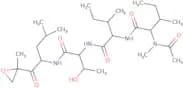
CAS :Epoxomicin is an activator that binds to the ligand-binding site of a receptor. It has been used as a research tool in cell biology, pharmacology, and immunology. Epoxomicin has been shown to inhibit ion channels by binding to them and blocking their activity. This property makes epoxomicin a good candidate for the treatment of epilepsy. Epoxomicin also inhibits protein synthesis through inhibition of ribosomal S6 kinase, which is involved in signal transduction pathways.
Formule :C28H50N4O7Degré de pureté :Min. 95%Masse moléculaire :554.72 g/molBis-dPEG®13-Acid
CAS :Bis-dPEG®13-Acid is a PEG polymer categorised as homobifunctional PEG (X-PEG X). Used as a linker, bis-dPEG®13-Acid is used to attached PEG to proteins, peptides, oligonucleotides, nanoparticles and small molecules via pegylation, a bioconjugation technique.
Formule :C30H58O17Degré de pureté :Min. 95%Masse moléculaire :690.77 g/molThiol-dPEG®4-Acid
CAS :Thiol-dPEG®4-Acid is a PEG compound with two different functional groups (also known as heterobifunctional). Unlike homobifunctional PEG compounds (same functional group on both ends), this type of compounds are more versatile as have two different anchor points. Thiol-dPEG®4-Acid is used as a linker and spacer to add a PEG moiety, via pegylation (a bioconjugation technique) to proteins, peptides, oligonucleotides, small molecules and nanoparticles.Degré de pureté :Min. 95%Masse moléculaire :282.35 g/molPhe-AMC
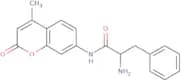
CAS :Phen-AMC is a potent inhibitor of the enzyme acetylcholinesterase (AChE), which catalyzes the breakdown of the neurotransmitter acetylcholine. Phen-AMC is used as a research tool to study protein interactions, activator, and ligand binding. This inhibitor also has been shown to activate nicotinic receptors, ion channels, and antibodies.
Formule :C19H18N2O3Degré de pureté :Min. 95%Masse moléculaire :322.36 g/molBeta-Endorphin (Human)
CAS :Human beta-endorphin is an opioid receptor agonist that belongs to the group of endogenous opioids. It is released by the pituitary gland and binds to receptors in the brain, where it stimulates the release of dopamine, which acts on many regions of the brain. Beta-endorphin has been used as a research tool for its ability to activate opioid receptors and study ligand-receptor interactions. This protein has also been used as a tool for studying ion channels, cell biology, pharmacology, and protein interactions. This product is available as an 0.5mg vial.Formule :C158H251N39O46SDegré de pureté :Min. 95%Masse moléculaire :3,465 g/molBAM-12P
CAS :BAM-12P is a peptide that binds to the extracellular domain of the CXCR4 chemokine receptor. It is an inhibitor of this receptor, and has been shown to inhibit HIV-1 infection in vitro. BAM-12P has also been shown to act as an activator of the CXCR4 receptor in some cell lines, and can be used as a research tool for studying the effects of ligands on receptors. BAM-12P is chemically synthesized with high purity and its CAS number is 75513-71-2. It was isolated from the baculovirus expression system.
Formule :C62H97N21O16SDegré de pureté :Min. 95%Masse moléculaire :1,424.6 g/molNocistatin (Human)
CAS :Nocistatin is a peptide that inhibits the activity of various types of ion channels. It does this by binding to their ligand-binding domain and preventing activation. Nocistatin is used as a research tool in pharmacology, cell biology, and biochemistry to study protein interactions and receptor function. Nocistatin has been shown to be an activator for the L-type calcium channel, suggesting that it may be useful for the treatment of conditions such as epilepsy or cardiac arrhythmias. Nocistatin was originally isolated from the venom of the tarantula Phoneutria nigriventer. It is purified from fish, bovine, or human sources.
Formule :C149H238N42O53S3Degré de pureté :Min. 95%Masse moléculaire :3,561.9 g/molAc-Ile-Glu-Thr-Asp-AMC
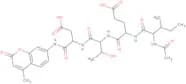
CAS :Ac-Ile-Glu-Thr-Asp-AMC is a high purity, water soluble peptide consisting of the amino acid sequence Ile-Glu-Thr-Asp. Ac-Ile-Glu-Thr-Asp-AMC has been shown to activate the nicotinic acetylcholine receptor and inhibit ligand binding to the NMDA glutamate receptor in rat cortical neurons. Ac-Ile-Glu-Thr-Asp AMC is also an inhibitor of voltage gated potassium channels and has been used as a research tool for studying ion channel function.Formule :C31H41N5O12Degré de pureté :Min. 95%Masse moléculaire :675.68 g/molGuanylin (Human)
CAS :Guanylin is a human gastrointestinal hormone which can be used to activate the transmembrane receptor Guanylate Cyclase C on the intestinal epithelial cells surface. This product contains disulfide bonds between Cys4-Cys12 and Cys7-Cys15 and is available as a 0.1mg vial.Formule :C58H87N15O21S4Degré de pureté :Min. 95%Masse moléculaire :1,458.7 g/mol[Pyr3]-Amyloid Beta-Protein (Human, 3-42)
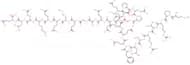
CAS :[Pyr3]-Amyloid Beta-Protein (Human, 3-42) is a fragment of the human amyloid beta protein that inhibits ion channels and ligand-activated receptors. It has been shown to be an inhibitor of ion channel activity in vitro. [Pyr3]-Amyloid Beta-Protein (Human, 3-42) is a synthetic peptide that can be used as a research tool for investigating the effects of amyloid beta protein on cell biology.Formule :C196H299N53O55SDegré de pureté :Min. 95%Masse moléculaire :4,309.9 g/mol2-Deoxy-2-Phthalimido-3,4,6-Tri-O-Acetyl-α-D-Glucopyranosyl Fluoride
CAS :2-Deoxy-2-Phthalimido-3,4,6-Tri-O-Acetyl-α-D-Glucopyranosyl Fluoride is a glycosyl compound that is used as a fluorinating agent. It reacts with proteins to form glycosyl fluorides by the action of fluoride ion, which introduces fluorine atoms into the carbohydrate side chains of proteins. This product is specifically designed for use in peptide synthesis. 2DGTGF may be used in the preparation of peptides for use in protein sequencing and mapping techniques.Formule :C20H20NO9FDegré de pureté :Min. 95%Masse moléculaire :437.37 g/molVIP (Human, Porcine)
CAS :VIP is a peptide that is an activator of cAMP-dependent protein kinase (PKA) and phospholipase C. It also inhibits the release of histamine from mast cells, stimulates gastric acid secretion, and causes vasodilation. VIP has been shown to interact with a number of proteins including ion channels and receptors. The peptide is a ligand for the neuropeptide Y receptor (NPY-R) and is involved in the regulation of appetite, immune responses, and blood pressure. VIP can be used as a research tool for studying protein interactions or as an inhibitor in pharmacological studies.Formule :C147H238N44O42SDegré de pureté :Min. 95%Masse moléculaire :3,325.8 g/molAmastatin
CAS :Amastatin is a natural protease inhibitor that has been shown to bind to the active site of serine proteases, such as trypsin and chymotrypsin. It also binds to other peptide substrates, such as angiotensin II, vasopressin and bradykinin. Amastatin is used in research as a tool for the study of protein interactions, receptor-ligand binding and ion channel activity. Amastatin is an activator of the high-affinity state of the beta-adrenergic receptor.Formule :C21H38N4O8Degré de pureté :Min. 95%Masse moléculaire :474.55 g/molAc-Val-Glu-Ile-Asp-H (aldehyde)
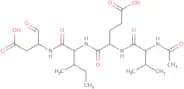
CAS :Ac-Val-Glu-Ile-Asp-H (aldehyde) is a synthetic peptide that is used as an inhibitor to study the effects of protein interactions. Ac-Val-Glu-Ile-Asp-H (aldehyde) binds to the active site of the enzyme, which prevents the enzyme from functioning and can be used as a research tool. Ac-Val-Glu-Ile-Asp-H (aldehyde) has been shown to activate some receptors and ligands, such as ion channels and antibodies.Formule :C22H36N4O9Degré de pureté :Min. 95%Masse moléculaire :500.54 g/molZ-Gly-Phe-NH2
CAS :Z-Gly-Phe-NH2 is a peptide that inhibits protein synthesis by binding to the ribosome. It has been shown to inhibit enzyme preparations containing peptides and proteins, such as hydrogen bond formation, phase transition temperature, uptake, and inhibitory effect. This molecule may be used in biochemical or molecular studies of protein synthesis. The uptake of Z-Gly-Phe-NH2 can be inhibited by ouabain binding. Z-Gly-Phe-NH2 also has a ca2+ response when calcium ionophores are applied to Xenopus oocytes.
Formule :C19H20N2O5Degré de pureté :Min. 95%Masse moléculaire :355.39 g/molOrexin-B (Human)
CAS :Orexin B, also known as hypocretin-2, is a neuropeptide that is produced by a small group of neurons in the hypothalamus, a region of the brain that plays a critical role in regulating various physiological functions, including sleep, appetite, and energy balance. Orexin B plays a role in promoting wakefulness and arousal and studies have shown that disruptions in the orexin system are associated with various sleep disorders, including narcolepsy and insomnia. In addition, orexin B has been shown to be involved in the regulation of appetite and energy metabolism, and is being explored as a potential target for the treatment of obesity and other metabolic disorders. Therefore, orexin B is an important neuropeptide and is an active area of research in neuroscience and medicine. This product is available as a 0.1mg vialFormule :C123H212N44O35SDegré de pureté :Min. 95%Masse moléculaire :2,899.3 g/molNHS-dPEG®24-Biotin
CAS :NHS-dPEG®24-Biotin is a PEG compound with two different functional groups (also known as heterobifunctional). Unlike homobifunctional PEG compounds (same functional group on both ends), this type of compounds are more versatile as have two different anchor points. NHS-dPEG®24-Biotin is used as a linker and spacer to add a PEG moiety, via pegylation (a bioconjugation technique) to proteins, peptides, oligonucleotides, small molecules and nanoparticles.Formule :C9H20O4SDegré de pureté :Min. 95%Masse moléculaire :224.32 g/molFibronectin Active Fragment (RGDS)
CAS :Fibronectin is an extracellular matrix protein that plays a critical role in cell adhesion, migration, and differentiation. Fibronectin subunits are composed of repeating units of three types of modules: type I, type II, and type III. The active fragment of fibronectin refers to a small peptide sequence within the type III modules of fibronectin that has been shown to have potent biological activity.
The fibronectin active fragment, also known as the cell-binding domain or RGD domain, is a short peptide sequence consisting of the amino acid sequence Arg-Gly-Asp (RGD). This peptide sequence interacts with cell surface receptors known as integrins, which are important for mediating cell adhesion, migration, and signaling.
The fibronectin active fragment has been extensively studied as a research tool to investigate the mechanisms of cell adhesion and migration. It has also been used in tissue engineering applications to promote cell attachment and proliferation on synthetic biomaterials.Formule :C15H27N7O8CH3COOH•2H2ODegré de pureté :Min. 95%Masse moléculaire :499.48 g/molUrotensin II (Human)
CAS :A potent vasoconstrictor, available in the hydrochloride form with disulfide bonds between Cys5-Cys10 and as a 0.5mg vial. Urotensin II (UT-II) is a peptide that is found in humans and other vertebrates and is involved in biological systems such as the nervous, endocrine, cardiovascular and renal. Like that of urotensin II-related peptide, urotensin II contains the hexapeptide -CYS-TYR-LYS-TRP-PHE-CYS- known as the core and this is crucial to its biological function. Urotensin II can also increase the concentration of intercellular calcium through binding to its G protein coupled receptor: urotensin-II receptor which causes the activation of Protein kinase C followed by the activation of Phospholipase C. UT-II is widely distributed throughout the body, with highest concentrations found in the cardiovascular system, particularly in the heart and blood vessels. UT-II has been shown to have a wide range of physiological effects in humans, including vasoconstriction, modulation of blood pressure, and stimulation of the release of aldosterone and vasopressin. In addition to its physiological effects, UT-II has also been implicated in the pathogenesis of various cardiovascular and metabolic disorders, including hypertension, heart failure, and diabetes. Inhibition of UT-II signaling has been suggested as a potential therapeutic target for these conditions.Formule :C64H85N13O18S2Degré de pureté :Min. 95%Masse moléculaire :1,388.6 g/molm-dPEG®36-Amine
CAS :m-dPEG®36-Amine is a PEG compound with two different functional groups (also known as heterobifunctional). Unlike homobifunctional PEG compounds (same functional group on both ends), this type of compounds are more versatile as have two different anchor points. m-dPEG®36-Amine is used as a linker and spacer to add a PEG moiety, via pegylation (a bioconjugation technique) to proteins, peptides, oligonucleotides, small molecules and nanoparticles.
Formule :C73H149NO36Degré de pureté :Min. 95%Masse moléculaire :1,616.95 g/molParathyroid Hormone (Human, 39-68)
CAS :Amino acids 39-68 of the Parathyroid Hormone (PTH) which is a peptide hormone that is secreted from the parathyroid gland in the event of abnormal serum calcium levels and it ultimately regulates calcium and phosphate levels in the body. The PTH exerts its activity through binding to the G-protein coupled receptor type 1 PTH receptor, which activates adenylate cyclase or phospholipase C thus activating pathways involved in the mediation of bone resorption and bone formation. This product is suitable for life science applications and is available as a 0.5mg vial.
Formule :C139H234N46O46Degré de pureté :Min. 95%Masse moléculaire :3,285.6 g/molNeuromedin S (Rat)
CAS :Neuromedin S (Rat) is a peptide that is a potent inhibitor of protein interactions. It binds to the extracellular domain of the receptor and blocks its interaction with the ligand. This can be used as a research tool for studying the role of proteins in cell biology, pharmacology, or ion channels. Neuromedin S (Rat) is a high-purity peptide with CAS No. 843782-19-4 that has been shown to inhibit ligand binding to receptors in vitro and in vivo. Neuromedin S (Rat) also inhibits agonist-induced activation of ion channels at micromolar concentrations and blocks voltage-gated sodium currents at nanomolar concentrations. It has been used to study the role of neurexins in transmission at synapses between neurons by blocking their interaction with neuroligins.Formule :C193H307N57O49SDegré de pureté :Min. 95%Masse moléculaire :4,241.9 g/molAdrenomedullin (Human, 22-52)
CAS :This product is an antagonist of adrenomedulin which is a vasodilator peptide hormone and also plays a role in the stimulation of angiogenesis which can be seen as a negative to human health as it helps tumors to extend their blood supply. This product is available as a 0.5mg vial.Formule :C159H252N46O48Degré de pureté :Min. 95%Masse moléculaire :3,576 g/molAzido-dPEG®12-acid
CAS :Azido-dPEG®12-acid is a PEG compound with two different functional groups (also known as heterobifunctional). Unlike homobifunctional PEG compounds (same functional group on both ends), this type of compounds are more versatile as have two different anchor points. Azido-dPEG®12-acid is used as a linker and spacer to add a PEG moiety, via pegylation (a bioconjugation technique) to proteins, peptides, oligonucleotides, small molecules and nanoparticles.Formule :C73H147N3O36Degré de pureté :Min. 95%Masse moléculaire :1,642.95 g/molNHS-dPEG®4-Biotinidase Resistant Biotin
CAS :NHS-dPEG®4-Biotinidase Resistant Biotin is a PEG compound with two different functional groups (also known as heterobifunctional). Unlike homobifunctional PEG compounds (same functional group on both ends), this type of compounds are more versatile as have two different anchor points. NHS-dPEG®4-Biotinidase Resistant Biotin is used as a linker and spacer to add a PEG moiety, via pegylation (a bioconjugation technique) to proteins, peptides, oligonucleotides, small molecules and nanoparticles.Formule :C15H32N2O5Degré de pureté :Min. 95%Masse moléculaire :160.21 g/molm-dPEG®7-Tosylate
CAS :m-dPEG®7-Tosylate is a PEG compound with two different functional groups (also known as heterobifunctional). Unlike homobifunctional PEG compounds (same functional group on both ends), this type of compounds are more versatile as have two different anchor points. m-dPEG®7-Tosylate is used as a linker and spacer to add a PEG moiety, via pegylation (a bioconjugation technique) to proteins, peptides, oligonucleotides, small molecules and nanoparticles.
Formule :C27H45NO12Degré de pureté :Min. 95%Masse moléculaire :575.65 g/molBis-dPEG®25-NHS Ester
CAS :Bis-dPEG®25-NHS Ester is a PEG polymer categorised as homobifunctional PEG (X-PEG X). Used as a linker, bis-dPEG®25-NHS Ester is used to attached PEG to proteins, peptides, oligonucleotides, nanoparticles and small molecules via pegylation, a bioconjugation technique.Formule :C62H112N2O33Degré de pureté :Min. 95%Masse moléculaire :1,413.55 g/molBiotin-dPEG®11-Lipoamide
CAS :Biotin-dPEG®11-Lipoamide is a PEG compound with two different functional groups (also known as heterobifunctional). Unlike homobifunctional PEG compounds (same functional group on both ends), this type of compounds are more versatile as have two different anchor points. Biotin-dPEG®11-Lipoamide is used as a linker and spacer to add a PEG moiety, via pegylation (a bioconjugation technique) to proteins, peptides, oligonucleotides, small molecules and nanoparticles.
Formule :C42H78N4O14SDegré de pureté :Min. 95%Masse moléculaire :959.28 g/molß-Casomorphin-7 (Bovine)
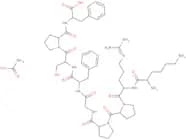
CAS :β-Casomorphin-7 (Bovine) is an opioid peptide that belongs to the class of casomorphins. It is a fragment of the larger ß-casomorphin molecule, which is derived from the breakdown of proline-rich proteins in cow milk. β-Casomorphin-7 has been shown to have potent bronchial and renal proximal effects in rats, as well as analgesic properties. It also inhibits aminopeptidase activity in lung explants and muscle tissues, which may be due to its ability to act on opioid receptors. β-Casomorphin-7 also has been shown to inhibit growth factor production and increase the production of factor β1 in a rat model of pulmonary fibrosis. This may be due to its ability to inhibit inflammation by acting on inflammatory cells such as macrophages or neutrophils.
Formule :C41H55N7O9•4H2ODegré de pureté :Min. 95%Masse moléculaire :861.98 g/molProlactin-Releasing Peptide (Rat)
CAS :Prolactin-Releasing Peptide (Rat) is a cyclic 18-amino acid peptide that is an inhibitor of the prolactin releasing hormone. It has been shown to have a high specificity for the prolactin releasing hormone receptor and has been used as a research tool in cell biology and pharmacology. This peptide can be used to study protein interactions, which may be due to its ability to act as an activator or ligand for receptors. Prolactin-Releasing Peptide (Rat) is also able to inhibit ion channels, such as voltage-gated potassium channels and calcium channels. This peptide can also be used to generate antibodies against the prolactin releasing hormone receptor.
Formule :C156H242N54O43SDegré de pureté :Min. 95%Masse moléculaire :3,594 g/molBis-dPEG®7-PFP Ester
CAS :Bis-dPEG®7-PFP Ester is a PEG polymer categorised as homobifunctional PEG (X-PEG X). Used as a linker, bis-dPEG®7-PFP Ester is used to attached PEG to proteins, peptides, oligonucleotides, nanoparticles and small molecules via pegylation, a bioconjugation technique.
Formule :C30H32F10O11Degré de pureté :Min. 95%Masse moléculaire :758.55 g/molCRF (Ovine)
CAS :Corticotropin Releasing Factor (CRF) is a peptide hormone involved in the regulation of the neuroendocrine system, the hypothalamic-pituitary-adrenal (HPA) axis. The hypothalamus releases CRF during stress and in turn CRF stimulates the production of stress hormones such as glucocorticoids and adrenocorticotropin (ACTH). A negative feedback loop is created as glucocorticoids then prevents further endocrine activity exhibited by the pituitary gland and hypothalamus. Interestingly in patients with depression, it has been found that the hypothalamic-pituitary adrenal axis is over stimulated thus increased production of CRF occurs resulting in depression symptoms. Furthermore studies have shown the expression of CRF receptors in glial cells and T-cells and elevated levels of CRF and glucocorticoids prevent T-cell proliferation. During stress cytokines can also stimulate the secretion of CRF. However CRF can also regulate these cytokines. CRF has the potential to be used in the research into depression treatments.
This product is available as a 0.1mg vial.Formule :C205H339N59O63SDegré de pureté :Min. 95%Masse moléculaire :4,670.3 g/molNojirimycin Bisulfite
CAS :Nojirimycin Bisulfite is a potent inhibitor of protein synthesis. It is a receptor-selective ligand that binds to the extracellular domain of the epidermal growth factor (EGF) receptor, thereby inhibiting receptor signaling. Nojirimycin Bisulfite has also been shown to inhibit ion channels and ligand-gated ion channels. Nojirimycin Bisulfite has been shown to bind to both peptides and antibodies, which makes it a useful research tool for studying protein interactions.
Formule :C6H13NO7SDegré de pureté :Min. 95%Masse moléculaire :243.23 g/molMargatoxin
CAS :Margatoxin is a research tool that has been shown to activate the nicotinic acetylcholine receptor. It binds to the ligand-binding site of the receptor and blocks ion channel activity. Margatoxin is a small molecule with high purity that can be used as a tool to study protein interactions and biological functions. This compound is also an inhibitor of peptide binding, which can be used in pharmacology studies.
Formule :C178H286N52O50S7Degré de pureté :Min. 95%Masse moléculaire :4,178.9 g/molCoV-2 N (127 a.a.)
A human infecting coronavirus (viral pneumonia) called 2019 novel coronavirus, 2019-nCoV was found in the fish market at the city of Wuhan, Hubei province of China on December 2019. The 2019-nCoV shares an 87% identity to the 2 bat-derived severe acute respiratory syndrome 2018 SARS-CoV-2 located in Zhoushan of eastern China. 2019-nCoV has an analogous receptor-BD-structure to that of 2018 SARS-CoV, even though there is a.a. diversity so thus the 2019-nCoV might bind to ACE2 receptor protein (angiotensin-converting enzyme 2) in humans. While bats are possibly the host of 2019-nCoV, researchers suspect that animal from the ocean sold at the seafood market was an intermediate host. RSCU analysis proposes that the 2019-nCoV is a recombinant within the viral spike glycoprotein between the bat coronavirus and an unknown coronavirus. The E. coli derived recombinant protein contains the Coronavirus 2019 C-terminal region 127 a.a. from the Nucleocapsid protein and fused to GST-6xHis tag at N-terminal and having a M.W. of 39.4 kDa. It has been purified using PNTA Sepharose-Affinity Purification. The CoV-2 Nucleocapsid protein solution is supplied in 50mM Tris-HCl pH 8, 1M Urea, and 50% Glycerol.
Degré de pureté :Min. 95%Beta-Neo-Endorphin (Porcine)
CAS :Beta-Neo-Endorphin is an opioid peptide which binds with high affinity to μ, δ and κ-receptors and has been found to be involved in the modulation of pain, epidermal nerve fiber regulation and skin homeostasis. It is further demonstrated the ability to in human keratinocytes, stimulate wound healing. Beta-neoendorphin is derived from prodynorphin when it is proteolytically cleaved.
This product is available as a 0.5mg vials and is sourced from Porcine.Formule :C54H77N13O12Degré de pureté :Min. 95%Masse moléculaire :1,100.3 g/molGIP (Human)
CAS :GIP is a peptide that is produced by the cells of the small intestine. GIP has been shown to be an inhibitor of insulin secretion and, in turn, may help regulate glucose levels. It also regulates growth hormone release in response to food intake. GIP acts as a ligand for the receptor known as the “gastric inhibitory polypeptide receptor” which is found on pancreatic beta cells and duodenal L-cells. This protein has been shown to activate ion channels and regulate their activity. The GIP receptor is also expressed on certain types of cancer cells, including breast cancer and colorectal cancer. Antibodies have been generated against this protein for use in research tools such as Western blotting or immunohistochemistry.Formule :C226H338N60O66SDegré de pureté :Min. 95%Masse moléculaire :4,983.5 g/molIL 1 α Human
IL-1α is a cytokine protein that has been shown to be involved in the immune system. IL-1α is an activator of the receptor and is also a ligand for it. The protein has been shown to activate ion channels, which are proteins that allow ions to pass through either by diffusion or by facilitated transport. This activation causes cells to produce more hydrogen ions, which leads to an increase in the acidity of the cell. IL-1α has also been shown to inhibit cell proliferation and induce apoptosis.
Degré de pureté :Min. 95%Suc-Ala-Ala-Ala-pNA
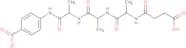
CAS :Suc-Ala-Ala-Ala-pNA is a peptide that binds to the acetylcholine receptor and activates it. This peptide has been shown to have potential as a research tool for studying the pharmacology of acetylcholine receptors in vitro. It has also been used as an inhibitor of neuronal ion channels, such as potassium channels, that are involved in the transmission of nerve impulses. Suc-Ala-Ala-Ala-pNA is not suitable for use in humans because it would be broken down by proteases before it could reach its target, but this peptide has applications in cell biology and neuroscience.Formule :C19H25N5O8Degré de pureté :Min. 95%Masse moléculaire :451.43 g/molMAL-dPEG®4-Acid
CAS :MAL-dPEG®4-Acid is a PEG compound with two different functional groups (also known as heterobifunctional). Unlike homobifunctional PEG compounds (same functional group on both ends), this type of compounds are more versatile as have two different anchor points. MAL-dPEG®4-Acid is used as a linker and spacer to add a PEG moiety, via pegylation (a bioconjugation technique) to proteins, peptides, oligonucleotides, small molecules and nanoparticles.
Formule :C18H28N2O9Degré de pureté :Min. 95%Masse moléculaire :315.39 g/molLys-AMC
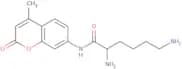
CAS :Lys-AMC is a potent and selective activator of the TRPM2 ion channel. It binds to the extracellular loop of the TRPM2 receptor, which is located in the membrane of cells. Lys-AMC activates TRPM2 by binding to its extracellular loop and opening it, allowing calcium ions to enter the cell. This leads to a change in cellular activity, such as increased production of reactive oxygen species or altered gene expression. Lys-AMC can be used for research purposes or as an inhibitor of TRPM2 channels.br>br> Lys-AMC is a high purity product with a CAS number of 92605-76-0. It has been shown to bind specifically and selectively to TRPM2 receptors without any cross reactivity with other proteins, making it an ideal tool for research purposes. Lys-AMC can be used as an antibody or cell biology reagent that can inhibit TRPM2 channels.br>br>Formule :C16H21N3O3Degré de pureté :Min. 95%Masse moléculaire :303.36 g/molLH-RH (Human)
CAS :Produit contrôléLuteinizing hormone-releasing hormone (LH-RH), also known as Gonadotropin-Releasing Hormone (GnRH), stimulates the pituitary gland’s production and secretion of luteinizing hormone and follicle-stimulating hormone. LHRH is a decapeptide and is itself secreted by the hypothalamus. It is crucial for human reproduction and is heavily involved in the regulation of ovulation, sexual development and the onset of puberty.
When secreted, GNRH binds to the G-protein coupled receptor, gonadotropin-releasing hormone receptor (GNRHR) located on pituitary gonadotrophic cells in the anterior pituitary.
Medically, the understanding of GnRH is paramount, due to its involvement in the pathogensis of central hypogonadism. Any obstructions to its function in the reproductive system can result in the development of human pathologically conditions. It is important to note that analogs of GnRH can be used in pharmacology, in the treatment of gynaecological diseases, through blocking the secretion of estrogen secretion from the ovary. Additional GNRH analogs can be used to treat ovarian cancer, hormone-dependent cancers, endometriosis and modality in infertility. Therefore this product is a useful research tool.Formule :C55H75N17O13•2CH3COOHDegré de pureté :Min. 95%Masse moléculaire :1,302.4 g/molAc-Ile-Glu-Thr-Asp-H (aldehyde)
CAS :Ac-Ile-Glu-Thr-Asp-H (aldehyde) is a peptide fragment of the human calcitonin gene. It is a research tool used in immunology and cell biology. Ac-Ile-Glu-Thr-Asp-H (aldehyde) binds to different types of ion channels, including ligand gated ion channels, voltage gated ion channels, and receptor activated ion channels. Ac-Ile-Glu-Thr-Asp-H (aldehyde) can also bind to membrane receptors such as the muscarinic acetylcholine receptor and the alpha adrenergic receptor. Acetylcholine is a neurotransmitter that activates the muscarinic acetylcholine receptor, which leads to an increase in intracellular levels of cyclic AMP. Alpha adrenergic receptors are located on the surface of blood vessels and activate vasoconstriction by inhibiting adenylyl cyclase activity.
Formule :C21H34N4O10Degré de pureté :Min. 95%Masse moléculaire :502.52 g/molAmino-dPEG®36-t-Butyl Ester
CAS :Amino-dPEG®36-t-Butyl Ester is a PEG compound with two different functional groups (also known as heterobifunctional). Unlike homobifunctional PEG compounds (same functional group on both ends), this type of compounds are more versatile as have two different anchor points. Amino-dPEG®36-t-Butyl Ester is used as a linker and spacer to add a PEG moiety, via pegylation (a bioconjugation technique) to proteins, peptides, oligonucleotides, small molecules and nanoparticles.Formule :C79H159NO38Degré de pureté :Min. 95%Masse moléculaire :1,731.09 g/molAc-Arg-OMe • HCl
CAS :Ac-Arg-OMe • HCl is a labile peptide that has been shown to be homologous to the human Arg-Gly-Asp (RGD) sequence. Ac-Arg-OMe • HCl is activated by trypsin and trypsin-like proteases, but inactivated by hemolytic activity and conformation. Ac-Arg-OMe • HCl is an enzyme substrate for peptidases such as trypsin and trypsin like proteases. It has been shown to be a molecule that interacts with various proteins, including hemoglobin.
Formule :C9H18N4O3•HCIDegré de pureté :Min. 95%Masse moléculaire :266.72 g/mol






![[Pyr3]-Amyloid Beta-Protein (Human, 3-42)](/_next/image/?url=https%3A%2Fstatic.cymitquimica.com%2Fproducts%2F3D%2Fthumb-webp%2FPAB-4367-V.webp&w=3840&q=75)