Peptides
Les peptides sont des chaînes courtes d'acides aminés liées par des liaisons peptidiques, jouant un rôle essentiel en tant que molécules biologiques dans divers processus cellulaires. Ils fonctionnent comme hormones, neurotransmetteurs et molécules de signalisation, et sont largement utilisés dans les applications thérapeutiques et diagnostiques. Les peptides sont également cruciaux dans la recherche pour étudier les interactions protéiques, les activités enzymatiques et les voies de signalisation cellulaire. Chez CymitQuimica, nous proposons une large sélection de peptides de haute qualité pour soutenir vos besoins en recherche et développement en biotechnologie et en pharmacie.
Sous-catégories appartenant à la catégorie "Peptides"
30311 produits trouvés pour "Peptides"
Trier par
Degré de pureté (%)
0
100
|
0
|
50
|
90
|
95
|
100
m-dPEG®4-OH
CAS :<p>m-dPEG®4-OH is a PEG polymer categorised as monofunctional (OH-PEG-X). Used as a linker, m-dPEG®4-OH is used to attached PEG to proteins, peptides, oligonucleotides, nanoparticles and small molecules via pegylation, a bioconjugation technique.</p>Formule :C19H30N2O7S2Degré de pureté :Min. 95%Masse moléculaire :462.58 g/molCarboxyl-dPEG®4-(m-dPEG®4)3
CAS :<p>Carboxyl-dPEG®4-(m-dPEG®4)3 is a PEG compound with two different functional groups (also known as heterobifunctional). Unlike homobifunctional PEG compounds (same functional group on both ends), this type of compounds are more versatile as have two different anchor points. Carboxyl-dPEG®4-(m-dPEG®4)3 is used as a linker and spacer to add a PEG moiety, via pegylation (a bioconjugation technique) to proteins, peptides, oligonucleotides, small molecules and nanoparticles.</p>Formule :C180H350N6O88Degré de pureté :Min. 95%Masse moléculaire :4,006.69 g/molXenin-25 (Human)
CAS :<p>Xenin-25 is a peptide that is an activator of ion channels. It is used as a research tool and in antibody production to study the binding of antibodies to their receptors. Xenin-25 can be used to inhibit protein interactions, such as receptor-ligand or enzyme-substrate interactions. It has been shown to have pharmacological effects on ligand binding and ion channel activation, which may be due to its ability to bind to proteins with high affinity and specificity.</p>Formule :C139H224N38O32SDegré de pureté :Min. 95%Masse moléculaire :2,971.6 g/molBis-dPEG®3-PFP Ester
CAS :<p>Bis-dPEG®3-PFP Ester is a PEG polymer categorised as homobifunctional PEG (X-PEG X). Used as a linker, bis-dPEG®3-PFP Ester is used to attached PEG to proteins, peptides, oligonucleotides, nanoparticles and small molecules via pegylation, a bioconjugation technique.</p>Formule :C22H16F10O7Degré de pureté :Min. 95%Masse moléculaire :582.34 g/molElastatinal
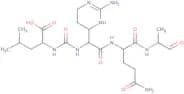
CAS :<p>Elastatinal is a research tool that is used to activate cells by binding to a receptor on the cell surface. Elastatinal belongs to the Ligand class of compounds and has been shown to bind to various ion channels and receptors, including cell surface receptors. This ligand binds with high affinity to the α-adrenergic receptor (α-AR) and activates cells that express this receptor. It also inhibits the binding of other ligands, such as bradykinin, which may be useful in pharmacology. Elastatinal is an inhibitor of protein interactions, which can be used in Cell Biology studies.</p>Formule :C21H36N8O7Degré de pureté :Min. 95%Masse moléculaire :512.56 g/molGlucagon-like Peptide 1 (Human, 7-36 Amide)
CAS :Glucagon-like peptide 1 (GLP-1) is a peptide hormone that belongs to the glucagon family. It is a 36 amino acid polypeptide and is naturally synthesized in the ileum of humans, pigs, and cows. GLP-1 is an activator of ion channels, which are protein structures that regulate the flow of ions across cell membranes. This hormone also has been shown to inhibit the activity of protein interactions at the cell membrane or ligand binding to receptors.Formule :C149H226N40O45Degré de pureté :Min. 95%Masse moléculaire :3,297.6 g/molNPY (Human, Rat)
CAS :<p>NPY is a potent inhibitor of the ion channel TRPM2. This protein has been shown to be involved in a variety of physiological functions, including regulation of body weight and food intake, sleep-wake cycles, and pain perception. It is also an important regulator of neuronal excitability. NPY (Human) can be used as a research tool for studying protein interactions or investigating the function of ion channels in cellular systems. NPY (Rat) can be used as an antibody for immunohistochemistry or Western blotting experiments.</p>Formule :C189H285N55O57SDegré de pureté :Min. 95%Masse moléculaire :4,271.7 g/molSubstance P (Human, Bovine, Rat, Mouse)
CAS :<p>Substance P is a member of the tachykinin neuropeptide family which is produced in the central nervous system (CNS) and acts through its specific receptor neurokinin 1 receptor (NK-1R). NK-1R is present in neurons and on glial cell types. Substance P is involved in: pain perceptions as a neurotransmitter; gut motility; increased inflammation in the lungs, gastrointestinal tract and the skin and neuroinflammation. Interestingly the levels of Substance P are raised in inflammatory bowel diseases and through its involvement in cytokine release, it contributes to asthma pathology. These diverse selection of functions makes substance P a target for therapeutic research. This product is available as a 0.5 mg vial.</p>Formule :C63H98N18O13SDegré de pureté :Min. 95%Masse moléculaire :1,347.6 g/molAmino-dPEG®8-t-butyl ester
CAS :<p>Amino-dPEG®8-t-butyl ester is a PEG compound with two different functional groups (also known as heterobifunctional). Unlike homobifunctional PEG compounds (same functional group on both ends), this type of compounds are more versatile as have two different anchor points. Amino-dPEG®8-t-butyl ester is used as a linker and spacer to add a PEG moiety, via pegylation (a bioconjugation technique) to proteins, peptides, oligonucleotides, small molecules and nanoparticles.</p>Formule :C32H58N2O15Degré de pureté :Min. 95%Masse moléculaire :710.81 g/molNHS-dPEG®4-Biotin
CAS :<p>NHS-dPEG®4-Biotin is a PEG compound with two different functional groups (also known as heterobifunctional). Unlike homobifunctional PEG compounds (same functional group on both ends), this type of compounds are more versatile as have two different anchor points. NHS-dPEG®4-Biotin is used as a linker and spacer to add a PEG moiety, via pegylation (a bioconjugation technique) to proteins, peptides, oligonucleotides, small molecules and nanoparticles.</p>Formule :C22H32N2O13Degré de pureté :(%) Min. 98%Masse moléculaire :532.5 g/molEndothelin-3 (Human)
CAS :<p>Endothelin-3 (ET-3) is a protein that belongs to the large family of endothelin peptides which activate the G-protein coupled receptors ETA and ETB. However ET-3 has lower affinity for the ETA receptors compared to Endothelin-1 (ET-1) and Endothelin-2 (ET-2), whereas all three endothelins have similar affinity for ETB receptors. As ETB receptors make up around 90% of the endothelin receptors found in the cerebral cortex in humans, ET-3 can be nicknamed the ‘brain endothelin’. Also through ET-3’s activation of ETB receptors, ET-3 is involved in the development of the enteric nervous system which controls within the gut, blood flow, secretion and intestinal motility. This product has disulfide bonds between Cys1-Cys and Cys3-Cys11, is sourced from Porcine, Rat and Rabbit and is available as a 0.1mg vial. It can be use as a research tool for studying the function of endothelin receptors.</p>Formule :C121H168N26O33S4Degré de pureté :Min. 95%Masse moléculaire :2,643 g/molBis-dPEG®21-PFP Ester
CAS :<p>Bis-dPEG®21-PFP Ester is a PEG polymer categorised as homobifunctional PEG (X-PEG X). Used as a linker, bis-dPEG®21-PFP Ester is used to attached PEG to proteins, peptides, oligonucleotides, nanoparticles and small molecules via pegylation, a bioconjugation technique.</p>Formule :C58H88F10O25Degré de pureté :Min. 95%Masse moléculaire :1,375.29 g/molNeuromedin C (Human, Porcine, Canine)
CAS :<p>Neuromedin C (NMC) is a peptide that belongs to the family of neuromedin and is a potent activator of ion channels. It has been shown to be a ligand for opioid receptors, which may be due to its ability to inhibit the release of neurotransmitters such as acetylcholine and noradrenaline. Neuromedin C has also been shown to inhibit the binding of morphine-6 beta-glucuronide in rat brain synaptosomes. In addition, NMC has been reported as an inhibitor of cell proliferation and induce apoptosis in various cancer cells including colon and prostate cancers.</p>Formule :C50H73N17O11SDegré de pureté :Min. 95%Masse moléculaire :1,120.3 g/molBiotin-dPEG®7-Azide
CAS :<p>Biotin-dPEG®7-Azide is a PEG compound with two different functional groups (also known as heterobifunctional). Unlike homobifunctional PEG compounds (same functional group on both ends), this type of compounds are more versatile as have two different anchor points. Biotin-dPEG®7-Azide is used as a linker and spacer to add a PEG moiety, via pegylation (a bioconjugation technique) to proteins, peptides, oligonucleotides, small molecules and nanoparticles.</p>Formule :C26H48N6O9SDegré de pureté :Min. 95%Masse moléculaire :620.32 g/molMOCAc-Arg-Pro-Lys-Pro-Val-Glu-Nva-Trp-Arg-Lys(Dnp)-NH₂
CAS :<p>MOCA-Arg-Pro-Lys-Pro-Val-Glu-Nva-Trp-Arg-Lys(Dnp)-NH2 is a synthetic peptide that interacts with the nicotinic acetylcholine receptor and is a potent agonist. MOCA was found to be a potent activator of the nicotinic acetylcholine receptor, as well as an inhibitor of ligand binding. The affinity for binding to the receptor was found to be high, with an inhibition constant (Ki) of 0.06 μM. It has been shown to inhibit ion channels and ligand binding in cell biology experiments. MOCA can also be used as a research tool for studying protein interactions and receptors.</p>Formule :C78H110N22O20Degré de pureté :Min. 95%Masse moléculaire :1,675.8 g/molSPDP-dPEG®12-NHS Ester
CAS :<p>SPDP-dPEG®12-NHS Ester is a PEG compound with two different functional groups (also known as heterobifunctional). Unlike homobifunctional PEG compounds (same functional group on both ends), this type of compounds are more versatile as have two different anchor points. SPDP-dPEG®12-NHS Ester is used as a linker and spacer to add a PEG moiety, via pegylation (a bioconjugation technique) to proteins, peptides, oligonucleotides, small molecules and nanoparticles.</p>Formule :C33H57N3O18Degré de pureté :Min. 95%Masse moléculaire :783.82 g/molAzido-dPEG®4-acid
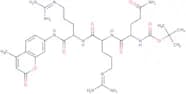
CAS :<p>Azido-dPEG®4-acid is a PEG compound with two different functional groups (also known as heterobifunctional). Unlike homobifunctional PEG compounds (same functional group on both ends), this type of compounds are more versatile as have two different anchor points. Azido-dPEG®4-acid is used as a linker and spacer to add a PEG moiety, via pegylation (a bioconjugation technique) to proteins, peptides, oligonucleotides, small molecules and nanoparticles.</p>Formule :C51H101N3O26Degré de pureté :Min. 95%Masse moléculaire :1,172.35 g/molBoc-Gln-Arg-Arg-AMC
CAS :<p>Boc-Gln-Arg-Arg-AMC is a Research Tool that is used to study the interactions of protein ligands with receptor and ion channels. It has been shown to inhibit the activity of ion channels, such as calcium and potassium channels.</p>Formule :C32H49N11O8Degré de pureté :Min. 95%Masse moléculaire :715.8 g/molBradykinin-Potentiator C
CAS :<p>Bradykinin-Potentiator C is a peptide that can act as an activator or inhibitor of ion channels. It has been used in research for pharmacology, protein interactions, cell biology, and antibody production. Bradykinin-Potentiator C is purified from rabbit lung and has a CAS number of 30953-20-9.</p>Formule :C51H77N11O13Degré de pureté :Min. 95%Masse moléculaire :1,052.2 g/molVirus Replication Inhibiting Peptide
CAS :<p>The virus replication-inhibiting peptide is a fatty acid that inhibits the replication of viruses. It has been shown to inhibit the growth of the bacteria Stenotrophomonas maltophilia and other bacteria, which causes infectious diseases. The peptide also has a diagnostic use for detecting viral infections in cells. The peptide was found to up-regulate genes in response to infection by pandemic influenza, which may be due to its ability to bind receptors on cells and also interfere with inflammatory responses. The virus replication-inhibiting peptide has been shown to be effective against influenza virus and other viruses, as well as against chronic inflammatory diseases such as lung damage caused by β-amino acids.</p>Formule :C28H29N3O6Degré de pureté :Min. 95%Masse moléculaire :503.55 g/molBis-MAL-dPEG®11
CAS :<p>Bis-MAL-dPEG®11 is a PEG polymer categorised as homobifunctional PEG (X-PEG X). Used as a linker, bis-MAL-dPEG®11 is used to attached PEG to proteins, peptides, oligonucleotides, nanoparticles and small molecules via pegylation, a bioconjugation technique.</p>Formule :C65H105F4N9O21S2Degré de pureté :Min. 95%Masse moléculaire :1,488.7 g/molBoc-Gln-Pro
CAS :<p>Boc-Gln-Pro is a peptide that can be used as a substrate for peptidoglutaminase.</p>Formule :C15H25N3O6Degré de pureté :Min. 95%Masse moléculaire :343.38 g/molGRF (Human)
CAS :<p>Growth hormone-releasing factor (GRF) or GHRH (growth hormone-releasing hormone).Binds to the growth hormone-releasing hormone receptor (GHRH-R), causing growth hormone secretion.porcine: H-YADAIFTNSYRKVLGQLSARKLLQDIMSRQQGERNQEQGARVRL-NH2bovine: H-YADAIFTNSYRKVLGQLSARKLLQDIMNRQQGERNQEQGAKVRL-NH2ovine: H-YADAIFTNSYRKILGQLSARKLLQDIMNRQQGERNQEQGAKVRL-NH2human: H-YADAIFTNSYRKVLGQLSARKLLQDIMSRQQGESNQERGARARL-NH2</p>Formule :C215H358N72O66SDegré de pureté :Min. 95%Masse moléculaire :5,039.7 g/molFmoc-Ser[Ac4Galß(1- >3)Ac2GalNAcα(1- >O)]-OH
CAS :Fmoc-Ser[Ac4Galß(1- >3)Ac2GalNAcα(1- >O)]-OH is a peptide that belongs to the group of carbohydrate derivatives. It has been shown to inhibit the growth of bacteria and fungi by inhibiting protein synthesis. The amino acid sequence is Ser-Gly-Gly-Gly-Ala-Ser, which has a high affinity for bacterial cell walls. Fmoc-Ser[Ac4Galß(1- >3)Ac2GalNAcα(1- >O)]-OH binds to bacterial cell walls by competitive inhibition of the enzyme D, L aminopimelate aminotransferase (EC 2.6.1.19). This binding prevents the formation of an antibiotic inhibitor complex with the enzyme that is required for cell wall biosynthesis, inhibiting protein synthesis and cell division.Formule :C44H52N2O21Degré de pureté :Min. 95%Masse moléculaire :944.88 g/molCGRP (Human)
CAS :<p>CGRP (calcitonin gene-related peptide) is a 37-amino acid neuropeptide that is found in humans and is widely distributed in the nervous system, particularly in sensory neurons, and is involved in the regulation of vascular tone, blood flow, pain perception, and inflammation. It is a potent vasodilator and has been implicated in the pathophysiology of several vascular disorders, including migraine headaches, cluster headaches, and hypertension.<br>In addition to its vascular effects, human CGRP also has neuroprotective properties and has been investigated as a potential therapeutic agent for various neurological disorders, such as Alzheimer's disease and Parkinson's disease.<br>Human CGRP has been extensively studied as a research tool to investigate its physiological and pathological roles in various tissues and diseases. It has also been targeted by pharmacological agents, such as CGRP antagonists and antibodies, for the treatment of migraine headaches and other conditions associated with CGRP dysfunction.<br>This product is available as a 0.5mg vial.</p>Formule :C163H267N51O49S2Degré de pureté :Min. 95%Masse moléculaire :3,789.3 g/molMAL-dPEG®4-(m-dPEG®12)3
CAS :MAL-dPEG®4-(m-dPEG®12)3 is a PEG compound with two different functional groups (also known as heterobifunctional). Unlike homobifunctional PEG compounds (same functional group on both ends), this type of compounds are more versatile as have two different anchor points. MAL-dPEG®4-(m-dPEG®12)3 is used as a linker and spacer to add a PEG moiety, via pegylation (a bioconjugation technique) to proteins, peptides, oligonucleotides, small molecules and nanoparticles.Formule :C84H158N6O40Degré de pureté :Min. 95%Masse moléculaire :1,892.17 g/molTuftsin
CAS :Produit contrôlé<p>Tuftsin is a cyclic peptide that has been shown to have various biological properties, including anti-inflammatory and immunosuppressive activity. Tuftsin has been shown to inhibit the production of proinflammatory cytokines such as IL-10 by T cells in vitro. Tuftsin also inhibits the activation of toll-like receptors (TLR) and may have a role in inhibiting mycobacterial infection. This drug was found to be well tolerated in humans with congestive heart failure, and is currently being evaluated for its potential use as an adjunct therapy for inflammatory bowel disease. It has also been shown to be effective against opportunistic fungal infections, such as Candida albicans, Cryptococcus neoformans, and Aspergillus fumigatus. Tuftsin can be measured using analytical methods such as titration calorimetry or polymerase chain reaction (PCR).</p>Formule :C21H40N8O6•2CH3COOH•4H2ODegré de pureté :Min. 95%Masse moléculaire :692.75 g/molFmoc-N-Amido-dPEG®6-Acid
CAS :<p>Fmoc-N-Amido-dPEG®6-Acid is a PEG compound with two different functional groups (also known as heterobifunctional). Unlike homobifunctional PEG compounds (same functional group on both ends), this type of compounds are more versatile as have two different anchor points. Fmoc-N-Amido-dPEG®6-Acid is used as a linker and spacer to add a PEG moiety, via pegylation (a bioconjugation technique) to proteins, peptides, oligonucleotides, small molecules and nanoparticles.</p>Degré de pureté :Min. 95%Masse moléculaire :575.65 g/mol[Tyr34]-Parathyroid Hormone (Bovine, 7-34 amide)
CAS :<p>[Tyr34]-Parathyroid Hormone (Bovine, 7-34 amide) is a product sourced from bovine, is available as a 0.5mg vial and is related to the peptide hormone Parathyroid Hormone (PTH). During abnormal serum calcium levels PTH is secreted from the parathyroid gland, thus regulating calcium and phosphate levels in the body. PTH binds to its PTH receptor which is a G-protein coupled receptor that activated adenylate cyclase or phospholipase C to activate pathways involved in the mediation of bone resorption and bone formation.</p>Formule :C156H244N48O40S2Degré de pureté :Min. 95%Masse moléculaire :3,496 g/molLeu-Gly-Gly
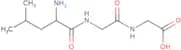
CAS :<p>Leu-Gly-Gly is a cyclic peptide that binds to fibrinogen and forms stable complexes with the enzyme form of human serum albumin. It is used as a model system for studying the structure of proteins, and has been shown to bind calcium ions. Leu-Gly-Gly is also an amide and can form stable complexes with basic proteins such as fibrinogen. This peptide also has significant cytotoxicity against polymorphonuclear leucocytes, which may be due to its ability to inhibit polymerase chain activity.</p>Formule :C10H19N3O4Degré de pureté :Min. 95%Masse moléculaire :245.28 g/molAzido-dPEG®12-Acid
CAS :<p>Azido-dPEG®12-Acid is a PEG compound with two different functional groups (also known as heterobifunctional). Unlike homobifunctional PEG compounds (same functional group on both ends), this type of compounds are more versatile as have two different anchor points. Azido-dPEG®12-Acid is used as a linker and spacer to add a PEG moiety, via pegylation (a bioconjugation technique) to proteins, peptides, oligonucleotides, small molecules and nanoparticles.</p>Degré de pureté :Min. 95%Masse moléculaire :643.72 g/molUrocortin (Rat)
CAS :<p>Urocortin is a peptide that is also known as corticotropin-releasing factor (CRF). It is an inhibitor of the protein phosphatase 1 and protein phosphatase 2A, which are enzymes that regulate the activity of other proteins. Urocortin also has the ability to bind to receptors for glucocorticoid hormones, such as GRP and MR, in a manner that activates them. This peptide is used in research studies to study ion channels, neuronal excitability, and other aspects of cell biology. Urocortin has been shown to be a high purity reagent with no detectable impurities.</p>Formule :C206H338N62O64Degré de pureté :Min. 95%Masse moléculaire :4,707.3 g/molACTH (Human 1-24)
CAS :<p>ACTH (1-24) is a peptide hormone and neurotransmitter that belongs to the corticotropin-releasing factor family. It is also known as corticotropin-releasing hormone, adrenocorticotropic hormone, or CRH. ACTH binds to the ACTH receptor, which activates protein kinase A and cyclic AMP response element binding protein (CREB). Activation of these proteins leads to an increase in the production of cortisol. ACTH can be used as a research tool for studying ion channels and ligands. It can also be used as an antibody in cell biology research.</p>Formule :C136H210N40O31SDegré de pureté :Min. 95%Masse moléculaire :2,933.4 g/molm-dPEG®4-Thiol
CAS :<p>m-dPEG®4-Thiol is a PEG compound with two different functional groups (also known as heterobifunctional). Unlike homobifunctional PEG compounds (same functional group on both ends), this type of compounds are more versatile as have two different anchor points. m-dPEG®4-Thiol is used as a linker and spacer to add a PEG moiety, via pegylation (a bioconjugation technique) to proteins, peptides, oligonucleotides, small molecules and nanoparticles.</p>Formule :C57H113NO25S2Degré de pureté :Min. 95%Masse moléculaire :1,276.63 g/molLipoamido-dPEG®12-Acid
CAS :<p>Lipoamido-dPEG®12-Acid is a PEG molecule conjugated with a lipid moiety. Lipoamido-dPEG®12-Acid, conjugated to this lipid constituent, is very important especially in drug delivery and vaccine development as it helps improve the stability and circulation time of lipid nanoparticles (LNPs) and liposomes.</p>Formule :C25H41N3O7S2Degré de pureté :Min. 95%Masse moléculaire :559.74 g/molAzido-dPEG®35-Amine
CAS :<p>Azido-dPEG®35-Amine is a PEG compound with two different functional groups (also known as heterobifunctional). Unlike homobifunctional PEG compounds (same functional group on both ends), this type of compounds are more versatile as have two different anchor points. Azido-dPEG®35-Amine is used as a linker and spacer to add a PEG moiety, via pegylation (a bioconjugation technique) to proteins, peptides, oligonucleotides, small molecules and nanoparticles.</p>Degré de pureté :Min. 95%Masse moléculaire :1,627.94 g/molLipoamido-dPEG®24-Acid
CAS :<p>Lipoamido-dPEG®24-Acid is a PEG molecule conjugated with a lipid moiety. Lipoamido-dPEG®24-Acid, conjugated to this lipid constituent, is very important especially in drug delivery and vaccine development as it helps improve the stability and circulation time of lipid nanoparticles (LNPs) and liposomes.</p>Formule :C39H69N3O15S2Degré de pureté :Min. 95%Masse moléculaire :884.11 g/molAmino-dPEG®12-t-Butyl Ester
CAS :<p>Amino-dPEG®12-t-Butyl Ester is a PEG compound with two different functional groups (also known as heterobifunctional). Unlike homobifunctional PEG compounds (same functional group on both ends), this type of compounds are more versatile as have two different anchor points. Amino-dPEG®12-t-Butyl Ester is used as a linker and spacer to add a PEG moiety, via pegylation (a bioconjugation technique) to proteins, peptides, oligonucleotides, small molecules and nanoparticles.</p>Formule :C31H63NO14Degré de pureté :Min. 95%Masse moléculaire :673.83 g/molPropargyl-dPEG®1-NHS Ester
CAS :<p>Propargyl-dPEG®1-NHS Ester is a PEG compound with two different functional groups (also known as heterobifunctional). Unlike homobifunctional PEG compounds (same functional group on both ends), this type of compounds are more versatile as have two different anchor points. Propargyl-dPEG®1-NHS Ester is used as a linker and spacer to add a PEG moiety, via pegylation (a bioconjugation technique) to proteins, peptides, oligonucleotides, small molecules and nanoparticles.</p>Formule :C48H98N4O23Degré de pureté :Min. 95%Masse moléculaire :1,099.3 g/molParathyroid Hormone (Human, 1-34)
CAS :This product which is available as a 0.1mg vial is amino acids 1-34 of the 84 amino acid parathyroid hormone (PTH) and can be used as an adenylate cyclase and bone growth stimulating peptide. It is also an effective anabolic agent used in the treatment of some forms of Osteoporosis. PTH is a peptide hormone that is secreted from the parathyroid gland in the event of abnormal serum calcium levels and it ultimately regulates calcium and phosphate levels in the body. The PTH exerts its activity through binding to the G-protein coupled receptor type 1 PTH receptor, which activates adenylate cyclase or phospholipase C thus activating pathways involved in the mediation of bone resorption and bone formation. This product is suitable for life science applications.Formule :C181H291N55O51S2Degré de pureté :Min. 95%Masse moléculaire :4,117.7 g/moldPEG®24-Biotin Acid
CAS :<p>dPEG®24-Biotin Acid is a PEG compound with two different functional groups (also known as heterobifunctional). Unlike homobifunctional PEG compounds (same functional group on both ends), this type of compounds are more versatile as have two different anchor points. dPEG®24-Biotin Acid is used as a linker and spacer to add a PEG moiety, via pegylation (a bioconjugation technique) to proteins, peptides, oligonucleotides, small molecules and nanoparticles.</p>Formule :C61H117N3O28SDegré de pureté :Min. 95%Masse moléculaire :1,325.6 g/mol2,3,4,6-Tetra-O-Acetyl-α-D-Glucopyranosyl Fluoride
CAS :2,3,4,6-Tetra-O-acetyl-α-D-glucopyranosyl fluoride is a glycosyl fluoride that inhibits the enzyme glucosidase. This compound has been shown to inhibit peptide degradation and is used in studies of proteolytic enzymes. 2,3,4,6-Tetra-O-acetyl-α-D-glucopyranosyl fluoride has also been used as an inhibitor of carbohydrate metabolism and in the synthesis of glycoproteins.Formule :C14H19O9FDegré de pureté :Min. 95%Masse moléculaire :350.29 g/molm-dPEG®8-Thiol
CAS :<p>m-dPEG®8-Thiol is a PEG compound with two different functional groups (also known as heterobifunctional). Unlike homobifunctional PEG compounds (same functional group on both ends), this type of compounds are more versatile as have two different anchor points. m-dPEG®8-Thiol is used as a linker and spacer to add a PEG moiety, via pegylation (a bioconjugation technique) to proteins, peptides, oligonucleotides, small molecules and nanoparticles.</p>Formule :C34H66N4O13SDegré de pureté :Min. 95%Masse moléculaire :770.97 g/molm-dPEG®15-Amine
CAS :<p>m-dPEG®15-Amine is a PEG compound with two different functional groups (also known as heterobifunctional). Unlike homobifunctional PEG compounds (same functional group on both ends), this type of compounds are more versatile as have two different anchor points. m-dPEG®15-Amine is used as a linker and spacer to add a PEG moiety, via pegylation (a bioconjugation technique) to proteins, peptides, oligonucleotides, small molecules and nanoparticles.</p>Formule :C59H109NO28Degré de pureté :Min. 95%Masse moléculaire :1,280.49 g/molFmoc-MeDbz
CAS :<p>Fmoc-MeDbz is an antimicrobial peptide that has been synthesized using solid-phase synthesis. The peptide is composed of the unusual amino acids Fmoc-Me and Dbz. It is a cyclic peptide with an amide bond at its C-terminus. Fmoc-MeDbz has a neutral ph value and can be activated using chemical ligation and modifications to improve its stability. Synthetic analogs of this peptide have also been developed to improve its antibacterial activity against various bacterial strains such as methicillin resistant Staphylococcus aureus (MRSA).</p>Formule :C23H20N2O4Degré de pureté :Min. 95%Masse moléculaire :388.42 g/molα-MSH (Human, Porcine, Bovine, Rat, Mouse)
CAS :Alpha-MSH is a peptide that binds to the Melanocortin 1 receptor. Alpha-MSH is a peptide hormone and neurotransmitter that is involved in the regulation of numerous physiological processes, including appetite, sexual desire, immune response, and skin pigmentation. In addition to its role as a natural hormone, it has been studied as a potential drug for the treatment of obesity and other diseases. The product can also be used as an antibody probe for Western blotting or immunohistochemistry. The product is produced synthetically.Formule :C77H109N21O19SDegré de pureté :Min. 95%Masse moléculaire :1,664.9 g/molCyclo(Ala-Pro) (Bulk)
CAS :<p>Cyclo(Ala-Pro) is a cyclic peptide that has been shown to inhibit the growth of endophytic fungi. It also has hydroxyl group and a regulatory function, which may be due to its ability to bind to DNA or RNA. Cyclo(Ala-Pro) can be used as a food additive for animal health purposes.</p>Formule :C8H12N2O2Degré de pureté :Min. 95%Masse moléculaire :168.19 g/molPyr-Ala
CAS :<p>Pyr-Ala is a peptide that has been shown to be effective in treating inflammatory diseases. It specifically targets the group P2 sequences of the inflammatory cytokine IL-1β. Pyr-Ala also inhibits IL-6 and TNF-α activity by binding to the amide bond of these molecules, inhibiting their catalysis and preventing their formation. Pyr-Ala has also shown efficacy in autoimmune diseases, such as rheumatoid arthritis, by inhibiting the production of proinflammatory cytokines including IL-1β and TNF-α. This drug binds to the bacterial enzyme that catalyzes the conversion of L -alanine into pyruvic acid, preventing its function and inhibiting bacterial growth.</p>Formule :C8H12N2O4Degré de pureté :Min. 95%Masse moléculaire :200.19 g/molAzido-dPEG®8-Acid
CAS :<p>Azido-dPEG®8-Acid is a PEG compound with two different functional groups (also known as heterobifunctional). Unlike homobifunctional PEG compounds (same functional group on both ends), this type of compounds are more versatile as have two different anchor points. Azido-dPEG®8-Acid is used as a linker and spacer to add a PEG moiety, via pegylation (a bioconjugation technique) to proteins, peptides, oligonucleotides, small molecules and nanoparticles.</p>Degré de pureté :Min. 95%Masse moléculaire :467.51 g/molAngiotensin IV acetate
CAS :<p>Angiotensin IV (human) is an active analogue of the chemoattractant protein, angiotensin. It is a potent anti-inflammatory cytokine that inhibits the production of pro-inflammatory cytokines, such as IL-10. Angiotensin IV (human) has been shown to significantly reduce the production of pro-inflammatory cytokines in mice with chronic inflammation and can be used to treat autoimmune diseases. The biological properties of this protein have been studied using polymerase chain reactions and cytosolic calcium assays. It has been shown to inhibit binding to both the angiotensin receptor and angiotensin converting enzyme. Angiotensin IV (human) also has locomotor activity.</p>Formule :C40H54N8O8Degré de pureté :Min. 95%Masse moléculaire :774.91 g/mol










![Fmoc-Ser[Ac4Galß(1- >3)Ac2GalNAcα(1- >O)]-OH](/_next/image/?url=https%3A%2Fstatic.cymitquimica.com%2Fproducts%2F3D%2Fthumb-webp%2FCAR-22103.webp&w=3840&q=75)


![[Tyr34]-Parathyroid Hormone (Bovine, 7-34 amide)](/_next/image/?url=https%3A%2Fstatic.cymitquimica.com%2Fproducts%2F3D%2Fthumb-webp%2FPTH-4185-V.webp&w=3840&q=75)