Substrats d'enzymes
Sous-catégories appartenant à la catégorie "Substrats d'enzymes"
1526 produits trouvés pour "Substrats d'enzymes"
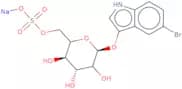
5-Bromo-3-indolyl-β-D-galactopyranoside-6-sulfate sodium salt
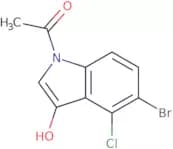
CAS :5-Bromo-3-indolyl-beta-D-galactopyranoside-6-sulfate sodium salt is a lapis substrate, a chromogenic substrate that yields a deep blue color after cleavage. It is used in sulfatase activity assays and for the diagnosis of Mucopolysaccharidosis IVA (Morquio A).Formule :C14H15BrNNaO9SDegré de pureté :Min. 95%Couleur et forme :PowderMasse moléculaire :476.23 g/mol5-Bromo-4-chloro-3-indoxyl-1-acetate
CAS :5-Bromo-4-chloro-3-indoxyl-1-acetate is a chromogenic substrate used to detect the specific enzymatic activity of esterase. After cleavage, 5-bromo-4-chloro-indoxyl is released, resulting in a blue to blue-green color change in bacterial colonies or media. 5-Bromo-4-chloro-3-indoxyl-1-acetate is used in bacterial esterase activity assays (e.g. Pseudomonas spp.).
Degré de pureté :Min. 95%Couleur et forme :PowderMasse moléculaire :288.52 g/molHippurate hydrolase from Campylobacter jejuni, aqueous solution with glycerol
Hippurate hydrolase is an enzyme that catalyzes the hydrolysis of hippurate to glycine and taurine. It is a fluorogenic substrate with high purity, ligand, and high quality. Hippurate hydrolase is used as a diagnostic enzyme for detecting the presence of hippuric acid in urine. This enzyme can be conjugated to a variety of molecules, including fluorophores, biotin or haptens, for use in immunoassay or other applications.Formule :C1944H3000N516O573S18Degré de pureté :Min. 95%Masse moléculaire :24,542 g/mol4-Nitrophenyl-alpha-L-fucopyranoside
CAS :Chromogenic substrate yielding a soluble yellow chromophor for the colorimetric assay of α-L-fucosidase, especially in human serum.Formule :C12H15NO7Degré de pureté :Min. 98 Area-%Masse moléculaire :285.26 g/mol4-Chloro-1-naphthol
CAS :Substrate for horseradish peroxidase
Formule :C10H7ClODegré de pureté :Min. 96.0 Area-%Couleur et forme :Brown PowderMasse moléculaire :178.61 g/molAldol® 455 alpha-D-glucopyranoside - Biosynth Patent: EP 2427431 and US 8940909
Aldol® 455 alpha-D-glucopyranoside is a high quality, environmentally tested, staining, and ligand for bioluminescent assays. It has been shown to be a chromogenic substrate for diagnostics and a fluorogenic substrate for enzymes such as alpha-glucosidase, producing a yellow/green-orange color. Aldol® 455 alpha-D-glucopyranoside is also used in culture media and food testing.
Formule :C27H24ClNO7Degré de pureté :Min. 95 Area-%Couleur et forme :PowderMasse moléculaire :509.93 g/mol5-Bromo-4-chloro-3-indolyl a-L-arabinofuranoside
5-Bromo-4-chloro-3-indolyl a-L-arabinofuranoside is a chromogenic substrate used to detect the specific enzymatic activity of alpha-L-arabinofuranosidase. After cleavage, 5-bromo-4-chloro-indoxyl is released, resulting in a blue to blue-green color change in bacterial colonies or media. 5-Bromo-4-chloro-3-indolyl a-L-arabinofuranoside is used in bacterial arabinan degradation assays (e.g. Bacillus spp.).Formule :C13H13BrClNO5Degré de pureté :Min. 98.0 Area-%Couleur et forme :PowderMasse moléculaire :378.6 g/molAldol® 484 beta-D-glucopyranoside, Biosynth Patent: EP 2427431 and US 8940909
CAS :Aldol® 484 beta-D-glucopyranoside is a chromogenic and fluorogenic enzyme substrate used for detection of beta-glucosidase activity. The colorless enzyme substrate is cleaved by bacteria producing beta-glucosidase in liquid or solid media, yielding intense red color and green fluorescent signal. Aldol® 484 beta-D-glucopyranoside can be used under aerobic and anaerobic conditions.Formule :C26H24ClFN2O7Degré de pureté :Min. 95%Couleur et forme :PowderMasse moléculaire :530.93 g/mol5-Bromo-4-chloro-3-indoxyl phosphate, dipotassium salt
CAS :Also known as BCIP; can be used for visualization of phosphatase labelled antibodies on Western blots. This method quickly became extremely popular in diagnostics and biology research.Formule :C8H4BrClK2NO4PCouleur et forme :Brown Off-White PowderMasse moléculaire :402.65 g/molL-Phenylalanine 7-amido-4-methylcoumarin trifluoroacetate salt
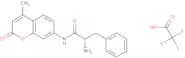
CAS :L-Phenylalanine 7-amido-4-methylcoumarin trifluoroacetate salt is a fluorogenic peptide substrate for aminopeptidase. This AMC peptide substrate is normally used to rapidly profile the N-terminal specificity of proteases.Formule :C19H18N2O3•C2HF3O2Degré de pureté :Min. 98 Area-%Couleur et forme :White PowderMasse moléculaire :436.38 g/molIsopropyl-β-D-thiogalactopyranoside - non-animal origin
CAS :A non-metabolizable allolactose analogue, widely used in molecular biology for overexpression of recombinant proteins from inducible systems under the control of lac promoter. IPTG binds to the LacI repressor and causes its release from the lac operator, allowing gene expression to take place. Present in vectors of pGEX, pGEM-T, pET, pRSET, pMAL class and others.Formule :C9H18O5SDegré de pureté :Min. 99.0 Area-%Masse moléculaire :238.3 g/molN-(6-Hydroxyhexyl)trifluoroacetamide
CAS :Please enquire for more information about N-(6-Hydroxyhexyl)trifluoroacetamide including the price, delivery time and more detailed product information at the technical inquiry form on this pageFormule :C8H14F3NO2Masse moléculaire :213.2 g/mol2-Fluoro-4-nitrophenyl b-D-galactopyranoside
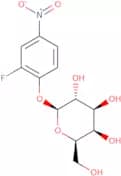
CAS :2-Fluoro-4-nitrophenyl b-D-galactopyranoside is a chromogenic substrate in enzymatic assays with β-galactosidase. Commonly abbreviated as PFONPG, it is a hydrophilic compound that can be dissolved in saline and blood samples, which makes it a suitable candidate for diagnostic applications as a gene reporter probe by simple analytic methodologies. 2-Fluoro-4-nitrophenyl b-D-galactopyranoside have been used to detect and monitor the growth of prostate tumor cells.Degré de pureté :Min. 95%Couleur et forme :PowderMasse moléculaire :319.24 g/mol4-Methylumbelliferone
CAS :4-Methylumbelliferone is a coumarin derivative that inhibits the activity of enzymes such as p-nitrophenyl phosphate oxidase and aminopeptidase. It is used in vitro to study oxidative injury, which plays a role in the pathogenesis of inflammatory diseases, including primary sclerosing cholangitis and bone marrow transplantation. 4-Methylumbelliferone has been shown to induce apoptosis by increasing reactive oxygen species levels and activating toll-like receptor 4 (TLR4). It also has inhibitory effects on osteosarcoma cell proliferation in vitro.Formule :C10H8O3Masse moléculaire :176.17 g/mol4-Methylumbelliferyl 6-deoxy-2,3,4,6-tetra-O-acetyl-6-thio-β-D-glucopyranoside
4-Methylumbelliferyl 6-deoxy-2,3,4,6-tetra-O-acetyl-6-thio-beta-D-glucopyranoside is a fluorogenic substrate for beta-glucosidase. After enzymatic cleaveage, free 4-methylumbelliferone (also known as hymecromone) is released, exhibiting blue fluorescence upon excitation with UV light. The strongest fluorescence of 4-methylumbelliferone requires deprotonation of the hydroxyl group (thus requires alkaline pH), with a maximal fluorescence intensity obtained with excitation at 350 to 370 nm and emission at 440 to 470 nm. The use of 4-methylumbelliferyl 6-deoxy-2,3,4,6-tetra-O-acetyl-6-thio-beta-D-glucopyranosideas a substrate for measuring the beta-glucosidase activity is used for Gaucher disease diagnosis.Formule :C24H26O11SDegré de pureté :Min. 95%Couleur et forme :White to off-white solid.Masse moléculaire :522.52 g/mol3-Nitrophenyl b-D-galactopyranoside
CAS :Chromogenic substrate targeting beta-galactosidaseFormule :C12H15NO8Couleur et forme :PowderMasse moléculaire :301.25 g/mol4-Nitrophenyl-beta-D-lactopyranoside
CAS :Chromogenic substrate for cellobiohydrolase and endoglucanase.Formule :C18H25NO13Degré de pureté :Min. 99.0 Area-%Masse moléculaire :463.40 g/molAquaSpark® 515 Singlet Oxygen Probe, Ramot at Tel-Aviv University Ltd. Patent family WO 2017/130191
CAS :Singlet Oxygen Chemiluminescence Probe, SOCLFormule :C21H23ClO4Degré de pureté :Min. 95 Area-%Couleur et forme :PowderMasse moléculaire :374.13 g/mol4-Methylumbelliferyl N,N',N''-triacetyl-b-D-chitotrioside
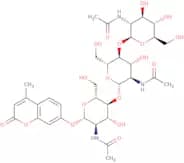
CAS :4-Methylumbelliferyl N,N',N''-triacetyl-beta-D-chitotrioside is a fluorogenic substrate for chitinase. After enzymatic cleaveage, free 4-methylumbelliferone (also known as hymecromone) is released, exhibiting blue fluorescence upon excitation with UV light. The strongest fluorescence of 4-methylumbelliferone requires deprotonation of the hydroxyl group (thus requires alkaline pH), with a maximal fluorescence intensity obtained with excitation at 350 to 370 nm and emission at 440 to 470 nm. The use of 4-methylumbelliferyl N,N',N''-triacetyl-beta-D-chitotriosideas a substrate for measuring the chitinase activity is used for fungal infection assays.Formule :C34H47N3O18Degré de pureté :Min. 95.0 Area-%Couleur et forme :White Off-White PowderMasse moléculaire :785.75 g/mol6-Bromo-2-naphthyl b-D-glucopyranoside
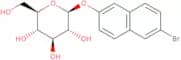
CAS :6-Bromo-2-naphthyl b-D-glucopyranoside is an enzyme substrate used in chromogenic assays with beta-glucosidases. It has been used in culture media for the identification of Legionella pneumophila.Formule :C16H17BrO6Degré de pureté :Min. 98 Area-%Couleur et forme :PowderMasse moléculaire :385.21 g/mol