Substrats d'enzymes
Sous-catégories appartenant à la catégorie "Substrats d'enzymes"
1527 produits trouvés pour "Substrats d'enzymes"
2-Amino-5-pyridyl 2-acetamido-3,4,6-tri-O-acetyl-2-deoxy-a-D-galactopyranose
2-Amino-5-pyridyl 2-acetamido-3,4,6-tri-O-acetyl-2-deoxy-a-D-galactopyranose is a chromogenic substrate for the enzyme β galactosidase. It is used to detect the presence of β galactosidase in bacterial cultures. The substrate is soluble in water and has a long shelf life. 2APAAG can be used for food testing and environmental testing as it produces a bioluminescent signal when cleaved by β galactosidase.
Degré de pureté :Min. 95%Espresso-Gal
Espresso-Gal (Espresso-beta-D-galactopyranoside) is a chromogenic indicator for beta-galactosidase activity. The colorless product is cleaved by lactose-utilizing bacteria in liquid media or on agar plates and yields an espresso brown colored precipitate. Espresso-Gal can also be used as detecting agent for beta-galactosidase activity in reporter gene assays or for identification of positive transformants on agar plates when using the α-complementation approach. Read more in the Application Notes.
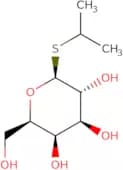
Degré de pureté :Min. 95%Isopropyl-beta-D-thiogalactopyranoside, approx. 15.0% dioxane
CAS :A non-metabolizable allolactose analogue, widely used in molecular biology for overexpression of recombinant proteins from inducible systems under the control of lac promoter. IPTG binds to the LacI repressor and causes its release from the lac operator, allowing gene expression to take place. Present in vectors of pGEX, pGEM-T, pET, pRSET, pMAL class and others.Formule :C9H18O5SDegré de pureté :Min. 95%Couleur et forme :PowderMasse moléculaire :238.30 g/mol5-Bromo-6-chloro-3-indoxyl phosphate, p-toluidine salt
CAS :Substrate for visualizing alkaline phosphatase activity. Produces a magenta colored insoluble end product that is detected visually, when used together with Nitroblue tetrazolium. The substrate system is versatile and functions in a variety of applications, including Northern, Southern, and Western blotting, in situ hybridization, ELISAs and immunohistochemistry. DMF soluble.Formule :C15H15BrClN2O4PDegré de pureté :Min. 98.0 Area-%Masse moléculaire :433.63 g/molRef: 3D-B-7550
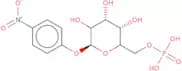
Produit arrêté4-Nitrophenyl b-D-glucopyranoside-6-phosphate
CAS :4-Nitrophenyl beta-D-glucopyranoside-6-phosphate is a chromogenic substrate for glucose-6-phosphatase. Upon hydrolysis, para-nitrophenol is released yielding a yellowish colour. 4-Nitrophenyl beta-D-glucopyranoside-6-phosphate is used in different applications such as the Glycogen storage disease diagnosis (e.g., von Gierke disease)
Formule :C12H16NO11PDegré de pureté :Min. 98 Area-%Couleur et forme :PowderMasse moléculaire :381.23 g/molCoelenterazine-v
CAS :Coelenterazine-v is a coelenterazine analog that emits a red fluorescent light in the presence of calcium (Ca2+). It is used as a reporter molecule for intracellular calcium concentration. Coelenterazine-v has been used in vitro to detect protein–protein interactions and in animal experiments to detect luciferase activity. Other coelenterazine-v analogs have also been developed with different color properties, including blue, green, yellow, orange, and purple. All these analogs, including coelenterazine-v, are used for optical imaging of cells or tissues or for detecting the activity of luciferases.
Formule :C28H21N3O3Degré de pureté :Min. 95%Masse moléculaire :447.48 g/mol4-Methylumbelliferyl a-D-mannopyranoside 6-sulfate sodium salt
4-Methylumbelliferyl alpha-D-mannopyranoside 6-sulfate sodium salt is a fluorogenic substrate for sulfatase. After enzymatic cleaveage, free 4-methylumbelliferone (also known as hymecromone) is released, exhibiting blue fluorescence upon excitation with UV light. The strongest fluorescence of 4-methylumbelliferone requires deprotonation of the hydroxyl group (thus requires alkaline pH), with a maximal fluorescence intensity obtained with excitation at 350 to 370 nm and emission at 440 to 470 nm. The use of 4-methylumbelliferyl alpha-D-mannopyranoside 6-sulfate sodium saltas a substrate for measuring the sulfatase activity is used for Mucopolysaccharidosis (MPS) screening and other lysosomal storage disorder diagnosis.
Formule :C16H17O11SNaDegré de pureté :Min. 98 Area-%Couleur et forme :White PowderMasse moléculaire :440.36 g/molBronze-Gal
Bronze-Gal (Bronze-beta-D-galactopyranoside) is a chromogenic indicator for beta-galactosidase activity. The colorless product is cleaved by lactose-utilizing bacteria in liquid media or on agar plates and yields a bronze colored precipitate. Bronze-Gal can also be used as detecting agent for beta-galactosidase activity in reporter gene assays or for identification of positive transformants on agar plates when using the α-complementation approach. Read more in the Application Notes.
Degré de pureté :Min. 95%Masse moléculaire :443.575-Bromo-4-chloro-3-indoxyl choline phosphate
CAS :5-Bromo-4-chloro-3-indoxyl choline phosphate is a synthetic enzyme substrate for detecting phosphatidylcholine-specific phospholipase C.
Formule :C13H17BrClN2O4PDegré de pureté :Min. 99 Area-%Masse moléculaire :411.63 g/molAquaSpark® 510 Calibration Probe, Ramot at Tel-Aviv University Ltd. Patent family WO 2017/130191
CAS :AquaSpark® Calibration Probe is a water-soluble dioxetane-based chemiluminescent probe. Deprotonation of the free phenol group of the calibration probe under mild basic conditions results in an emissive decomposition process. No addition of enhancer or sensitizing agent is required to produce the bright green light emission in aqueous solutions.
AquaSpark® Calibration Probe is used for:Formule :C21H23ClO6Degré de pureté :Min. 95.0 Area-%Masse moléculaire :406.12 g/mol4-Chloro-1-naphthol
CAS :4-Chloro-1-naphthol is a chemical compound that has been used in clinical pathology to identify human immunoglobulin. It is also used as a potential biomarker for the diagnosis of Alzheimer's disease. 4-Chloro-1-naphthol binds to the amyloid fibrils and has anti-angiogenic effects in the hippocampus, which may be due to its ability to inhibit the formation of new blood vessels. This chemical compound can be used as a substrate molecule for electrochemical impedance spectroscopy and is used in wastewater treatment.
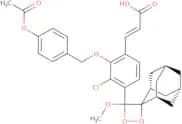
Formule :C10H7ClODegré de pureté :Min. 97.0 Area-%Masse moléculaire :178.62 g/molAquaSpark® 510 acetate, 10 mM in DMSO, Ramot at Tel-Aviv University Ltd. Patent family WO 2017/130191
CAS :Chemiluminescence substrate for C2-esterase (acetyl esterase)
Formule :C30H31ClO8Degré de pureté :Min. 95%Couleur et forme :Clear LiquidMasse moléculaire :554.17 g/molAldol® 455 β-D-galactopyranoside, Biosynth Patent: EP 2427431 and US 8940909
CAS :Aldol® 455 beta-D-galactopyranoside is a chromogenic substrate for the enzyme β-galactosidase. It is used to detect the activity of β-galactosidase in cell culture, and has been shown to be highly purified and of high quality. This product can be used as a ligand for receptor binding studies or as an agent in enzyme substrates in fluorescence and chemiluminescence reactions.
Formule :C27H24ClNO7Degré de pureté :Min. 93.0 Area-%Masse moléculaire :509.94 g/mol3,4-Cyclohexenoesculetine-N-acetyl-glucosamine
Please enquire for more information about 3,4-Cyclohexenoesculetine-N-acetyl-glucosamine including the price, delivery time and more detailed product information at the technical inquiry form on this page
Degré de pureté :Min. 95%Luc-coliforms
CAS :Luc-coliforms is a food testing kit that can be used to test for coliforms. It is composed of a series of enzyme substrates, culture media, and ligands specific to the bacteria being tested. The kit uses chromogenic or fluorogenic substrates that react with coliforms to produce a color change in the reaction mixture. Luc-coliforms is designed for use on solid foods such as meat, eggs, and vegetables.
Formule :C17H18N2O8S2Degré de pureté :Min. 95 Area-%Masse moléculaire :442.46 g/molRef: 3D-L-8260
Produit arrêté4-Nitrophenyl β-rutinoside
CAS :4-Nitrophenyl beta-rutinoside is a chromogenic substrate for beta-glucosidase. Upon hydrolysis, para-nitrophenol is released yielding a yellowish colour. 4-Nitrophenyl beta-rutinoside is used in different applications such as the Flavonoid glycoside hydrolysis, food industry applications
Formule :C18H25NO12Degré de pureté :Min. 95%Couleur et forme :PowderMasse moléculaire :447.39 g/molL-Arginyl-L-arginine 7-amido-4-methylcoumarin trihydrochloride
CAS :Fluorogenic substrate for cathepsin B or aminopeptidase III. Yields a blue fluorescent solution upon cleavage.
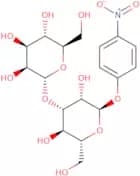
Formule :C22H36Cl3N9O4Degré de pureté :Min. 98 Area-%Masse moléculaire :596.95 g/mol4-Nitrophenyl 3-O-(a-D-mannopyranosyl)-a-D-mannopyranoside
CAS :Chromogenic substrate for α-glucanase
Formule :C18H25NO13Degré de pureté :Min. 97 Area-%Couleur et forme :White PowderMasse moléculaire :463.39 g/molBronze-Gal
Bronze-Gal (Bronze-beta-D-galactopyranoside) is a chromogenic indicator for beta-galactosidase activity. The colorless product is cleaved by lactose-utilizing bacteria in liquid media or on agar plates and yields a bronze colored precipitate. Bronze-Gal can also be used as detecting agent for beta-galactosidase activity in reporter gene assays or for identification of positive transformants on agar plates when using the α-complementation approach. Read more in the Application Notes.
Masse moléculaire :443.57 g/mol4-Methylumbelliferyl myo-inositol-1-phosphate N-methyl-morpholine salt
CAS :Please enquire for more information about 4-Methylumbelliferyl myo-inositol-1-phosphate N-methyl-morpholine salt including the price, delivery time and more detailed product information at the technical inquiry form on this page
Formule :C16H19O11P·C5H11NOCouleur et forme :PowderMasse moléculaire :519.44 g/mol