Substrats d'enzymes
Sous-catégories appartenant à la catégorie "Substrats d'enzymes"
1527 produits trouvés pour "Substrats d'enzymes"
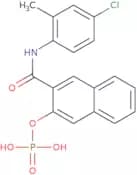
Naphthol AS-TR phosphate
CAS :Modified naphtol AS substrate used in histochemical and cytochemical staining
Formule :C18H15ClNO5PDegré de pureté :Min. 95%Couleur et forme :Off-White PowderMasse moléculaire :391.74 g/molCoelenterazine e
CAS :Coelenterazine and its derivatives spontaneously complex with aequorin to develop a Ca2+-dependent fluorescent signal.
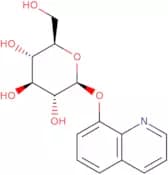
Formule :C28H23N3O3Degré de pureté :Min. 95%Couleur et forme :PowderMasse moléculaire :449.5 g/mol8-Hydroxyquinoline b-D-glucopyranoside
CAS :8-Hydroxyquinoline b-D-glucopyranoside (8-OHG-glu) is a chromogenic enzyme substrate commonly used to detect the presence of beta-glucosidase in biological samples. When hydrolyzed by beta-glucosidase, 8-OHG-glu produces a yellow-orange color, indicating the presence of the enzyme. This substrate is particularly useful for measuring beta-glucosidase activity in soil and plant samples.
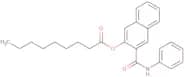
Formule :C15H17NO6Degré de pureté :Min. 95%Couleur et forme :PowderMasse moléculaire :307.3 g/molNaphthol AS nonanoate
CAS :Modified naphtol AS substrate used in histochemical and cytochemical staining
Formule :C26H29NO3Degré de pureté :Min. 95%Couleur et forme :PowderMasse moléculaire :403.51 g/molLuc-Listeria Na
Luc-Listeria Na is a chemiluminescent substrate that is used as a reporter molecule in enzyme assays. Luc-Listeria Na reacts with the luciferase enzyme, emitting light. The light emission can be detected using a luminometer and the intensity of light is proportional to the amount of substrate present. Luc-Listeria Na has been shown to react with Listeria monocytogenes and other bacteria that are resistant to conventional staining techniques. This product has passed testing for purity and quality, as well as being tested for its ability to cause an adverse effect on the environment when disposed of.
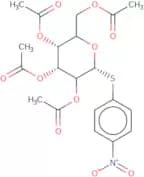
Degré de pureté :Min. 95%4-Nitrophenyl 2,3,4,6-tetra-O-acetyl-a-D-thiomannopyranoside
CAS :4-Nitrophenyl 2,3,4,6-tetra-O-acetyl-a-D-thiomannopyranoside is a pNP substrate that serves as a chromogenic substrate for enzyme assays. It has been tested for the detection of a-D-mannosidase activity in a variety of biological samples, including cell lysates, body fluids, and tissue homogenates.
Degré de pureté :Min. 95%Masse moléculaire :485.47 g/mol4-Methylumbelliferyl β-D-glucopyranoside
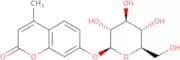
CAS :Fluorogenic substrate for β-glucosidase
Formule :C16H18O8Degré de pureté :Min. 98 Area-%Couleur et forme :PowderMasse moléculaire :338.31 g/molFluorescein di-β-D-glucopyranoside
CAS :Fluorogenic substrate targeting beta-glucosidase
Formule :C32H32O15Degré de pureté :Min. 95%Couleur et forme :PowderMasse moléculaire :656.59 g/mol4-Methylumbelliferyl butyrate
CAS :Methylumbelliferyl butyrate is structurally based on 4-methylumbelliferone and is a MOSCERDAM® substrate. It targets the esterase enzyme.
Formule :C14H14O4Degré de pureté :Min. 95%Couleur et forme :White PowderMasse moléculaire :246.26 g/mol4-Nitrophenyl a-D-xylopyranoside
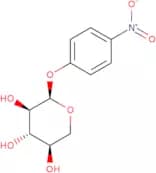
CAS :The 4-Nitrophenyl a-D-xylopyranoside is a highly sensitive and reliable chromogenic substrate tailored for the detection and analysis of alpha-D-xylosidase enzyme activity. Upon enzymatic hydrolysis, it forms 4-nitrophenol, a yellow compound with remarkable fluorescence that enables a straightforward, quantitative assay in areas including environmental science, metabolism studies, and enzyme modifier exploration.
Formule :C11H13NO7Degré de pureté :Min. 95%Couleur et forme :White PowderMasse moléculaire :271.22 g/mol4-Nitrophenyl phosphate bis(cyclohexylammonium)
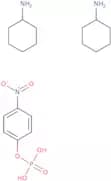
CAS :4-Nitrophenyl phosphate bis(cyclohexylammonium) is an excellent chromogenic substrate designed for the detection and quantification of phosphatase enzyme activities. Aided by the presence of the cyclohexylammonium cation, it undergoes enzymatic hydrolysis, yielding the colored 4-nitrophenolate ion, which can be readily observed at 405 nm. The substrate has become an essential tool for biomedical research, playing a crucial role in unearthing cellular mechanisms, function, and potential drug targets.
Formule :C18H32N3O6PDegré de pureté :97.0 To 103.0%Couleur et forme :PowderMasse moléculaire :417.44 g/mol4-Nitrophenyl decanoate
CAS :4-Nitrophenyl decanoate is a chromogenic substrate for lipase. Upon hydrolysis, para-nitrophenol is released yielding a yellowish colour. 4-Nitrophenyl decanoate is used in different applications such as the Pancreatic insufficiency diagnosis, lipid metabolism studies
Formule :C16H23NO4Degré de pureté :Min. 97 Area-%Couleur et forme :PowderMasse moléculaire :293.36 g/mol2-Nitrophenyl b-D-glucopyranoside
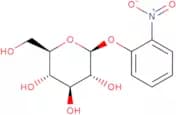
CAS :Chromogenic substrate for beta-glucosidase
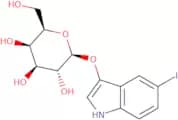
Formule :C12H15NO8Degré de pureté :Min. 99 Area-%Couleur et forme :Off-White Yellow PowderMasse moléculaire :301.25 g/mol5-Iodo-3-indolyl b-D-galactopyranoside
CAS :5-Iodo-3-indolyl b-D-galactopyranoside is a chromogenic substrate used for beta-galactosidase. It is incorporated into media or detection kits for rapid and direct identification of microorganisms.
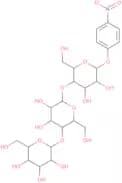
Formule :C14H16INO6Degré de pureté :Min. 98 Area-%Couleur et forme :PowderMasse moléculaire :421.18 g/mol4-Nitrophenyl b-D-cellotrioside
CAS :4-Nitrophenyl beta-D-cellotrioside is a chromogenic substrate for cellulase. Upon hydrolysis, para-nitrophenol is released yielding a yellowish colour. 4-Nitrophenyl beta-D-cellotrioside is used in different applications such as the Biomass conversion research, paper industry applications
Formule :C24H35NO18Degré de pureté :Min. 95%Couleur et forme :PowderMasse moléculaire :625.53 g/mol4-Methylumbelliferyl 6-thio-palmitate-b-D-glucopyranoside - Moscerdam™ biochemical purity
CAS :4-Methylumbelliferyl 6-thio-palmitate-b-D-glucopyranoside (Mu-6S-Palm-β-Glc) is a fluorogenic substrate of palmitoyl-protein thioesterase 1 (PPT1), used in the diagnosis of infantile neuronal ceroid lipofuscinosis (INCL). INCL, also known as infantile CLN1 disease, is a rapidly progressing lysosomal storage disorder (LSD), caused by a deficiency of PPT1. Mu-6S-Palm-β-Glc is also used as the substrate in the PPT assay to investigate the retention of lysosomal enzyme activity of bi-functional IgG-PPT1 fusion protein in the delivery across blood-brain barrier.
Formule :C32H48O8SDegré de pureté :Min. 95%Couleur et forme :White PowderMasse moléculaire :592.78 g/molNitrocefin
CAS :Chromogenic cephalosporin substrate for the detection of beta-lactamase activity
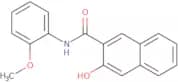
Formule :C21H16N4O8S2Degré de pureté :Min. 90 Area-%Couleur et forme :Yellow Orange PowderMasse moléculaire :516.51 g/molNaphthol AS-OL
CAS :Naphthol AS-OL is a widely used chromogenic enzyme substrate that forms a colored product upon reaction with specific enzymes. It is commonly employed in histochemical and cytochemical staining techniques to visualize enzyme activity in cells and tissues. Naphthol AS-OL is particularly useful for detecting the presence of enzymes such as alkaline phosphatase, acid phosphatase, and esterases. The resulting colored product can be easily observed under a microscope, allowing researchers to study the distribution and localization of these enzymes in various biological samples.
Formule :C18H15NO3Degré de pureté :Min. 95%Couleur et forme :PowderMasse moléculaire :293.32 g/molAquaSpark® Enhanced HRP Detection Solution, Ramot at Tel-Aviv University Ltd. Patent family WO 2017/130191
CAS :AquaSpark® Enhanced HRP Detection Solution is a sensitive chemiluminescent substrate solution for detecting horseradish peroxidase (HRP) conjugates on immunoblots (Western blot, dot blot) and in enzyme-linked immunosorbent assays (ELISA). The ready-to-use detection solution contains the AquaSpark® substrate and the oxidizing reagent hydrogen peroxide (H2O2).
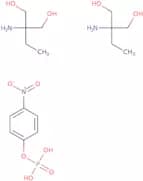
Degré de pureté :Min. 95%Couleur et forme :Clear Liquid4-Nitrophenyl phosphate mono(2-amino-2-ethyl-1,3-propanediol) salt monohydrate
CAS :Chromogenic substrate for alkaline phosphatase
Formule :C26H32N3NaO6S2Degré de pureté :Min. 95%Couleur et forme :PowderMasse moléculaire :457.41 g/mol