Substrats d'enzymes
Sous-catégories appartenant à la catégorie "Substrats d'enzymes"
1527 produits trouvés pour "Substrats d'enzymes"
5-Bromo-4-chloro-3-indolyl a-L-arabinofuranoside
5-Bromo-4-chloro-3-indolyl a-L-arabinofuranoside is a chromogenic substrate used to detect the specific enzymatic activity of alpha-L-arabinofuranosidase. After cleavage, 5-bromo-4-chloro-indoxyl is released, resulting in a blue to blue-green color change in bacterial colonies or media. 5-Bromo-4-chloro-3-indolyl a-L-arabinofuranoside is used in bacterial arabinan degradation assays (e.g. Bacillus spp.).Formule :C13H13BrClNO5Degré de pureté :Min. 98.0 Area-%Couleur et forme :PowderMasse moléculaire :378.6 g/molIsopropyl-β-D-thiogalactopyranoside - non-animal origin
CAS :A non-metabolizable allolactose analogue, widely used in molecular biology for overexpression of recombinant proteins from inducible systems under the control of lac promoter. IPTG binds to the LacI repressor and causes its release from the lac operator, allowing gene expression to take place. Present in vectors of pGEX, pGEM-T, pET, pRSET, pMAL class and others.Formule :C9H18O5SDegré de pureté :Min. 99.0 Area-%Masse moléculaire :238.3 g/mol2-Nitrophenyl b-D-arabinopyranoside
2-Nitrophenyl b-D-arabinopyranoside is a chemical compound that is used in the detection of ATP by chemiluminescence. It acts as a substrate for enzymes such as luciferase and catalase, which catalyze the oxidation of 2-nitrophenyl b-D-arabinopyranoside to phenol and carbon dioxide with the release of light. This reaction can be used in diagnostic applications such as detecting bacteria in culture media or diagnosing food spoilage. 2-Nitrophenyl b-D-arabinopyranoside can also be used as a conjugate to detect proteins or nucleic acids by fluorescence spectroscopy. The CAS number for this compound is 107772-06-1.
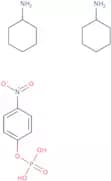
Degré de pureté :Min. 95%Masse moléculaire :271.22 g/mol4-Nitrophenyl phosphate, bis(cyclohexylammonium) salt
CAS :Chromogenic substrate yielding a soluble yellow chromophor for the colorimetric assay of phosphatases.Formule :C18H32N3O6PDegré de pureté :97.0 To 103.0%Masse moléculaire :417.45 g/molAldol® 515 caprylate solution, 0.50 M in DMSO, Biosynth Patent: EP 2427431 and US 8940909
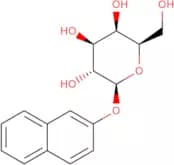
CAS :Aldol® 515 caprylate is a chromogenic and fluorogenic enzyme substrate used for detection of lipase activity. The colorless enzyme substrate is cleaved by C8 esterases, yielding development of red coloration. In addition, red fluorescence is generated when Aldol® 355 fluorescence enhancer or a suitable matrix is present. Aldol® 515 caprylate can be used in enzyme assays and live bacterial cultures. Aldol® 515 caprylate is suitable for use in liquid and solid media, under aerobic as well as anaerobic conditions.Formule :C31H34N2O3Degré de pureté :Of Solute (Hplc) Min. 90.0 Area-%Masse moléculaire :482.62 g/mol2-Naphthyl-beta-D-galactopyranoside
CAS :2-Naphthyl-β-D-galactopyranoside is a substrate for β-galactosidase. 2-Naphthol is released upon hydrolyzation. By simultaneous coupling with a suitable staining reagent, such as hexazonium p-rosaniline, the corresponding reddish-brown azo-dye is formed. Naphthols can also be detected by fluorescence analysis.Formule :C16H18O6Degré de pureté :Min. 99 Area-%Masse moléculaire :306.32 g/molN-Acetyl-3,7-dihydroxyphenoxazine
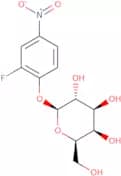
CAS :Fluorogenic substrate for peroxidaseFormule :C14H11NO4Degré de pureté :(1H-Nmr) Min. 95%Couleur et forme :Slightly Brown PowderMasse moléculaire :257.24 g/mol2-Fluoro-4-nitrophenyl b-D-galactopyranoside
CAS :2-Fluoro-4-nitrophenyl b-D-galactopyranoside is a chromogenic substrate in enzymatic assays with β-galactosidase. Commonly abbreviated as PFONPG, it is a hydrophilic compound that can be dissolved in saline and blood samples, which makes it a suitable candidate for diagnostic applications as a gene reporter probe by simple analytic methodologies. 2-Fluoro-4-nitrophenyl b-D-galactopyranoside have been used to detect and monitor the growth of prostate tumor cells.Degré de pureté :Min. 95%Couleur et forme :PowderMasse moléculaire :319.24 g/mol2-Naphthyl b-D-galactopyranoside
CAS :2-Naphthyl beta-D-galactopyranoside is a glycoside that is found in the flowers of the plant Eschscholzia californica. It is used as a localizer for bacterial strains and can be hydrolyzed by enzymes to release naphthalene. 2-Naphthyl beta-D-galactopyranoside has been shown to inhibit the growth of corynebacterium and diazonium salt, which may be due to its ability to bind to DNA and disrupt protein synthesis. The potential use of this molecule is for its insolubility, which prevents it from being absorbed by skin cells.
Formule :C16H18O6Degré de pureté :Min. 99 Area-%Couleur et forme :PowderMasse moléculaire :306.31 g/molD-Luciferin Firefly, potassium salt - endotoxin free
CAS :Water soluble substrate for firefly luciferase. Used for imaging the expression of the LUC marker gene and luciferase-fusion conjugates in living cells, tissues and organisms. Extensively utilized in reporter gene assays, immunoassays and hygiene monitoring. Endotoxin free product.
Formule :C11H7KN2O3S2Degré de pureté :Min. 95%Couleur et forme :PowderMasse moléculaire :318.42 g/mol4-Methylumbelliferyl phosphate, free acid
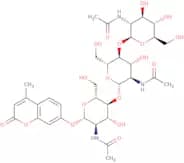
CAS :A sensitive fluorogenic substrate for fluorometric and UV-spectrophotometric assays of phosphatases. It is used for the detection of C. perfringens because acid phosphatase is a highly specific indicator for C. perfringens.Formule :C10H9O6PMasse moléculaire :256.15 g/mol4-Methylumbelliferyl N,N',N''-triacetyl-b-D-chitotrioside
CAS :4-Methylumbelliferyl N,N',N''-triacetyl-beta-D-chitotrioside is a fluorogenic substrate for chitinase. After enzymatic cleaveage, free 4-methylumbelliferone (also known as hymecromone) is released, exhibiting blue fluorescence upon excitation with UV light. The strongest fluorescence of 4-methylumbelliferone requires deprotonation of the hydroxyl group (thus requires alkaline pH), with a maximal fluorescence intensity obtained with excitation at 350 to 370 nm and emission at 440 to 470 nm. The use of 4-methylumbelliferyl N,N',N''-triacetyl-beta-D-chitotriosideas a substrate for measuring the chitinase activity is used for fungal infection assays.Formule :C34H47N3O18Degré de pureté :Min. 95.0 Area-%Couleur et forme :White Off-White PowderMasse moléculaire :785.75 g/mol4-Methylumbelliferyl-β-L-fucopyranoside
CAS :4-Methylumbelliferyl-beta-L-fucopyranoside is a fluorogenic substrate that is used in food testing. It also has uses as a chromogenic substrate and a ligand for biological studies. 4-Methylumbelliferyl-beta-L-fucopyranoside is a conjugate of 4-methylumbelliferone and beta-D-fucopyranosyl ester, which is an enzyme substrate for the detection of phosphatases. This product can be used to detect the activity of phosphatase enzymes in various media, including culture media, environmental testing, and staining. 4MUFBPY also has chemiluminescent properties that can be used for bioluminescence assays.Formule :C16H18O7Masse moléculaire :322.31 g/molRef: 3D-M-5541
1gÀ demander5gÀ demander250mgÀ demander500mgÀ demander2500mgÀ demander-Unit-ggÀ demander4-Nitrophenyl 2-acetamido-2-deoxy-a-D-galactopyranoside
CAS :4-Nitrophenyl 2-acetamido-2-deoxy-alpha-D-galactopyranoside is a chromogenic substrate for alpha-N-acetylgalactosaminidase. Upon hydrolysis, para-nitrophenol is released yielding a yellowish colour. 4-Nitrophenyl 2-acetamido-2-deoxy-alpha-D-galactopyranoside is used in different applications such as the diagnosis of Schindler-Kanzaki disease and other lysosomal storage disorders.Formule :C14H18N2O8Degré de pureté :Min. 98%Couleur et forme :White PowderMasse moléculaire :342.3 g/mol4-Methylumbelliferone
CAS :4-Methylumbelliferone is a coumarin derivative that inhibits the activity of enzymes such as p-nitrophenyl phosphate oxidase and aminopeptidase. It is used in vitro to study oxidative injury, which plays a role in the pathogenesis of inflammatory diseases, including primary sclerosing cholangitis and bone marrow transplantation. 4-Methylumbelliferone has been shown to induce apoptosis by increasing reactive oxygen species levels and activating toll-like receptor 4 (TLR4). It also has inhibitory effects on osteosarcoma cell proliferation in vitro.Formule :C10H8O3Masse moléculaire :176.17 g/mol4-Methylumbelliferyl α-D-xylopyranoside
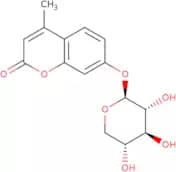
CAS :4-Methylumbelliferyl alpha-D-xylopyranoside is a fluorogenic substrate for alpha-xylosidase. After enzymatic cleaveage, free 4-methylumbelliferone (also known as hymecromone) is released, exhibiting blue fluorescence upon excitation with UV light. The strongest fluorescence of 4-methylumbelliferone requires deprotonation of the hydroxyl group (thus requires alkaline pH), with a maximal fluorescence intensity obtained with excitation at 350 to 370 nm and emission at 440 to 470 nm. The use of 4-methylumbelliferyl alpha-D-xylopyranosideas a substrate for measuring the alpha-xylosidase activity is used for oligosaccharidosis monitoring and other lysosomal storage disorder diagnosis.Formule :C15H16O7Degré de pureté :Min. 98 Area-%Couleur et forme :White PowderMasse moléculaire :308.28 g/mol4-Methylumbelliferyl 6-deoxy-2,3,4,6-tetra-O-acetyl-6-thio-β-D-glucopyranoside
4-Methylumbelliferyl 6-deoxy-2,3,4,6-tetra-O-acetyl-6-thio-beta-D-glucopyranoside is a fluorogenic substrate for beta-glucosidase. After enzymatic cleaveage, free 4-methylumbelliferone (also known as hymecromone) is released, exhibiting blue fluorescence upon excitation with UV light. The strongest fluorescence of 4-methylumbelliferone requires deprotonation of the hydroxyl group (thus requires alkaline pH), with a maximal fluorescence intensity obtained with excitation at 350 to 370 nm and emission at 440 to 470 nm. The use of 4-methylumbelliferyl 6-deoxy-2,3,4,6-tetra-O-acetyl-6-thio-beta-D-glucopyranosideas a substrate for measuring the beta-glucosidase activity is used for Gaucher disease diagnosis.Formule :C24H26O11SDegré de pureté :Min. 95%Couleur et forme :White to off-white solid.Masse moléculaire :522.52 g/mol6-Hexadecanoylamino-4-methylumbelliferyl phosphorylcholine - Moscerdam™ biochemical purity
CAS :6-Hexadecanoylamino-4-methylumbelliferyl phosphorylcholine (HMUPC) is a fluorogenic substrate of acid sphingomyelinase (ASM) in the application of the diagnosis of Niemann–Pick type A and B (NPAB). NPAB is one of the lysosomal storage diseases, caused by a deficiency of ASM. This deficiency results in the accumulation of sphingomyelin and other lipids in various tissues. The assay using HMUPC as the substrate shows rapid and robust determination of ASM activity. When combined with the unlabelled natural substrate such as sphingomyelin as a specific inhibitor of ASM activity, the specificity of assay is enhanced up to the level of the classical assay with radiolabelled natural substrate. HMUPC is also used as the substrate in the ASM assay to investigate the retention of lysosomal enzyme activity of bi-functional IgG-ASM fusion protein in the delivery across blood-brain barrier.
Formule :C31H51N2O7PDegré de pureté :Min. 97 Area-%Couleur et forme :White PowderMasse moléculaire :594.72 g/mol5-Bromo-4-chloro-3-indoxyl-N-acetyl-beta-D-galactosaminide
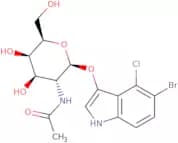
CAS :5-Bromo-4-Chloro-3-Indoxyl-N-Acetyl-Beta-D-Galactosaminide is a chromogenic substrate for detecting beta-galactosidase and GalNAc-transferase enzymes. Upon hydrolysis by the enzyme, it produces a blue-green colored compound that can be detected visually or measured spectrophotometrically. This substrate is useful in characterizing the activity of Beta-Galactosidase and GalNAc-transferase enzymes involved in glycobiology research and diagnostic applications.Formule :C16H18BrClN2O6Degré de pureté :Min. 98 Area-%Couleur et forme :Crystalline PowderMasse moléculaire :449.68 g/molOstazin brilliant red H-3B starch
Ostazin Brilliant Red H-3B is a water soluble, non-toxic, and non-hazardous substrate for enzymes that catalyze reactions involving the cleavage of β-D-glucosides. It is used as a chromogenic or fluorogenic substrate in diagnostic tests. Ostazin Brilliant Red H-3B can also be used in bioluminescence reaction with luciferase to measure ATP levels in living cells.Degré de pureté :Min. 95%AquaSpark® 515 Singlet Oxygen Probe, Ramot at Tel-Aviv University Ltd. Patent family WO 2017/130191
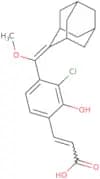
CAS :Singlet Oxygen Chemiluminescence Probe, SOCLFormule :C21H23ClO4Degré de pureté :Min. 95 Area-%Couleur et forme :PowderMasse moléculaire :374.13 g/mol2-Chloro-4-nitrophenyl α-D-mannopyranoside
CAS :2-Chloro-4-nitrophenyl alpha-D-mannopyranoside is a substrate used to measure the alpha-mannosidase activity. This enzyme plays a crucial role in the lysosomal degradation of asparagine-linked carbohydrate cores of glycoproteinsis. The use of 2-Chloro-4-nitrophenyl alpha-D-mannopyranoside in diagnostic assays is important as a deficiency in alpha-mannosidase leads to the accumulation of mannose-rich oligosaccharides in lysosomes, causing a range of health problems collectively known as alpha-mannosidosis.
Formule :C12H14ClNO8Degré de pureté :Min. 98 Area-%Couleur et forme :White PowderMasse moléculaire :335.69 g/mol3-Nitrophenyl b-D-galactopyranoside
CAS :Chromogenic substrate targeting beta-galactosidaseFormule :C12H15NO8Couleur et forme :PowderMasse moléculaire :301.25 g/mol4-Methylumbelliferyl-beta-D-galactopyranoside
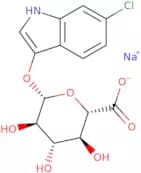
CAS :Fluorogenic substrate for β-D-galactosidase yielding a blue fluorescent solution upon cleavage.Formule :C16H18O8Degré de pureté :Min. 98.0 Area-%Masse moléculaire :338.32 g/mol6-Chloro-3-indolyl b-D-glucuronide sodium salt
CAS :6-Chloro-3-indolyl b-D-glucuronide sodium salt is a chromogenic substrate for beta-glucuronidase, a reporter gene used to monitor gene expression by detecting the enzyme's activity. It yields a salmon colored precipitate upon cleavage.
Degré de pureté :Min. 95%Couleur et forme :PowderMasse moléculaire :365.7 g/mol4-Nitrophenyl myristate
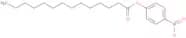
CAS :4-Nitrophenyl myristate (NphOMy) is a chromogenic enzyme substrate used as a diagnosis tool for detection of β-lactamase hydrolysis activities. In the presence of certain drugs, 4-nitrophenyl myristate HSA-Tyr411-catalyzed hydrolysis seems to be inhibited.Formule :C20H31NO4Degré de pureté :Min. 95 Area-%Couleur et forme :White PowderMasse moléculaire :349.46 g/mol4-Nitrophenyl N,N',N''-triacetyl-b-D-chitotriose
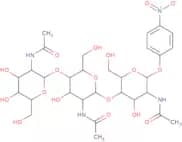
CAS :Substrate for determining hydrolytic activity of chitinaseDegré de pureté :Min. 95%Couleur et forme :White PowderMasse moléculaire :748.69 g/mol5-Bromo-6-chloro-3-indoxyl-N-acetyl-β-D-glucosaminide
CAS :Chromogenic substrate for N-Acetyl-β-D-glucosaminidase yielding a magenta precipitate.
Formule :C16H18BrClN2O6Degré de pureté :Min. 99 Area-%Masse moléculaire :449.69 g/molRef: 3D-B-7020
1gÀ demander5gÀ demander10gÀ demander500mgÀ demander2500mgÀ demander-Unit-ggÀ demanderN-(6-Hydroxyhexyl)trifluoroacetamide
CAS :Please enquire for more information about N-(6-Hydroxyhexyl)trifluoroacetamide including the price, delivery time and more detailed product information at the technical inquiry form on this pageFormule :C8H14F3NO2Masse moléculaire :213.2 g/mol4-Nitrophenyl b-D-thioglucopyranoside
CAS :4-Nitrophenyl b-D-thioglucopyranoside is a highly sensitive chromogenic substrate designed for the colorimetric detection and quantification of thioglucosidase enzymes. Upon enzymatic cleavage, it releases a highly absorbing 4-nitrophenyl moiety, generating a yellow color that can be readily measured spectrophotometrically. This substrate is widely utilized in the study of enzyme kinetics, substrate specificity, and inhibitor screening for thioglucosidases involved in various metabolic pathways and biological processes.Formule :C12H15NO7SDegré de pureté :Min. 95%Couleur et forme :White PowderMasse moléculaire :317.32 g/mol4-Methylumbelliferyl cholin phosphate
CAS :4-Methylumbelliferyl phosphocholine, commonly known as 4-MUPC, is a synthetic phosphodiester used as an enzyme substrate for phospholipase enzymes. 4-MUPC is used as a fluorogenic substrate to measure the activity of phopholipases, which are important mediators of cell signalling.Formule :C15H20NO6PDegré de pureté :Min. 99.0 Area-%Masse moléculaire :341.30 g/molAquaSpark® beta-D-glucoside, 10 mM in DMSO, Ramot at Tel-Aviv University Ltd. Patent family WO 2017/130191
CAS :AquaSpark® β-D-glucoside is a dioxetane-based water-soluble substrate for β-glucosidase activity. In microbiology, β-glucosidase probes can be used for the detection of Listeria spp., Enterococcus spp.,Klebsiella pneumoniae and other species.
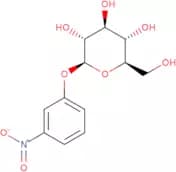
Formule :C34H39ClO12Masse moléculaire :675.12 g/mol3-Nitrophenyl β-D-glucopyranoside
CAS :3-Nitrophenyl beta-D-glucopyranoside is a chromogenic enzyme substrate commonly used to assay for beta-glucosidase activity. Upon hydrolysis by the enzyme, it produces a yellow product that can be easily detected by spectrophotometry. This substrate is often used in the field of carbohydrate chemistry and biochemistry to study enzyme kinetics and inhibition in both in vitro and in vivo systems.Formule :C12H15NO8Degré de pureté :Min. 95%Couleur et forme :White Yellow PowderMasse moléculaire :301.25 g/mol6-Nitro-3-indolyl-b-D-galactopyranoside
6-Nitro-3-indolyl-b-D-galactopyranoside is a chemiluminescent substrate that reacts with horseradish peroxidase to produce light. 6NIGP is used in the diagnostic field as a fluorogenic or chromogenic substrate for enzymes such as alkaline phosphatase, and as a staining agent for cells, tissues, and other biological materials. 6NIGP has been used in the detection of bacteria, fungi, parasites, and viruses. It is also used in food testing as an enzyme substrate. 6NIGP is purified by recrystallization from water or acetone and can be stored at −20°C.Degré de pureté :Min. 95%L-Luciferin, potassium salt
CAS :L-Luciferin is an enzyme substrate that is used in the detection of bioluminescence. It is a fluorogenic substrate that can be used to detect the presence of glucose in urine. L-Luciferin is also a chemiluminescent substrate that can be used to detect ATP, which is required for cell metabolism. L-Luciferin has been shown to be stable at pH levels ranging from 2.5 to 9 and can be stored for up to 3 years when stored at 4°C with no light or oxygen exposure. This product has CAS No. 754978-59-1, indicating high purity and quality. L-Luciferin will not stain or react with other compounds, making it highly suitable for use as a conjugate in diagnostic tests or as a ligand in fluorescent staining reactions.Formule :C11H7KN2O3S2Degré de pureté :Min. 98.0 Area-%Masse moléculaire :318.42 g/mol5-Bromo-6-chloro-3-indolyl α-D-glucopyranoside
CAS :5-Bromo-6-chloro-3-indolyl α-D-glucopyranoside is a chromogenic substrate that yields a magenta-colored product after cleavage. The chromophore 5-bromo-6-chloro-indoxyl is released, generating the observable color. It is used in Pompe disease diagnostics, a glycogen storage disorder, that measures the deffiency of alpha-glucosidase (GAA) that could lead to the accumulation of glycogen in lysosomes.
Formule :C14H15BrClNO6Degré de pureté :Min. 95%Couleur et forme :PowderMasse moléculaire :408.63 g/mol2-Chloro-4-nitrophenyl a-D-maltotrioside
CAS :2-Chloro-4-nitrophenyl a-D-maltotrioside (2CNP) is a potent hypoglycemic agent that has been shown to decrease postprandial blood glucose levels in humans. 2CNP is a white crystalline solid that is soluble in water and ethanol. The transfer reactions of 2CNP are enhanced by benzalkonium chloride, which forms an organic complex with the drug. The optimum concentration for the hypoglycemic effect of 2CNP is determined to be 10 μM, which can be detected using an optical sensor. This compound also inhibits α-amylase and other enzymes involved in carbohydrate metabolism, leading to the accumulation of glycogen and lowering the blood glucose level.
Formule :C24H34CiNO18Degré de pureté :Min. 95%Couleur et forme :Off-White Yellow PowderMasse moléculaire :659.98 g/molAldol® 515 palmitate, Biosynth Patent: EP 2427431 and US 8940909
CAS :Aldol® 515 palmitate is a chromogenic substrate that is used in food testing, diagnostics, and other applications. It has a high purity and is conjugated to various ligands for specific applications. Aldol® 515 palmitate is an excellent chemiluminescent substrate for the detection of ATP and other nucleotides. It also has high bioluminescence activity for the detection of adenosine-5'-triphosphate (ATP) or luciferin as well as enzyme substrates to measure β-galactosidase or β-glucuronidase activity.Formule :C39H50N2O3Degré de pureté :Min. 95.0 Area-%Masse moléculaire :594.83 g/molCoelenterazine, native
CAS :Coelenterazine is the substrate for the enzymes Renilla luciferase, Gaussia luciferase and other luciferase enzymes. Marine organisms like squids, shrimps, fish and jellyfish use coelenterazine to produce spectacular bioluminescence (in analogy with insects which utilize firefly luciferine). Today, coelenterazine is used in numerous applications like immunoassays, ELISA, monitoring of reporter genes, chemiluminescence detection of superoxide anion and peroxynitritein cells or tissues. The substrate is also used in bioluminescence resonance energy transfer (BRET), HTS and protein based methods for Calcium detection. The isolation and structure determination of coelenterazine was reported independently by two different groups in the seventies who discovered the molecule in sea pansy (Renilla reniformis) and in the cnidarian Aequorea victoria, respectively. Interestingly it was also found that the luminescent jellyfish Aequorea victoria does not produce coelenterazine itself but it rather assimilates it through ingestion of small preys like shrimps and copepods. This product Coelenterazine, native, which is provided as a powder, is identical in quality and chemistry to our product Coelenterazine, native, dried.Formule :C26H21N3O3Degré de pureté :Min. 95 Area-%Masse moléculaire :423.48 g/mol5-Bromo-4-chloro-3-indolyl b-D-galactofuranoside
5-Bromo-4-chloro-3-indolyl b-D-galactofuranoside is a chromogenic substrate used to detect the specific enzymatic activity of beta-D-galactofuranosidase. After cleavage, 5-bromo-4-chloro-indoxyl is released, resulting in a blue to blue-green color change in bacterial colonies or media. 5-Bromo-4-chloro-3-indolyl b-D-galactofuranoside is used in assays for detecting bacterial pathogens (e.g., Mycobacterium tuberculosis).Formule :C14H15BrClNO6Degré de pureté :Min. 95%Couleur et forme :PowderMasse moléculaire :408.63 g/mol4-Nitrophenyl a-D-mannopyranoside
CAS :4-Nitrophenyl a-D-mannopyranoside is a chromogenic pNP enzyme substrate that enables the detection and quantification of a-D-mannosidase activity in various biological samples through a colorimetric assay. The hydrolysis of the substrate by the enzyme releases 4-nitrophenol, a yellow compound whose absorption can be measured spectrophotometrically. Applications for this substrate span biomedical research, disease diagnostics, and industrial enzyme production.
Formule :C12H15NO8Degré de pureté :Min. 98.0 Area-%Couleur et forme :Off-White PowderMasse moléculaire :301.25 g/mol8-Hydroxyquinoline-beta-D-glucuronic acid, sodium salt
CAS :8-Hydroxyquinoline-beta-D-glucuronic acid, sodium salt is a fluorogenic substrate that can be used for enzymatic detection of peroxidase. The substrate is available in a variety of forms, including powder and liquid. This product has been tested for environmental and bioluminescence activity, as well as food safety. It has also been shown to be a useful ligand in immunoassays.
Formule :C15H14NNaO7Degré de pureté :Min. 98 Area-%Couleur et forme :White PowderMasse moléculaire :343.26 g/mol4-Nitrophenyl-alpha-D-glucopyranoside
CAS :Chromogenic substrate for α-D-glucosidase yielding a yellow solution upon cleavage. Also used for the detection of glucansucrases and for yeast α-D-glucosidase and for studies of the crystal structure of the complexes of concanavalin A.
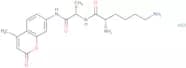
Formule :C12H15NO8Degré de pureté :Min. 98.0 Area-%Masse moléculaire :301.26 g/molL-Lysyl-L-alanine 7-amido-4-methylcoumarin dihydrochloride
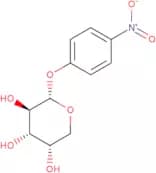
CAS :L-Lysyl-L-alanine 7-amido-4-methylcoumarin dihydrochloride is a fluorogenic peptide substrate for aminopeptidase. This AMC peptide substrate is normally used to rapidly profile the N-terminal specificity of proteases.Degré de pureté :Min. 98.0 Area-%Couleur et forme :Powder4-Nitrophenyl a-L-arabinopyranoside
CAS :Substrate for a-L-arabinopyranosidaseFormule :C11H13NO7Degré de pureté :Min. 98 Area-%Couleur et forme :White PowderMasse moléculaire :271.22 g/mol5-Bromo-6-chloro-3-indolyl a-D-galactopyranoside
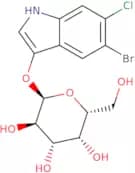
CAS :5-Bromo-6-chloro-3-indolyl a-D-galactopyranoside is a chromogenic substrate that yields a magenta-colored product after cleavage. The chromophore 5-bromo-6-chloro-indoxyl is released, generating the observable color. It is used in glycolipid metabolism studies.Formule :C14H15BrClNO6Couleur et forme :White to off-white solid.Masse moléculaire :408.63 g/molResorufin b-D-xylobioside
Resorufin b-D-xylobioside is a fluorogenic substrate for xylanases useful for xylanase activity assays.Degré de pureté :Min. 95%Couleur et forme :PowderMasse moléculaire :477.42 g/mol5-Bromo-4-chloro-1-methyl-3-indolyl-α-D-glucopyranoside
CAS :5-Bromo-4-chloro-1-methyl-3-indolyl-α-D-glucopyranoside is a fluorescent substrate used for the detection of α-glucuronidase.Formule :C15H17BrClNO6Degré de pureté :Min. 99.0 Area-%Masse moléculaire :422.66 g/molAc-Abu-Tle-Leu-Gln-AMC TFA salt
A fluorogenic substrate for detection of enzymatic activity of the SARS-CoV-2 Mpro protease. The fluorophore 7-Amino-4-methylcoumarin (AMC) is linked to the tetrapeptide via a peptide bond at the C-terminal of the glutamine residue. Following the hydrolytic activity of the Mpro protease, the fluorogenic AMC group get released from the substrate, generating a fluorescent signal (Ex 380 nm / Em 455 nm).Formule :C33H48N6O8(freebase)Degré de pureté :Min. 95.0 Area-%Masse moléculaire :656.77 g/mol5-Iodo-3-indolyl-b-D-galactopyranoside-6-sulfate sodium salt
5-Iodo-3-indolyl-b-D-galactopyranoside-6-sulfate sodium salt is a high purity, water soluble fluorogenic substrate for the detection of beta-galactosidase activity. This product is used in food testing, environmental testing, and diagnostics. 5-Iodo-3-indolyl-b-D-galactopyranoside (5IIAG) is a beta galactosidase substrate that provides a convenient method for determining beta galactosidase activity. This product is also used as an indicator to measure the rate of hydrolysis of ester bonds in other compounds that contain acid functional groups such as glycerides and oils.Degré de pureté :Min. 95%Masse moléculaire :523.24 g/mol