Substrats d'enzymes
Sous-catégories appartenant à la catégorie "Substrats d'enzymes"
1526 produits trouvés pour "Substrats d'enzymes"
5-Bromo-6-chloro-3-indoxylphosphat, disodium salt trihydrate
5-Bromo-6-chloro-3-indoxylphosphate, disodium salt trihydrate is a bioluminescent substrate that can be used in a variety of diagnostic applications. This compound reacts with luciferase to yield light and can serve as an indicator for various enzymes and chemical reactions. 5-Bromo-6-chloro-3-indoxylphosphate, disodium salt trihydrate has been shown to be compatible with both culture media and food testing.Degré de pureté :Min. 95%4-Nitrophenyl phosphate disodium hexahydrate
CAS :4-Nitrophenyl phosphate disodium salt hexahydrate is a substrate of the hydrolase alkaline phosphatase. The products of the enzymatic reaction are 4-nitrophenol and phosphate.Formule :C6H16NNa2O12PCouleur et forme :PowderMasse moléculaire :371.15 g/molLuc-coliforms Na
CAS :Luc-coliforms Na is a high quality, chromogenic substrate for the detection of coliforms. It is used widely in the food industry to detect whether coliforms are present in milk, cheese, and other dairy products. Luc-coliforms Na provides a color change from yellow to blue when it reacts with coliforms and has a high pH range of 4.0-8.0. Luc-coliforms Na has a CAS number of 93824-43-4.Degré de pureté :Min. 95%D-Luciferin sodium salt
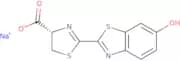
CAS :Bioluminescent substrate for luciferaseFormule :C11H7N2NaO3S2Degré de pureté :Min. 99 Area-%Couleur et forme :PowderMasse moléculaire :302.3 g/molNaphthol AS-MX acetate
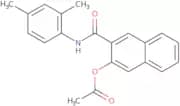
CAS :Modified naphtol AS substrate used in histochemical and cytochemical staining
Formule :C21H19NO3Degré de pureté :Min. 80%Couleur et forme :White Off-White PowderMasse moléculaire :333.38 g/mol4-Methylumbelliferyl b-D-galactopyranoside-6-sulphate sodium salt - Moscerdam™ biochemical purity
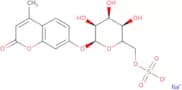
CAS :4-MU-Gal-6S (M4A) is a fluorogenic substrate of galactose-6-sulfate sulfatase (GALNS), used for the diagnosis of Mucopolysaccharidosis IV type A (MPS IV A). MPS IV, also known as Morquio syndrome, is a rare metabolic disorder in which the human body cannot process glycosaminoglycans (GAGs). MPS IV A is caused by the deficiency of the enzyme N-acetyl-galactosamine-6-sulfatase resulting in accumulation of keratan and chondroitin sulfate in tissues. M4A is used as the GALNS substrate in the anti-lysosomal enzyme antibody assay for the treatments of lysosomal storage disorders (LSDs) with enzyme replacement therapies (ERTs).Formule :C16H17NaO11SDegré de pureté :Min. 97 Area-%Couleur et forme :White PowderMasse moléculaire :440.36 g/molLuciferin-alpha-D-galactoside, sodium salt
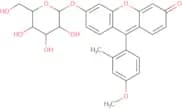
Luciferin-alpha-D-galactoside, sodium salt is a fluorogenic substrate for use in food testing and environmental testing. It can be used as a chromogenic substrate for the detection of conjugates of bile acids and cholesterol. This product is also used in diagnostic medical tests, such as ligand binding assays, chemiluminescence, and bioluminescence.Degré de pureté :Min. 95%6-(b-D-Galactopyranosyloxy)-9-(4-methoxy-2-methylphenyl)-3H-xanthen-3-one
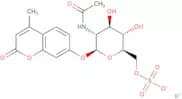
CAS :6-(b-D-Galactopyranosyloxy)-9-(4-methoxy-2-methylphenyl)-3H-xanthen-3-one (MGBG) is a hydrophilic activatable fluorescence probe that has been shown to be effective in photodynamic therapy. MGBG is activated by light and has a high affinity for esterases, which are found in many tissues. The fluorescence of the MGBG is quenched by the esterase enzymes, but when it is exposed to light and oxygen, the probe becomes activated and its fluorescence increases. MGBG can be used as a fluorescent probe for intraperitoneal tumor resection or as a fluorescent imaging agent in optical microscopy.Degré de pureté :Min. 95%Masse moléculaire :494.49 g/mol4-Methylumbelliferyl 2-acetamido-2-deoxy-β-D-glucopyranoside-6-sulfate potassium salt
CAS :4-Methylumbelliferyl 2-acetamido-2-deoxy-beta-D-glucopyranoside-6-sulfate potassium salt is a fluorogenic substrate for beta-N-acetylglucosaminidase. After enzymatic cleaveage, free 4-methylumbelliferone (also known as hymecromone) is released, exhibiting blue fluorescence upon excitation with UV light. The strongest fluorescence of 4-methylumbelliferone requires deprotonation of the hydroxyl group (thus requires alkaline pH), with a maximal fluorescence intensity obtained with excitation at 350 to 370 nm and emission at 440 to 470 nm. The use of 4-methylumbelliferyl 2-acetamido-2-deoxy-beta-D-glucopyranoside-6-sulfate potassium saltas a substrate for measuring the beta-N-acetylglucosaminidase activity is used for diagnosis of Mucopolysaccharidosis IIIB (MPS IIIB) (a rare lysosomal storage disorder) and Sanfilippo B syndrome screening.
Formule :C18H20KNO11SDegré de pureté :Min. 95%Couleur et forme :White Off-White PowderMasse moléculaire :497.52 g/molCoelenterazine - lyopholised
CAS :Coelenterazine is a bio-luminescent substrate of luciferases such as Renilla luciferase (Rluc) and Gaussia luciferase (Gluc). The main applications of Coelenterazine are monitoring of reporter genes and chemiluminescence-based methods for Calcium detection. The substrate is also used in bioluminescence resonance energy transfer (BRET), ELISA, HTS and chemiluminescent detection of superoxide anion and peroxynitritein cells or tissues. About this grade Coelenterazine, native, dried (C-7002): in order to provide milligram and sub-milligram quantities of native Coelenterazine we pre-dissolve the substance; defined amounts of Coelenterazine are subsequently dried under nitrogen in individual vials. Coelenterazine, native, dried is identical in quality and chemistry to our product Coelenterazine, native which is provided as a powder. Information to the user: since Coelenterazine is sensitive to oxygen, degas your solvents for stock solutions, if possible. To dissolve Coelenterazine, native, dried please proceed as follows. 1) Add the appropriate amount of solvent. If possible through the septum using a needle. Otherwise open the cap with pliers. 2) Vortex the closed vial briefly to completely dissolve the content of the vial. 3) Take out the solution, if possible with a needle through the septum.Formule :C26H21N3O3Degré de pureté :Min. 95 Area-%Masse moléculaire :423.48 g/molLuc-Enterococcus K
Luc-Enterococcus K (LK) is a Chromogenic substrate that can be used for the detection of Enterococcus. LK is a conjugate of beta-lactamase and luciferase, which are both enzymes. LK is used in diagnostics to detect the presence of Enterococcus in food and environmental samples. LK can also be used as a chemiluminescent substrate for the detection of Enterococcus in clinical specimens or as an enzyme substrate for the detection of Enterococcus in clinical specimens. CAS No.: 64739-74-8Formule :C17H17KN2O8S2Degré de pureté :Min. 94 Area-%Masse moléculaire :480.55 g/mol4-Methylumbelliferyl-alpha-D-glucopyranoside
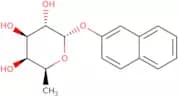
CAS :Fluorogenic substrate for α-D-glucosidase. It has been used in studies of Pompe's disease (Glycogen Storage Disease). Used for differentiation and enumeration of Enterobactersakazakii based on α-glucosidase activity.Formule :C16H18O8Degré de pureté :Min. 99 Area-%Masse moléculaire :338.32 g/mol2-Naphthyl-alpha-L-fucopyranoside
CAS :Chromogenic substrate for α-L-Fucosidase. 2-naphthol is released upon hydrolyzation. By simultaneous coupling with a suitable staining reagent, such as hexazonium p-rosaniline, the corresponding azo-dye is formed. Naphthols can also be detected by fluorescence analysis.Formule :C16H18O5Degré de pureté :Min. 98 Area-%Masse moléculaire :290.32 g/mol4-Methylumbelliferyl phosphate, disodium salt trihydrate
CAS :Sensitive fluorogenic substrate for fluorometric and UV-spectrophotometric assays of phosphatases.Formule :C10H13Na2O9PMasse moléculaire :354.16 g/molLuciferin-α-D-galactoside, sodium salt
Luciferin-alpha-D-galactoside, sodium salt (LDA) is a bioluminescence substrate. It is used in diagnostic tests for the detection of bacteria and fungi. LDA is also used to measure the effectiveness of biocides and disinfectants. This product has been shown to be a potent fluorogenic substrate in chemiluminescent assays that can be used effectively with firefly luciferase.
Formule :C17H17NaN2O8S2Degré de pureté :Min. 94 Area-%Masse moléculaire :464.44 g/molRef: 3D-L-8126
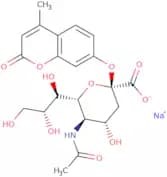
5mgÀ demander10mgÀ demander25mgÀ demander50mgÀ demander100mgÀ demander-Unit-mgmgÀ demander2'-(4-Methylumbelliferyl)-alpha-D-N-acetylneuraminic acid, sodium salt
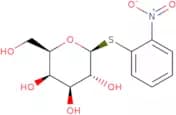
CAS :4-Methylumbelliferyl N-acetyl-a-D-neuraminic acid sodium salt (4-MUNANA) is a fluorogenic substrate of neuraminidase. 4-Methylumbelliferone is released from 4-MUNANA by neuraminidase in the assay and can be detected fluorometrically with excitation at 365-380 nm and emission at 445-454 nm. It can also be used for fluorescent staining of sialidases in PAGE.Formule :C21H24NNaO11Degré de pureté :Min. 98 Area-%Masse moléculaire :489.42 g/mol2-Nitrophenyl-β-D-thiogalactopyranoside
CAS :2-Nitrophenyl-beta-D-thiogalactopyranoside is a chromogenic substrate used to detect the presence of galactosidase enzymes in various biological and biochemical assays. It consists of a nitrophenyl group attached to a galactose sugar molecule through a thioglycosidic bond. When acted upon by enzymes such as galactosidases, it releases the colored nitrophenyl group, which can be detected using spectrophotometry. This substrate is commonly used in assays for the detection of LacZ activity in bacterial cultures, as lacZ encodes for β-galactosidase.Formule :C12H15NO7SDegré de pureté :Min. 98 Area-%Couleur et forme :Yellow PowderMasse moléculaire :317.32 g/molL-Leucine 7-amido-4-methylcoumarin hydrochloride
CAS :Sensitive fluorogenic substrate for leucine aminopeptidase or a broad specificity aminopeptidase like aminopeptidase M that releases a bright blue fluorescent dye, 7-amino-4-methylcoumarin upon enzyme activity (excitation 380nm emission 440nm).Formule :C16H21ClN2O3Degré de pureté :Min. 97.5 Area-%Masse moléculaire :324.81 g/molRef: 3D-L-2800
1gÀ demander100mgÀ demander250mgÀ demander500mgÀ demander2500mgÀ demander-Unit-ggÀ demander5-Nitro-3-indolyl-b-D-galactopyranoside
5-Nitro-3-indolyl-b-D-galactopyranoside is a substrate for a number of enzymes, including beta-galactosidase, beta-glucuronidase, and beta-mannosidase. It is used as an enzyme substrate in diagnostics to measure the activity of these enzymes. 5N3IG was also used to study the effects of conjugation on enzyme activity. 5N3IG is available in high purity and high quality at CAS No.
Degré de pureté :Min. 95%Aldol® 515 acetate, Biosynth Patent: EP 2427431 and US 8940909
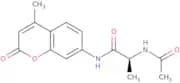
CAS :Aldol® 515 acetate is a chromogenic and fluorogenic substrate, used for detection of esterase activity. The colorless product is cleaved by purified esterase, or esterase secreted by microorganisms in liquid or solid media, yielding a red color and red fluorescence signal when Aldol® 355 fluorescence enhancer or a suitable matrix is present. Aldol® 515 acetate can be used under aerobic and anaerobic conditions. Well detectable color/fluorescence of bacterial colonies or liquid cultures is obtained within 16-48 h. In the presence of a purified esterase, color and fluorescence develops within minutes to few hours.Formule :C25H22N2O3Degré de pureté :Min. 95.0 Area-%Masse moléculaire :398.45 g/molAcetyl-L-alanine 7-amido-4-methylcoumarin
CAS :Acetyl-L-alanine 7-amido-4-methylcoumarin is a fluorogenic substrate for aminopeptidase. The enzyme cleaves the N-terminal amino acids, yielding a blue fluorescent solution.
Formule :C15H16N2O4Degré de pureté :Min. 98 Area-%Couleur et forme :PowderMasse moléculaire :288.3 g/mol4-Methylumbelliferyl-2-O-(α-L-fucopyranosyl)-β-L-fucopyranoside
4-Methylumbelliferyl-2-O-(alpha-L-fucopyranosyl)-beta-L-fucopyranoside is a fluorogenic substrate for alpha-L-fucosidase. After enzymatic cleaveage, free 4-methylumbelliferone (also known as hymecromone) is released, exhibiting blue fluorescence upon excitation with UV light. The strongest fluorescence of 4-methylumbelliferone requires deprotonation of the hydroxyl group (thus requires alkaline pH), with a maximal fluorescence intensity obtained with excitation at 350 to 370 nm and emission at 440 to 470 nm. The use of 4-methylumbelliferyl-2-O-(alpha-L-fucopyranosyl)-beta-L-fucopyranosideas a substrate for measuring the alpha-L-fucosidase activity is used for diagnosis of fucosidosis (defficiency of L-fucosidase).Degré de pureté :Min. 95%Couleur et forme :White/Off-White SolidMasse moléculaire :468.45 g/mol5-Bromo-6-chloro-3-indoxyl sulfate, potassium salt
CAS :5-Bromo-6-chloro-3-indoxyl sulfate, potassium salt is a fluorogenic substrate for the enzyme alkaline phosphatase. This compound is used in the detection of alkaline phosphatase activity as well as in many other applications such as diagnostic tests and environmental testing. 5-Bromo-6-chloro-3-indoxyl sulfate, potassium salt is available at high purity and quality.Formule :C8H4BrClKNO4SDegré de pureté :Min. 98 Area-%Masse moléculaire :364.65 g/mol5-Bromo-4-chloro-3-indoxyl-α-D-N-acetylneuraminic acid, cyclohexylammonium salt
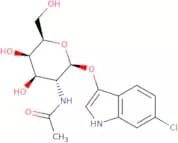
5-Bromo-4-chloro-3-indoxyl-alpha-D-N-acetylneuraminic acid, cyclohexylammonium salt is a Fluorogenic substrate used for the detection of an enzyme that converts sialic acid to fluorescein. This product has a high quality and purity with a CAS number. It is used in Culture media as a conjugate, Enzyme substrate, Food testing, High purity, Diagnostics, ligand, Chromogenic substrate, Environmental testing. The product has been tested and found to be safe for use with animals and humans.Formule :C25H35BrClN3O9Degré de pureté :Min. 99.5 Area-%Masse moléculaire :636.92 g/mol6-Chloro-3-indoxyl-N-acetyl-β-D-galactosaminide
CAS :Chromogenic substrate for N-Acetyl-β-D-galactosaminidase yielding a salmon-colored precipitate.Formule :C16H19ClN2O6Degré de pureté :Min. 98.0 Area-%Masse moléculaire :370.79 g/molRef: 3D-C-4762
1gÀ demander50mgÀ demander100mgÀ demander250mgÀ demander500mgÀ demander-Unit-ggÀ demanderN-Acetyl-3,7-dihydroxyphenoxazine
CAS :N-Acetyl-3,7-dihydroxyphenoxazine is a fluorescent probe, which is synthesized from chemical precursors and used primarily in biochemical research. This compound acts by undergoing a chemical reaction with hydrogen peroxide, resulting in the formation of resorufin, a highly fluorescent compound. The distinctive property of this probe is its capacity to produce a measurable fluorescent signal upon interaction with hydrogen peroxide, making it an invaluable tool for detecting and quantifying this reactive oxygen species.
Formule :C14H11NO4Masse moléculaire :257.24 g/molRef: 3D-J-100008
1gÀ demander5gÀ demander250mgÀ demander500mgÀ demander2500mgÀ demander-Unit-ggÀ demanderIsopropyl-β-D-thiogalactopyranoside, <5ppm dioxane, plant origin (ex peach gum)
CAS :A non-metabolizable allolactose analogue, widely used in molecular biology for overexpression of recombinant proteins from inducible systems under the control of lac promoter. IPTG binds to the LacI repressor and causes its release from the lac operator, allowing gene expression to take place. Present in vectors of pGEX, pGEM-T, pET, pRSET, pMAL class and others.Formule :C9H18O5SDegré de pureté :Min. 99.0 Area-%Masse moléculaire :238.30 g/molRef: 3D-I-8070
1kgÀ demander50gÀ demander100gÀ demander250gÀ demander500gÀ demander-Unit-ggÀ demanderCoelenterazine e
CAS :Coelenterazine e is a synthetic, fluorescent amino acid that can be used to measure calcium ion concentration. It binds to calcium ions and emits light when excited with blue light. Coelenterazine e is an analog of coelenteramide, which is a luminescent protein found in jellyfish. Coelenterazine e has been shown to emit fluorescence when it interacts with calcium ions, while coelenteramide emits bioluminescence instead. The emission of light from coelenterazine e is due to the stabilization of the molecule by calcium ions.Formule :C28H23N3O3Degré de pureté :Min. 90.0 Area-%Masse moléculaire :449.51 g/molRef: 3D-C-7020
5mgÀ demander10mgÀ demander25mgÀ demander50mgÀ demander100mgÀ demander-Unit-mgmgÀ demander4-Nitrophenyl b-L-arabinopyranoside
CAS :4-Nitrophenyl beta-L-arabinopyranoside is a chromogenic substrate for beta-L-arabinosidase. Upon hydrolysis, para-nitrophenol is released yielding a yellowish colour. 4-Nitrophenyl beta-L-arabinopyranoside is used in different applications such as the Bacterial arabinan degradation assays, gut microbiome analysis
Formule :C11H13NO7Degré de pureté :Min. 98 Area-%Couleur et forme :White PowderMasse moléculaire :271.22 g/mol6-Bromo-2-naphthyl b-D-glucuronide
CAS :6-Bromo-2-naphthyl beta-D-glucuronide is a substrate for beta-glucuronidase, an enzyme involved in detoxification and bacterial metabolism. Upon enzymatic hydrolysis, it releases 6-bromo-2-naphthol, which forms a detectable dye when reacted with diazonium salts. This compound is widely used in microbiology to detecting E. coli in water testing and histochemical staining. 6-Bromo-2-naphthyl beta-D-glucuronide is also been used in cancer research studies. It has been found that some tumors are related to a high activity of beta-glucuronidase, responsible to reactivate the carcinogens and promote tumor progression, developing a drug resistance to chemotherapy.Formule :C16H15BrO7Degré de pureté :Min 97%Couleur et forme :White Off-White PowderMasse moléculaire :399.2 g/mol5-Bromo-4-chloro-3-indolyl nonanoate
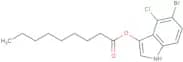
CAS :5-Bromo-4-chloro-3-indolyl nonanoate is a fluorogenic substrate that is used in the detection of enzymes. The substrate reacts with various enzymes and produces a fluorescent product, which can be detected using a fluorimeter or luminometer. It has been shown to be active against β-galactosidase, α-chymotrypsin, and β-glucuronidase. This compound may also be used as an enzyme substrate for the detection of bacteria in culture media or for food testing. 5-Bromo-4-chloro-3 indolyl nonanoate is not mutagenic or genotoxic when tested on bacterial cells.Formule :C17H21BrClNO2Degré de pureté :Min. 95%Masse moléculaire :386.71 g/mol4-Methylumbelliferyl-N-acetyl-β-D-glucosaminide
CAS :Fluorogenic substrate for N-Acetyl-β-D-glucosaminidase yielding a blue fluorescent solution. Used for rapid identification of Salmonella species.Formule :C18H21NO8Degré de pureté :Min. 99 Area-%Masse moléculaire :379.37 g/molN-CBZ-L-Lysyl-L-lysyl-L-arginine 7-amido-4-methylcoumarin triacetate
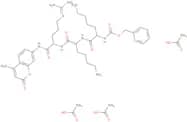
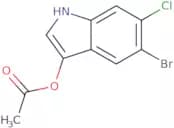
CAS :Produit contrôléN-CBZ-L-Lysyl-L-lysyl-L-arginine 7-amido-4-methylcoumarin triacetate is a synthetic peptide substrate used as a fluorogenic substrate for aminopeptidase.Formule :C35H51N9O7•(C2H4O2)3Degré de pureté :Min. 95%Couleur et forme :PowderMasse moléculaire :903.03 g/mol5-Bromo-6-chloro-3-indolyl acetate
CAS :5-Bromo-6-chloro-3-indolyl acetate is a chromogenic substrate that yields a magenta-colored product after cleavage. The chromophore 5-bromo-6-chloro-indoxyl is released, generating the observable color. It is used in bacterial esterase detection (e.g. Staphylococcus spp.).
Formule :C10H7BrClNO2Degré de pureté :Min. 98 Area-%Couleur et forme :PowderMasse moléculaire :288.52 g/mol4-Methylumbelliferyl-β-D-ribofuranoside
CAS :4-Methylumbelliferyl-beta-D-ribofuranoside is a chemical compound that belongs to the class of phenols. It has been found in Australian plants and animals. 4-Methylumbelliferyl-beta-D-ribofuranoside is used as a corrosion inhibitor. This chemical has been shown to be effective against corrosion in mammals.br>br> 4-Methylumbelliferyl-beta-D-ribofuranoside can also be used as a fluorescent probe for studying cell membrane activity.Formule :C15H16O7Degré de pureté :Min. 99 Area-%Masse moléculaire :308.29 g/molRef: 3D-M-6190
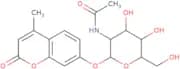
1gÀ demander5gÀ demander250mgÀ demander500mgÀ demander2500mgÀ demander-Unit-ggÀ demander4-Methylumbelliferyl 2-acetamido-2-deoxy-a-D-glucopyranoside
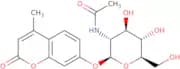
CAS :4-Methylumbelliferyl 2-acetamido-2-deoxy-alpha-D-glucopyranoside is a fluorogenic substrate for alpha-N-acetylglucosaminidase. After enzymatic cleaveage, free 4-methylumbelliferone (also known as hymecromone) is released, exhibiting blue fluorescence upon excitation with UV light. The strongest fluorescence of 4-methylumbelliferone requires deprotonation of the hydroxyl group (thus requires alkaline pH), with a maximal fluorescence intensity obtained with excitation at 350 to 370 nm and emission at 440 to 470 nm. The use of 4-methylumbelliferyl 2-acetamido-2-deoxy-alpha-D-glucopyranosideas a substrate for measuring the alpha-N-acetylglucosaminidase activity is used for Sanfilippo syndrome B screening and mucopolysaccharidosis diagnosis.Formule :C18H21NO8Degré de pureté :Min. 98 Area-%Couleur et forme :PowderMasse moléculaire :379.36 g/mol4-Nitrophenyl 2-acetamido-2-deoxy-a-D-glucopyranoside
CAS :4-Nitrophenyl 2-acetamido-2-deoxy-a-D-glucopyranoside is a chromogenic pNP substrate specifically designed for the analysis of N-acetylglucosaminidase activity. Upon enzyme action, the substrate releases 4-nitrophenol, a yellow compound that can be detected by spectrophotometric methods, providing a reliable and sensitive means of quantifying enzyme activity. This versatile substrate is widely used in biochemical studies, disease diagnostics, and the enzyme production industry.Formule :C14H18N2O8Couleur et forme :White Off-White PowderMasse moléculaire :342.3 g/mol6-Chloro-3-indoxyl choline phosphate
CAS :6-Chloro-3-indoxyl choline phosphate is a chromogenic substrate for phosphatidylcholine-specific phospholipase C (PC-PLC) for the detection of mibrobial metabolites. The use of this specific substrate permits monitoring the activity of PC-PLC. This an important enzyme for the regulation of steady-state levels of phosphatidylcholine (PC) and diacylglycerol (DAG). Abnormally high levels of PC-PLC activity in various tissues have been linked to many disease progressions.Formule :C13H18ClN2O4PDegré de pureté :Min. 99 Area-%Couleur et forme :PowderMasse moléculaire :332.72 g/mol3-(7-Hydroxycoumarin-3-carboxamido)propyl 4-O-(b-D-galactopyranosyl)-b-D-glucopyranoside
3-(7-Hydroxycoumarin-3-carboxamido)propyl 4-O-(b-D-galactopyranosyl)-b-D-glucopyranoside is a fluorogenic substrate that is used for the detection of beta-galactosidase. It has been shown to be an efficient substrate for the enzyme beta galactosidase and can be used to detect this enzyme in cell culture media and other diagnostic applications. 3-(7-Hydroxycoumarin-3-carboxamido)propyl 4-O-(b-D-galactopyranosyl)-b-D-glucopyranoside can also be used as a chromogenic substrate, which is added to a reaction mixture containing beta galactosidase, where it is hydrolyzed by the enzyme to produce a blue color. This product also has food testing and environmental testing applications.Degré de pureté :Min. 95%4-Methylumbelliferyl-β-L-fucopyranoside
CAS :4-Methylumbelliferyl-beta-L-fucopyranoside is a fluorogenic substrate that is used in food testing. It also has uses as a chromogenic substrate and a ligand for biological studies. 4-Methylumbelliferyl-beta-L-fucopyranoside is a conjugate of 4-methylumbelliferone and beta-D-fucopyranosyl ester, which is an enzyme substrate for the detection of phosphatases. This product can be used to detect the activity of phosphatase enzymes in various media, including culture media, environmental testing, and staining. 4MUFBPY also has chemiluminescent properties that can be used for bioluminescence assays.Formule :C16H18O7Masse moléculaire :322.31 g/molRef: 3D-M-5541
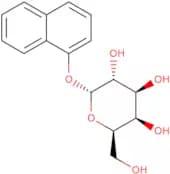
1gÀ demander5gÀ demander250mgÀ demander500mgÀ demander2500mgÀ demander-Unit-ggÀ demander1-Naphthyl a-D-galactopyranoside
CAS :1-Naphthyl a-D-galactopyranoside is a chromogenic substrate use to detect alpha-galactosidase activity.Formule :C16H18O6Degré de pureté :Min. 95%Couleur et forme :PowderMasse moléculaire :306.31 g/molGlycine 7-amido-4-methylcoumarin hydrobromide
CAS :Glycine 7-amido-4-methylcoumarin hydrobromide is a chromogenic substrate that can be used for the detection of alkaline phosphatase. It reacts with the enzyme to produce a blue color, which can be measured spectrophotometrically. The product is also used as a ligand in cell culture media and as a diagnostic agent in environmental testing. It has been shown to be an excellent substrate for chemiluminescence reactions with luminol and luciferin, and bioluminescence reactions with luciferase. Glycine 7-amido-4-methylcoumarin hydrobromide is available from several suppliers at different prices, but we are able to offer it at a competitive price due to our high quality standards. The following product description was generated for 6-Fluoro-3-indoxyl-beta-D-galactopyranoside: RifFormule :C12H13BrN2O3Degré de pureté :Min. 98.0 Area-%Masse moléculaire :313.16 g/mol2,5-dioxabicyclo[2.2.1]heptan-7-one
Please enquire for more information about 2,5-dioxabicyclo[2.2.1]heptan-7-one including the price, delivery time and more detailed product information at the technical inquiry form on this page
Formule :C5H6O3Degré de pureté :Min. 95%Masse moléculaire :114.10 g/mol4-Methylumbelliferyl palmitate
CAS :4-Methylumbelliferyl palmitate, commonly names as 4-MUP, is a fluorescent probe that binds to lipases, enzymes responsible to assist on the hydrolysis of fats. In diagnosis, 4-MUP is used for screening of lysosomal storage diseases (LSD) caused by a deficiency of a single enzyme involved in the metabolism of glycoproteins, lipids or mucopolysaccharides.
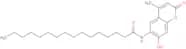
Formule :C26H38O4Degré de pureté :Min. 95%Couleur et forme :White PowderMasse moléculaire :414.58 g/mol6-Hexadecanoylamino-4-methylumbelliferone
CAS :Fluorochrome for calibration of fluorimeters. Used with corresponding fluorogenic substrates for the diagnosis of Krabbe - and Niemann-Pick A/B disease.Formule :C26H39NO4Degré de pureté :Min. 95%Couleur et forme :White PowderMasse moléculaire :429.59 g/mol4-Nitrophenyl-alpha-D-galactopyranoside
CAS :Chromogenic substrate yielding a soluble chromophore for the colorimetric assay of α-D-galactosidase upon cleavage. Used for the detection of hydrolases in tissues and membranes.Formule :C12H15NO8Degré de pureté :Min. 99.0 Area-%Masse moléculaire :301.26 g/molResorufin-beta-D-galactopyranoside
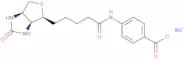
CAS :Resorufin β-D-galactopyranoside is a non-fluorescent compound and is orange-yellow in color. It is hydrolyzed by the enzyme β-galactosidase (β-Gal) to yield fluorescent resorufin.Formule :C18H17NO8Degré de pureté :Min. 98.0 Area-%Masse moléculaire :375.34 g/mol(+)-Biotin 4-amidobenzoic acid sodium salt
CAS :(+)-Biotin 4-amidobenzoic acid sodium salt, often referred as (+)-biotin PABA, is a fluorogenic substrate used to measure biotinidase activity, especially in newborn screening programs.
Formule :C17H20N3NaO4SDegré de pureté :Min. 95%Couleur et forme :White Slightly Yellow PowderMasse moléculaire :385.41 g/mol4-Methylumbelliferyl a-L-idopyranosiduronic acid sodium salt
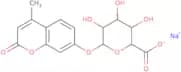
CAS :PAIRED PRODUCT AVAILABLE: alpha-L-iduronidase Enzyme, FI179383.
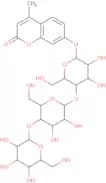
4MU-alpha-L-idopyranosiduronic acid is a fluorogenic substrate for alpha-L-iduronidase. Active alpha-L-iduronidase cleaves the MU moiety from the synthetic substrate, which results in release of a fluorescent signal (Ex 360 nm / Em 455 nm). The reaction is stopped by the addition of sodium carbonate. 4MU-alpha-L-idopyranosiduronic acid is used in alpha-L-iduronidase assays in the context of biochemical characterisation of samples from patients affected by lysosomal storage disease mucopolysaccharidosis I (MPS I).Formule :C16H15NaO9Degré de pureté :Min. 98 Area-%Couleur et forme :White PowderMasse moléculaire :374.27 g/mol4-Methylumbelliferyl b-D-cellotrioside
CAS :Fluorogenic cellulose analogueFormule :C28H38O18Degré de pureté :Min. 95%Couleur et forme :PowderMasse moléculaire :662.6 g/mol

















![2,5-dioxabicyclo[2.2.1]heptan-7-one](/_next/image/?url=https%3A%2Fstatic.cymitquimica.com%2Fproducts%2F3D%2Fthumb-webp%2FKAA21803.webp&w=3840&q=75)