Substrats chromogènes
712 produits trouvés pour "Substrats chromogènes"
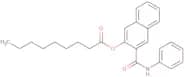
Naphthol AS nonanoate
CAS :Modified naphtol AS substrate used in histochemical and cytochemical staining
Formule :C26H29NO3Degré de pureté :Min. 95%Couleur et forme :PowderMasse moléculaire :403.51 g/mol5-Bromo-4-chloro-3-indoxyl choline phosphate
CAS :5-Bromo-4-chloro-3-indoxyl choline phosphate is a synthetic enzyme substrate for detecting phosphatidylcholine-specific phospholipase C.
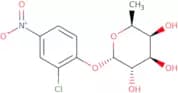
Formule :C13H17BrClN2O4PDegré de pureté :Min. 99 Area-%Masse moléculaire :411.63 g/mol2-Chloro-4-nitrophenyl-alpha-L-fucopyranoside
CAS :Alternative chromogenic substrate for alpha-D-galactosidase
Formule :C12H14ClNO7Degré de pureté :Min. 98 Area-%Couleur et forme :White PowderMasse moléculaire :319.69 g/mol3,4-Cyclohexenoesculetin β-D-glucuronide
Chromogenic substrate for beta-glucuronidase
Degré de pureté :Min. 95%3,4-Cyclohexenoesculetine β-D-glucopyranoside
CAS :Chromogenic substrate for beta-glucosidase
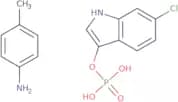
Formule :C19H22O9Degré de pureté :Min. 95%Couleur et forme :PowderMasse moléculaire :394.37 g/mol6-Chloro-3-indolyl phosphate p-toluidine salt
CAS :A substrate for visualising alkaline phosphatase activity. Produces a red colored insoluble end product that is detected visually, when used together with Nitroblue tetrazolium. The substrate system is versatile and functions in a variety of applications, including Northern, Southern, and Western blotting, in situ hybridization, ELISAs and immunohistochemistry. DMF soluble.
Formule :C15H16ClN2O4PDegré de pureté :Min. 98%Couleur et forme :White Off-White PowderMasse moléculaire :354.73 g/mol5-Bromo-6-chloro-3-indoxyl phosphate, p-toluidine salt
CAS :Substrate for visualizing alkaline phosphatase activity. Produces a magenta colored insoluble end product that is detected visually, when used together with Nitroblue tetrazolium. The substrate system is versatile and functions in a variety of applications, including Northern, Southern, and Western blotting, in situ hybridization, ELISAs and immunohistochemistry. DMF soluble.Formule :C15H15BrClN2O4PDegré de pureté :Min. 98.0 Area-%Masse moléculaire :433.63 g/molRef: 3D-B-7550
Produit arrêté4-Nitrophenyl-β-D-glucopyranoside
CAS :4-Nitrophenyl-beta-D-glucopyranoside is a fluorescent probe that can be used in the study of the biochemical properties of enzymes. This compound binds to the enzyme's active site, which allows for transfer reactions to occur. 4-Nitrophenyl-beta-D-glucopyranoside is an artificial substrate that is biochemically inert and has a similar physical structure to natural substrates. It can be used as a model system to study enzymatic reactions and has been shown to have pharmacokinetic properties and a pH optimum. The detection sensitivity of this compound is high, making it ideal for use in biochemical studies.
Formule :C12H15NO8Degré de pureté :Min. 99.0 Area-%Masse moléculaire :301.25 g/molRef: 3D-N-4401
Produit arrêté5-Cyano-3-indolyl-β-D-galactopyranoside
5-Cyano-3-indolyl-b-D-galactopyranoside is a chemiluminescent substrate that can be used to measure the activity of esterases and other enzymes. It has been shown to be a potent inhibitor of human erythrocyte esterase. The compound is also a potent inducer of bioluminescence in bacteria, which can be used for diagnostic applications. 5-Cyano-3-indolyl-b-D-galactopyranoside is a fluorogenic substrate that can be used to measure the activity of phosphatases and other enzymes. This product has an enzyme substrate function, which can be used for enzyme assays. 5CIGP is useful for measuring high levels of enzyme activity in the presence of strong inhibitors such as phenylmethylsulfonyl fluoride (PMSF).
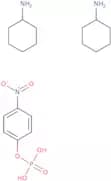
Formule :C15H16N2O6Degré de pureté :Min. 95%Couleur et forme :PowderMasse moléculaire :320.3 g/mol4-Nitrophenyl phosphate bis(cyclohexylammonium)
CAS :4-Nitrophenyl phosphate bis(cyclohexylammonium) is an excellent chromogenic substrate designed for the detection and quantification of phosphatase enzyme activities. Aided by the presence of the cyclohexylammonium cation, it undergoes enzymatic hydrolysis, yielding the colored 4-nitrophenolate ion, which can be readily observed at 405 nm. The substrate has become an essential tool for biomedical research, playing a crucial role in unearthing cellular mechanisms, function, and potential drug targets.
Formule :C18H32N3O6PDegré de pureté :97.0 To 103.0%Couleur et forme :PowderMasse moléculaire :417.44 g/mol8-Hydroxyquinoline b-D-glucopyranoside
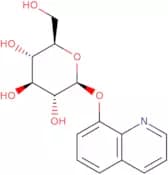
CAS :8-Hydroxyquinoline b-D-glucopyranoside (8-OHG-glu) is a chromogenic enzyme substrate commonly used to detect the presence of beta-glucosidase in biological samples. When hydrolyzed by beta-glucosidase, 8-OHG-glu produces a yellow-orange color, indicating the presence of the enzyme. This substrate is particularly useful for measuring beta-glucosidase activity in soil and plant samples.
Formule :C15H17NO6Degré de pureté :Min. 95%Couleur et forme :PowderMasse moléculaire :307.3 g/molNaphthol AS-OL
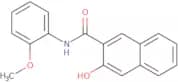
CAS :Naphthol AS-OL is a widely used chromogenic enzyme substrate that forms a colored product upon reaction with specific enzymes. It is commonly employed in histochemical and cytochemical staining techniques to visualize enzyme activity in cells and tissues. Naphthol AS-OL is particularly useful for detecting the presence of enzymes such as alkaline phosphatase, acid phosphatase, and esterases. The resulting colored product can be easily observed under a microscope, allowing researchers to study the distribution and localization of these enzymes in various biological samples.
Formule :C18H15NO3Degré de pureté :Min. 95%Couleur et forme :PowderMasse moléculaire :293.32 g/molNaphthol AS-TR phosphate
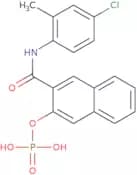
CAS :Modified naphtol AS substrate used in histochemical and cytochemical staining
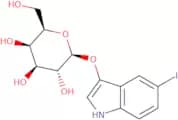
Formule :C18H15ClNO5PDegré de pureté :Min. 95%Couleur et forme :Off-White PowderMasse moléculaire :391.74 g/mol5-Iodo-3-indolyl b-D-galactopyranoside
CAS :5-Iodo-3-indolyl b-D-galactopyranoside is a chromogenic substrate used for beta-galactosidase. It is incorporated into media or detection kits for rapid and direct identification of microorganisms.
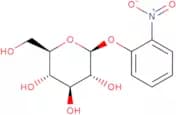
Formule :C14H16INO6Degré de pureté :Min. 98 Area-%Couleur et forme :PowderMasse moléculaire :421.18 g/mol2-Nitrophenyl b-D-glucopyranoside
CAS :Chromogenic substrate for beta-glucosidase
Formule :C12H15NO8Degré de pureté :Min. 99 Area-%Couleur et forme :Off-White Yellow PowderMasse moléculaire :301.25 g/mol4-Nitrophenyl decanoate
CAS :4-Nitrophenyl decanoate is a chromogenic substrate for lipase. Upon hydrolysis, para-nitrophenol is released yielding a yellowish colour. 4-Nitrophenyl decanoate is used in different applications such as the Pancreatic insufficiency diagnosis, lipid metabolism studies
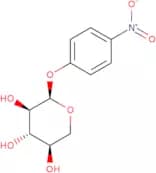
Formule :C16H23NO4Degré de pureté :Min. 97 Area-%Couleur et forme :PowderMasse moléculaire :293.36 g/mol4-Nitrophenyl a-D-xylopyranoside
CAS :The 4-Nitrophenyl a-D-xylopyranoside is a highly sensitive and reliable chromogenic substrate tailored for the detection and analysis of alpha-D-xylosidase enzyme activity. Upon enzymatic hydrolysis, it forms 4-nitrophenol, a yellow compound with remarkable fluorescence that enables a straightforward, quantitative assay in areas including environmental science, metabolism studies, and enzyme modifier exploration.
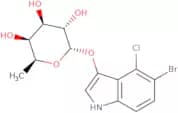
Formule :C11H13NO7Degré de pureté :Min. 95%Couleur et forme :White PowderMasse moléculaire :271.22 g/mol5-Bromo-4-chloro-3-indoxyl-alpha-L-fucopyranoside
CAS :5-Bromo-4-chloro-3-indoxyl-alpha-L-fucopyranoside is a chromogenic substrate for alpha-L-Fucosidase. It produces a green-blue color.
Formule :C14H15BrClNO5Degré de pureté :Min. 98 Area-%Couleur et forme :PowderMasse moléculaire :392.63 g/molAldol® 515 phosphate, disodium salt, Biosynth Patent: EP 2427431 and US 8940909
CAS :Aldol® 515 phosphate is a chromogenic and fluorogenic enzyme substrate used for detection of phosphatase activity. The colorless enzyme substrate is cleaved by acid and alkaline phosphatases secreted by bacteria in liquid or solid media, yielding intense red color and red fluorescence. Aldol® 515 phosphate can also be used in Western blots and other immunoassay applications with phosphatase-coupled secondary antibodies. Aldol® 515 phosphate can be used under aerobic and anaerobic conditions.Formule :C23H19N2Na2O5PDegré de pureté :Min. 95 Area-%Masse moléculaire :480.36 g/molAldol® 455 β-D-glucopyranoside, Biosynth Patent: EP 2427431 and US 8940909
CAS :Aldol® 455 beta-D-glucopyranoside is a chromogenic and fluorogenic enzyme substrate used for detection of beta-glucosidase activity. The colorless enzyme substrate is cleaved by beta-glucosidase producing bacteria grown in liquid or solid media, yielding a yellow color and green to orange fluorescence. Aldol® 455 beta-D-glucopyranoside can be used under aerobic and anaerobic conditions.
Formule :C27H24ClNO7Degré de pureté :Min. 92.0 Area-%Masse moléculaire :509.94 g/mol