AC-20580 - silveri-oxide-99 | 20667-12-3
Désolé, aucun produit avec la référence AC-20580 n'a été trouvé, cependant nous vous invitons à consulter les produits similaires suivants:
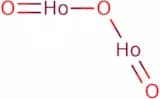
Holmium (III) oxide
CAS :<p>Holmium is a rare earth metal that belongs to the group of oxide. It is a soft, silvery-white, chemically inert and malleable metal. The element has two allotropic forms, holmium (III) oxide and holmium (III) nitrate. Holmium (III) oxide is used in high-temperature applications such as in x-ray equipment. It has a transition temperature range of 865°C to 1085°C and can be used at temperatures up to 1450°C with an argon atmosphere. The diffraction pattern for holmium (III) oxide is similar to those of other crystals in the same family. This element exhibits strong absorption lines in the infrared region between 2500 nm and 3200 nm.</p>Formule :Ho2O3Degré de pureté :Min. 95%Couleur et forme :Slightly Yellow PowderMasse moléculaire :377.86 g/molLanthanum
CAS :<p>Lanthanum is a soft, silvery-white metal that belongs to the group of lanthanides. It is chemically similar to calcium, strontium, and barium. Lanthanum is used in analytical chemistry as a standard for light emission measurements and as a standard for thermal expansion measurements. It has been shown to reduce the growth of tumor cells in vitro by stabilizing complexes with growth factors such as insulin-like growth factor 1 (IGF-1). Lanthanum is also used in electrochemical impedance spectroscopy as an additive to hydrochloric acid solutions, which improves their stability.</p>Formule :LaDegré de pureté :98%Masse moléculaire :138.91 g/molPotassium sodium L-tartrate tetrahydrate, ACS, 99.0-102.0%
CAS :<p>Potassium sodium L-tartrate tetrahydrate is used in the process of silvering mirrors. It is an active ingredient in Fehiling’s solution and Nylander’s test involved in the determination of reducing sugars. It is utilized to break up emulsion in organic synthesis as well as a common precipitant in pr</p>Formule :C4H12KNaO10Degré de pureté :99.0-102.0%Masse moléculaire :282.22Lithium cobalt(III) oxide, 99.5% (metals basis)
CAS :<p>Baking powder, medicine (cathartic), component of Fehling's solution, silvering mirrors.Potassium sodium L-tartrate tetrahydrate is used in the process of silvering mirrors. It is active ingredient in the Fehiling’s solution and Nylander’s test involved in the determination of reducing sugars. It is</p>Formule :CoLiO2Degré de pureté :99.5%Couleur et forme :Blue-black or dark gray or dark blue, PowderMasse moléculaire :97.87Potassium sodium L-tartrate tetrahydrate, 99%
CAS :<p>Baking powder, medicine (cathartic), component of Fehling's solution, silvering mirrors.Potassium sodium L-tartrate tetrahydrate is used in the process of silvering mirrors. It is active ingredient in the Fehiling’s solution and Nylander’s test involved in the determination of reducing sugars. It is</p>Formule :C4H12KNaO10Degré de pureté :99%Couleur et forme :White, Crystals or powder or crystalline powderMasse moléculaire :282.22Lanthanum(III) chloride bis(lithium chloride) complex solution - 0.6M in THF
Lanthanum is a chemical element that has the symbol La and atomic number 57. It is a soft, silvery-white metal belonging to the lanthanide series, which is chemically similar to the rare earth metals. Lanthanum is found mainly in monazite and bastnäsite, two minerals from the lateritic weathering of rocks. Lanthanum's main commercial uses involve its compounds as catalysts in petroleum refining, as well as glass polishing and production of ceramics and glass. Lanthanum chloride bis(lithium chloride) complex solution - 0.6M in THF is a synthetic compound that contains lanthanum (La), lithium (Li), and chloride ions (Cl). It can be used as an agrochemical for plants with high levels of hydrocarbons in their leaves or stems. The synthesis process starts with tetrahydrofuran (THF) being mixed with aqueous solutions containing LiCl or LaCl3Formule :LaCl5Li2Degré de pureté :Min. 95%Masse moléculaire :330.05 g/molTrifluoromolybdenum
Trifluoromolybdenum is a chemical element with symbol MoF and atomic number 42. It is a very rare, hard, silvery metal that resists corrosion. Trifluoromolybdenum has been shown to form electrochemical cells in the presence of fluorine, hydrogen fluoride, and oxygen. The reaction mechanism for this process is not well understood but it may involve oxidation by hydrogen fluoride or direct reaction with fluorine gas. Trifluoromolybdenum has been shown to react with monoclonal antibodies as well as polyclonal antibodies but not with trifluoroacetic acid or ammonia. Laser ablation experiments have shown that trifluoromolybdenum can be synthesized by heating molybdenum metal at constant temperature in hydrogen fluoride gas. This process requires an activation energy of 0.6 eV and the rate of the reaction increases linearly with increasing laser power density up to a threshold valueFormule :F3MoDegré de pureté :Min. 95%Masse moléculaire :152.96 g/molTetrafluoromolybdenum
Tetrafluoromolybdenum is a chemical element that has the symbol Mo and atomic number 42. It is a hard, silvery white metal that resists corrosion in dry air. Tetrafluoromolybdenum is used to synthesize other metal compounds. X-ray crystal structures of tetrafluoromolybdenum show that it contains four electrons in its outermost shell, which is why it has such good resistance to corrosion. Tetrafluoromolybdenum can be found in biological systems as a gene product, where it functions as a hydrogen carrier. Hydroxyl groups on the surface of tetrafluoromolybdenum react with hydrogen fluoride to produce water and fluorescence, which has been shown to have anticancer properties. This metal also reacts with radiation and x-rays, which causes structural changes that are studied by using nmr spectroscopy.Formule :F4MoDegré de pureté :Min. 95%Masse moléculaire :171.95 g/molDimethylcadmium
Dimethylcadmium is a chemical element with the symbol Cd and atomic number 48. It has an atomic mass of 112.4 g/mol. The metal is a silvery white, soft, malleable, and ductile metal. Dimethylcadmium is used in the manufacture of semiconductors and diodes, as well as in coordination chemistry. It can also be used as a catalyst for chemical reactions. It has been proposed that dimethylcadmium may be a source of chemiluminescence because it emits light when heated to high temperatures or exposed to radiation (e.g., ultraviolet light). In addition to its use in semiconductor production, dimethylcadmium can be used as a reactant in coordination chemistry to form organometallic compounds such as Cd(CH)Cl, which are useful for applications such as catalysts or drugs. The mechanism for the formation of these compounds begins with the reactionFormule :C2H6CdDegré de pureté :Min. 95%Masse moléculaire :142.88 g/molNeodymium(III) oxide
Neodymium oxide is a rare earth metal with the chemical symbol Nd. It is a soft, silvery-white solid that reacts strongly with water and air. Neodymium oxide has been shown to cause apoptosis in lung cancer cells via the mitochondrial pathway. This process begins when neodymium oxide binds to mitochondria, leading to a change in the mitochondrial membrane potential and opening of pores between the outer and inner mitochondrial membranes. This leads to an influx of calcium ions, which activate enzymes that initiate cell death by oxidative stress or caspase activation. Neodymium oxide has also been shown to be an effective catalyst for oxidation reactions in organic solvents. The neodymium group (Nd) has a high resistance against oxidation, making it suitable for use as an electrode material in electrochemical impedance spectroscopy studies of biological systems.Formule :Nd2O3Degré de pureté :Min. 95%Masse moléculaire :336.48 g/molTin
Tin is a silvery-grey, low-melting, non-toxic metal. It has high resistance to corrosion and oxidation and is used in the manufacture of solder, paint, and some alloys. Tin can be found in the Earth's crust at an average concentration of 0.2 ppm and as a trace element in living organisms. Tin has been shown to bind to antibodies and polymerase chain reaction products with high affinity. This metal also binds to reactive oxygen species (ROS) such as superoxide radicals, hydroxyl radicals, hydrogen peroxide, nitric oxide radicals, and lipid peroxides. The neurotrophic factors that are important for neuronal survival have been shown to contain tin in their structures. Tin is also used in the manufacturing of tin oxide which can be found in pigments or ceramics with high thermal expansion properties. Aluminum oxide forms when tin is exposed to air at elevated temperatures where it reacts with oxygen atoms from the air forming a layer of aluminum oxideFormule :SnDegré de pureté :Min. 95%Couleur et forme :Grey SolidMasse moléculaire :118.71 g/molYttrium
CAS :Produit contrôlé<p>Yttrium is a silvery-white, hard metal that is used primarily in alloys. Yttrium has an oxidation number of 3+, and it reacts with water vapor to form hydroxides. Yttrium can be found in wastewater treatment plants because it is resistant to corrosion by chlorine. It also binds to the monoclonal antibody and causes light emission, which can be observed using electrochemical impedance spectroscopy (EIS). The redox potential of yttrium is high, which allows it to oxidize other metals at lower concentrations than other metals would need to oxidize yttrium. Yttrium also has a coordination geometry of group P2, which means that its electrons are located in the same plane as the nucleus and are not as easily dislodged.</p>Formule :YDegré de pureté :Min. 95%Masse moléculaire :88.91 g/molLutetium
Lutetium is a silvery-white metal that belongs to the lanthanide series. It has been used in photomultiplier tubes and as a catalyst for hydrolyzing hydrochloric acid. Lutetium is also used in the production of gadolinium, which is used in MRI scans. Exposure to lutetium can cause radiation burns and skin ulcers due to its ability to emit light with a wavelength of less than 400 nm. Lutetium is also used in ferroelectric materials and displays low light emission.Formule :LuDegré de pureté :Min. 95%Masse moléculaire :174.97 g/molPraseodymium standard
Praseodymium is a soft, silvery-white metal that belongs to the rare earth metals. It has a high resistance to heat, and does not corrode easily. Praseodymium is used in the production of glass and ceramics, as well as in catalysts for chemical reactions. It can be found in the form of praseodymium oxide or praseodymium chloride and reacts with hydrogen to form a reddish-brown compound. Praseodymium also emits light when heated, which is due to an intramolecular hydrogen reaction. This property can be used for analytical purposes by spectroscopic analysis or by using lasers. Praseodymium has coordination geometry of square planar with four ligands in one plane (Nd(OH)4). The human osteosarcoma cell was found to have a signal peptide sequence at the N-terminal end of the protein that regulates its transport acrossFormule :PrDegré de pureté :Min. 95%Masse moléculaire :140.91 g/molBarium solution
Barium is a chemical element that is a silvery-white metal. Barium has been used in many different industries, including the textile industry, to make barium sulfate, which is used in paper and paint. In medicine, barium sulfate can be used for X-ray examination of the digestive tract. This test will show if there are any abnormalities such as ulcers or tumors in the bowel. Barium has also been used for other medical purposes such as for colonoscopies and as an enema to help diagnose inflammatory bowel disease (IBD). The most common side effects of barium are constipation, diarrhea, nausea and vomiting. A new type of barium called ionotropic gelation barium (IOGB) has been developed recently. IOGB can be used in various ways including to treat chronic bowel diseases like ulcerative colitis and Crohn's disease by absorbing water vapor from the gut and reducing bacterial infections in the gut.Formule :BaDegré de pureté :Min. 95%Masse moléculaire :137.33 g/molGadolinium standard
CAS :Produit contrôlé<p>Gadolinium is a chemical element with symbol Gd and atomic number 64. Gadolinium is a silvery-white, malleable, ductile metal that resembles iron in its physical properties and reactivity. It is found in the Earth's crust only in trace amounts. Gadolinium is used as a component of alloys such as high-strength magnets and X-ray shielding, or to produce gadolinium ions for use in magnetic resonance imaging (MRI). Gadolinium can be toxic to humans if it enters the bloodstream and causes damage to the liver, bones, nervous system, heart, or other organs. In some cases, these adverse effects may be delayed up to 20 years after exposure.</p>Formule :GdDegré de pureté :Min. 95%Masse moléculaire :157.25 g/molHafnium standard
CAS :Produit contrôlé<p>Hafnium is a chemical element with symbol Hf and atomic number 72. Hafnium is a lustrous, silvery gray, transition metal that has the highest melting point of all metals. It is chemically similar to zirconium and exhibits similar physical properties. The most common oxidation state of hafnium is +4, but compounds in oxidation states +2 and +3 exist as well. Hafnium has no biological role and its toxicity is low. Hafnium's potential applications include fabrication of semiconductors, electrodes for high-temperature gas sensors, nuclear control rods, and quantum computing devices.</p>Formule :HfDegré de pureté :Min. 95%Masse moléculaire :178.49 g/molYttrium(III) sulfate octahydrate
Yttrium is a chemical element with the symbol Y and atomic number 39. It is a silvery-white, hard metal that has a melting point of 1814°C. Yttrium is chemically stable in air due to its high oxidation state of +6. The hydrated form of yttrium sulfate has the chemical formula YSO4·xH2O and is a colorless crystalline solid that dissolves in water to give solutions containing the salt compound YSO4. This compound can be found in nature as the mineral gadolinite, which often contains other metals such as copper or iron. The average particle diameter of this compound can be determined by measuring the light emission from the reaction between hydrochloric acid and copper oxide, which produces yttrium chloride and hydrogen gas. This reaction is carried out at room temperature for 1 hour, after which the light emission intensity is measured using an optical photometer. The average particle diameter can then be calculated from this resultFormule :H22O20S3Y2Degré de pureté :Min. 95%Masse moléculaire :616.17 g/molYtterbium(III) sulphate octahydrate
Ytterbium is a chemical element with symbol Yb and atomic number 70. A rare earth metal, ytterbium is found in many minerals and its compounds have many applications. It is a soft, silvery, ductile metal that resists corrosion in air. The most important application of ytterbium is as the active component of the red phosphors in cathode ray tubes (CRTs), fluorescent lamps, television sets, computer screens, exit signs and other less common devices. Ytterbium-based red phosphors are brighter and last longer than those based on europium salts. Ytterbium sulphate octahydrate (YSO4·8H2O) is an acidic compound that can be used as a catalyst for organic reactions such as esterification or polymerization. It has been shown to catalyze the synthesis of particle-sized zirconia particles from zircon sand at high temperatures.Formule :Yb2Degré de pureté :Min. 95%Masse moléculaire :782.24 g/molYttrium(III) iodide
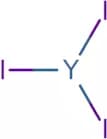
CAS :<p>Yttrium is a silvery white, hard metal that belongs to the lanthanide series. Yttrium(III) iodide is a crystalline solid that is soluble in water. It has been used in diffraction studies and x-ray crystallography to determine the molecular structure of chemical compounds. In these studies, yttrium(III) iodide is used as a heavy atom because it has the same electron configuration as uranium, which has one proton and one neutron in its nucleus. Yttrium(III) iodide can be obtained by reacting yttrium with iodine or by heating yttrium metal with potassium iodide. The compound's coordination number varies depending on the amount of oxygen atoms present; when there are no oxygen atoms coordinated to the cation, it is octahedral. When there are two oxygen atoms coordinated to the cation, it becomes square planar, and when there are three oxygen atoms coordinated to the cation, it becomes trigonal</p>Formule :YI3Degré de pureté :Min. 95%Masse moléculaire :469.62 g/mol