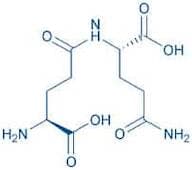
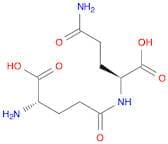
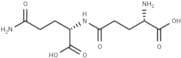
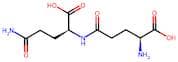
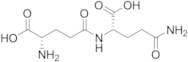
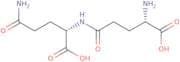
CAS 10148-81-9
:γ-Glutamilglutammina
- <span class="text-smallcaps">L</smallcap>-Glutamine, <smallcap>L</span>-γ-glutamyl-
- <span class="text-smallcaps">L</smallcap>-Glutamine, N<sup>2</sup>-<smallcap>L</span>-γ-glutamyl-
- <span class="text-smallcaps">L</smallcap>-γ-Glutamyl-<smallcap>L</span>-glutamine
- Glutamine, N<sup>2</sup>-<span class="text-smallcaps">L</smallcap>-γ-glutamyl-, <smallcap>L</span>-
- Glutamine, N<sup>2</sup>-<span class="text-smallcaps">L</span>-γ-glutamyl-
- H-.gamma.-Glu-Gln-OH
- γ-<span class="text-smallcaps">L</smallcap>-Glutamyl-<smallcap>L</span>-glutamine
- γ-Glu-Gln
- γ-Glutamylglutamine
- L-γ-Glutamyl-L-glutamine
- Glutamine, N2-L-γ-glutamyl-, L-
- L-Glutamine, L-γ-glutamyl-
- L-Glutamine, N2-L-γ-glutamyl-
- Vedi altri sinonimi
H-Glu(Gln-OH)-OH
CAS:γ-Glu-Gln and further kokumi-active γ-glutamyl dipeptides have been isolated from mature Gouda cheese. These branched dipeptides are responsible for the complex taste of the cheese.Formula:C10H17N3O6Purezza:> 99%Colore e forma:White PowderPeso molecolare:275.26L-Glutamine, L-γ-glutamyl-
CAS:Formula:C10H17N3O6Purezza:98%Colore e forma:SolidPeso molecolare:275.2585H-γ-Glu-Gln-OH
CAS:H-γ-Glu-Gln-OH, a hydrophilic peptide, serves as a drug carrier with high water solubility, robust drug-loading capacity, excellent biocompatibility, andFormula:C10H17N3O6Colore e forma:SolidPeso molecolare:275.26N5-((S)-4-Amino-1-carboxy-4-oxobutyl)-L-glutamine
CAS:N5-((S)-4-Amino-1-carboxy-4-oxobutyl)-L-glutaminePurezza:98%Peso molecolare:275.26g/molH-Glu(Gln-OH)-OH
CAS:Glutamate is a nonessential amino acid that is an important neurotransmitter in the central nervous system. It is found in many foods and can be synthesized by the body from other amino acids. Glutamate is also an excitatory neurotransmitter that binds to glutamate receptors, causing depolarization of the postsynaptic cell. This leads to increased intracellular calcium levels and eventually to neuronal death. Glutamate can be taken up by cells through both facilitated diffusion and active transport and converted into glutamine by glutaminase. The uptake of glutamate into cells may have clinical relevance in diseases such as hepatic steatosis, schizophrenia, or Alzheimer's disease.
Glu(Gln-OH)-OH (HGG) is a synthetic compound that has been shown to inhibit enzymes involved in the shikimate pathway, which converts chorismate into aromatic amino acids such as phenylalanine, tyrosine, and tryptophan. HGG has beenFormula:C10H17N3O6Purezza:Min. 95%Colore e forma:White PowderPeso molecolare:275.26 g/mol