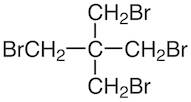
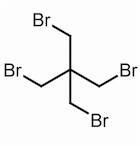
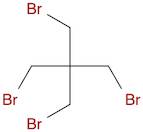
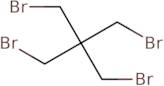
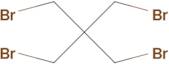
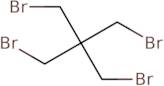
CAS 3229-00-3
:1,3-Dibromo-2,2-bis(bromometil)propano
- 1,2,2,3-Tetrabromobutane
- 1,3-Dibromo-2,2-Bis(Bromomethyl)Propane
- 2,2-Bis(bromomethyl)-1,3-dibromopropane
- NSC 8998
- Pentaerithrityl tetrabromide
- Pentaerythritol tetrabromide
- Pentaerythrityl bromide
- Propane, 1,3-dibromo-2,2-bis(bromomethyl)-
- Tetra(bromomethyl)methane
- Tetrabromoneopentane
- Tetrabromopentaerythritol
- Tetrakis(bromomethyl)methane
- Vedi altri sinonimi
- Prezzo più basso
- Prezzo più alto
- Purezza più bassa
- Purezza più alta
- Consegna più veloce
Pentaerythrityl Tetrabromide
CAS:Formula:C5H8Br4Purezza:>98.0%(GC)Colore e forma:White to Almost white powder to crystalPeso molecolare:387.741,3-dibromo-2,2-di(bromomethyl)propane
CAS:1,3-dibromo-2,2-di(bromomethyl)propaneFormula:C5H8Br4Purezza:99%Colore e forma:White SolidPeso molecolare:387.73302Pentaerythritol tetrabromide
CAS:Formula:C5H8Br4Purezza:97%Colore e forma:SolidPeso molecolare:387.7330Pentaerythrityltetrabromide
CAS:PentaerythrityltetrabromideFormula:C5H8Br4Purezza:98%Peso molecolare:387.73Pentaerythrityl tetrabromide
CAS:Pentaerythrityl tetrabromide is a brominated derivative of pentaerythritol. It can be used as a radiation-absorbing coating, and has been shown to have good hydrophobic properties. The FTIR spectrum of pentaerythrityl tetrabromide shows features at 3,000-3,600 cm-1 that are attributed to the NH and OH groups in the molecule. This compound has been shown to have good water permeability in cell culture experiments, which may be due to its acidic nature. Pentaerythrityl tetrabromide reacts with hydrochloric acid and sodium carbonate to produce chloride ions, which may be responsible for its acidic nature.
Formula:C5H8Br4Purezza:Min. 95%Colore e forma:White Clear LiquidPeso molecolare:387.73 g/molPentaerythritol tetrabromide
CAS:Formula:C5H8Br4Purezza:97%Colore e forma:SolidPeso molecolare:387.735Tetrakis(bromomethyl)methane - 94%
CAS:Tetrakis(bromomethyl)methane is a chemical compound that contains an aromatic hydrocarbon and a hydroxyl group. It can be synthesized by reacting an aliphatic hydrocarbon with bromine in the presence of a base such as sodium carbonate. The reaction solution is acidic and can be neutralized with a base, such as sodium carbonate. Tetrakis(bromomethyl)methane has been used to crosslink polymers, such as polystyrene, for use in cell culture experiments. FT-IR spectroscopy has shown that this compound contains both nitrogen atoms and aliphatic hydrocarbons.
Formula:C5H8Br4Purezza:(%) Min. 94%Colore e forma:Clear LiquidPeso molecolare:387.73 g/mol