CAS 58-86-6
:(+)-Xilosio
Descrizione:
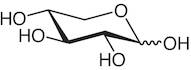
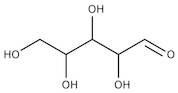
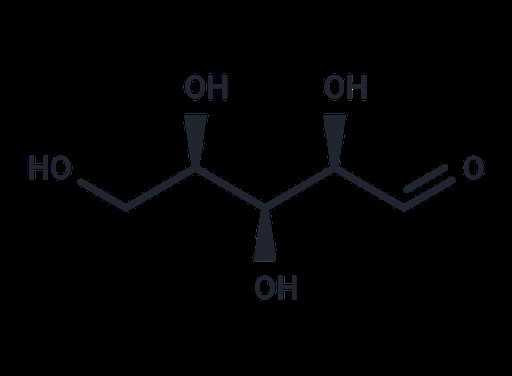
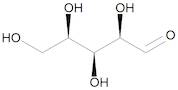
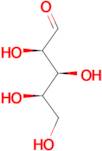
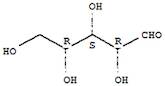
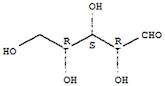
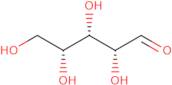
(+)-Xilosio, con il numero CAS 58-86-6, è uno zucchero aldopentoso che si verifica naturalmente, specificamente un monosaccaride a cinque carboni. È classificato come uno zucchero D ed è comunemente trovato in vari materiali vegetali, in particolare nella emicellulosa del legno e in alcuni frutti. La formula molecolare di (+)-Xilosio è C5H10O5, e si presenta in forma cristallina che è tipicamente bianca o incolore. Questo zucchero è noto per il suo sapore dolce, anche se è meno dolce del glucosio. (+)-Xilosio è solubile in acqua, il che facilita la sua assorbimento nei sistemi biologici. Svolge un ruolo significativo nel metabolismo dei carboidrati ed è spesso utilizzato in contesti di laboratorio per vari saggi biochimici, inclusi test per l'assorbimento intestinale. Inoltre, è importante nell'industria alimentare e può essere utilizzato nella produzione di xilo-oligosaccaridi, che hanno proprietà prebiotiche. Il composto può esistere in diverse forme anomeriche, con la configurazione D che è la più prevalente in natura.
Formula:C5H10O5
InChI:InChI=1S/C5H10O5/c6-1-3(8)5(10)4(9)2-7/h1,3-5,7-10H,2H2/t3-,4+,5+/m0/s1
InChI key:InChIKey=PYMYPHUHKUWMLA-VPENINKCSA-N
SMILES:[C@H]([C@@H](CO)O)([C@H](C=O)O)O
Sinonimi:- (+)-Xylose
- (2R,3S,4R)-2,3,4,5-Tetrahydroxypentanal
- 2,3,4,5-Tetrahydroxypentanal
- <span class="text-smallcaps">D</span>-(+)-Xylose
- Brn 1562108
- Ccris 1899
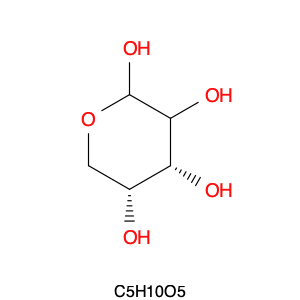
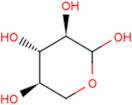
- D-xylopyranose
- FEMA No. 3606
- Holzzucker
- Hsdb 3273
- Unii-A1Ta934Ako
- Wood sugar
- Xilosa, Pura
- Xylose, <span class="text-smallcaps">D</span>-
- Xylose, D-
- alpha-D-xylopyranose
- beta-D-xylopyranose
- Vedi altri sinonimi
Filtra per
Percentuale di purezza
0
100
|
0
|
50
|
90
|
95
|
100
- Prezzo più basso
- Prezzo più alto
- Purezza più bassa
- Purezza più alta
- Consegna più veloce
D-(+)-Xylose
CAS:Formula:C5H10O5Purezza:>98.0%(HPLC)Colore e forma:White powder to crystalPeso molecolare:150.13D-(+)-Xylose, 98+%
CAS:D-(+)-Xylose is used to prepare furfural by acid catalyzed degradation reaction, which acts as a solvent as well as a precursor to synthetic polymers. It is a useful animal medicine involved in the treatment of malabsorption. It finds application in the production of sugar substitute xylitol by subFormula:C5H10O5Purezza:98+%Colore e forma:White to pale cream, Crystals or powder or crystalline powderPeso molecolare:150.13D-(+)-Xylose, 10mM (in DMSO)
CAS:D-(+)-Xylose, 10mM (in DMSO)Formula:C5H10O5Purezza:≥98%, 10 mM in DMSOPeso molecolare:150.13D-(+)-Xylose
CAS:D-(+)-XyloseFormula:C5H10O5Purezza:98%Colore e forma:White Solid-CrystalsPeso molecolare:150.1299D-(+)-Xylose
CAS:Formula:C5H10O5Purezza:≥ 98.5%Colore e forma:White to colourless crystalline powderPeso molecolare:150.13D-(+)-Xylose, USP grade
CAS:Formula:C5H10O5Purezza:98.0 - 102.0 % (dried basis)Colore e forma:White crystalline powderPeso molecolare:150.13D-(+)-Xylose (Standard)
CAS:D-(+)-Xylose (Standard) is the standard substance of D-(+)-Xylose, and it is applicable for quantitative analysis, quality control, and related research in biochemical experiments. D-(+)-Xylose (Wood sugar) is an aldopentose - a monosaccharide containing five carbon atoms and an aldehyde functional group. It has chemical formula C5H10O5 and is 40% as sweet as sucrose. Xylose is also found in mucopolysaccharides of connective tissue and sometimes in the urine. Xylose is the first sugar added to serine or threonine residues during proteoglycan type O-glycosylation. Therefore xylose is involved in the biosythetic pathways of most anionic polysaccharides such as heparan sulphate and chondroitin sulphate. In medicine, xylose is used to test for malabsorption by administering a xylose solution to the patient after fasting. If xylose is detected in the blood and/or urine within the next few hours, it has been absorbed by the intestines. Xylose is said to be one of eight sugars which are essential for human nutrition, the others being galactose, glucose, mannose, N-acetylglucosamine, N-acetylgalactosamine, fucose, and sialic acid. . Xylose in the urine is a biomarker for the consumption of apples and other fruits.Formula:C5H10O5Peso molecolare:150.13D-(+)-Xylose
CAS:D-(+)-Xylose analytical standardFormula:C5H10O5Purezza:(HPLC) ≥95%Colore e forma:PowderPeso molecolare:150.14D-Xylose-1,2,3,4,5,5'-C-d6
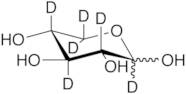
CAS:Prodotto controllatoApplications D-Xylose-1,2,3,4,5,5'-C-d6 is a labeled analog of D-Xylose, which is used in diagnostic malabsorption tests as well as in the production of Furfural.
References Ehrenpreis E.D. et al.: J. Acquir. Immune. Defic. Syndr., 5, 1047 (1992); Sérgio L. et al.: Cat. Comm., 9, 2144 (2008);Formula:C5H4D6O5Colore e forma:NeatPeso molecolare:156.17D-Xylose
CAS:Applications D-Xylose is used in diagnostic malabsorption tests as well as in the production of Furfural.
References Ehrenpreis E.D. et al.: J. Acquir. Immune. Defic. Syndr., 5, 1047 (1992); Sérgio L. et al.: Cat. Comm., 9, 2144 (2008);Formula:C5H10O5Colore e forma:NeatPeso molecolare:150.13D-(+)-Xylose
CAS:D-(+)-Xylose (Wood sugar) is an aldopentose. Xylose is also found in mucopolysaccharides of connective tissue and sometimes in the urine.Formula:C5H10O5Purezza:99.84% - 99.85%Colore e forma:White SolidPeso molecolare:150.13D-(+)-Xylose extrapure
CAS:Formula:C5H10O5Colore e forma:White to off-white, Crystalline powder, Clear, ColourlessPeso molecolare:150.13D-(+)-Xylose ExiPlus, Multi-Compendial
CAS:Formula:C5H10O5Colore e forma:White to off-white, Crystalline powder, ClearPeso molecolare:150.13D-Xylose
CAS:Xylose (Xyl) is an aldopentose also known as wood sugar (Collins, 2006). The main sources of xylose are hemicelluloses found in hardwood and perennial plants, such as, grasses, cereals, and herbs (Petzold-Welcke, 2014) and some algae. Xylose is used in the production of xylitol, a low calory sugar substitute. Xylose is used in glycosaminoglycan (GAG) biosynthesis, which is initiated by peptide O-xylosyltransferases, which transfer xylose onto selected serine residues in the core proteins. The first enzyme in the pathway, peptide O-xylosyltransferase, catalyzes the transfer of xylose from uridine diphosphate (UDP)-α-D-xylose onto serine and thus determines the site(s) of GAG attachment on the core protein (Briggs, 2018).Formula:C5H10O5Purezza:Min. 99.0 Area-%Peso molecolare:150.13 g/mol