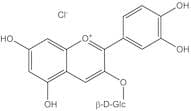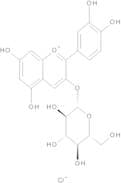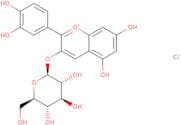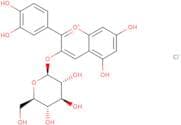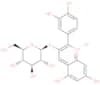
CAS 7084-24-4
:Cianidina 3-glucoside
Descrizione:
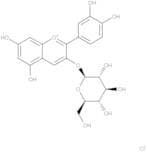
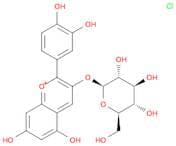
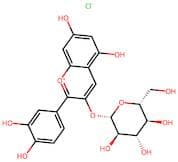
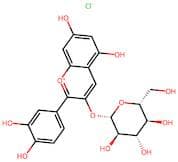
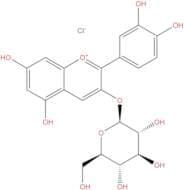
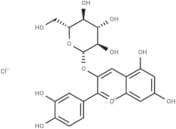
Cianidina 3-glucoside è un'antocianina che si verifica naturalmente, un tipo di pigmento flavonoide responsabile dei colori rosso, viola e blu in molti frutti e verdure. Si trova comunemente nelle bacche, nel cavolo rosso e in altre fonti vegetali. La formula chimica di Cianidina 3-glucoside è C21H21O11 e ha un peso molecolare di circa 449,39 g/mol. Questo composto è noto per le sue proprietà antiossidanti, che possono aiutare a combattere lo stress ossidativo nei sistemi biologici. Cianidina 3-glucoside presenta solubilità in acqua ed è stabile in condizioni acide, rendendolo un composto prezioso nelle applicazioni alimentari e nelle bevande per la colorazione naturale. Inoltre, è stato studiato per i suoi potenziali benefici per la salute, inclusi effetti anti-infiammatori e anti-cancro. Il suo numero CAS, 7084-24-4, è un identificatore unico che aiuta nella classificazione e regolamentazione delle sostanze chimiche. In generale, Cianidina 3-glucoside è significativo non solo per i suoi contributi estetici agli alimenti, ma anche per le sue potenziali proprietà promozionali per la salute.
Formula:C21H21ClO11
InChI:InChI=1/C21H20O11/c22-7-16-17(27)18(28)19(29)21(32-16)31-15-6-10-12(25)4-9(23)5-14(10)30-20(15)8-1-2-11(24)13(26)3-8/h1-6,16-19,21-22,27-29H,7H2,(H3-,23,24,25,26)/p+1/t16-,17-,18+,19-,21-/m1/s1
InChI key:InChIKey=YTMNONATNXDQJF-UBNZBFALSA-N
SMILES:O(C=1C(=[O+]C2=C(C1)C(O)=CC(O)=C2)C3=CC(O)=C(O)C=C3)[C@@H]4O[C@H](CO)[C@@H](O)[C@H](O)[C@H]4O.[Cl-]
Sinonimi:- 1-Benzopyrylium, 2-(3,4-dihydroxyphenyl)-3-(β-<span class="text-smallcaps">D</span>-glucopyranosyloxy)-5,7-dihydroxy-, chloride
- 1-Benzopyrylium, 2-(3,4-dihydroxyphenyl)-3-(β-<span class="text-smallcaps">D</span>-glucopyranosyloxy)-5,7-dihydroxy-, chloride (1:1)
- 1-Benzopyrylium, 2-(3,4-dihydroxyphenyl)-3-(β-D-glucopyranosyloxy)-5,7-dihydroxy-, chloride
- 1-Benzopyrylium, 2-(3,4-dihydroxyphenyl)-3-(β-D-glucopyranosyloxy)-5,7-dihydroxy-, chloride (1:1)
- 2-(3,4-Dihydroxyphenyl)-3-(β-D-glucopyranosyloxy)-5,7-dihydroxy-1-benzopyryliumchlorid
- 2-(3,4-dihydroxyphenyl)-3-(β-D-glucopyranosyloxy)-5,7-dihydroxy-1-benzopyrylium chloride
- 3,3',4',5,7-Pentahydroxyflavylium chloride, 3-glucoside
- 3,3′,4′,5,7-Pentahydroxyflavylium chloride, 3-glucoside
- 3-(β-<span class="text-smallcaps">D</span>-Glucopyranosyloxy)-3′,4′,5,7-tetrahydroxyflavylium chloride
- 3-(β-D-Glucopyranosyloxy)-3',4',5,7-tetrahydroxyflavylium chloride
- 3-O-(β-<span class="text-smallcaps">D</span>-Glucopyranosyl)cyanidin
- 3-O-(β-D-Glucopyranosyl)cyanidin
- Asterin
- Chrysanthemin
- Chrysanthenin
- Chrysontemin
- Cyanidin 3-O-glucoside chloride
- Cyanidin 3-O-β-<span class="text-smallcaps">D</span>-glucopyranoside
- Cyanidin 3-O-β-D-glucopyranoside
- Cyanidin 3-O-β-glucopyranoside
- Cyanidin 3-glucoside chloride
- Cyanidin 3-monoglucoside
- Cyanidin 3-β-<span class="text-smallcaps">D</span>-glucopyranoside
- Cyanidin 3-β-D-glucopyranoside
- Cyanidin 3-β-O-glucoside
- Cyanidin 3-β-glucopyranoside
- Cyanidin 3-β-glucoside
- Cyanidin-3-Glucoside
- Cyanidol 3-glucoside
- Glucocyanidin
- Kuromanin
- Kuromanin Chloride
- Kuromanine
- chlorure de 2-(3,4-dihydroxyphenyl)-3-(β-D-glucopyrannosyloxy)-5,7-dihydroxy-1-benzopyrylium
- cloruro de 2-(3,4-dihidroxifenil)-3-(β-D-glucopiranosiloxi)-5,7-dihidroxi-1-benzopirilio
- CYANIDIN-3-O-BETA-GLUCOPYRANOSIDE
- Cyanidin-3-O-glucoside chloride, froM GlycineMax (L.) Merr.
- cyanidol3-glucoside
- Cyanidin 3-O-β-glucopyranoside chloride
- CYANIDIN3-O-BETA-D-GLUCOSIDE
- CYANIDIN-3-O-GLUCOSIDE CHLORIDE(KUROMANIN CHLORIDE)(RG)
- 2-(3,4-Dihydroxyphenyl)-3-(.beta.-D-glucopyranosyloxy)-5,7-dihydroxy-1-benzopyryliumchloride
- Cyanidin-3-O-
- glucoside chloride
- 1-benzopyrylium,5,7-dihydroxy-2-(3,4-dihydroxyphenyl)-3-(beta-d-glucopyranosyl
- C-3-G
- KUROMANIN CHLORIDE WITH HPLC
- ASTERIN hplc
- Asterin, Chrysanthemin, Cyanidin 3-O-glucoside chloride
- C3G
- KUROMANINE CHLORIDE
- cyanidin3-monoglucoside
- Cyanidin-3-O-glucoside Chloride (15 mg)
- CYANIDIN3-O-BETA-D-GLUCOPYRANOSIDE
- CYANIDIN-3-O-GLUCOSIDE CHLORIDE(KUROMANIN CHLORIDE)(SH)
- CYANIDIN-3-O-GLUCOSIDE CHLORIDE, KuroManin chloride
- cyanidin3-o-glucoside
- cyanidin3-beta-glucoside
- cyanidine3-glucoside
- cyanidin-3-O-glu
- Vedi altri sinonimi
Ordinare per
Purezza (%)
0
100
|
0
|
50
|
90
|
95
|
100
13 prodotti.
Kuromanin chloride
CAS:Kuromanin chloride analytical standard provided with w/w absolute assay, to be used for quantitative titration.Formula:C21H21O11ClPurezza:(HPLC) ≥96%Colore e forma:PowderPeso molecolare:484.82Cyanidin-3-O-glucoside Chloride
CAS:Other glycosides, natural or reproduced by synthesis, and their salts, ethers, esters and other derivativesFormula:C21H21O11ClColore e forma:Dark Violet PowderPeso molecolare:484.077241-Benzopyrylium, 2-(3,4-dihydroxyphenyl)-3-(β-D-glucopyranosyloxy)-5,7-dihydroxy-, chloride (1:1)
CAS:Formula:C21H21ClO11Purezza:95%Colore e forma:SolidPeso molecolare:484.83782-(3,4-Dihydroxyphenyl)-3-(β-D-glucopyranosyloxy)-5,7-dihydroxy-1-benzopyrylium chloride
CAS:2-(3,4-Dihydroxyphenyl)-3-(β-D-glucopyranosyloxy)-5,7-dihydroxy-1-benzopyrylium chlorideFormula:C21H21O11·ClPurezza:98%Colore e forma: dark brown powderPeso molecolare:484.84g/molCyanidin-3-O-glucoside
CAS:Formula:C21H21ClO11Purezza:≥ 95.0%Colore e forma:Red to dark red or red-brown powderPeso molecolare:484.84Cyanidin-3-glucoside chloride
CAS:Cyanidin-3- O -glucoside, is one of the main component of mulberry anthocyanins,has protective effects from blackberry extract against peroxynitrite-induced endothelial dysfunction and vascular failure.Formula:C21H21ClO11Purezza:95%~99%Colore e forma:Yellow powderPeso molecolare:484.838Kuromanin chloride
CAS:Kuromanin chloride (Chrysontemin chloride) is potent antioxidants and free radical scavengers, may act as modulators of gene regulation and signal transductionFormula:C21H21ClO11Purezza:97.27% - 99.84%Colore e forma:SolidPeso molecolare:484.84Ref: TM-T3406
1mg34,00€2mg48,00€5mg78,00€10mg104,00€25mg195,00€50mg290,00€100mg434,00€1mL*10mM (DMSO)84,00€Cyanidin 3-O-Glucoside Chloride (Kuromanin Chloride)
CAS:Formula:C21H21O11·ClPeso molecolare:449.39 35.45Ref: 4Z-C-248006
5mgPrezzo su richiesta10mgPrezzo su richiesta25mg2.629,00€50mg4.301,00€100mgPrezzo su richiestaCyanidin 3-glucoside chloride
CAS:Natural glycosideFormula:C21H21O11ClPurezza:≥ 98.0 % (HPLC)Colore e forma:PowderPeso molecolare:484.84Cyanidol 3-Glucoside
CAS:Stability Hygroscopic
Applications Cyanidol 3-Glucoside is a anthocyanin that is naturally occurring in various fruits, vegetable and plants. Cyanidol 3-Glucoside is known to exhibit high antioxidant capacity and neuroprotective effects by triggering mobilization of cellular free sialic acid and utilizing it as an additional biological antioxidant in brain neural cells.
References Damar, I., et al.: Food. Chem., 135, 2910 (2012); Kim, S.M., et al.: Life. Sci., 90, 874 (2012); Asada, T., et al.: J. Agri. Chem., 60, 10634 (2012);Formula:C21H21O11·ClColore e forma:NeatPeso molecolare:484.84Cyanidin-3-O-glucoside chloride
CAS:Cyanidin-3-O-glucoside chloride, also called C3G, Asterin, Chrysanthemin and Kuromanin chloride, is a naturally occurring anthocyanin. C3G is the 3-glucoside of cyanidin, a pigment commonly found in red berries. Cyanidin-3-O-glucoside chloride is found in some plants and fruits and is the major anthocyanin in purple corn. C3G has been investigated for anti-inflammatory properties in inflamed human intestinal epithelial cells and in cancer chemoprevention.Formula:C21H21O11•xClPurezza:Min. 95%Colore e forma:Red PowderPeso molecolare:484.852-(3,4-Dihydroxyphenyl)-3-(β-D-glucopyranosyloxy)-5,7-dihydroxy-1-benzopyrylium chloride
CAS:Anthocyanins are a group of pigments responsible for blue, red or purple colors of flowers, leafs and fruits such as blueberries, raspberries and grapes. The color of anthocyanins depends largely on their structure (for example on the position and type of sugars attached), as well as on external factors like pH. Recently, a new blue wine product was invented, which was made adopting anthocyanins and some indole-type compounds in the wine making process. Interestingly, anthocyanins are generally thought to have the function in protecting the plant from excessive sun exposure, and are also considered to be healthy for human consumption.Formula:C21H21ClO11Purezza:Min. 95.0 Area-%Peso molecolare:484.84 g/molRef: 3D-Q-100788
1gPrezzo su richiesta100mgPrezzo su richiesta250mgPrezzo su richiesta500mgPrezzo su richiesta2500mgPrezzo su richiesta