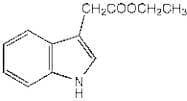
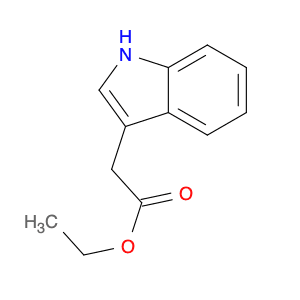
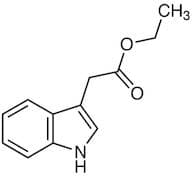
CAS 778-82-5
:Acetato di etile 1H-indolo-3
Descrizione:
Acetato di etile 1H-indolo-3, con il numero CAS 778-82-5, è un composto organico che appartiene alla classe dei derivati dell'indolo. Presenta un anello di indolo, che è una struttura biciclica composta da un anello di benzene fuso a un anello di pirrolo, e un gruppo funzionale acetato attaccato all'atomo di azoto dell'indolo. Questo composto è tipicamente un liquido incolore o giallo pallido con un odore caratteristico. Acetato di etile 1H-indolo-3 è noto per le sue applicazioni nella sintesi di vari farmaci e agrochimici, così come per il suo potenziale utilizzo nella profumeria grazie alla sua fragranza gradevole. È moderatamente solubile in solventi organici e presenta bassa solubilità in acqua. Il composto è stabile in condizioni normali, ma deve essere maneggiato con cura, poiché può comportare rischi per la salute se ingerito o inalato. La sua reattività può essere influenzata dalla presenza di altri gruppi funzionali e dalle condizioni ambientali, rendendolo un argomento di interesse nella sintesi organica e nella chimica medicinale.
Formula:C12H13NO2
InChI:InChI=1S/C12H13NO2/c1-2-15-12(14)7-9-8-13-11-6-4-3-5-10(9)11/h3-6,8,13H,2,7H2,1H3
InChI key:InChIKey=HUDBDWIQSIGUDI-UHFFFAOYSA-N
SMILES:C(C(OCC)=O)C=1C=2C(NC1)=CC=CC2
Sinonimi:- (1H-Indol-3-yl)acetic acid ethyl ester
- 1H-indole-3-acetic acid, ethyl ester
- 3-[(Ethoxycarbonyl)methyl]indole
- Ethyl (1H-indol-3-yl)acetate
- Ethyl 1H-indol-3-ylacetate
- Ethyl 1H-indole-3-acetate
- Ethyl 2-(1H-indol-3-yl)acetate
- Ethyl 2-(indol-3-yl)acetate
- Ethyl indole-3-acetate
- Ethyl β-indolylacetate
- IAA ethyl ester
- Indole-3-acetic acid, ethyl ester
- Vedi altri sinonimi
Ordinare per
Purezza (%)
0
100
|
0
|
50
|
90
|
95
|
100
9 prodotti.
Ethyl indole-3-acetate, 98+%
CAS:This Thermo Scientific Chemicals brand product was originally part of the Alfa Aesar product portfolio. Some documentation and label information may refer to the legacy brand. The original Alfa Aesar product / item code or SKU reference has not changed as a part of the brand transition to Thermo SciFormula:C12H13NO2Purezza:98+%Colore e forma:White to cream to pale brown or pale yellow, PowderPeso molecolare:203.24Ethyl 2-(1H-indol-3-yl)acetate
CAS:Formula:C12H13NO2Purezza:98%Colore e forma:SolidPeso molecolare:203.2371Indole-3-acetic acid ethyl ester
CAS:Formula:C12H13NO2Purezza:≥ 98.0%Colore e forma:White to light yellow or pale-brown powder to crystalsPeso molecolare:203.24Ethyl 2-(1H-indol-3-yl)acetate
CAS:Ethyl 2-(1H-indol-3-yl)acetatePurezza:98%Peso molecolare:203.24g/molEthyl 3-Indoleacetate
CAS:Formula:C12H13NO2Purezza:>98.0%(GC)Colore e forma:White to Light yellow to Light orange powder to crystalPeso molecolare:203.24Ethyl Indole-3-acetate
CAS:Prodotto controllatoApplications Ethyl Indole-3-acetate is a compound used in the synthesis of 9H-Pyrrolo[1,2-α]Indoles via Michael Addition-Condensation with α,β-Unsaturated Ketimines.
References Zhang, M., et al.: J. Heterocyclic Chem. (2016)Formula:C12H13NO2Colore e forma:NeatPeso molecolare:203.24Indole-3-acetic acid ethyl ester
CAS:Indole-3-acetic acid ethyl ester is a fine chemical that is used as a building block for synthesis of more complex compounds. It is a versatile building block that can be used in reactions to produce useful intermediates and scaffolds. Indole-3-acetic acid ethyl ester has been used to synthesize indole derivatives, which are useful in the research of cancer and Alzheimer's disease. Indole-3-acetic acid ethyl ester can also be used to produce indoles as well as other heterocyclic compounds, such as benzoxazines. The compound has CAS number 778-82-5.Formula:C12H13NO2Purezza:Min. 99.0 Area-%Peso molecolare:203.24 g/molRef: 3D-I-1100
-Unit-ggPrezzo su richiesta50gPrezzo su richiesta100gPrezzo su richiesta250gPrezzo su richiesta500gPrezzo su richiestaEthyl indole-3-acetate
CAS:Ethyl indole-3-acetate (EIA) is a compound that inhibits the growth of certain cancer cells. It belongs to the group of acyl halides. EIA inhibits the synthesis of nucleic acids, proteins and other macromolecules by the cancer cells. It has been shown to be effective in reducing the size of tumors in mice with prostate and breast cancer. This compound also inhibits enzymes such as abscisic acid oxidase, which is responsible for converting abscisic acid into reactive oxygen species. EIA has been shown to have hemolytic activity in human lung tissue, but not ovules or human erythrocytes. This may be due to its ability to inhibit hormone production and cause an increase in progesterone levels.Formula:C12H13NO2Purezza:Min. 95%Colore e forma:PowderPeso molecolare:203.24 g/molEthyl 3-indoleacetate
CAS:Formula:C12H13NO2Purezza:98%Colore e forma:Solid, CrystallinePeso molecolare:203.241