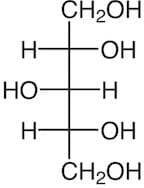
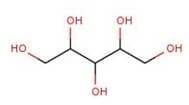
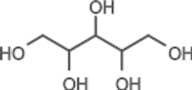
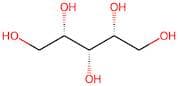
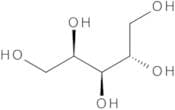
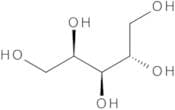
CAS 87-99-0
:Xilitolo
- 1,2,3,4,5-Pentahydroxypentane
- <span class="text-smallcaps">D</smallcap><smallcap>L</span>-Xylitol
- C-Xylidex CR 16055
- D-Xylitol
- DL-Xylitol
- Eutrit
- Fluorette
- Klinit
- Kylit
- Nsc 25283
- Wood sugar alcohol
- X 0018
- Xilitol
- Xivia CM 90
- Xylisorb
- Xylisorb 300
- Xylisorb 700
- Xylit
- Xylit XC
- Xylitab 100
- Xylitab 300
- Xylitab DC
- Xylite
- Xylite (sugar)
- Xylite P
- Xylitol C
- Xylitol CM 90
- Xylitol P
- Xyliton
- meso-Xylitol
- xylo-Pentitol
- Vedi altri sinonimi
Xylitol
CAS:Formula:C5H12O5Purezza:>98.0%(T)Colore e forma:White to Almost white powder to crystalPeso molecolare:152.15Xylitol, 99%
CAS:It is employed as a polyol substrate for xylitol and sorbitol dehydrogenases and sorbitol dehydrogenase derived from xylose. It is applied as a sweetener and humectants and skin conditioning agent in cosmetics industry. This Thermo Scientific Chemicals brand product was originally part of the Alfa AFormula:C5H12O5Purezza:99%Colore e forma:White, Crystalline powderPeso molecolare:152.15Xylitol
CAS:Acyclic polyhydric alcohols not elsewhere specified or includedFormula:C5H12O5Colore e forma:White Crystalline Powder CrystalsPeso molecolare:152.06847Xylitol
CAS:Xylitol (Ribitol) is a five-carbon sugar alcohol derived from XYLOSE by reduction of the carbonyl group.Formula:C5H12O5Purezza:99.89% - 99.96%Colore e forma:White Solid PowderPeso molecolare:152.15Ref: IN-DA001TFC
50kgPrezzo su richiesta25g20,00€100g25,00€500g25,00€250g26,00€10kg190,00€25kg543,00€Xylitol
CAS:Formula:C5H12O5Purezza:98.5 - 101.0 % (dried basis)Colore e forma:White crystalline powderPeso molecolare:152.15Ref: 4Z-X-015001
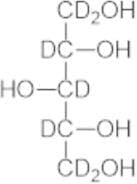
5mgPrezzo su richiesta10mgPrezzo su richiesta25mgPrezzo su richiesta50mgPrezzo su richiesta100mgPrezzo su richiestaXylitol-d7
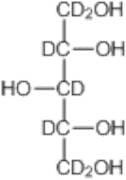
CAS:Prodotto controllatoApplications Xylitol-d7 is deuterium labelled Xylitol (X748050), which is a lower-calorie alternative to table sugar. Studies have shown xylitol chewing gum can help prevent acute otitis media. Xylitol is categorized by the U.S. Food and Drug Administration as a food additive.
References Code of Federal Regulations Title 21, US., FDA (2012); Azarparzhooh, A., et al.,: Cochrane data. Sys. Revi. (online) (11), (2011)Formula:C5D7H5O5Colore e forma:NeatPeso molecolare:159.19Xylitol
CAS:Prodotto controllatoApplications Xylitol, is a lower-calorie alternative to table sugar. Studies have shown xylitol chewing gum can help prevent acute otitis media. Xylitol is categorized by the U.S. Food and Drug Administration as a food additive.
References Code of Federal Regulations Title 21, US., FDA (2012); Azarparzhooh, A., et al.,: Cochrane data. Sys. Revi. (online) (11), (2011);Formula:C5H12O5Colore e forma:NeatPeso molecolare:152.15Xylitol
CAS:Xylitol is a sugar alcohol that can be found in some plants, including berries and corn husks. It is also produced by the body during normal metabolism. Xylitol has been shown to have antimicrobial properties against aerobacter aerogenes, a bacterium that inhabits the human gastrointestinal tract. Xylitol inhibits bacterial growth by binding to glucose-6-phosphate dehydrogenase, which prevents the conversion of glucose into energy for cell growth and reproduction. Xylitol also affects the water balance of cells by inhibiting their ability to extract water vapor from their environment. Xylitol is metabolized by a number of bacteria strains, which leads to the production of hydrogen peroxide or xylose as an end product. The biochemical properties of xylitol are still being researched and it is not yet known how this compound interacts with other biological compounds.Formula:C5H12O5Purezza:Min. 98.5 Area-%Peso molecolare:152.15 g/molXylitol - BP/EP
CAS:Xylitol is a sugar alcohol that has been shown to have antimicrobial properties. It has been found to be effective in inhibiting the growth of bacteria, yeast, and fungi by disrupting their cell membranes. In addition, xylitol appears to have the ability to reduce plasma glucose levels in animals and humans. Xylitol has also been shown to inhibit the growth of bacteria in acidic environments by binding with proteins on the bacterial cell membrane. This binding prevents the transport of nutrients into the cell and results in cell death. Xylitol is not metabolized by human cells because it cannot be broken down into acetaldehyde or acetate. However, xylitol can be metabolized by certain types of liver cells.
Xylitol BP/EP is a drug that belongs to the class of antidiabetic agents used for lowering blood sugar levels in patients with diabetes mellitus type II (insulin-dependent diabetes). It is an exogenous insulin secretagogue that stimulates insulin secretion from pancreaticFormula:C5H12O5Purezza:Min. 95%Peso molecolare:152.15 g/mol