Recettore degli androgeni
Il recettore degli androgeni (AR) è un recettore ormonale nucleare che viene attivato dal legame con gli androgeni, come il testosterone e il diidrotestosterone. Questo recettore svolge un ruolo cruciale nello sviluppo e nel mantenimento delle caratteristiche maschili, nonché nella regolazione di diversi processi fisiologici, tra cui la crescita muscolare, la libido e la densità ossea. Gli inibitori del recettore degli androgeni sono ampiamente studiati nel contesto del cancro alla prostata, dove la segnalazione dell'AR è spesso sovraregolata. Presso CymitQuimica, offriamo una gamma di modulatori del recettore degli androgeni di alta qualità per supportare la tua ricerca in endocrinologia, biologia del cancro e regolazione ormonale.
Trovati 232 prodotti per "Recettore degli androgeni".
Ordinare per
Purezza (%)
0
100
|
0
|
50
|
90
|
95
|
100
Androgen receptor degrader-1
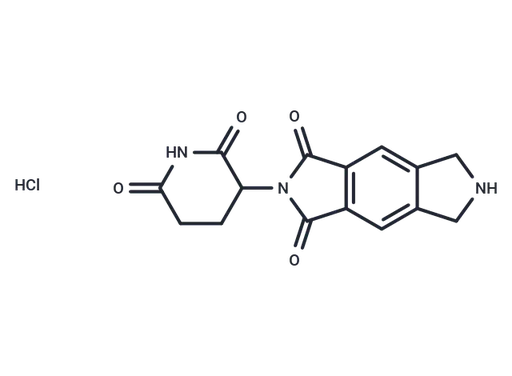
CAS:Androgen Receptor Degrader-1 (Compound 18) is a potent agent for androgen receptor degradation, applicable in cancer research [1].Formula:C15H14ClN3O4Purezza:98%Colore e forma:SolidPeso molecolare:335.74Androgen receptor degrader-2
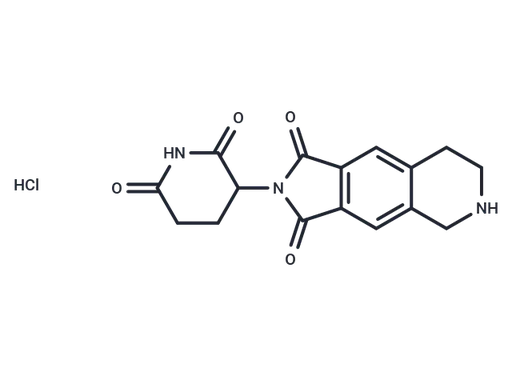
CAS:Androgen Receptor Degrader-2 (Compound 9) is a potent degrader of androgen receptors, with potential application in cancer research [1].Formula:C16H16ClN3O4Purezza:98%Colore e forma:SolidPeso molecolare:349.77Androgen receptor degrader-5
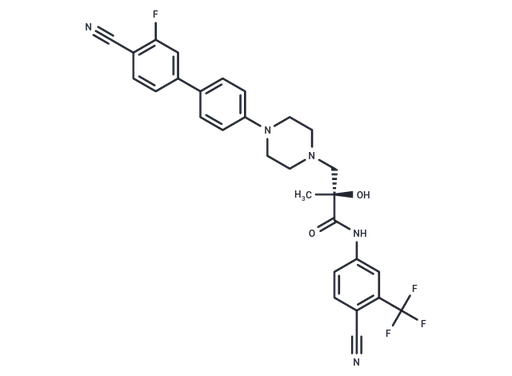
CAS:Androgen receptor degrader-5 (compound 14k) demonstrates superior capabilities, specifically in androgen receptor degradation and antiproliferative activity, showcasing its promising properties.Formula:C29H25F4N5O2Colore e forma:SolidPeso molecolare:551.53TLB 150 Benzoate
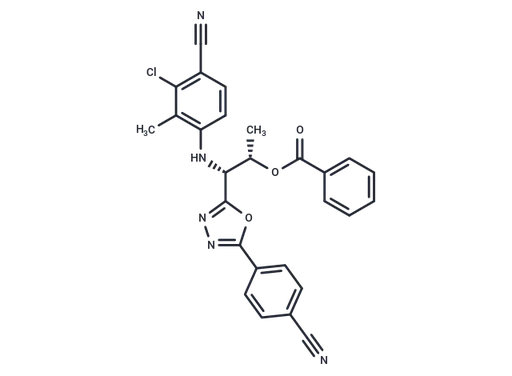
CAS:TLB 150 Benzoate (RAD150) is a modulator of the androgen receptor with an IC50 value of 0.13 μM.Formula:C27H20ClN5O3Colore e forma:SolidPeso molecolare:497.93LX1
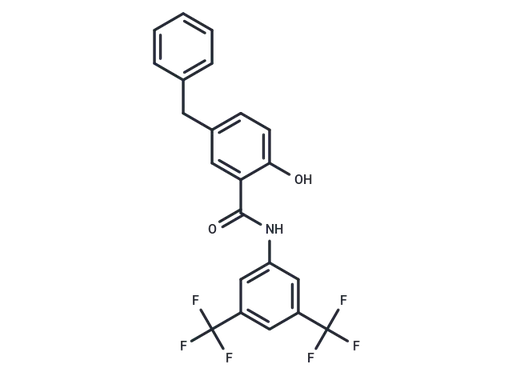
CAS:LX1, an anti-prostate cancer compound, specifically targets the androgen receptor (AR), AR variants, and the steroidogenic enzyme AKR1C3. It inhibits AKR1C3's enzymatic function, decreases the conversion of androstenedione to testosterone, and reduces the expression of both AR and AR-V7, subsequently downregulating their target genes. Additionally, LX1 is effective in overcoming tumor cell resistance to Enzalutamide, and when combined with Enzalutamide, it further suppresses tumor growth.Formula:C22H15F6NO2Colore e forma:SolidPeso molecolare:439.35ID11916
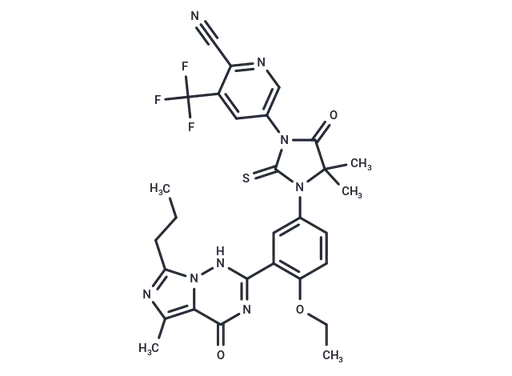
CAS:ID11916 is an orally active compound functioning as both an androgen receptor (AR) antagonist and a phosphodiesterase 5 (PDE5) inhibitor. It disrupts androgen binding to AR, impedes nuclear translocation, and blocks androgen-dependent transcriptional activity of AR, while simultaneously elevating intracellular cGMP levels by inhibiting PKG activation. Moreover, ID11916 exhibits potent anticancer effects in prostate cancer cell lines VCaP and 22Rv1, as well as in AR-positive breast cancer cell line SK-BR-3.Formula:C29H27F3N8O3SColore e forma:SolidPeso molecolare:624.637(+)-JJ-74-138
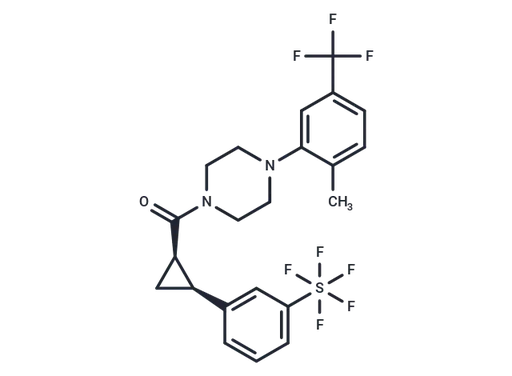
CAS:(+)-JJ-74-138 is a novel non-competitive androgen receptor (AR) antagonist capable of inhibiting enzalutamide-resistant castration-resistant prostate cancer (CRPC).Formula:C22H22F8N2OSColore e forma:SolidPeso molecolare:514.48KF-19418
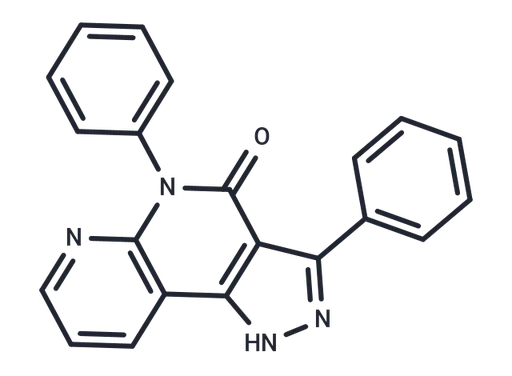
CAS:KF-19418 is a follicle stimulant that directly activates follicles in vitro and promotes hair growth in vivo.Formula:C21H14N4OColore e forma:SolidPeso molecolare:338.36Androgen receptor antagonist 13
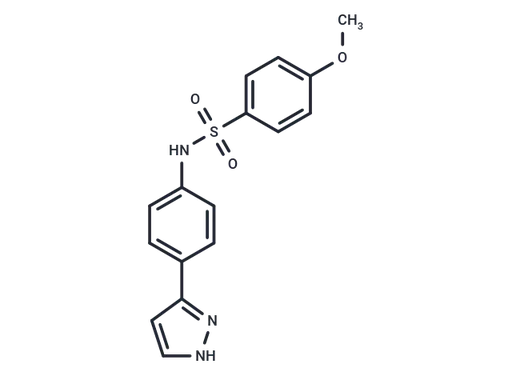
CAS:Androgen receptor antagonist 13 (compound 8a) is an orally active androgen receptor antagonist with an IC50 of 0.20 μM. It is used in prostate cancer research.Formula:C16H15N3O3SColore e forma:SolidPeso molecolare:329.37AR antagonist 11
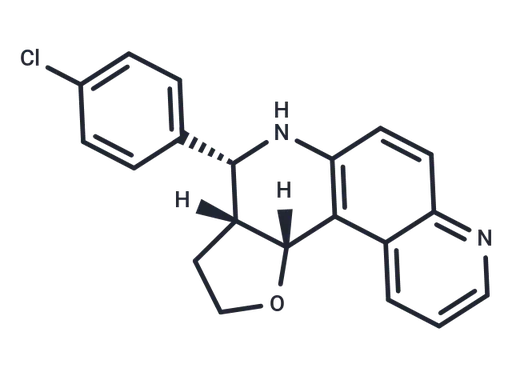
CAS:AR antagonist 11 (Compound c2) is a selective androgen receptor antagonist with an IC50 of 0.019 μM. It is also effective against the ARF877L/T878A mutant (IC50: 1.03 μM). Additionally, AR antagonist 11 inhibits LNCaP cell proliferation and decreases PSA protein expression (IC50: 0.54 μM). This compound is applicable in prostate cancer (PCa) research.Formula:C20H17ClN2OColore e forma:SolidPeso molecolare:336.815EN1441
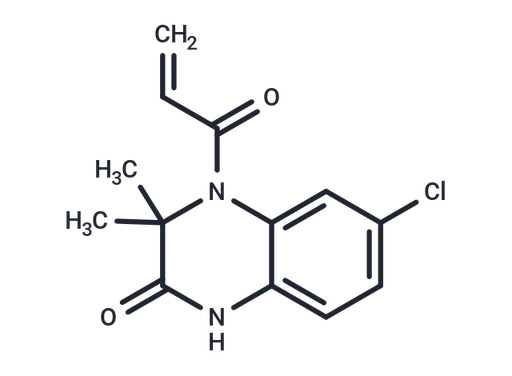
CAS:EN1441 is a covalent degrader that targets the androgen receptor (AR) with an EC50 value of 4.2 μM, as well as its truncated variant AR-V7. It selectively and effectively degrades AR and AR-V7 in androgen-independent prostate cancer cells. EN1441 holds potential for research into androgen-independent prostate cancer.Formula:C13H13ClN2O2Colore e forma:SolidPeso molecolare:264.708(Rac)-Idroxioleic acid sodium
CAS:(Rac)-Idroxioleic acid (2-Hydroxyoleic acid) sodium is a synthetic derivative of oleic acid (OA) that binds to the plasma membrane, altering lipid composition. This compound exhibits antitumor properties.Formula:C18H33NaO3Colore e forma:SolidPeso molecolare:320.44VNPP433-3β
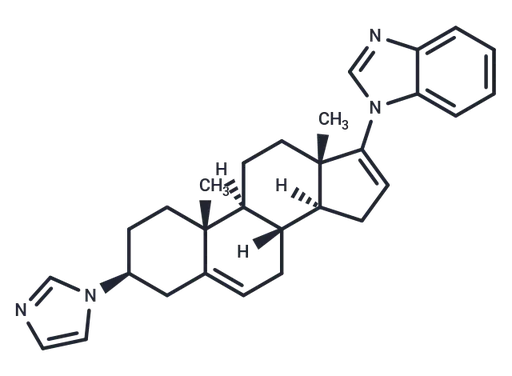
CAS:VNPP433-3β acts as a molecular glue degrader, targeting the androgen receptor (AR) and its splice variants (AR-Vs) as well as MAP kinase-interacting serine/threonine protein kinase Mnk1/2. It effectively inhibits the proliferation of cancer cells LNCaP, C4-2B, and CWR22Rv1, with GI50 values of 0.2, 0.3, and 0.31 μM, respectively. Additionally, VNPP433-3β shows favorable pharmacokinetics in CD-1 mice and suppresses tumor growth in the CWR22Rv1 xenograft mouse model.Formula:C29H34N4Colore e forma:SolidPeso molecolare:438.61GLPG0492 (R enantiomer)
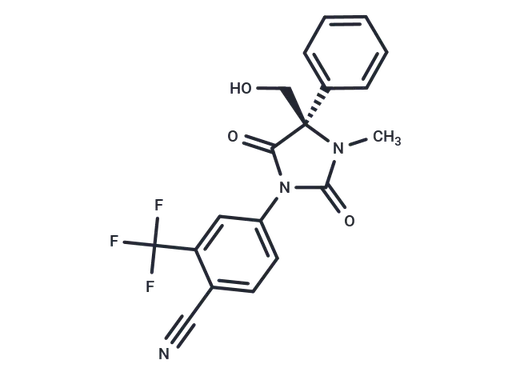
CAS:GLPG0492 R enantiomer is the R enantiomer of GLPG-0492, a novel selective androgen receptor modulator.Formula:C19H14F3N3O3Colore e forma:SolidPeso molecolare:389.33AR antagonist 10
CAS:AR antagonist 10 (Compound Y5) is a potent, orally active androgen receptor (AR) antagonist with an IC50 value of 0.04 μM. It demonstrates a dual mechanism of action: antagonizing AR by disrupting AR dimerization and inducing AR degradation through the ubiquitin-proteasome pathway. This compound shows excellent activity against various resistant AR mutants and effectively inhibits the growth of LNCaP xenograft tumors. AR antagonist 10 is applicable for research in resistant prostate cancer.Formula:C18H17ClN4O3SColore e forma:SolidPeso molecolare:404.871Androgen receptor antagonist 11
CAS:Androgen receptor antagonist 11 (compound N29) is a selective, orally available antagonist.Formula:C20H19F3N4O3SColore e forma:SolidPeso molecolare:452.45FL442
CAS:FL442 is an Androgen Receptor (AR) modulator. This compound exhibits potent inhibitory effects in AR-dependent prostate cancer cells, showing similar suppression efficiency to the traditional antiandrogen drugs Bicalutamide and Enzalutamide. It also maintains antiandrogen activity against the Enzalutamide-resistant AR mutant F876L. The pharmacokinetic properties of FL442 in mice reveal a longer half-life (8 hours), excellent targeting (prostate tissue), and metabolic stability. Additionally, it is effective at inhibiting LNCaP tumor growth at low plasma concentrations (30 ng/mL).Formula:C15H13F3N2OColore e forma:SolidPeso molecolare:294.272-Ethylhexyl(E)-3-(4-(methoxy-D3) phenyl)acrylate
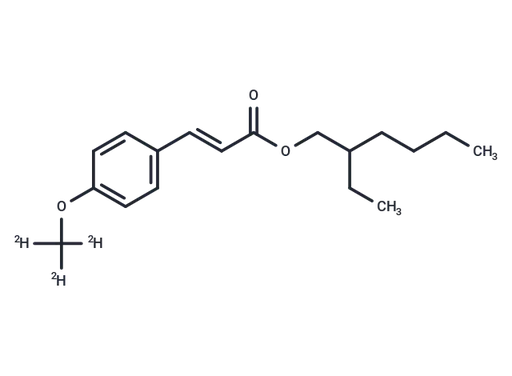
CAS:2-Ethylhexyl(E)-3-(4-(methoxy-D3) phenyl)acrylate is the deuterated form of Octinoxate. Octinoxate (Octyl methoxycinnamate) acts as an agonist of thyroid hormone receptors, leading to a reduction in triiodothyronine (T3) and thyroxine (T4) levels, as well as the transcription levels of type II deiodinase (deio2) related genes in Japanese Medaka. Commonly used as a safe ultraviolet (UV) filter in aquatic environments, Octinoxate inhibits CYP1A1 and CYP1B1, and influences hyaluronic acid (HA) metabolism in human keratinocytes through a PI3K pathway-dependent manner. It also exhibits both anti-estrogenic and anti-androgenic effects in vitro and in vivo.Formula:C18H26O3Peso molecolare:293.42Pentomone
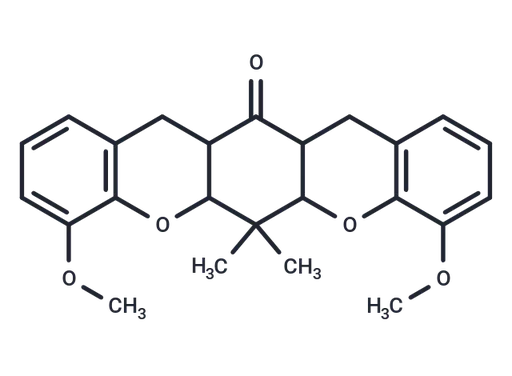
CAS:Pentomone (LY-113935) is an anti-androgen compound that acts as a prostate growth inhibitor.Formula:C24H26O5Colore e forma:SolidPeso molecolare:394.46SC428
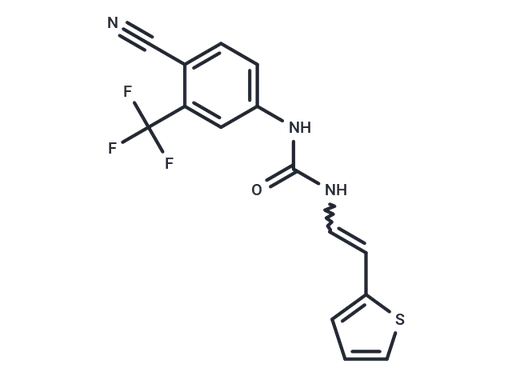
CAS:SC428 acts as an inhibitor of the androgen receptor (AR), specifically targeting the N-terminal domain of AR. This compound effectively diminishes the transactivation of various AR forms, including AR-V7, ARv567es, full-length AR (AR-FL), and its LBD mutants. Additionally, SC428 significantly inhibits AR-FL nuclear translocation, chromatin binding, and AR-regulated gene transcription under androgen stimulation. In vitro, SC428 suppresses the proliferation of tumor cells. In vivo, it inhibits tumor growth in mice transplanted with 22Rv1 cells by inducing apoptosis.Formula:C15H10F3N3OSColore e forma:SolidPeso molecolare:337.32