Composti policiclici
Sottocategorie di "Composti policiclici"
- Acridine(98 prodotti)
- Antrachinoni(533 prodotti)
- Acidi antrachinonici solfonici(16 prodotti)
- Azobenzeni(270 prodotti)
- Azonaftalene(98 prodotti)
- Azoxybenzeni(12 prodotti)
- Azuleni(11 prodotti)
- Benzimidazoli(1.476 prodotti)
- Benzodiossani(27 prodotti)
- Benzofurani(928 prodotti)
- Benzotiofeni(701 prodotti)
- Benzotriazoli(438 prodotti)
- Binaphthyl(133 prodotti)
- Carbazoli(464 prodotti)
- Cromani, cromeni(480 prodotti)
- Cumarine(1.125 prodotti)
- Ciclofani(11 prodotti)
- Fluorene e Fluorenoni(384 prodotti)
- Imidazopiridine(10 prodotti)
- Indan(118 prodotti)
- Indazoli(2.038 prodotti)
- Indeni(22 prodotti)
- Indoli(3.987 prodotti)
- Indoline(119 prodotti)
- Isatine(234 prodotti)
- Isobenzofurani(17 prodotti)
- Ftalimmidi N-sostituiti(154 prodotti)
- Naftaleni(2.438 prodotti)
- Naftiridina(17 prodotti)
- Naftochinone(2 prodotti)
- Perilene(36 prodotti)
- Fenazine(25 prodotti)
- Ftalazine(33 prodotti)
- Ftalimmide(154 prodotti)
- Idrocarburi policiclici aromatici (PAH)(282 prodotti)
- Polifenolo(270 prodotti)
- Pteridine(52 prodotti)
- Pireni(87 prodotti)
- Chinuclidina(1 prodotti)
- Tetraceni(7 prodotti)
Trovati 4575 prodotti di "Composti policiclici"
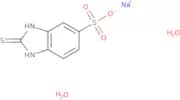
2-Mercapto-5-benzimidazole sulfonic acid sodium salt dihydrate
CAS:2-Mercapto-5-benzimidazole sulfonic acid sodium salt dihydrate is a molecule that can be used in devices. It has been shown to reversibly change the morphology of a monolayer and to generate asymmetric structures. 2-Mercapto-5-benzimidazole sulfonic acid sodium salt dihydrate can be used to generate fluorescent emulsions, which are systems where the magnetic particles are suspended in an oil droplet and illuminated by light of an appropriate wavelength. The molecules that make up 2-Mercapto-5-benzimidazole sulfonic acid sodium salt dihydrate have been shown to function as acceptors for molecular orbitals, which are wave functions that describe electron distribution around the atomic nucleus. These properties make it a promising candidate for use in microscopy techniques, such as scanning tunneling microscopy (STM) or atomic force microscopy (AFM).Formula:C7H5N2NaO3S2·2H2OPurezza:Min. 95%Colore e forma:PowderPeso molecolare:288.28 g/mol1-Acetyl-5-bromoindole
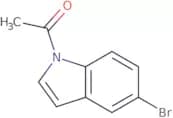
CAS:1-Acetyl-5-bromoindole is a high quality reagent that is useful as an intermediate in the synthesis of a wide range of complex compounds. It can be used as a speciality chemical for research purposes or to make other chemicals. 1-Acetyl-5-bromoindole is also needed for the synthesis of indoles, which are useful scaffolds and building blocks in organic chemistry. This compound can be used to form reactions with other chemical compounds and can be used to create versatile building blocks.Formula:C10H8BrNOPurezza:Min. 95%Colore e forma:SolidPeso molecolare:238.08 g/mol5-Chloro-3-methyl-1H-indole-2-carboxylic acid
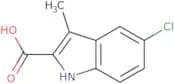
CAS:5-Chloro-3-methyl-1H-indole-2-carboxylic acid (5CMC) is a versatile building block and research chemical. It has been shown to be an effective intermediate for the synthesis of many complex compounds with interesting pharmacological properties. 5CMC is also used as a speciality chemical in the production of pharmaceuticals, agrochemicals, and other chemicals. The compound is a fine chemical that can be used in various research and industrial applications.
Formula:C10H8ClNO2Purezza:Min. 95 Area-%Colore e forma:PowderPeso molecolare:209.63 g/mol6-Methyl-2,2':6',2''-terpyridine
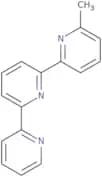
CAS:6-Methyl-2,2':6',2''-terpyridine is a versatile building block that can be used in the synthesis of complex compounds. It is a fine chemical and is sold for research purposes only. 6-Methyl-2,2':6',2''-terpyridine has been used as a reagent or speciality chemical in the manufacture of pharmaceuticals, agrochemicals, and other organic compounds. This compound also has potential use as an intermediate in the synthesis of other useful compounds or scaffolds.Formula:C16H13N3Purezza:Min. 85 Area-%Colore e forma:PowderPeso molecolare:247.29 g/mol4-Aminoindole
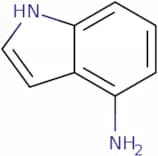
CAS:4-Aminoindole is a heterocycle with a carboxy group and four nitrogen atoms. It can be synthesized by reacting hydrochloric acid with nitrobenzene. 4-Aminoindole has shown potential as a drug target, which may be due to its ability to inhibit the enzyme carboxamidase. The compound is also acidic in water, making it an ideal candidate for use as an acid catalyst. Electropolymerization of 4-aminoindole has been achieved using Pt electrodes in the presence of an acidic environment. This reaction results in the formation of functional groups on the metal surface that are not found in most other electropolymerization reactions.
Formula:C8H8N2Colore e forma:PowderPeso molecolare:132.16 g/mol6-Azaspiro[2.5]octane hydrochloride
CAS:6-Azaspiro[2.5]octane hydrochloride is a high quality, reagent, complex compound that is useful as an intermediate in the synthesis of various organic compounds. CAS No. 1037834-62-0 is a fine chemical with many applications including use as a building block and scaffold for speciality chemicals such as research chemicals and versatile building blocks for reactions. 6-Azaspiro[2.5]octane hydrochloride can be used for the synthesis of various compounds including pharmaceuticals, agrochemicals, flavors and fragrances, dyes and pigments, polymers and plasticizers, perfumes and flavorings, agricultural chemicals, surfactants, catalysts and solvents.
Formula:C7H14ClNPurezza:Min. 95%Colore e forma:PowderPeso molecolare:147.65 g/mol6-Benzylamino-7-deazapurine
CAS:6-Benzylamino-7-deazapurine is a drug that has been shown to be effective in the treatment of pancreatic cancer. It is a monomer that reacts with nucleophiles such as 6-mercaptopurine, which are present in the human lung. The reaction generates an exergonic molecule that can be used to generate ATP and regenerate NAD+ during irradiation. This process has been observed using kinetic studies on human colon adenocarcinoma cells. 6-Benzylamino-7-deazapurine can also react with triazole compounds to form a linker and increase the rate of polymerization. The optimization of this reaction time could lead to more efficient cancer treatments.Formula:C13H12N4Purezza:Min. 95%Colore e forma:PowderPeso molecolare:224.26 g/mol[(8S,9R,10S,11S,13S,14S,16S,17R)-9-Fluoro-11-Hydroxy-17-(2-Methoxyacetyl)-10,13,16-Trimethyl-3-Oxo-6,7,8,11,12,14,15,16-Octahydrocyc lopenta[a]Phenanthren-17-Yl] Propanoate
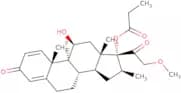
CAS:Prodotto controllatoBetamethasone is a corticosteroid that is used to treat inflammation, ankylosing spondylitis, and rheumatoid arthritis. It has been shown to have efficacy in the treatment of pediatric patients with asthma, as well as animal models of cardiac arrest and stroke. Betamethasone has also been shown to be effective in the treatment of potassium ion-associated death due to cardiac arrhythmia or repolarization abnormalities. This drug can be administered orally or topically; it binds to the glucocorticoid receptor on cells and modulates gene transcription. The primary mechanism of action for betamethasone is not fully understood but may involve inhibition of protein synthesis and suppression of inflammatory cells.Formula:C26H35FO6Purezza:Min. 95%Peso molecolare:462.55 g/mol[2,2':6',2''- Terpyridine]-4'-methanol
CAS:2,2':6',2''- Terpyridine-4'-methanol is a high quality reagent that is used as an intermediate in the synthesis of other fine chemicals. It has been shown to be a useful scaffold for synthesis of complex compounds with interesting biological and chemical properties. 2,2':6',2''- Terpyridine-4'-methanol has also been found to be a versatile building block for the preparation of new speciality chemicals. This compound can be used as a reaction component in many organic reactions.Formula:C16H13N3OPurezza:Min. 95%Colore e forma:PowderPeso molecolare:263.29 g/molFuril
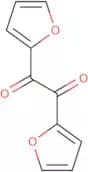
CAS:Furil is a pharmaceutical preparation used for the treatment of metabolic disorders, such as hypertension and diabetes. Furil is an inhibitor of the enzyme acyl coenzyme A: diacylglycerol acyltransferase-2 (DGAT-2) which catalyses the formation of triacylglycerols from diacylglycerol and free fatty acids. Furil has been shown to have potent inhibitory activity against DGAT-2, with an IC50 value of 0.5 μM. Furil also inhibits the enzyme phosphodiesterase 4B (PDE4B), which plays a role in signal transduction and inflammation. Furil can be synthesized by reacting hydrogen chloride with 2-bromoacetophenone in a nonpolar solvent to form 2,4-dichlorobenzoyl chloride, followed by reaction with 3-furancarboxylic acid in methanol to produce furil. FurilFormula:C10H6O4Purezza:Min. 95%Colore e forma:Beige PowderPeso molecolare:190.15 g/mol2,4-Dihydroxyquinoline
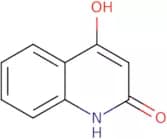
CAS:2,4-Dihydroxyquinoline is a malonic acid derivative that is used as an antimicrobial agent. It is a diazonium salt that can be synthesized from 2-chloro-4-nitrobenzene and malonic acid. The reaction mechanism for this compound involves the formation of a diazo intermediate, which reacts with the amine to form a quinoline. This compound has been shown to have antibiotic properties and is able to inhibit the growth of bacteria such as Salmonella typhi, Mycobacterium tuberculosis, Escherichia coli, and Staphylococcus aureus. 2,4-Dihydroxyquinoline has also been shown to have anticancer activity in vitro on human liver cells (HepG2) and human hepg2 cells.Formula:C9H7NO2Purezza:Min. 95%Colore e forma:White PowderPeso molecolare:161.16 g/mol6,7,8-Trimethoxycoumarin
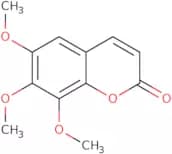
CAS:6,7,8-Trimethoxycoumarin is a methoxylated coumarin compound, which is a derivative of the natural product coumarin. It is primarily sourced from certain plant species where methoxylation occurs naturally as part of plant secondary metabolism. The compound exhibits interesting properties due to its structural modifications, particularly in its potential interactions with biological molecules.Formula:C12H12O5Purezza:Min. 95%Colore e forma:PowderPeso molecolare:236.22 g/mol4,4'-Bis(bromomethyl)-2,2'-bipyridine
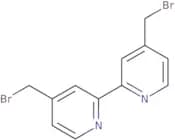
CAS:4,4'-Bis(bromomethyl)-2,2'-bipyridine is a cyclic molecule that can be synthesized by the reaction of 4-bromo-2,2'-bipyridine with a brominating agent. It is used as a precursor to ruthenium catalysts in organic synthesis, and as an additive in dendrimers. The compound has been shown to have light absorption properties and can be used in photovoltaics and electropolymerization.Formula:C12H10N2Br2Purezza:Min. 95%Colore e forma:PowderPeso molecolare:342.03 g/mol6-Methoxyindole-2-carboxylic acid methyl ester
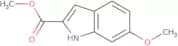
CAS:6-Methoxyindole-2-carboxylic acid methyl ester is a pyrroloquinoline alkaloid with cytotoxic and antiproliferative activities. It inhibits the growth of cancer cells in culture by inducing apoptosis and cell cycle arrest. 6-Methoxyindole-2-carboxylic acid methyl ester has been shown to be effective against breast cancer cell lines in vitro and to inhibit the proliferation of breast cancer cells in vivo. This compound also inhibits the growth of a number of other cancer cell lines such as prostate, colon, lung, liver, stomach, and leukemia. The mechanism of action for this compound is thought to be due to its ability to act as an intramolecular quencher of reactive oxygen species (ROS) or as an inhibitor of DNA synthesis through inhibition of ribonucleotide reductase activity.
Formula:C11H11NO3Purezza:Min. 95%Colore e forma:PowderPeso molecolare:205.21 g/mol5-Chloro-2-mercaptobenzimidazole
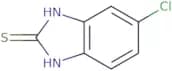
CAS:5-Chloro-2-mercaptobenzimidazole is an inorganic base that is used as a microscopy reagent. It has been shown to have a transfer mechanism that is similar to the hydrogen ion transfer mechanism. 5-Chloro-2-mercaptobenzimidazole has been used in vivo assays and has functional groups that are important for its use in coatings and aluminum oxide. The molecule also contains chlorine atoms, which are important for its use in chlorination reactions. 5-Chloro-2-mercaptobenzimidazole can be used in voltammetry to test samples of organic compounds (e.g., casein) and has been shown to be effective against the Gram positive bacterium Staphylococcus aureus.Formula:C7H5ClN2SPurezza:Min. 98.5 Area-%Colore e forma:Off-White PowderPeso molecolare:184.65 g/molBergaptol
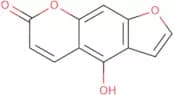
CAS:Bergaptol is a naturally occurring furanocoumarin, which is a compound derived from plants, particularly from the Rutaceae family such as bergamot and other citrus species. It is primarily characterized by its chemical structure containing a furan ring fused to a coumarin moiety. Bergaptol acts primarily through its interaction with biological systems by inhibiting certain enzymatic activities and interfering with the biological pathways that involve reactive oxygen species. This compound exhibits antioxidant properties, reducing oxidative stress by scavenging free radicals and thereby protecting cells from damage.Formula:C11H6O4Purezza:Min. 95%Colore e forma:Off-White PowderPeso molecolare:202.16 g/molEthyl indole-3-acetate
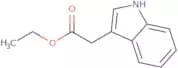
CAS:Ethyl indole-3-acetate (EIA) is a compound that inhibits the growth of certain cancer cells. It belongs to the group of acyl halides. EIA inhibits the synthesis of nucleic acids, proteins and other macromolecules by the cancer cells. It has been shown to be effective in reducing the size of tumors in mice with prostate and breast cancer. This compound also inhibits enzymes such as abscisic acid oxidase, which is responsible for converting abscisic acid into reactive oxygen species. EIA has been shown to have hemolytic activity in human lung tissue, but not ovules or human erythrocytes. This may be due to its ability to inhibit hormone production and cause an increase in progesterone levels.Formula:C12H13NO2Purezza:Min. 95%Colore e forma:PowderPeso molecolare:203.24 g/molIsoquinoline-4-carbaldehyde
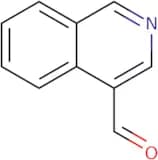
CAS:Isoquinoline-4-carbaldehyde is an aldehyde chemical that has been synthesized in the laboratory. It is a chiral molecule with one asymmetric carbonyl group. Isoquinoline-4-carbaldehyde is a potential precursor to naphthyridine, which can be used as a building block for the synthesis of natural products. Isoquinoline-4-carbaldehyde has been shown to have phosphine properties, and it can be used as a ligand in transition metal complexes. The molecule has been shown to exist in two forms, which coexist in equilibrium and can undergo interconversion.
Formula:C10H7NOPurezza:Min. 95%Peso molecolare:157.17 g/mol1,1'-Bicyclo[1,1,1]pentane-1,3-dicarboxylic acid
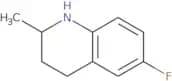
CAS:1,1'-Bicyclo[1,1,1]pentane-1,3-dicarboxylic acid is a diacid that has been found to be effective in the synthesis of many organic compounds. It can be used as a building block for other molecules with different functional groups and is an excellent bioisostere for disulfides. The addition of 1,1'-bicyclo[1,1,1]pentane-1,3-dicarboxylic acid to a nucleophilic compound can be used to synthesize an ester. This molecule can also undergo cross-coupling reactions with halogens such as chlorine or bromine. The crystal x-ray diffraction pattern indicates that this molecule has a linear structure.Formula:C7H8O4Purezza:Min. 95%Colore e forma:SolidPeso molecolare:156.14 g/mol6-Fluoro-1,2,3,4-tetrahydro-2-methylquinoline
CAS:6-Fluoro-1,2,3,4-tetrahydro-2-methylquinoline is an organocatalytic fluorine compound that has been investigated as a fluoroquinolone antibiotic. It is an enantiopure compound and has been shown to be effective in the treatment of bacterial infections. 6-Fluoro-1,2,3,4-tetrahydro-2-methylquinoline inhibits bacterial growth by binding to DNA gyrase and topoisomerase IV. 6FLMQ is a chiral molecule with two possible configurations (R or S), which can be determined from x-ray crystallography. The S configuration is more potent than the R configuration. 6FLMQ also binds with chloride ions to form a cationic complex that can be used for antibacterial activity against Gram negative bacteria such as Escherichia coli and Pseudomonas aeruginosa. 6FLMQ hasFormula:C10H12FNPurezza:Min. 95%Colore e forma:PowderPeso molecolare:165.21 g/mol

![6-Azaspiro[2.5]octane hydrochloride](/_next/image/?url=https%3A%2Fstatic.cymitquimica.com%2Fproducts%2F3D%2Fthumb-webp%2FFA141499.webp&w=3840&q=75)

![[2,2':6',2''- Terpyridine]-4'-methanol](/_next/image/?url=https%3A%2Fstatic.cymitquimica.com%2Fproducts%2F3D%2Fthumb-webp%2FFT171190.webp&w=3840&q=75)
![1,1'-Bicyclo[1,1,1]pentane-1,3-dicarboxylic acid](/_next/image/?url=https%3A%2Fstatic.cymitquimica.com%2Fproducts%2F3D%2Fthumb-webp%2FFB33678.webp&w=3840&q=75)