Composti policiclici
Sottocategorie di "Composti policiclici"
- Acridine(98 prodotti)
- Antrachinoni(533 prodotti)
- Acidi antrachinonici solfonici(16 prodotti)
- Azobenzeni(270 prodotti)
- Azonaftalene(98 prodotti)
- Azoxybenzeni(12 prodotti)
- Azuleni(11 prodotti)
- Benzimidazoli(1.476 prodotti)
- Benzodiossani(27 prodotti)
- Benzofurani(928 prodotti)
- Benzotiofeni(701 prodotti)
- Benzotriazoli(438 prodotti)
- Binaphthyl(133 prodotti)
- Carbazoli(464 prodotti)
- Cromani, cromeni(480 prodotti)
- Cumarine(1.124 prodotti)
- Ciclofani(11 prodotti)
- Fluorene e Fluorenoni(384 prodotti)
- Imidazopiridine(10 prodotti)
- Indan(118 prodotti)
- Indazoli(2.039 prodotti)
- Indeni(22 prodotti)
- Indoli(3.986 prodotti)
- Indoline(119 prodotti)
- Isatine(234 prodotti)
- Isobenzofurani(17 prodotti)
- Ftalimmidi N-sostituiti(153 prodotti)
- Naftaleni(2.438 prodotti)
- Naftiridina(17 prodotti)
- Naftochinone(2 prodotti)
- Perilene(36 prodotti)
- Fenazine(25 prodotti)
- Ftalazine(33 prodotti)
- Ftalimmide(153 prodotti)
- Idrocarburi policiclici aromatici (PAH)(292 prodotti)
- Polifenolo(269 prodotti)
- Pteridine(52 prodotti)
- Pireni(87 prodotti)
- Chinuclidina(1 prodotti)
- Tetraceni(7 prodotti)
Trovati 4575 prodotti di "Composti policiclici"
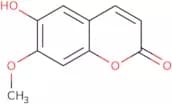
Isoscopoletin
CAS:Isoscopoletin is a naturally occurring coumarin derivative, which is typically sourced from various plants, including some medicinal herbs. This compound is found in a variety of plant species, where it plays a role in the plant's defense mechanisms against pathogens. It is known for its characteristic chemical structure that belongs to the coumarin family, which is widespread in the plant kingdom.Formula:C10H8O4Purezza:Min. 95%Colore e forma:PowderPeso molecolare:192.17 g/mol3,4-Dihydro-2(1H)-Quinolinone
CAS:3,4-Dihydro-2(1H)-quinolinone is a potent inhibitor of dopamine β-hydroxylase and is used as a model system to study the pharmacokinetic properties of carbostyril. It has been shown that 3,4-dihydro-2(1H)-quinolinone binds to the chloride ion in the active site of dopamine β-hydroxylase. This binding prevents the formation of a complex with the enzyme's substrate, which is required for catalysis. 3,4-Dihydro-2(1H)-quinolinone also interacts with the alkynyl group on dopamine and competitively inhibits its metabolism by monoamine oxidase (MAO).Formula:C9H9NOPurezza:Min. 95%Colore e forma:PowderPeso molecolare:147.17 g/mol2-Azabicyclo[2.2.1]hept-5-en-3-one
CAS:2-Azabicyclo[2.2.1]hept-5-en-3-one is a carbocyclic nucleoside that is synthesized from cyclopentyl and organic solvent, imine, lactam, and fluorine. It has been shown to have potential as a prodrug for the treatment of cancer when it is converted to 2-azabicyclo[2.2.1]heptane by an enzyme called lactamase in the body. Molecular modeling studies show that this compound has a high level of fluidity and can be used in liquid chromatography methods. The enantiomer of this molecule has also been identified and is being studied as a possible drug candidate for the treatment of malaria.
Formula:C6H7NOPurezza:Min. 95%Colore e forma:PowderPeso molecolare:109.13 g/mol6-Benzylamino-7-deazapurine
CAS:6-Benzylamino-7-deazapurine is a drug that has been shown to be effective in the treatment of pancreatic cancer. It is a monomer that reacts with nucleophiles such as 6-mercaptopurine, which are present in the human lung. The reaction generates an exergonic molecule that can be used to generate ATP and regenerate NAD+ during irradiation. This process has been observed using kinetic studies on human colon adenocarcinoma cells. 6-Benzylamino-7-deazapurine can also react with triazole compounds to form a linker and increase the rate of polymerization. The optimization of this reaction time could lead to more efficient cancer treatments.Formula:C13H12N4Purezza:Min. 95%Colore e forma:PowderPeso molecolare:224.26 g/mol1H-Indoline-3-carboxylic acid
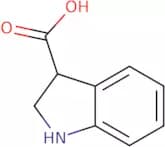
CAS:1H-Indoline-3-carboxylic acid is a molecule with the chemical formula C8H6N2O2. It is an aromatic carboxylic acid and one of the three enantiopure isomers of indoline. 1H-Indoline-3-carboxylic acid has two tautomers, cis (cis) and trans (trans). The stereoisomer cis is found in nature, while trans can be synthesized. 1H-Indoline-3-carboxylic acid can be cleaved to form phenylacetic acid and benzoic acid in reactions catalyzed by acids at high temperatures. Kinetic studies have shown that 1H-indoline-3-carboxylic acid undergoes biotransformation to form methylbenzene, ethylbenzene, propylbenzene, butylbenzene, pentylbenzene and hexylbenzene.Formula:C9H9NO2Purezza:Min. 95%Colore e forma:PowderPeso molecolare:163.17 g/mol5-Methyl-3-piperidin-4-yl-1H-indole hydrochloride
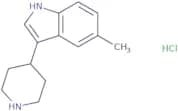
CAS:5-Methyl-3-piperidin-4-yl-1H-indole hydrochloride is a synthetic chemical that is used as a building block for the synthesis of other compounds. It is a versatile intermediate, having been shown to react with amines, alcohols, phenols, and thiols. 5-Methyl-3-piperidin-4-yl-1H-indole hydrochloride can be used in the manufacture of pharmaceuticals and agrochemicals. This compound has been found to be an effective reagent for the preparation of cyclic peptides and can be used as a building block for the synthesis of other compounds. When reacted with 2-(trimethylsilyl)ethanol, it produces a high quality complex compound.
Formula:C14H18N2·HClPurezza:Min. 97 Area-%Colore e forma:PowderPeso molecolare:250.77 g/mol4,6-Dichloro-1H-indole-2-carboxylic acid ethyl ester
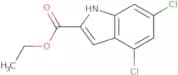
CAS:4,6-Dichloro-1H-indole-2-carboxylic acid ethyl ester is a synthetic compound that functions as an agonist of the indole 2 receptor. It has been shown to have affinity for cortical and brain membranes, with a greater affinity for acidic regions of the membrane. 4,6-Dichloro-1H-indole-2-carboxylic acid ethyl ester is also capable of binding to the indole 2 receptor and activating it. The carboxyl group in this compound is substituted with benzene rings, which are connected by a moiety containing two carboxylic groups. 4,6-Dichloro-1H-indole-2-carboxylic acid ethyl ester was synthesised from 1H -indole acetic acid and chloroethane in four steps.Formula:C11H9Cl2NO2Purezza:Min. 95%Colore e forma:SolidPeso molecolare:258.1 g/mol2-Methylindole-3-acetic acid
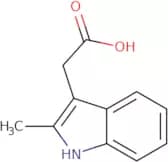
CAS:2-Methylindole-3-acetic acid is a molecule that has been shown to interact with membrane lipids and induce lipid peroxidation. It also interacts with the molecule creatinine, which is excreted in urine, and has been shown to increase urinary levels of creatinine. 2-Methylindole-3-acetic acid has been shown to have antioxidant activity by scavenging radicals and inhibiting lipid peroxidation. The mechanism for this activity is due to its ability to form hydrogen bonds with radicals and react with them, thereby removing them from the cell membrane. 2-Methylindole-3-acetic acid also interacts with receptor protein within the cell, targeting intracellular targets such as DNA and RNA molecules. This compound is an endogenous hormone that may reduce cholesterol levels in cells. 2-Methylindole-3-acetic acid was first isolated from the bark of "Indocalamus latifolius" (Formula:C11H11NO2Purezza:Min. 95%Peso molecolare:189.21 g/molIsatin
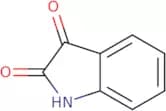
CAS:Isatin is a natural compound that can be found in the bark of the Cinchona tree. It has inhibitory properties against the enzyme polymerase chain reaction (PCR) and has been shown to have antimicrobial activity. Isatin also has an effect on 5-HT concentrations, which may be due to its ability to inhibit platelet aggregation and induce vasoconstriction. Isatin has been shown to have anticancer effects in vitro, and also inhibits cellular transformation by reducing DNA synthesis.
Formula:C8H5NO2Purezza:Min. 98 Area-%Colore e forma:Red PowderPeso molecolare:147.13 g/mol6-Fluoro-2-methylindole
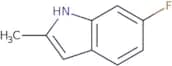
CAS:6-Fluoro-2-methylindole is a member of the group of aromatic ketones. It is an organic compound that can be synthetized from 2,6-dichloroindole and methyl iodide. There are two types of photodimerization reactions for 6-fluoro-2-methylindole: one is an aerobic reaction and the other is an anaerobic reaction. The mechanistic study of 6-fluoro-2-methylindole has been investigated using bond cleavage and transformation reactions. This organic compound reacts with amines to form polycycles with high yields. It also undergoes Diastereomeric Control in chemistry.Formula:C9H8FNPurezza:Min. 95%Colore e forma:Brown PowderPeso molecolare:149.16 g/mol4-Hydroxy-3-phenylcoumarin
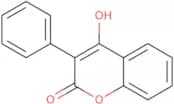
CAS:4-Hydroxy-3-phenylcoumarin is an organic compound, which is a derivative of coumarin. It is synthetically derived through chemical modification processes that introduce a hydroxy group and a phenyl ring to the coumarin core structure. Its mechanism of action involves the inhibition of vitamin K epoxide reductase, an enzyme critical for the cyclic conversion of vitamin K. This inhibition prevents the activation of vitamin K-dependent clotting factors, thereby exerting its anticoagulant effects.
Formula:C15H10O3Purezza:Min. 98 Area-%Colore e forma:PowderPeso molecolare:238.24 g/molN,N-Dimethyl-(tetrahydro-3,3 diphenyl-2-furilidine)ammonium bromide
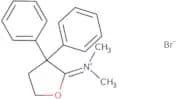
CAS:N,N-Dimethyl-(tetrahydro-3,3 diphenyl-2-furilidine)ammonium bromide is a synthetic opioid analgesic and is used in the treatment of severe pain. It has been shown to cause life-threatening cardiac effects, supratherapeutic concentrations, or fatalities in humans and animals. N,N-Dimethyl-(tetrahydro-3,3 diphenyl-2-furilidine)ammonium bromide has also been shown to cause gastrointestinal inflammation in animal models. This drug acts as an agonist at opioid receptors and can be fatal at high doses.
Formula:C18H20BrNOPurezza:Min. 95%Colore e forma:White PowderPeso molecolare:346.26 g/mol3-Isobutyl-1-methylxanthine
CAS:Prodotto controllatoA non-specific inhibitor of cAMP and cGMP phosphodiesterases (PDEs) with IC50 values between 2 and 50 µM. 2-isobutyl-1-methylxanthine (IBMX) has also been found to inhibit phenylephrine-induced 5-HT release by neuroendocrine epithelial cells and IBMX-mediated increase in cAMP and upregulation of Ca2+ channels promotes neuronal differentiation. Additionally IBMX stimulates secretion of thyroid hormones, resulting in cAMP-mediated activation of glycogenolysis and reduced glycogen storage.Formula:C10H14N4O2Colore e forma:Slightly Yellow PowderPeso molecolare:222.24 g/molOxypeucedanin
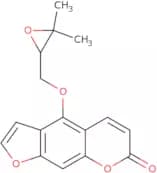
CAS:Oxypeucedanin is a furanocoumarin compound, which is derived from various plant sources, most notably those in the Apiaceae family such as Peucedanum and Angelica species. It functions primarily as a photoreactive agent, capable of interacting with DNA under ultraviolet (UV) light through a process called photoactivation. Upon UV exposure, it forms covalent bonds with DNA, leading to cross-linking that can disrupt cellular functions.Formula:C16H14O5Purezza:Min. 95%Colore e forma:Clear LiquidPeso molecolare:286.28 g/molFerene disodium salt
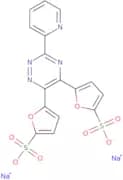
CAS:Ferene is an iron chelate that has been shown to have a number of beneficial effects on iron homeostasis. Ferene has been used in the treatment of chronic viral hepatitis, and it has also been shown to be effective against galleria mellonella. Ferene is a metal chelate, which means that it is a type of molecule that contains two metal ions. The metal ions are usually connected by a central atom, such as oxygen or nitrogen. Ferene disodium salt can be synthesized in the lab using the chemiluminescence method and polymerase chain reaction (PCR). It is also possible to isolate ferene from human serum or from a model system.Formula:C16H8N4Na2O8S2Purezza:Min. 95 Area-%Colore e forma:Yellow PowderPeso molecolare:494.37 g/mol7-Methylindole-2-carboxylic acid
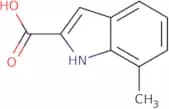
CAS:7-Methylindole-2-carboxylic acid (7MICA) is an indole that can be synthesized by the condensation of phenylhydrazine and pyruvic acid. It has been used as a precursor in the synthesis of styphnates, picrates, and ethyl pyruvate. 7MICA is also known to have antimicrobial activity against gram positive bacteria.Formula:C10H9NO2Purezza:Min. 95%Colore e forma:PowderPeso molecolare:175.18 g/mol6-(Dimethylamino)purine
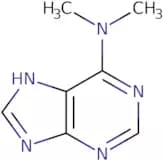
CAS:6-(Dimethylamino)purine (6-DAP) is a purine nucleoside that acts as an inhibitor of the transcription factor leukemia inhibitory factor (LIF). 6-DAP binds to the response element in the promoter region of LIF and blocks the binding of LIF to this site. This prevents transcription of LIF, which leads to cell cycle arrest. 6-DAP also has inhibitory effects on skin cells and inhibits the formation of fetal bovine serum protein in a model system. 6-DAP binds to nuclear DNA and alters its structure, which may cause problems with DNA replication or transcription.Formula:C7H9N5Purezza:Min. 98 Area-%Colore e forma:White PowderPeso molecolare:163.18 g/mol(R)-(+)-3-Aminoquinuclidine dihydrochloride
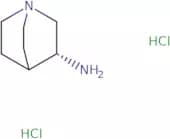
CAS:A building block; used for synthesis tryptophan 2,?3-?dioxygenase inhibitorsFormula:C7H14N2•(HCl)2Purezza:Min. 95%Colore e forma:PowderPeso molecolare:199.12 g/mol4,4'-Dinonyl-2,2'-bipyridine
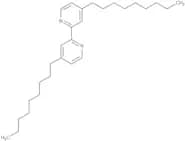
CAS:4,4'-Dinonyl-2,2'-bipyridine is a high-yield transfer reagent that is used in organic synthesis. It can be used to transfer aryl or alkyl groups from ancillary to the functional group on the substrate. 4,4'-Dinonyl-2,2'-bipyridine is also used for the production of polymers and organic semiconductors. In addition, this compound has been shown to be useful in the production of silicon solar cells and as a catalyst for photovoltaic devices. 4,4'-Dinonyl-2,2'-bipyridine has been shown to be thermostable and can be used in temperatures up to 200°C. This compound is also a ligand with ruthenium complex properties and can be used as an electron acceptor in radiation therapy procedures.
Formula:C28H44N2Purezza:Min. 98 Area-%Colore e forma:White PowderPeso molecolare:408.68 g/molIndole-3-acetyl-L-valine
CAS:Indole-3-acetyl-L-valine (IAV) is a naturally occurring amino acid that binds to the surface glycoprotein of wild-type viruses. It inhibits viral replication by inhibiting the production of basic proteins, which are necessary for viral life. IAV also has inhibitory properties against the toll-like receptor, which may be due to its ability to inhibit growth factor signaling. IAV has been shown to decrease the number of opportunistic fungal and bacterial infections in humans, with no adverse effects on human health. This drug has no effect on healthy cells and can be used as an adjuvant for the treatment of HIV and other viral infections.Formula:C15H18N2O3Purezza:Min. 95%Colore e forma:PowderPeso molecolare:274.32 g/mol


![2-Azabicyclo[2.2.1]hept-5-en-3-one](/_next/image/?url=https%3A%2Fstatic.cymitquimica.com%2Fproducts%2F3D%2Fthumb-webp%2FFA10344.webp&w=3840&q=75)