Composti policiclici
Sottocategorie di "Composti policiclici"
- Acridine(97 prodotti)
- Antrachinoni(533 prodotti)
- Acidi antrachinonici solfonici(16 prodotti)
- Azobenzeni(270 prodotti)
- Azonaftalene(98 prodotti)
- Azoxybenzeni(12 prodotti)
- Azuleni(11 prodotti)
- Benzimidazoli(1.475 prodotti)
- Benzodiossani(27 prodotti)
- Benzofurani(924 prodotti)
- Benzotiofeni(700 prodotti)
- Benzotriazoli(438 prodotti)
- Binaphthyl(133 prodotti)
- Carbazoli(462 prodotti)
- Cromani, cromeni(480 prodotti)
- Cumarine(1.122 prodotti)
- Ciclofani(11 prodotti)
- Fluorene e Fluorenoni(381 prodotti)
- Imidazopiridine(10 prodotti)
- Indan(118 prodotti)
- Indazoli(2.037 prodotti)
- Indeni(22 prodotti)
- Indoli(3.988 prodotti)
- Indoline(119 prodotti)
- Isatine(234 prodotti)
- Isobenzofurani(17 prodotti)
- Ftalimmidi N-sostituiti(153 prodotti)
- Naftaleni(2.436 prodotti)
- Naftiridina(17 prodotti)
- Naftochinone(2 prodotti)
- Perilene(36 prodotti)
- Fenazine(25 prodotti)
- Ftalazine(33 prodotti)
- Ftalimmide(153 prodotti)
- Idrocarburi policiclici aromatici (PAH)(270 prodotti)
- Polifenolo(261 prodotti)
- Pteridine(52 prodotti)
- Pireni(87 prodotti)
- Chinuclidina(1 prodotti)
- Tetraceni(7 prodotti)
Trovati 4574 prodotti di "Composti policiclici"
2,2':6',2'-Terpyridine-4,4',4''-tricarboxylic acid
CAS:2,2':6',2'-Terpyridine-4,4',4''-tricarboxylic acid is a model system that has been studied for its photochemical properties. In this molecule, there are two carboxyl groups and three pyridine rings. The molecule can be protonated easily by electron transfer to form a positively charged anion. This allows the molecule to undergo electron transfer reactions with other molecules in the presence of radiation or visible light. 2,2':6',2'-Terpyridine-4,4',4''-tricarboxylic acid absorbs photons easily and then transfers its energy to a nearby electron. The electron then passes on the energy to another molecule, which can produce a photocurrent.
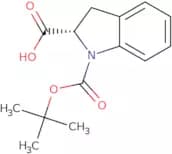
Formula:C18H11N3O6Purezza:Min. 95%Colore e forma:Brown SolidPeso molecolare:365.3 g/molBoc-L-indoline-2-carboxylic acid
CAS:Boc-L-indoline-2-carboxylic acid is a high quality, versatile building block that can be used as a reagent or intermediate in organic synthesis. It is used as a research chemical and has potential applications in the development of new drugs. Boc-L-indoline-2-carboxylic acid is a complex compound that reacts with nucleophiles to form valuable products. It also has the ability to bind to metal ions such as copper, zinc, and nickel. This product can be used in reactions involving amines, alcohols, amides, phenols, carboxylic acids, sulfonic acids, and other compounds.
Formula:C14H17NO4Purezza:Min. 95%Colore e forma:White PowderPeso molecolare:263.29 g/mol5,6-Diaminobenzimidazole dihydrochloride
CAS:Please enquire for more information about 5,6-Diaminobenzimidazole dihydrochloride including the price, delivery time and more detailed product information at the technical inquiry form on this pageFormula:C7H10Cl2N4Purezza:Min. 95%Colore e forma:Off-white to pale brown solid.Peso molecolare:221.09 g/mol6-(4,4,5,5-Tetramethyl-[1,3,2]dioxaborolan-2-yl)-isoquinoline
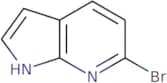
CAS:6-(4,4,5,5-Tetramethyl-[1,3,2]dioxaborolan-2-yl)-isoquinoline is a versatile building block for the synthesis of complex compounds. This product is a reagent that can be used in organic synthesis as a reaction component or as a reagent to form new compounds. 6-(4,4,5,5-Tetramethyl-[1,3,2]dioxaborolan-2-yl)-isoquinoline has shown high quality in research and is useful for the synthesis of fine chemicals and speciality chemicals.Formula:C15H18BNO2Purezza:Min. 95%Colore e forma:White To Beige SolidPeso molecolare:255.12 g/mol6-Bromo-7-azaindole
CAS:6-Bromo-7-azaindole is a homologous molecule. It is an electron deficient compound with a piperidine moiety at the 6 position and a nitrogen atom at the 7 position. The nitrogen atom substitutes for an oxygen atom, making this molecule reactive. The electron deficient nature of this molecule makes it suitable for use in transistors and other physicochemical devices. 6-Bromo-7-azaindole has been shown to be effective against carcinoma cells in vitro, as well as to inhibit tumor growth in vivo. This drug also causes homologous recombination by interacting with DNA in mammalian cells. 6-Bromo-7-azaindole binds to DNA, forming a covalent bond with the guanine base of DNA through the nitrogen atom, which is electron deficient.
Formula:C7H5BrN2Purezza:Min. 95%Colore e forma:Off-White To Beige To Yellow SolidPeso molecolare:197.03 g/molMethyl 5-methoxy-2-methylindole-3-acetate
CAS:Methyl 5-methoxy-2-methylindole-3-acetate is a versatile building block that can be used as a research chemical, reagent, or speciality chemical. It is also an intermediate in the synthesis of other compounds and has been shown to be useful in reactions involving nucleophilic substitution and electrophilic addition. This compound can be used as a scaffold for complex organic molecules. CAS No. 7588-36-5Formula:C13H15NO3Purezza:Min. 95%Colore e forma:Beige SolidPeso molecolare:233.26 g/mol1-Phenyl-3-oxabicyclo[3.1.0]hexan-2-one
CAS:1-Phenyl-3-oxabicyclo[3.1.0]hexan-2-one (1POX) is a monomer that belongs to the class of cyclopropane compounds and can be used in the synthesis of polymers. It has been shown to react with benzene, irradiation, monoxide, oxiranyl, acetonitrile and trimeric dyes to form reactive intermediates such as ketones and carboxylic acids. These intermediates can undergo photolysis to produce products such as ketones and carboxylic acids. The wavelength of the light used for photolysis can influence the product formation. 1POX is also a substrate for cyclopropane ring formation reactions, which are known for their high reactivity due to the stability of this ring system. The carbonyl group on 1POX is electron withdrawing and stabilizes the planar geometry of 1POX.
Formula:C11H10O2Purezza:Min. 95%Colore e forma:PowderPeso molecolare:174.2 g/mol5-(1,3-Benzodioxol-5-yl)-4,5-dihydro-1,3-diphenylpyrazole
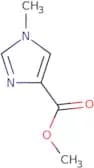
CAS:5-(1,3-Benzodioxol-5-yl)-4,5-dihydro-1,3-diphenylpyrazole is a chemical compound with the molecular formula C12H10O4. It is an aromatic compound that is used as a reagent and research chemical. This chemical is soluble in ethanol and ether, but insoluble in water. 5-(1,3-Benzodioxol-5-yl)-4,5-dihydro-1,3-diphenylpyrazole has been used as a building block for other organic compounds. It can be synthesized from benzaldehyde and phenylhydrazine by the method of condensation reaction.Formula:C17H14N2O2Purezza:Min. 95%Colore e forma:White to pale yellow solid.Peso molecolare:278.31 g/mol1-Methyl-1H-imidazole-4-carboxylic acid methyl ester
CAS:1-Methyl-1H-imidazole-4-carboxylic acid methyl ester is a carboxylic acid that is aniline derivative with the chemical formula C6H5NCH2COOH. It is soluble in water, ethanol and acetone. 1-Methyl-1H-imidazole-4-carboxylic acid methyl ester hydrolyzes to form aniline and methanol. The reflux of 1-methyl imidazole can produce the same products as well as formaldehyde and hydrogen cyanide.Formula:C6H8N2O2Purezza:Min. 95%Colore e forma:PowderPeso molecolare:140.14 g/mol2-Methyl-5-nitroimidazole-1-propanol
CAS:2-Methyl-5-nitroimidazole-1-propanol (2MI) is a matrix effect correction reagent that can be used to reconstitute the original concentrations of drugs in plasma and urine samples. It is also used for sample preparation, validation and quality control. 2MI has been shown to bind with cervical cancer cells, which may be due to its ability to bind with drug receptors on the surface of these cells. A liquid chromatography-mass spectrometry (LC-MS/MS) method was developed to measure 2MI in plasma and urine samples. The method was validated using test samples and showed good agreement with the target concentration.Formula:C7H11N3O3Purezza:Min. 95%Colore e forma:PowderPeso molecolare:185.18 g/mol6'-Dehydromarmin
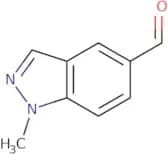
CAS:6'-Dehydromarmin is a natural product, classified as a coumarin derivative, which is primarily sourced from certain plant species, notably within the Rutaceae family. This compound arises through the biochemical transformation of secondary metabolites in plants, typically involving oxidation processes that occur under specific enzymatic conditions.Formula:C19H22O5Purezza:Min. 95%Peso molecolare:330.37 g/mol1-Methyl-1H-indazole-5-carbaldehyde
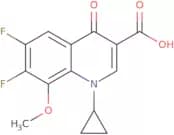
CAS:1-Methyl-1H-indazole-5-carbaldehyde is a selective inhibitor of the enzyme lysine acetyltransferase (KAT). KAT inhibitors are a new class of compounds that have been shown to be effective in inhibiting the growth of acute myeloid leukaemia cells, with little effect on other cells. 1-Methyl-1H-indazole-5-carbaldehyde has potent inhibitory activity against human myeloid leukemia cells and does not affect the viability of normal human erythrocytes or peripheral blood mononuclear cells. This compound is reversible, meaning it can be turned off when it is no longer needed. 1-Methyl-1H-indazole-5-carbaldehyde has also been shown to inhibit maoA and thymidine phosphorylase in vitro.Formula:C9H8N2OPurezza:Min. 95%Colore e forma:PowderPeso molecolare:160.17 g/mol1-Cyclopropyl-6,7-difluoro-1,4-dihydro-8-methoxy-4-oxo-3-quinolinecarboxylic acid
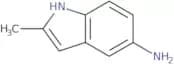
CAS:Moxifloxacin is an analog of the antibiotic quinolone. It is a prodrug that is hydrolyzed in vivo to its active form, moxifloxacin. Moxifloxacin has been shown to be effective against a variety of bacteria, including methicillin-resistant Staphylococcus aureus (MRSA), Mycobacterium tuberculosis and Mycobacterium avium complex. The reaction yield for the synthesis of moxifloxacin is very high, with an industrial production capacity in excess of 500 tons per year. Impurities are not usually found in the final product due to the use of methyl alcohol as a solvent during the reaction process. The drug has discoloring properties and deuterium atoms are often substituted for hydrogen atoms on the molecule to make it more stable. Deuterium atoms can be easily identified by mass spectrometry analysis. MoxifloxacFormula:C14H11F2NO4Purezza:Min. 95%Colore e forma:PowderPeso molecolare:295.24 g/mol5-Amino-2-methylindole
CAS:5-Amino-2-methylindole is a hyaluronic acid inhibitor that has been shown to have an inhibitory effect on the growth of some bacteria. It inhibits the synthesis of bacterial enzymes and growth factors, which are required for bacterial cell division. 5-Amino-2-methylindole also inhibits the production of a number of important enzymes in bacteria, including benzofuran derivatives, as well as p. aeruginosa. This drug is used as a topical treatment in cases where there is tissue damage or inflammation. 5-Amino-2-methylindole has been shown to be effective against gram positive bacteria such as Streptococcus pyogenes and Enterococcus faecalis, but not against gram negative bacteria such as Pseudomonas aeruginosa or Escherichia coli.Formula:C9H10N2Purezza:Min. 95%Colore e forma:Yellow To Dark Brown SolidPeso molecolare:146.19 g/mol5-Amino-6-(methylamino)quinoline
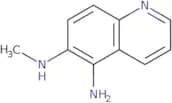
CAS:5-Amino-6-(methylamino)quinoline is a molecule that inhibits the enzymatic activity of tyrosine phosphatases and has been shown to inhibit the growth of typhimurium ta98, which is resistant to quinoxaline. It has also been shown to be mutagenic in vitro. 5-Amino-6-(methylamino)quinoline has an imidazole ring and is synthesized from 2-methylbenzothiazole and N,N'-dimethylethylenediamine. The synthesis of this compound takes place in two steps with the first step being an oxidative cyclization followed by a reductive amination.Formula:C10H11N3Purezza:Min. 95%Colore e forma:Green Brown To Brown SolidPeso molecolare:173.21 g/mol3-Methyl-2-hydroxy-3H-imidazo[4,5-f]quinoline
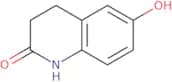
CAS:3-Methyl-2-hydroxy-3H-imidazo[4,5-f]quinoline is a high quality reagent that can be used as an intermediate or building block in the synthesis of other compounds. It is a fine chemical with CAS No. 144486-08-8 and can be used as a speciality chemical in research. This compound has versatile building blocks that are useful in reactions and have been shown to be a reaction component in the synthesis of various compounds.Formula:C11H9N3OPurezza:Min. 95%Colore e forma:Yellow PowderPeso molecolare:199.21 g/mol6-Hydroxy-3,4-dihydro-1H-quinoline-2-one
CAS:This is a quinoline derivative that has been shown to have inotropic and cardioprotective effects. It has been shown to increase the duration of action potentials and contractions in isolated heart muscle, as well as to improve the function of the heart by reducing the rate of myocardial oxygen consumption. 6-Hydroxy-3,4-dihydro-1H-quinoline-2-one has been shown to have anti-inflammatory properties and may be useful for treating respiratory diseases such as asthma. This compound is also used as a precursor for some pharmaceutical drugs, including chloroquine, mefloquine, amodiaquine, and primaquine. The compound is metabolized into conjugates that are recycled back into the body or excreted in human urine; this process is regulated by the balance between conjugation reactions and hydrolysis reactions.Formula:C9H9NO2Purezza:Min. 95%Peso molecolare:163.17 g/mol2-Nitroimidazole
CAS:2-Nitroimidazole is a compound that has been shown to have significant cytotoxicity against tumor cells. It is also an anti-cancer drug with a matrix effect on solid tumours, and has been shown to inhibit the synthesis of DNA, RNA, and proteins in vitro. 2-Nitroimidazole is also active against infectious diseases such as HIV, herpes simplex virus type 1, and influenza A virus. The biological properties of this compound are currently being studied by analytical methods such as LC/MS and HPLC/UV.Formula:C3H3N3O2Purezza:Min. 95%Colore e forma:PowderPeso molecolare:113.07 g/mol4-Chloro-6-methoxyquinolin-7-ol
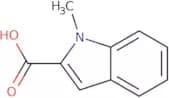
CAS:4-Chloro-6-methoxyquinolin-7-ol (CMQ) is an alkali metal that inhibits the sodium/potassium ATPase pump, which is responsible for maintaining the cell's intracellular ion balance. It was discovered in a search for compounds that inhibit this enzyme and show promise in the treatment of heart diseases. CMQ has been shown to inhibit the sodium concentration in rat hearts with no effect on potassium concentrations, which may be due to its ability to bind to sodium ions but not potassium ions. The long-term effects of CMQ on human populations are unknown, as well as its effects on genotype and parameters. CMQ also has been shown to cause drug resistance mutations in bacteria, such as methicillin resistant Staphylococcus aureus (MRSA), by increasing the mutation rate. This is due to the fact that it inhibits DNA replication and protein synthesis in bacteria cells.Formula:C10H8ClNO2Purezza:Min. 95%Colore e forma:Yellow PowderPeso molecolare:209.63 g/mol1-Methylindole-2-Carboxylic Acid
CAS:1-Methylindole-2-Carboxylic Acid is a chemical that belongs to the group of phenylacetic acid compounds. It has been shown to inhibit lymphocyte activation and t-cell proliferation in vitro, which may be due to its ability to interfere with the production of interleukin. 1-Methylindole-2-Carboxylic Acid also has an antitumor effect on animals and can reduce the tumor burden by inhibiting DNA synthesis, protein synthesis, and mineralization. The molecular modeling studies have shown that 1-Methylindole-2-Carboxylic Acid binds in the active site of protein kinase C as a competitive inhibitor and prevents ATP from binding to the enzyme.
Formula:C10H9NO2Purezza:Min. 95%Colore e forma:PowderPeso molecolare:175.18 g/mol



![6-(4,4,5,5-Tetramethyl-[1,3,2]dioxaborolan-2-yl)-isoquinoline](/_next/image/?url=https%3A%2Fstatic.cymitquimica.com%2Fproducts%2F3D%2Fthumb-webp%2FFT76191.webp&w=3840&q=75)

![1-Phenyl-3-oxabicyclo[3.1.0]hexan-2-one](/_next/image/?url=https%3A%2Fstatic.cymitquimica.com%2Fproducts%2F3D%2Fthumb-webp%2FFP16068.webp&w=3840&q=75)



![3-Methyl-2-hydroxy-3H-imidazo[4,5-f]quinoline](/_next/image/?url=https%3A%2Fstatic.cymitquimica.com%2Fproducts%2F3D%2Fthumb-webp%2FFM25639.webp&w=3840&q=75)