Composti policiclici
Sottocategorie di "Composti policiclici"
- Acridine(97 prodotti)
- Antrachinoni(533 prodotti)
- Acidi antrachinonici solfonici(16 prodotti)
- Azobenzeni(270 prodotti)
- Azonaftalene(98 prodotti)
- Azoxybenzeni(12 prodotti)
- Azuleni(11 prodotti)
- Benzimidazoli(1.475 prodotti)
- Benzodiossani(27 prodotti)
- Benzofurani(924 prodotti)
- Benzotiofeni(700 prodotti)
- Benzotriazoli(438 prodotti)
- Binaphthyl(133 prodotti)
- Carbazoli(462 prodotti)
- Cromani, cromeni(480 prodotti)
- Cumarine(1.122 prodotti)
- Ciclofani(11 prodotti)
- Fluorene e Fluorenoni(381 prodotti)
- Imidazopiridine(10 prodotti)
- Indan(118 prodotti)
- Indazoli(2.037 prodotti)
- Indeni(22 prodotti)
- Indoli(3.988 prodotti)
- Indoline(119 prodotti)
- Isatine(234 prodotti)
- Isobenzofurani(17 prodotti)
- Ftalimmidi N-sostituiti(153 prodotti)
- Naftaleni(2.437 prodotti)
- Naftiridina(17 prodotti)
- Naftochinone(2 prodotti)
- Perilene(36 prodotti)
- Fenazine(25 prodotti)
- Ftalazine(33 prodotti)
- Ftalimmide(153 prodotti)
- Idrocarburi policiclici aromatici (PAH)(270 prodotti)
- Polifenolo(261 prodotti)
- Pteridine(52 prodotti)
- Pireni(87 prodotti)
- Chinuclidina(1 prodotti)
- Tetraceni(7 prodotti)
Trovati 4574 prodotti di "Composti policiclici"
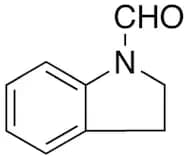
N-Formylindoline
CAS:Prodotto controllatoApplications Indoline metabolite
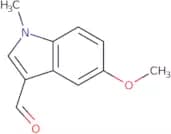
References Lacroix, I., et al.: Nat. Prod. Lett., 7, 15 (1995), Yamada, Y., et al.: Chem. Pharm. Bull., 54, 788 (2006), Whitehead, T., et al.: App. Environ. Microbiol., 74, 1950 (2008),Formula:C9H9NOColore e forma:NeatPeso molecolare:147.175-Methoxy-1-methyl-1H-indole-3-carbaldehyde
CAS:5-Methoxy-1-methyl-1H-indole-3-carbaldehyde is a synthetic compound that has been shown to inhibit the growth of human tumour cells in vitro. This compound is a regioisomeric mixture of two enantiomers, with the (S) isomer being the more potent inhibitor. The (R) isomer was found to be less active against human tumour cells and may have an antimicrobial activity. 5-Methoxy-1-methyl-1H-indole-3-carbaldehyde has been shown to be bioreductive towards electron donors such as NADPH and glutathione. It also inhibits dt diaphorase and aerobic metabolism in human tumour cells.Formula:C11H11NO2Purezza:Min. 95%Colore e forma:Off-White PowderPeso molecolare:189.21 g/molMethyl 5-methoxy-2-methylindole-3-acetate
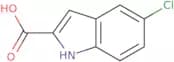
CAS:Methyl 5-methoxy-2-methylindole-3-acetate is a versatile building block that can be used as a research chemical, reagent, or speciality chemical. It is also an intermediate in the synthesis of other compounds and has been shown to be useful in reactions involving nucleophilic substitution and electrophilic addition. This compound can be used as a scaffold for complex organic molecules. CAS No. 7588-36-5Formula:C13H15NO3Purezza:Min. 95%Colore e forma:Beige SolidPeso molecolare:233.26 g/mol5-Chloroindole-2-carboxylic acid
CAS:5-Chloroindole-2-carboxylic acid is a fatty acid that is synthesized from glucose. It has been shown to have inhibitory properties against the enzyme cyclooxygenase-2 (COX-2), which may be due to its ability to suppress prostaglandin synthesis. 5-Chloroindole-2-carboxylic acid also has been shown to have anticancer properties and can inhibit cancer cell growth in vitro. The drug may also play a role in the central nervous system, as it has been shown to cause neuronal death. 5-Chloroindole-2-carboxylic acid is not water soluble, so it must be dissolved in organic solvents such as cyclohexane or chloroform before being used for chemical reactions. This drug can be used with other drugs that are coxib sensitive, such as aspirin, acetaminophen, and ibuprofen.
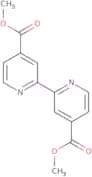
Formula:C9H6ClNO2Colore e forma:PowderPeso molecolare:195.6 g/mol4,4'-Bis(methoxycarbonyl)-2,2'-bipyridine
CAS:4,4'-Bis(methoxycarbonyl)-2,2'-bipyridine is a ligand that can be used in cross-coupling reactions. It has been shown to bind to metal ions and form complexes with the ligands. 4,4'-Bis(methoxycarbonyl)-2,2'-bipyridine has a constant value for maximizing the yield of the reaction and is luminescent. This product also has photophysical properties that allow it to be utilized in voltammetry studies. The transfer of this product can be optimized by using chromophores or catalysis. 4,4'-Bis(methoxycarbonyl)-2,2'-bipyridine provides a means for cross-coupling reactions using electrochemical studies and dichroism.
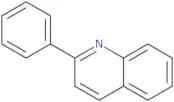
Formula:C14H12N2O4Purezza:Min. 95%Colore e forma:PowderPeso molecolare:272.26 g/mol2-phenyl-quinoline
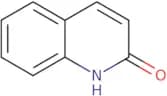
CAS:2-Phenyl-quinoline is a naturally occurring compound that exhibits antimicrobial activity. It has been shown to inhibit the growth of bacteria by interfering with the synthesis of ATP, which is necessary for bacterial cell division. 2-Phenyl-quinoline also possesses antioxidative properties and has been shown to have inhibitory effects on a number of bacterial strains. 2-Phenyl-quinoline has been shown to induce necrotic cell death in S. aureus strains, as well as anti-inflammatory and antinociceptive properties.Formula:C15H11NPurezza:Min. 98 Area-%Colore e forma:PowderPeso molecolare:205.25 g/mol2-Hydroxyquinoline
CAS:2-Hydroxyquinoline is a coumarin derivative that has inhibitory properties against a variety of human pathogens, including the causative agent of malaria. It binds to the active site of the enzyme xanthine oxidase, which catalyzes the oxidation of hypoxanthine to xanthine and then to uric acid. 2-Hydroxyquinoline inhibits this reaction, preventing the accumulation of uric acid in the blood and urine. This compound also has potential anticancer activity due to its ability to inhibit tumor cell proliferation in human prostate cancer cells. 2-Hydroxyquinoline is metabolized by cytochrome P450 enzymes and has pharmacokinetic properties that include an inhibitory dose (ID50) of 1mg/kg.Formula:C9H7NOPurezza:Min. 95%Colore e forma:White To Light (Or Pale) Yellow To Light (Or Pale) Green To Purple Brown SolidPeso molecolare:145.16 g/mol2,3-Dimethyl-1H-indole-5-carbaldehyde
CAS:2,3-Dimethyl-1H-indole-5-carbaldehyde is a high quality reagent that is used as a complex compound. It has been shown to be a useful intermediate and building block in the production of fine chemicals. 2,3-Dimethyl-1H-indole-5-carbaldehyde is also useful as a research chemical. This compound is versatile and can be used in reactions as an intermediate or building block. As a speciality chemical, it has various applications and is not limited to any specific area of research.Formula:C11H11NOPurezza:Min. 95%Colore e forma:PowderPeso molecolare:173.21 g/mol5,6-Diaminobenzimidazole dihydrochloride
CAS:Please enquire for more information about 5,6-Diaminobenzimidazole dihydrochloride including the price, delivery time and more detailed product information at the technical inquiry form on this pageFormula:C7H10Cl2N4Purezza:Min. 95%Colore e forma:Off-white to pale brown solid.Peso molecolare:221.09 g/mol4-Bromoisatin
CAS:4-Bromoisatin is a synthetic compound that reversibly inhibits the activity of telomerase and has been shown to be effective against a broad range of bacterial species. It binds to the catalytic site on telomerase and prevents the synthesis of ribonucleotides, which are necessary for DNA replication. 4-Bromoisatin is synthesized by humans, but can also be found in plants such as coffee beans and black tea leaves. The antibacterial properties of 4-bromoisatin may be due to its ability to inhibit the biosynthesis of purine, an essential component in bacterial DNA synthesis.Formula:C8H4BrNO2Purezza:Min. 95%Colore e forma:Orange PowderPeso molecolare:226.03 g/mol4-Chloro-1H-imidazole
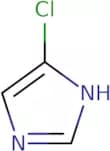
CAS:4-Chloro-1H-imidazole is an organic chemical compound that contains a heterocyclic ring with one nitrogen and three carbons. It is classified as a weak acid. 4-Chloro-1H-imidazole can be found in hydrochloric acid, methyl ketones, and the acid conjugates of pyrazole rings. It has minimal toxicity. 4-Chloro-1H-imidazole binds to receptors in the body, which may account for its effects on blood pressure and heart rate. This drug also reacts with diazonium salts to form an intermediate that is then oxidized by chloride ions to form a reactive intermediate that can react with histidine or flavin (a type of vitamin B2) to form a fluorescent product that can be detected by light absorption or fluorescence emission spectroscopy.
Formula:C3H3ClN2Purezza:Min. 95%Colore e forma:White PowderPeso molecolare:102.52 g/mol2-Boc-6-hydroxy-1,2,3,4-tetrahydroisoquinoline-1-carboxylic acid
CAS:2-Boc-6-hydroxy-1,2,3,4-tetrahydroisoquinoline-1-carboxylic acid is a useful scaffold with a high quality. It can be used as a building block in the synthesis of complex compounds and fine chemicals. 2-Boc-6-hydroxy-1,2,3,4-tetrahydroisoquinoline-1-carboxylic acid is also a useful intermediate and reagent in organic synthesis. This compound has CAS number 362492-00-0.
Formula:C15H19NO5Purezza:Min. 95%Colore e forma:PowderPeso molecolare:293.32 g/mol3-Aminoquinoline
CAS:3-Aminoquinoline is a chemical compound that inhibits the activity of the epidermal growth factor receptor (EGFR). It is a potent inhibitor of cell proliferation and has been shown to have antitumour activity. 3-Aminoquinoline has been shown to inhibit the proliferation of carcinoma cell lines. This drug binds to the EGFR receptor, preventing it from activating downstream signalling pathways that control cell growth. 3-Aminoquinoline also has biological properties, including matrix-assisted laser desorption/ionization time-of-flight mass spectrometry, analytical chemistry, sample preparation, and Suzuki coupling reaction. The molecule is structurally analyzed using chemical structures and structural analysis techniques such as thermodynamic data or proton NMR spectroscopy. 3-Aminoquinoline also interacts with sugars through hydrogen bonding and oligosaccharides. These interactions are found to be high in value in some cases.
Formula:C9H8N2Purezza:Min. 95%Colore e forma:White PowderPeso molecolare:144.17 g/molBoc-L-indoline-2-carboxylic acid
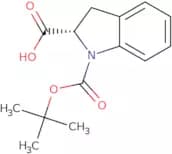
CAS:Boc-L-indoline-2-carboxylic acid is a high quality, versatile building block that can be used as a reagent or intermediate in organic synthesis. It is used as a research chemical and has potential applications in the development of new drugs. Boc-L-indoline-2-carboxylic acid is a complex compound that reacts with nucleophiles to form valuable products. It also has the ability to bind to metal ions such as copper, zinc, and nickel. This product can be used in reactions involving amines, alcohols, amides, phenols, carboxylic acids, sulfonic acids, and other compounds.
Formula:C14H17NO4Purezza:Min. 95%Colore e forma:White PowderPeso molecolare:263.29 g/mol1-Methyl-N-(9-methyl-9-azabicyclo[3.3.1]non-3-yl)-indazole-3-carboxamide
CAS:Prodotto controllato1-Methyl-N-(9-methyl-9-azabicyclo[3.3.1]non-3-yl)-indazole-3-carboxamide is a chemical inhibitor of the 5HT2 receptor, which is responsible for regulating nausea and vomiting. It has been shown to have antiemetic properties, and can be used in chemotherapy to control nausea and vomiting. The 5HT2 receptor is coupled to Gs proteins and inhibits adenylyl cyclase activity, while 1MMAI binds to the 5HT2A receptor and blocks serotonin from binding. This prevents serotonin from activating Gq protein receptors, which are involved in the generation of intracellular calcium concentrations that lead to neurotransmitter release. 1MMAI also inhibits the activation of phospholipase C by serotonin, resulting in decreased levels of diacylglycerol (DAG) and inositol triphosphate (IP3). These changes inhibit plateFormula:C18H24N4OPurezza:Min. 95%Colore e forma:White Off-White PowderPeso molecolare:312.41 g/mol6-Hydroxy-3,4-dihydro-1H-quinoline-2-one
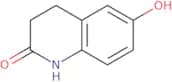
CAS:This is a quinoline derivative that has been shown to have inotropic and cardioprotective effects. It has been shown to increase the duration of action potentials and contractions in isolated heart muscle, as well as to improve the function of the heart by reducing the rate of myocardial oxygen consumption. 6-Hydroxy-3,4-dihydro-1H-quinoline-2-one has been shown to have anti-inflammatory properties and may be useful for treating respiratory diseases such as asthma. This compound is also used as a precursor for some pharmaceutical drugs, including chloroquine, mefloquine, amodiaquine, and primaquine. The compound is metabolized into conjugates that are recycled back into the body or excreted in human urine; this process is regulated by the balance between conjugation reactions and hydrolysis reactions.Formula:C9H9NO2Purezza:Min. 95%Peso molecolare:163.17 g/mol3-Aminoquinuclidine dihydrochloride
CAS:3-Aminoquinuclidine dihydrochloride (3-AQDH) is a chiral quinuclidine derivative that is an acetylcholine receptor agonist. It has been shown to bind to the α7 nicotinic acetylcholine receptor with high affinity and selectivity. 3-AQDH has also been shown to crosslink the cholinergic receptor, which may lead to increased sensitivity of the receptor. The binding constants between 3-AQDH and the α7 nicotinic acetylcholine receptors are very high and it has been shown to be enantiopure in its synthesis. 3-AQDH also has a hydrophilic interaction chromatography profile, which separates it from other compounds. This agent may have potential use as a drug for treating Alzheimer's disease and Parkinson's disease due to its ability to inhibit acetylcholinesterase activity.
Purezza:Min. 95%Colore e forma:PowderPeso molecolare:199.12 g/mol1,2,3,4-Tetrahydrocyclopenta[b]indole
CAS:1,2,3,4-Tetrahydrocyclopenta[b]indole is a synthetic drug that has been shown to be an effective antidepressant in animal models of depression. It has also been shown to inhibit the replication of HIV and Hepatitis C virus in cell culture. It is thought that 1,2,3,4-tetrahydrocyclopenta[b]indole's anti-depressant effects are due to its ability to block the α2-adrenergic receptor and cholinergic receptors. The drug also inhibits the synthesis of amines including serotonin, dopamine and noradrenaline. This compound may be used as a treatment for depression because it does not have any significant side effects on the central nervous system or other organs.Formula:C11H11NPurezza:Min. 95%Peso molecolare:157.21 g/molQuinoline-5-carboxylic acid
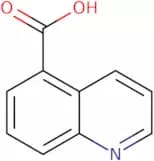
CAS:Quinoline-5-carboxylic acid is a peroxide that is produced by the oxidation of quinoline derivatives. Quinoline-5-carboxylic acid has been shown to have antibacterial activity, and it also has affinity values for chloride ions. The chemical isomers of quinoline-5-carboxylic acid are called quninolines, which are produced by the hydrolysis of quinoline-5-carboxylic acid. Quinolines can be obtained by the oxidation of aniline. Quinolines have been shown to catalyze reactions with carbonyl groups in organic molecules, such as the reaction between an alkoxycarbonyl group and a hydroxyl group to form an aldehyde or ketone. Kinetic data for this reaction was obtained using titration calorimetry.
Formula:C10H7NO2Purezza:Min. 95%Colore e forma:White To Beige To Light Brown To Grey SolidPeso molecolare:173.17 g/molMethyl 3-cyano-1H-indole-7-carboxylate
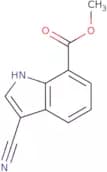
CAS:Methyl 3-cyano-1H-indole-7-carboxylate is a fine chemical that belongs to the class of useful scaffolds, versatile building blocks, and useful intermediates. It is used as a research chemical and a reaction component. Methyl 3-cyano-1H-indole-7-carboxylate is also a speciality chemical with high quality and can be used as a reagent in the production of other compounds.Formula:C11H8N2O2Purezza:Min. 95%Colore e forma:White PowderPeso molecolare:200.19 g/mol







![1-Methyl-N-(9-methyl-9-azabicyclo[3.3.1]non-3-yl)-indazole-3-carboxamide](/_next/image/?url=https%3A%2Fstatic.cymitquimica.com%2Fproducts%2F3D%2Fthumb-webp%2FFM137557.webp&w=3840&q=75)

![1,2,3,4-Tetrahydrocyclopenta[b]indole](/_next/image/?url=https%3A%2Fstatic.cymitquimica.com%2Fproducts%2F3D%2Fthumb-webp%2FFT119279.webp&w=3840&q=75)