Composti policiclici
I composti policiclici sono molecole organiche che contengono più anelli interconnessi. Questi composti includono idrocarburi aromatici policiclici e altri sistemi ad anello complessi. Sono significativi nella scienza dei materiali, nei prodotti farmaceutici e nell'elettronica organica. Da CymitQuimica, offriamo composti policiclici di alta qualità per supportare le tue ricerche e applicazioni industriali, garantendo risultati affidabili ed efficaci nei tuoi progetti.
Sottocategorie di "Composti policiclici"
- Acridine(97 prodotti)
- Antrachinoni(533 prodotti)
- Acidi antrachinonici solfonici(16 prodotti)
- Azobenzeni(270 prodotti)
- Azonaftalene(98 prodotti)
- Azoxybenzeni(12 prodotti)
- Azuleni(11 prodotti)
- Benzimidazoli(1.475 prodotti)
- Benzodiossani(27 prodotti)
- Benzofurani(924 prodotti)
- Benzotiofeni(700 prodotti)
- Benzotriazoli(438 prodotti)
- Binaphthyl(133 prodotti)
- Carbazoli(462 prodotti)
- Cromani, cromeni(480 prodotti)
- Cumarine(1.122 prodotti)
- Ciclofani(11 prodotti)
- Fluorene e Fluorenoni(381 prodotti)
- Imidazopiridine(10 prodotti)
- Indan(118 prodotti)
- Indazoli(2.037 prodotti)
- Indeni(22 prodotti)
- Indoli(3.988 prodotti)
- Indoline(119 prodotti)
- Isatine(234 prodotti)
- Isobenzofurani(17 prodotti)
- Ftalimmidi N-sostituiti(153 prodotti)
- Naftaleni(2.436 prodotti)
- Naftiridina(17 prodotti)
- Naftochinone(2 prodotti)
- Perilene(36 prodotti)
- Fenazine(25 prodotti)
- Ftalazine(33 prodotti)
- Ftalimmide(153 prodotti)
- Idrocarburi policiclici aromatici (PAH)(270 prodotti)
- Polifenolo(261 prodotti)
- Pteridine(52 prodotti)
- Pireni(87 prodotti)
- Chinuclidina(1 prodotti)
- Tetraceni(7 prodotti)
Mostrare 32 più sottocategorie
Trovati 4574 prodotti di "Composti policiclici"
Ordinare per
Purezza (%)
0
100
|
0
|
50
|
90
|
95
|
100
Ethyl 3-{[(1E)-(dimethylamino)methylene]amino}-5-methoxy-1-methyl-1H-indole-2-carboxylate
CAS:Prodotto controllato<p>Please enquire for more information about Ethyl 3-{[(1E)-(dimethylamino)methylene]amino}-5-methoxy-1-methyl-1H-indole-2-carboxylate including the price, delivery time and more detailed product information at the technical inquiry form on this page</p>Formula:C16H21N3O3Purezza:Min. 95%Peso molecolare:303.36 g/mol1-(3-Methoxybenzyl)-1H-indole-3-carbaldehyde
CAS:Prodotto controllatoPlease enquire for more information about 1-(3-Methoxybenzyl)-1H-indole-3-carbaldehyde including the price, delivery time and more detailed product information at the technical inquiry form on this pageFormula:C17H15NO2Purezza:Min. 95%Peso molecolare:265.31 g/mol1-Azaspiro[4.4]nonane hydrochloride
CAS:1-Azaspiro[4.4]nonane hydrochloride is a versatile building block that is also used in research, as a reagent, and as a speciality chemical. It has been shown to be an excellent building block for complex compounds, with wide applications in the pharmaceutical industry. 1-Azaspiro[4.4]nonane hydrochloride has a CAS No. of 1417567-64-6 and can be found under the trade name Azapropynalene Hydrochloride (AP). It is soluble in water, alcohols, ethers and acetone but insoluble in most other solvents. 1-Azaspiro[4.4]nonane hydrochloride has been shown to have high quality and stability when stored under appropriate conditions; it is also resistant to degradation by light or air.Formula:C8H15N•HClPurezza:Min. 95%Colore e forma:PowderPeso molecolare:161.67 g/molPrenyletin methyl ether
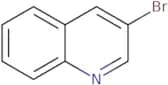
CAS:<p>Prenyletin methyl ether is a flavonoid compound, which is a naturally occurring polyphenolic molecule sourced primarily from specific plant species. This compound exerts its effects through a variety of biochemical interactions, notably influencing cellular signaling pathways, including antioxidative and anti-inflammatory processes.</p>Formula:C15H16O4Purezza:Min. 95%Peso molecolare:260.29 g/mol3-Bromoquinoline
CAS:<p>3-Bromoquinoline is a brominated quinoline derivative that can be synthesized by cross-coupling reactions. The compound's chemical structure is similar to the 3-azidoquinoline, which was studied in quantum theory and molecular modeling. The 3-bromoquinoline molecule has been shown to exist in two different coordination geometries: octahedral and trigonal bipyramidal. In the octahedral geometry, the 3-bromoquinoline molecule is bound to three bromine atoms and one nitrogen atom, with an intramolecular hydrogen bond between the nitrogen atom and the quinoline ring system. The trigonal bipyramidal geometry also features an intramolecular hydrogen bond between the nitrogen atom and quinoline ring system, as well as a halogen bonding interaction with one of the three bromine atoms.</p>Formula:C9H6BrNPurezza:Min. 95%Colore e forma:Yellow PowderPeso molecolare:208.05 g/mol7,8-Dihydroxy-4-methylcoumarin
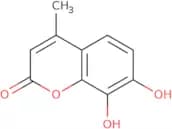
CAS:<p>7,8-Dihydroxy-4-methylcoumarin is a bioactive compound, specifically a derivative of coumarin. This compound is naturally derived from plant sources, where it acts as a metabolite in various biochemical pathways. Its chemical structure is characterized by the presence of two hydroxyl groups at the 7 and 8 positions, along with a methyl group at the 4 position of the coumarin core, contributing to its unique pharmacological profile.</p>Formula:C10H8O4Purezza:Min. 95%Peso molecolare:192.17 g/molPhellopterin
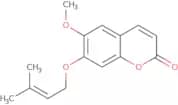
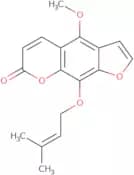
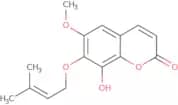
CAS:Phellopterin is a bioactive compound belonging to the class of furanocoumarins. It is extracted from various plants within the Apiaceae family, notably Angelica and Peucedanum species. These plants are found in diverse geographical regions and have been used in traditional medicine for centuries.Purezza:Min. 95%Tomenin
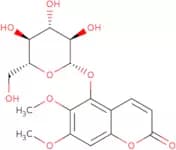
CAS:<p>Tomenin is a systemic insecticidal compound, which is synthetically derived with a unique dual mode of action. This product is designed to efficiently target nematodes, plant-parasitic organisms that cause significant agricultural damage. The molecular formulation of Tomenin involves binding to specific nematode receptors, disrupting their neuromuscular functions and metabolic pathways. This dual action results in paralysis and eventual death of the nematodes, ensuring effective control over populations that threaten crop yield and quality.</p>Formula:C17H20O10Purezza:Min. 95%Peso molecolare:384.33 g/mol4,6-Dichloroisatin
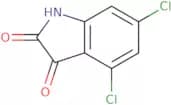
CAS:<p>4,6-Dichloroisatin is a pro-apoptotic compound that is synthesized from amino acids. It has been shown to have anticancer activity in human liver cancer cells, which may be due to its ability to induce apoptosis. 4,6-Dichloroisatin has also been shown to inhibit the production of electron transport chain proteins in the mitochondria by binding to their regulatory sites and inhibiting their phosphorylation. This inhibition of electron transport chain proteins leads to an accumulation of electrons that can react with molecular oxygen and produce reactive oxygen species (ROS). ROS are known for their ability to cause DNA damage and cell death through oxidative stress.</p>Formula:C8H3Cl2NO2Purezza:Min. 95%Peso molecolare:216.02 g/mol(2R)-1-[2-[(3-Hydroxytricyclo[3.3.1.1(3,7)]dec-1-yl)amino]acetyl]-2-pyrrolidinecarbonitrile
CAS:(2R)-1-[2-[(3-Hydroxytricyclo[3.3.1.1(3,7)]dec-1-yl)amino]acetyl]-2-pyrrolidinecarbonitrile is a drug that belongs to the class of DPP-IV inhibitors and is used for the treatment of type 2 diabetes mellitus. It has been shown to be effective in reducing postprandial blood glucose levels in patients with type 2 diabetes mellitus. The mechanism of action of this drug is not fully understood, but it may have an effect on insulin release from pancreatic beta cells and/or inhibition of gastric emptying or intestinal absorption of glucose. This drug has been shown to reduce tubulointerstitial injury in diabetic rats and can be used as a combination therapy for type 2 diabetes mellitus. There are no known clinically relevant interactions between (2R)-1-[2-[(3-HydroxytricycloFormula:C17H25N3O2Purezza:Min. 95%Peso molecolare:303.4 g/mol5-Methoxyquinoline
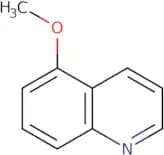
CAS:<p>5-Methoxyquinoline (5MQ) is a chemical compound that belongs to the quinoline derivatives. It has shown anticancer activity in tumor models through a proton-transfer mechanism. 5MQ reacts with an acidic proton, such as the hydronium ion, to produce a reactive intermediate that can react with DNA and other cellular macromolecules. The drug also has been shown to inhibit the growth of bacteria by inhibiting protein synthesis. This inhibition is due to its ability to transfer protons from one molecule to another, which alters the charge distribution on that molecule and prevents it from reacting with other molecules.</p>Formula:C10H9NOPurezza:Min. 95%Colore e forma:LiquidPeso molecolare:159.18 g/molCapensin
CAS:<p>Capensin is an alkaloid-based compound, which is a naturally occurring chemical derived from specific plant sources known for producing bioactive molecules. Its mode of action involves interacting with cellular pathways to produce pharmacological effects, making it of particular interest in biochemical and medical research.</p>Formula:C15H16O5Purezza:Min. 95%Peso molecolare:276.28 g/molcis-Isokhellactone
CAS:<p>cis-Isokhellactone is a bioactive compound that belongs to the class of sesquiterpene lactones, which is isolated from plants in the genus Khella. With a well-characterized molecular structure, this compound exhibits significant binding affinity for cellular targets that are crucial in the regulation of cell proliferation and apoptosis. The mode of action involves the modulation of signaling pathways involved in cell cycle regulation and the induction of apoptosis in neoplastic cells.</p>Formula:C14H14O5Purezza:Min. 95%Peso molecolare:262.26 g/molMethyl 1H-indazole-3-carboxylate
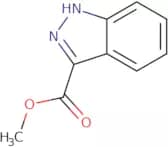
CAS:Prodotto controllato<p>Methyl 1H-indazole-3-carboxylate is a synthetic cannabinoid that is structurally related to the natural cannabinoid, anandamide. It has been shown to be a potent activator of the CB2 receptor and to inhibit spontaneous activity in mice. Methyl 1H-indazole-3-carboxylate also binds to CB1 receptors and has potential use as a cancer therapy due to its ability to induce apoptosis. This compound is illegal in many countries, including the United States and Canada, where it is classified as a Schedule I drug.</p>Formula:C9H8N2O2Purezza:Min. 95%Peso molecolare:176.17 g/mol7-Methylquinoline
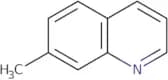
CAS:<p>7-Methylquinoline is an organic compound that can be used to synthesize antimalarial drugs. It is a quinoline derivative with a methyl group at the 7th position. The structure of 7-methylquinoline contains a nitrogen atom and hydrogen atoms, which are bonded to fluorine, chlorine, and bromine atoms. This molecule has been shown to be stable in the presence of Friedel-Crafts catalysts and chloride ions. The reaction mechanism for 7-methylquinoline is intramolecular hydrogen transfer from the chloroform molecule to the quinoline ring system. The formation rate for this compound is slow because it requires two steps: nucleophilic substitution and electrophilic addition reactions.</p>Formula:C10H9NPurezza:Min. 95%Peso molecolare:143.19 g/mol(3R)-1-Azabicyclo[2.2.2]oct-3-yl N-[2-(2-benzoylphenyl)ethyl]carbamate
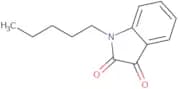
CAS:<p>Please enquire for more information about (3R)-1-Azabicyclo[2.2.2]oct-3-yl N-[2-(2-benzoylphenyl)ethyl]carbamate including the price, delivery time and more detailed product information at the technical inquiry form on this page</p>Formula:C23H26N2O3Purezza:Min. 95%Peso molecolare:378.46 g/mol1-Pentyl-1H-indole-2,3-dione
CAS:<p>1-Pentyl-1H-indole-2,3-dione is a synthetic cannabinoid that is used as a recreational drug. It has been shown to be thermally labile and can decompose at high temperatures. 1-Pentyl-1H-indole-2,3-dione is an acidic compound with a melting point of 79°C. The compound is also oxidant and therefore can react with other compounds to create new substances. This reaction can be accelerated by light or heat, which may result in the formation of hazardous products such as naphthalene.</p>Formula:C13H15NO2Purezza:Min. 95%Peso molecolare:217.26 g/mol2,2,4-Trimethyl-1,2-dihydroquinolin-6-yl phenylacetate
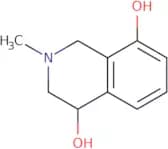
CAS:Prodotto controllato<p>Please enquire for more information about 2,2,4-Trimethyl-1,2-dihydroquinolin-6-yl phenylacetate including the price, delivery time and more detailed product information at the technical inquiry form on this page</p>Formula:C20H21NO2Purezza:Min. 95%Peso molecolare:307.39 g/mol1,2,3,4-Tetrahydro-4,8-dihydroxy-2-methyl-isoquinoline
CAS:<p>1,2,3,4-Tetrahydro-4,8-dihydroxy-2-methyl-isoquinoline is a chemical compound that has been used as an intermediate in the synthesis of pharmaceuticals. It is also a useful building block for the production of other chemicals. This compound is soluble in water. 1,2,3,4-Tetrahydro-4,8-dihydroxy-2-methyl-isoquinoline has shown to be a versatile and high quality reagent with many research applications.</p>Formula:C10H13NO2Purezza:Min. 95%Colore e forma:Yellow PowderPeso molecolare:179.22 g/molMethyl 3-formyl-4,6-dimethoxy-1-methyl-1H-indole-2-carboxylate
CAS:Prodotto controllato<p>Please enquire for more information about Methyl 3-formyl-4,6-dimethoxy-1-methyl-1H-indole-2-carboxylate including the price, delivery time and more detailed product information at the technical inquiry form on this page</p>Formula:C14H15NO5Purezza:Min. 95%Peso molecolare:277.27 g/mol
![Ethyl 3-{[(1E)-(dimethylamino)methylene]amino}-5-methoxy-1-methyl-1H-indole-2-carboxylate](/_next/image/?url=https%3A%2Fstatic.cymitquimica.com%2Fproducts%2F3D%2Fthumb-webp%2FFE123273.webp&w=3840&q=75)


![1-Azaspiro[4.4]nonane hydrochloride](/_next/image/?url=https%3A%2Fstatic.cymitquimica.com%2Fproducts%2F3D%2Fthumb-webp%2FFA130012.webp&w=3840&q=75)
![(2R)-1-[2-[(3-Hydroxytricyclo[3.3.1.1(3,7)]dec-1-yl)amino]acetyl]-2-pyrrolidinecarbonitrile](/_next/image/?url=https%3A%2Fstatic.cymitquimica.com%2Fproducts%2F3D%2Fthumb-webp%2FFH46129.webp&w=3840&q=75)
![(3R)-1-Azabicyclo[2.2.2]oct-3-yl N-[2-(2-benzoylphenyl)ethyl]carbamate](/_next/image/?url=https%3A%2Fstatic.cymitquimica.com%2Fproducts%2F3D%2Fthumb-webp%2FFQ171047.webp&w=3840&q=75)