Composti policiclici
I composti policiclici sono molecole organiche che contengono più anelli interconnessi. Questi composti includono idrocarburi aromatici policiclici e altri sistemi ad anello complessi. Sono significativi nella scienza dei materiali, nei prodotti farmaceutici e nell'elettronica organica. Da CymitQuimica, offriamo composti policiclici di alta qualità per supportare le tue ricerche e applicazioni industriali, garantendo risultati affidabili ed efficaci nei tuoi progetti.
Sottocategorie di "Composti policiclici"
- Acridine(97 prodotti)
- Antrachinoni(533 prodotti)
- Acidi antrachinonici solfonici(16 prodotti)
- Azobenzeni(270 prodotti)
- Azonaftalene(98 prodotti)
- Azoxybenzeni(12 prodotti)
- Azuleni(11 prodotti)
- Benzimidazoli(1.475 prodotti)
- Benzodiossani(27 prodotti)
- Benzofurani(924 prodotti)
- Benzotiofeni(700 prodotti)
- Benzotriazoli(438 prodotti)
- Binaphthyl(133 prodotti)
- Carbazoli(462 prodotti)
- Cromani, cromeni(480 prodotti)
- Cumarine(1.122 prodotti)
- Ciclofani(11 prodotti)
- Fluorene e Fluorenoni(381 prodotti)
- Imidazopiridine(10 prodotti)
- Indan(118 prodotti)
- Indazoli(2.037 prodotti)
- Indeni(22 prodotti)
- Indoli(3.988 prodotti)
- Indoline(119 prodotti)
- Isatine(234 prodotti)
- Isobenzofurani(17 prodotti)
- Ftalimmidi N-sostituiti(153 prodotti)
- Naftaleni(2.436 prodotti)
- Naftiridina(17 prodotti)
- Naftochinone(2 prodotti)
- Perilene(36 prodotti)
- Fenazine(25 prodotti)
- Ftalazine(33 prodotti)
- Ftalimmide(153 prodotti)
- Idrocarburi policiclici aromatici (PAH)(270 prodotti)
- Polifenolo(261 prodotti)
- Pteridine(52 prodotti)
- Pireni(87 prodotti)
- Chinuclidina(1 prodotti)
- Tetraceni(7 prodotti)
Mostrare 32 più sottocategorie
Trovati 4574 prodotti di "Composti policiclici"
Ordinare per
Purezza (%)
0
100
|
0
|
50
|
90
|
95
|
100
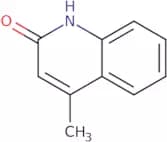
2-Hydroxy-4-methylquinoline
CAS:<p>2-Hydroxy-4-methylquinoline is an organic compound that has a chelate ring. It is soluble in deionized water and reacts with metal ions to form a fluorescent product. The molecule also has antibacterial activity, which may be due to its ability to inhibit the growth of bacteria by acting as a metal ion chelator. 2-Hydroxy-4-methylquinoline can react with halides and ammonium persulfate to form isomeric products, such as 4,5-dihydroxyquinoline, which have been shown to have antimicrobial properties. 2-Hydroxy-4-methylquinoline can also react with phosphorus oxychloride and alkylating agents such as chloroethane or chloroform to form substituted derivatives.</p>Formula:C10H9NOPurezza:Min. 95%Colore e forma:PowderPeso molecolare:159.18 g/molSelinidin
CAS:<p>Selinidin is a phytochemical compound, which is derived from the natural source of the Brunsvigia bosmaniae plant. As a bioactive constituent of this plant, it is characterized by its unique structure and chemical properties, enabling it to interact with a variety of cellular targets, primarily through modulation of inflammatory pathways. The mode of action of Selinidin involves the inhibition of pro-inflammatory cytokines and mediators, thereby reducing inflammation and oxidative stress at the cellular level.</p>Formula:C19H20O5Purezza:Min. 95%Peso molecolare:328.36 g/molDaphnetin-8-methyl ether
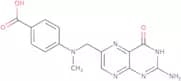
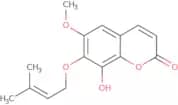
CAS:<p>Daphnetin-8-methyl ether is a naturally derived coumarin compound, which is predominantly sourced from the Daphne genus of plants, among other botanical species known for their therapeutic potential. This compound is recognized for its biochemical interaction with key cellular pathways, particularly through the modulation of enzymes and receptors associated with inflammatory and oxidative stress responses.</p>Formula:C10H8O4Purezza:Min. 95%Peso molecolare:192.17 g/molN10-Methyl pteroic acid
CAS:<p>N10-Methyl pteroic acid is a novel immunosuppressant that inhibits T-cell proliferation and promotes regression of inflammatory bowel disease. It has been shown to be effective in treating cancer patients, with the terminal half-life being approximately 20 hours. N10-Methyl pteroic acid is a potent inhibitor of human acute lymphoblastic leukemia cells. It can also be used as an immunosuppressant for organ transplantation, with desorption from gels using matrix-assisted laser desorption/ionization time-of-flight mass spectrometry (MALDI TOF MS) and bioanalytical methods such as high performance liquid chromatography (HPLC).</p>Formula:C15H14N6O3Purezza:Min. 95%Peso molecolare:326.31 g/mol1,2,3,4,5,6-Hexahydro-1,5-methano-pyrido-[1,2-a][1,5]diazocin-8-one
CAS:<p>1,2,3,4,5,6-Hexahydro-1,5-methano-pyrido-[1,2-a][1,5]diazocin-8-one is a cholinergic drug that is used as a research tool in vitro. It has been shown to increase the concentration of acetylcholine in the synapse. It is also known as cytisine and varenicline. 1,2,3,4,5,6-Hexahydro-1,5-methano-pyrido-[1,2-a][1,5]diazocin-8-one binds to nicotinic receptors and stimulates them. This increased activity of nicotinic receptors leads to the release of acetylcholine (ACh), which is an important neurotransmitter in the brain. 1,2,3,4 5 6 hexahydro - 1 5</p>Formula:C11H14N2OPurezza:Min. 95%Peso molecolare:190.24 g/mol4-Chloro-5H-pyrimido[5,4-b]indole
CAS:<p>Please enquire for more information about 4-Chloro-5H-pyrimido[5,4-b]indole including the price, delivery time and more detailed product information at the technical inquiry form on this page</p>Formula:C10H6ClN3Purezza:Min. 95%Peso molecolare:203.63 g/mol1H-Cyclopenta[l]phenanthrene
CAS:<p>1H-Cyclopenta[l]phenanthrene is a five-membered cyclic hydrocarbon that binds to phosphine and is used in the synthesis of ferrocenes. It is also unsymmetrical and anion-forming. 1H-Cyclopenta[l]phenanthrene can be protonated at carbon, which makes it a good ligand. 1H-Cyclopenta[l]phenanthrene has been shown to react with carbonyls, imines, and ethylene to form organometallic complexes.</p>Formula:C17H12Purezza:Min. 95%Colore e forma:PowderPeso molecolare:216.28 g/molOxypeucedanin hydrate
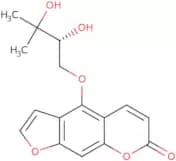
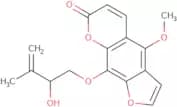
CAS:Oxypeucedanin hydrate is a natural furanocoumarin compound, which is derived from various plant sources, such as citrus fruits and members of the Apiaceae family. As a secondary metabolite, it plays a role in plant defense mechanisms against herbivores and pathogens.Purezza:Min. 95%Ethyl 5-fluoroindole-2-carboxylate
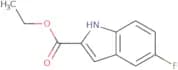
CAS:<p>Ethyl 5-fluoroindole-2-carboxylate is a cytotoxic compound that belongs to the class of organic compounds called aryl rings. It has been shown to inhibit tumor growth in vitro and in vivo through the inhibition of protein synthesis. The molecular docking studies have shown that this compound binds to the enzyme SMMC-7721 cell, which is involved in DNA transcription and replication. It also inhibits activity of other enzymes, such as kinases and phosphatases, which are involved in cellular processes such as proliferation and differentiation. Ethyl 5-fluoroindole-2-carboxylate may be used for the treatment of blood cancer or monosugar diseases, such as diabetes mellitus or hyperlipidemia.</p>Formula:C11H10FNO2Purezza:Min. 95%Peso molecolare:207.2 g/mol3-[2-(2,5-Dimethyl-1H-pyrrol-1-yl)ethyl]-1H-indole
CAS:Prodotto controllato<p>Please enquire for more information about 3-[2-(2,5-Dimethyl-1H-pyrrol-1-yl)ethyl]-1H-indole including the price, delivery time and more detailed product information at the technical inquiry form on this page</p>Formula:C16H18N2Purezza:Min. 95%Peso molecolare:238.33 g/mol1-Cyclopropyl-7-(2,8-diazabicyclo[4.3.0]non-8-yl)-6-fluoro-8-methoxy-4-oxoquinoline-3-carboxylic acid
CAS:<p>This is a broad-spectrum antibacterial agent that inhibits bacterial DNA gyrase. It is active against atypical bacterial species, such as Chlamydia and Mycoplasma, and has been shown to be effective against certain strains of the methicillin-resistant Staphylococcus aureus (MRSA) bacteria. This drug also inhibits the growth of other bacteria by binding to their DNA. The drug is used in combination with other antibiotics to treat infections caused by Clostridium difficile, Helicobacter pylori, Borrelia burgdorferi, and Salmonella enterica. However, this drug does not work against Pseudomonas aeruginosa or Enterobacteriaceae infections.</p>Formula:C21H24FN3O4Purezza:Min. 95%Colore e forma:PowderPeso molecolare:401.43 g/molBis(tricyclohexylphosphine)palladium(II) Dichloride
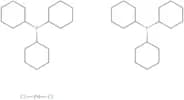
CAS:Prodotto controllato<p>Bis(tricyclohexylphosphine)palladium(II) Dichloride is a cross-coupling agent that is used for the synthesis of organic and organometallic compounds. It reacts with terminal alkynes to form a phosphine oxide, which can then be converted into an arylated product. The reaction proceeds by the formation of a palladium-carbon bond and subsequent cleavage of the carbon-palladium bond in the presence of ammonium formate. Bis(tricyclohexylphosphine)palladium(II) Dichloride is insoluble in water, but soluble in organic solvents such as dichloromethane, 1,2-dichloroethane, or chloroform. This reagent has been shown to enhance the rate of transfer reactions between monomers.</p>Formula:C36H66Cl2P2PdPurezza:Min. 95%Peso molecolare:738.18 g/mol2-Chloroquinolin-8-ol
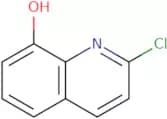
CAS:2-Chloroquinolin-8-ol is a chemical compound that binds to the human serum albumin and has cytotoxic effects on cancer cells. It has been shown to be an inhibitor of survivin, a protein that can promote cancer cell survival. 2-Chloroquinolin-8-ol has also been shown to inhibit the proliferation of human epidermoid carcinoma cells in vitro. This agent also inhibits the growth of Trichophyton mentagrophytes, a fungus that causes tinea versicolor, by binding to the ribosomal RNA. The binding constants for 2-chloroquinolin-8-ol were determined using atomic orbital calculations and vibrational spectroscopy. It has also been shown to bind with high affinity to hepg2 cells and cervical cancer cells.Formula:C9H6ClNOPurezza:Min. 95%Peso molecolare:179.6 g/molNeobyakangelicol
CAS:<p>Neobyakangelicol is a phytochemical compound, which is a natural product derived from various plant species. Its source is predominantly the roots of certain medicinal plants that are known for their array of bioactive constituents. The mode of action of Neobyakangelicol primarily involves interacting with specific biochemical pathways, potentially including modulation of enzyme activity or receptor binding, which could result in diverse pharmacological effects.</p>Formula:C17H16O6Purezza:Min. 95%Peso molecolare:316.31 g/molCapensin
CAS:<p>Capensin is an alkaloid-based compound, which is a naturally occurring chemical derived from specific plant sources known for producing bioactive molecules. Its mode of action involves interacting with cellular pathways to produce pharmacological effects, making it of particular interest in biochemical and medical research.</p>Formula:C15H16O5Purezza:Min. 95%Peso molecolare:276.28 g/mol1-Azaspiro[4.4]nonane hydrochloride
CAS:1-Azaspiro[4.4]nonane hydrochloride is a versatile building block that is also used in research, as a reagent, and as a speciality chemical. It has been shown to be an excellent building block for complex compounds, with wide applications in the pharmaceutical industry. 1-Azaspiro[4.4]nonane hydrochloride has a CAS No. of 1417567-64-6 and can be found under the trade name Azapropynalene Hydrochloride (AP). It is soluble in water, alcohols, ethers and acetone but insoluble in most other solvents. 1-Azaspiro[4.4]nonane hydrochloride has been shown to have high quality and stability when stored under appropriate conditions; it is also resistant to degradation by light or air.Formula:C8H15N•HClPurezza:Min. 95%Colore e forma:PowderPeso molecolare:161.67 g/moltert-Butyl 4,7-diazaspiro[2.5]octane-7-carboxylate
CAS:<p>Please enquire for more information about tert-Butyl 4,7-diazaspiro[2.5]octane-7-carboxylate including the price, delivery time and more detailed product information at the technical inquiry form on this page</p>Purezza:Min. 95%1,4-Diazabicyclo[2.2.2]octane
CAS:<p>1,4-Diazabicyclo[2.2.2]octane is an organic compound that belongs to the group of coordination compounds and has antimicrobial activity. It is a colorless solid with a melting point of -117°C and a boiling point of 245°C. The molecular geometry is planar, which means that all bonds are linear. The compound can be found in water vapor or as colloidal gold sols in reaction with water vapor. It can also be obtained by reacting triethylenediamine with hydrochloric acid at 100°C under vacuum conditions. 1,4-Diazabicyclo[2.2.2]octane has been shown to have antibiotic properties and is able to inhibit the growth of bacteria through coordination geometry and phase transition temperature effects on the bacterial cell membrane.</p>Formula:C6H12N2Purezza:Min. 98%Colore e forma:PowderPeso molecolare:112.17 g/molTegerrardin A
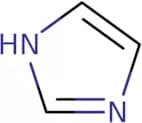
CAS:<p>Tegerrardin A is an innovative biopesticide derived from microbial fermentation processes, harnessing the potency of naturally occurring microorganisms. It is formulated to exploit the specific biochemical mechanisms within targeted pest populations, effectively disrupting their vital physiological functions. This selective mode of action is achieved through the inhibition of key enzymes essential for pest survival and proliferation, resulting in decreased pest pressure and improved crop health.</p>Formula:C15H13NO3Purezza:Min. 95%Peso molecolare:255.27 g/molImidazole
CAS:<p>Imidazole is a highly polar aromatic compound with two annular nitrogen atoms. Imidazole is widely used in the affinity purification of proteins with polyhistidine tags (His-Tag). In the protein purification process, imidazole is used for the elution of His-Tag-fused recombinant proteins from a metal-immobilised resins. In the elution buffers, imidazole is typically used in the 50 â 500 mM concentration range (Bornhorst and Falke, 2000).</p>Formula:C3H4N2Purezza:Min 99%Colore e forma:White Off-White PowderPeso molecolare:68.08 g/mol


![1,2,3,4,5,6-Hexahydro-1,5-methano-pyrido-[1,2-a][1,5]diazocin-8-one](/_next/image/?url=https%3A%2Fstatic.cymitquimica.com%2Fproducts%2F3D%2Fthumb-webp%2FFD117142.webp&w=3840&q=75)
![4-Chloro-5H-pyrimido[5,4-b]indole](/_next/image/?url=https%3A%2Fstatic.cymitquimica.com%2Fproducts%2F3D%2Fthumb-webp%2FFC118328.webp&w=3840&q=75)
![1H-Cyclopenta[l]phenanthrene](/_next/image/?url=https%3A%2Fstatic.cymitquimica.com%2Fproducts%2F3D%2Fthumb-webp%2FFC60818.webp&w=3840&q=75)
![3-[2-(2,5-Dimethyl-1H-pyrrol-1-yl)ethyl]-1H-indole](/_next/image/?url=https%3A%2Fstatic.cymitquimica.com%2Fproducts%2F3D%2Fthumb-webp%2FFD117662.webp&w=3840&q=75)
![1-Cyclopropyl-7-(2,8-diazabicyclo[4.3.0]non-8-yl)-6-fluoro-8-methoxy-4-oxoquinoline-3-carboxylic a…](/_next/image/?url=https%3A%2Fstatic.cymitquimica.com%2Fproducts%2F3D%2Fthumb-webp%2FFC102529.webp&w=3840&q=75)
![1-Azaspiro[4.4]nonane hydrochloride](/_next/image/?url=https%3A%2Fstatic.cymitquimica.com%2Fproducts%2F3D%2Fthumb-webp%2FFA130012.webp&w=3840&q=75)
![tert-Butyl 4,7-diazaspiro[2.5]octane-7-carboxylate](/_next/image/?url=https%3A%2Fstatic.cymitquimica.com%2Fproducts%2F3D%2Fthumb-webp%2FFB141975.webp&w=3840&q=75)
![1,4-Diazabicyclo[2.2.2]octane](/_next/image/?url=https%3A%2Fstatic.cymitquimica.com%2Fproducts%2F3D%2Fthumb-webp%2FFD14322.webp&w=3840&q=75)