Sintesi peptidica
La sintesi dei peptidi è il processo chimico di creazione di peptidi, che sono brevi catene di amminoacidi legati da legami peptidici. Questo processo è fondamentale nella ricerca e nello sviluppo farmaceutico, permettendo la creazione di peptidi su misura per l'uso nella scoperta di farmaci, nella biologia molecolare e nell'immunologia. La sintesi dei peptidi può essere eseguita utilizzando metodi in fase solida, che consentono l'assemblaggio preciso ed efficiente di peptidi con lunghezze e sequenze variabili. Presso CymitQuimica, forniamo reagenti e servizi di alta qualità per la sintesi dei peptidi per supportare la tua ricerca e le applicazioni industriali.
Trovati 85 prodotti di "Sintesi peptidica"
Ordinare per
Purezza (%)
0
100
|
0
|
50
|
90
|
95
|
100
N-Boc-L-homoserine
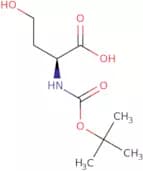
CAS:<p>N-Boc-L-homoserine is a lactam with an alkyl group, which makes it a useful synthetic intermediate for the synthesis of various products. It has been used in the synthesis of β-unsaturated ketones and conjugates. N-Boc-L-homoserine is also found naturally in nature and can be found as its two isomers, L-homoserine and D-homoserine. This compound has been shown to have histone deacetylase inhibition activity, which may be due to its ability to inhibit histone acetyl transferase. N-Boc-L-homoserine is synthesized from butyric acid, which is a tetrapeptide that contains four amino acids: valine, leucine, proline, and hydroxyproline.</p>Formula:C9H17NO5Purezza:Min. 95%Colore e forma:PowderPeso molecolare:219.24 g/mol4-Hydroxybenzenepropanoic acid 2,5-dioxo-1-pyrrolidinyl ester
CAS:<p>4-Hydroxybenzenepropanoic acid 2,5-dioxo-1-pyrrolidinyl ester is a chemical reagent commonly employed in the field of peptide synthesis. This compound, often utilized as a coupling agent, is derived from the esterification of 4-hydroxybenzenepropanoic acid with N-hydroxysuccinimide (NHS).</p>Formula:C13H13NO5Purezza:Min. 95 Area-%Peso molecolare:263.25 g/molMethyl 2,4-diaminobutanoate dihydrochloride
CAS:<p>Please enquire for more information about Methyl 2,4-diaminobutanoate dihydrochloride including the price, delivery time and more detailed product information at the technical inquiry form on this page</p>Formula:C5H12N2O2•(HCl)2Purezza:Min. 95%Colore e forma:PowderPeso molecolare:205.08 g/molFmoc-D-allo-Thr(tBu)-L-Ser(Psi(Me,Me)pro)-OH
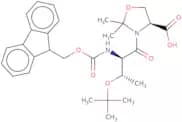
<p>Fmoc-D-allo-Thr(tBu)-L-Ser(Psi(Me,Me)pro)-OH is a reagent that is used as an intermediate in the synthesis of complex compounds. It is also a fine chemical that can be used to prepare speciality chemicals. Fmoc-D-allo-Thr(tBu)-L-Ser(Psi(Me,Me)pro)-OH has CAS No. and can be used as a reaction component in various reactions. This compound is versatile and can be used as a building block for other compounds.</p>Formula:C29H36N2O7Purezza:Min. 95%Colore e forma:PowderPeso molecolare:524.61 g/molγ-L-Glutamyl-L-glutamic acid trifluoroacetate
CAS:<p>Please enquire for more information about γ-L-Glutamyl-L-glutamic acid trifluoroacetate including the price, delivery time and more detailed product information at the technical inquiry form on this page</p>Formula:C10H16N2O7•C2HF3O2Purezza:Min. 95%Peso molecolare:390.27 g/molH-L-Cys(mdnpe)-OH
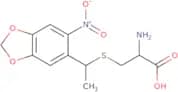
CAS:<p>A novel protected cysteine that can be cleaved by photolysis.</p>Formula:C12H14N2O6SPurezza:Min. 95%Peso molecolare:314.32 g/molN-(Triphenylmethyl)-D-asparagine monohydrate
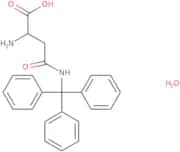
CAS:<p>Please enquire for more information about N-(Triphenylmethyl)-D-asparagine monohydrate including the price, delivery time and more detailed product information at the technical inquiry form on this page</p>Formula:C23H22N2O3•H2OPurezza:Min. 95%Peso molecolare:392.45 g/molFmoc-Cys-(CAMTrt)-OH
CAS:<p>Fmoc-Cys-(CAMTrt)-OH is an amino acid derivative, which is a synthetic compound essential for peptide synthesis. It is derived from natural cysteine, an amino acid found in proteins, and is modified with an Fmoc (9-fluorenylmethoxycarbonyl) protective group and a CAMTrt (trityl sulfonium ion) moiety. This derivative is used primarily in solid-phase peptide synthesis, where the Fmoc group protects the amine during chain elongation, and the CAMTrt group safeguards the thiol function of cysteine, preventing unwanted side reactions during synthesis.</p>Formula:C39H34N2O5SPurezza:Min. 98 Area-%Peso molecolare:642.76 g/molD-Methionine
CAS:<p>D-methionine is a form of the amino acid methionine that is synthesized in plants. It has been studied for its potential to help with various metabolic disorders, including osteoarthritis and primary sclerosing cholangitis. D-methionine provides methionine to the body, which is essential for the formation of collagen and elastin. In addition, it has been shown to have a protective effect against neuronal death in a model system. D-methionine may be beneficial for people with liver disease, but more research is needed.</p>Formula:C5H11NO2SPurezza:Min. 95%Colore e forma:White Off-White PowderPeso molecolare:149.21 g/molPoly-L-lysine hydrochloride, MW 10000 - 30000
CAS:<p>Poly-L-lysine hydrochloride, MW20000 is a water soluble polymer with an average molecular weight of 20000 Da. It is used in the synthesis of peptides and proteins due to its high purity, high quality, and low cost. Poly-L-lysine hydrochloride, MW20000 has been shown to bind to a wide range of surfaces such as glass, plastic, silicon dioxide, and stainless steel. This makes it useful for surface modification. Poly-L-lysine hydrochloride can be used as a scaffold for chemical reactions or as an intermediate in the synthesis of complex compounds.</p>Colore e forma:PowderMALP-2
CAS:<p>Macrophage-activating lipopetide-2 (MALP-2) is a TLR2 agonist and activator of MyD88-dependent signaling pathways. It has potential as a vaccine adjuvant.</p>Formula:C99H167N19O30SPurezza:Min. 95%Peso molecolare:2,135.6 g/molL-γ-Glutamyl-3-(1-propenylsulfinyl)-L-alanine
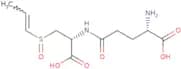
CAS:<p>Please enquire for more information about L-γ-Glutamyl-3-(1-propenylsulfinyl)-L-alanine including the price, delivery time and more detailed product information at the technical inquiry form on this page</p>Formula:C11H18N2O6SPurezza:Min. 95%Colore e forma:PowderPeso molecolare:306.34 g/molS-2-Propen-1-yl-L-cysteine ethyl ester hydrochloride
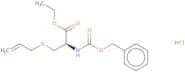
CAS:<p>Please enquire for more information about S-2-Propen-1-yl-L-cysteine ethyl ester hydrochloride including the price, delivery time and more detailed product information at the technical inquiry form on this page</p>Formula:C8H15NO2S•HClPurezza:Min. 95%Peso molecolare:225.74 g/molSulfo-SMCC sodium
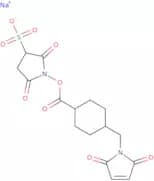
CAS:<p>Crosslinker reacting rapidly with primary amines. It is used as a protein crosslinker where it reacts with cysteine to yield specific conjugates. The cyclohexane bridge confers added stability to the maleimide group making it ideal for maleimide activation of proteins. It is soluble in water and many other aqueous buffers although it is less stable then in DMSO or DMF.</p>Formula:C16H17N2O9SNaPurezza:Min. 95 Area-%Colore e forma:White Off-White PowderPeso molecolare:436.37 g/molFmoc-Thr(tBu)-D-Ser(Psi(Me,Me)pro)-OH
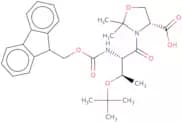
<p>Fmoc-Thr(tBu)-D-Ser(Psi(Me,Me)pro)-OH is a speciality chemical that is used as a reagent for peptide synthesis. It is also useful in the synthesis of complex compounds and scaffolds. This compound has high quality with a CAS number of 56610-81-8. Fmoc-Thr(tBu)-D-Ser(Psi(Me,Me)pro)-OH is a versatile building block that can be used in reactions involving amines and carboxylic acids. Fmoc-Thr(tBu)-D-Ser(Psi(Me,Me)pro)-OH is an intermediate that can be used in the synthesis of many different compounds.</p>Formula:C29H36N2O7Purezza:Min. 95%Colore e forma:PowderPeso molecolare:524.61 g/molBoc-L-prolinal
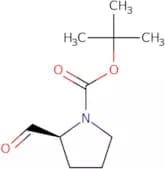
CAS:<p>Boc-L-prolinal is a stereoselective enolate that has been used in the synthesis of organometallic compounds. It is also used in the preparation of monoclonal antibodies, which are proteins that are produced by the immune system to help fight off infections. Boc-L-prolinal has been shown to be an effective agent for treating many cancers, including breast cancer and melanoma. In addition, it has been shown to inhibit epidermal growth factor (EGF) and other growth factors, which may be due to its ability to induce apoptotic signaling. Boc-L-prolinal also contains a carbonyl group, which can undergo acidolysis reactions with nucleophiles such as water or alcohols.</p>Formula:C10H17NO3Purezza:Min. 95%Colore e forma:Colorless Clear LiquidPeso molecolare:199.25 g/molN-Cbz-L-homoserine
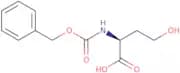
CAS:<p>N-Cbz-L-homoserine is a synthetic amino acid that has been used in positron emission tomography (PET) studies to determine the uptake and utilisation of other amino acids by biological systems. It has also been used in biological studies to investigate the mechanism of nucleophilic attack by serine on Cbz-protected homoserine. N-Cbz-L-homoserine has been shown to have hepatotoxic effects and may be carcinogenic, but no evidence indicates it is mutagenic or teratogenic. It is highly reactive with acrylonitrile, which can cause it to produce hydrogen cyanide as a result of nitrile hydrolysis.</p>Formula:C12H15NO5Purezza:Min. 95%Colore e forma:PowderPeso molecolare:253.25 g/molFmoc-Asp(OtBu)-D-Ser(Psi(Me,Me)pro)-OH
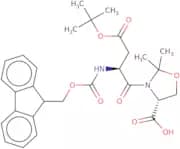
<p>Fmoc-Asp(OtBu)-D-Ser(Psi(Me,,Me)pro)-OH is a high quality, reagent, complex compound, useful intermediate, fine chemical, useful scaffold, and speciality chemical that is used in the synthesis of peptides and other organic compounds. It can be used as a reaction component for the synthesis of peptides and other organic compounds. This building block is versatile with many different functional groups and can be used in a wide variety of reactions. Fmoc-Asp(OtBu)-D-Ser(Psi(Me,,Me)pro)-OH is also a reaction component that can be used to make various drugs or pharmaceuticals.</p>Formula:C29H34N2O8Purezza:Min. 95%Colore e forma:White PowderPeso molecolare:538.59 g/molFmoc-glycinol
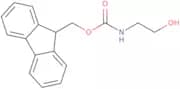
CAS:<p>Fmoc-glycinol is a synthetase that is used to synthesize glycinol conjugates. It binds to the receptor on Gram-positive bacteria and blocks the synthesis of bacterial cell wall, leading to cell death. Fmoc-glycinol has been shown to have high binding constants with amines and an acyl chain, which allows it to bind with antigen. Fmoc-glycinol also has strong nucleophilic properties that allow it to react with chloride ions in water and other polar solvents. This reaction mechanism leads to the formation of a new bond between two molecules, which is called a glycinol linkage.</p>Formula:C17H17NO3Purezza:Min. 95%Colore e forma:White PowderPeso molecolare:283.32 g/molFmoc-D-allo-isoleucine
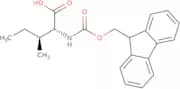
CAS:<p>Fmoc-D-allo-isoleucine is a β-amino acid that is used in the synthesis of calpinactam, a multidrug used to treat tuberculosis. The chemical structure of Fmoc-D-allo-isoleucine has been analyzed by spectroscopic methods and found to be labile. This product is susceptible to hydrolysis and can undergo modifications such as dehydration, oxidation, or racemization. Fmoc-D-allo-isoleucine has shown antimycobacterial activity when tested against M. tuberculosis.</p>Formula:C21H23NO4Purezza:Min. 95%Colore e forma:PowderPeso molecolare:353.41 g/mol