Sintesi peptidica
Trovati 50 prodotti per "Sintesi peptidica".
- Prezzo più basso
- Prezzo più alto
- Purezza più bassa
- Purezza più alta
- Consegna più veloce
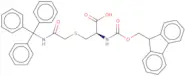
Fmoc-Cys-(CAMTrt)-OH
CAS:Fmoc-Cys-(CAMTrt)-OH is an amino acid derivative, which is a synthetic compound essential for peptide synthesis. It is derived from natural cysteine, an amino acid found in proteins, and is modified with an Fmoc (9-fluorenylmethoxycarbonyl) protective group and a CAMTrt (trityl sulfonium ion) moiety. This derivative is used primarily in solid-phase peptide synthesis, where the Fmoc group protects the amine during chain elongation, and the CAMTrt group safeguards the thiol function of cysteine, preventing unwanted side reactions during synthesis.
Formula:C39H34N2O5SPurezza:Min. 98 Area-%Peso molecolare:642.76 g/molPexiganan acetate
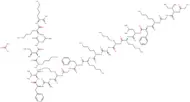
CAS:Prodotto controllatoPexiganan acetate is the acetate salt form of a polymyxin B derivative that has potent antimicrobial activity against both Gram-positive and Gram-negative bacteria. It has been shown to be effective in the treatment of tissue infections, especially those caused by human pathogens such as Staphylococcus aureus, Pseudomonas aeruginosa, and Escherichia coli. Pexiganan also has significant activity against Mycobacterium tuberculosis and other mycobacteria. The mechanism of action for pexiganan is not fully understood but it may involve the inhibition of bacterial cell wall synthesis, or the disruption of bacterial membranes. Pexiganan was originally isolated from a marine sponge off the coast of Australia in 1961. It had been classified as an antimicrobial peptide (AMP) because of its chemical structure, which includes a polymyxin B moiety. Pexiganan’s AMP classification was later challenged when researchers found that it did
Formula:C122H210N32O22•(C2H4O2)xPurezza:Min. 95%Colore e forma:PowderPeso molecolare:2,477.18 g/molSulfo-SMCC sodium
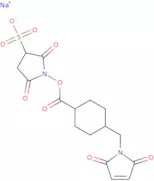
CAS:Crosslinker reacting rapidly with primary amines. It is used as a protein crosslinker where it reacts with cysteine to yield specific conjugates. The cyclohexane bridge confers added stability to the maleimide group making it ideal for maleimide activation of proteins. It is soluble in water and many other aqueous buffers although it is less stable then in DMSO or DMF.
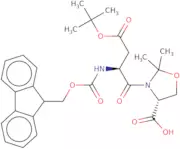
Formula:C16H17N2O9SNaPurezza:Min. 95 Area-%Colore e forma:White Off-White PowderPeso molecolare:436.37 g/molFmoc-Asp(OtBu)-D-Ser(Psi(Me,Me)pro)-OH
Fmoc-Asp(OtBu)-D-Ser(Psi(Me,,Me)pro)-OH is a high quality, reagent, complex compound, useful intermediate, fine chemical, useful scaffold, and speciality chemical that is used in the synthesis of peptides and other organic compounds. It can be used as a reaction component for the synthesis of peptides and other organic compounds. This building block is versatile with many different functional groups and can be used in a wide variety of reactions. Fmoc-Asp(OtBu)-D-Ser(Psi(Me,,Me)pro)-OH is also a reaction component that can be used to make various drugs or pharmaceuticals.Formula:C29H34N2O8Purezza:Min. 95%Colore e forma:White PowderPeso molecolare:538.59 g/molTrityl-L-phenylalanine diethylamine
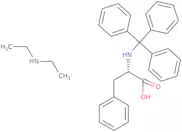
CAS:Trityl-L-phenylalanine diethylamine is a reagent that is used in the synthesis of peptides, reagents, and other chemicals. Trityl-L-phenylalanine diethylamine reacts with an azide to form a triazole. It can also be used to convert an acid into an amino acid. This chemical has been shown to be sensitive to plasmin, which may lead to degradation during peptide synthesis.Formula:C28H25NO2·C4H11NPurezza:Min. 95%Colore e forma:PowderPeso molecolare:480.64 g/molFmoc-D-allo-Thr(tBu)-L-Ser(Psi(Me,Me)pro)-OH
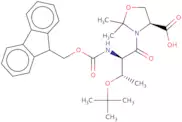
Fmoc-D-allo-Thr(tBu)-L-Ser(Psi(Me,Me)pro)-OH is a reagent that is used as an intermediate in the synthesis of complex compounds. It is also a fine chemical that can be used to prepare speciality chemicals. Fmoc-D-allo-Thr(tBu)-L-Ser(Psi(Me,Me)pro)-OH has CAS No. and can be used as a reaction component in various reactions. This compound is versatile and can be used as a building block for other compounds.Formula:C29H36N2O7Purezza:Min. 95%Colore e forma:PowderPeso molecolare:524.61 g/molFmoc-D-allo-isoleucine
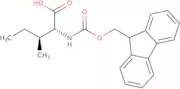
CAS:Fmoc-D-allo-isoleucine is a β-amino acid that is used in the synthesis of calpinactam, a multidrug used to treat tuberculosis. The chemical structure of Fmoc-D-allo-isoleucine has been analyzed by spectroscopic methods and found to be labile. This product is susceptible to hydrolysis and can undergo modifications such as dehydration, oxidation, or racemization. Fmoc-D-allo-isoleucine has shown antimycobacterial activity when tested against M. tuberculosis.Formula:C21H23NO4Purezza:Min. 95%Colore e forma:PowderPeso molecolare:353.41 g/molFmoc-4-phosphomethyl-L-phenylalanine
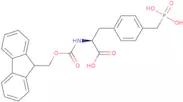
CAS:Fmoc-4-phosphomethyl-L-phenylalanine** is a specialized amino acid derivative used primarily in the field of peptide synthesis. It is a synthesized compound that serves as a building block for creating phosphorylated peptides. The compound is characterized by the presence of a phosphomethyl group attached to the phenylalanine side chain, along with a 9-fluorenylmethoxycarbonyl (Fmoc) group for temporary N-terminal protection during peptide assembly.This product plays a crucial role in the synthesis of peptides by allowing the incorporation of a phosphomethyl moiety, which is crucial for mimicking the phosphorylation of proteins—a key post-translational modification. Through its well-designed chemical structure, it facilitates the formation of peptide bonds while maintaining the integrity of sensitive side chain functionalities during synthesis.Fmoc-4-phosphomethyl-L-phenylalanine is widely used in biochemical and pharmaceutical research where the study of protein phosphorylation is paramount. It provides researchers with the means to construct peptides that closely resemble the natural phosphorylated proteins found within biological systems, thereby enabling more accurate studies of protein function and interaction. This makes it an invaluable tool in the exploration of cellular signaling pathways and protein regulation mechanisms.Formula:C25H24NO7PPurezza:Min. 95%Peso molecolare:481.43 g/molRink amide-AM Resin
CAS:Rink amide-AM resin is a cation exchange resin that is used in peptide synthesis. It has an optimal pH range of 8-9. Rink amide-AM resin can be activated with trifluoroacetic acid or piperidine and washed with a mixture of water and methanol to remove the salt byproduct. The resin can then be used for peptide synthesis, which is typically done by adding the desired amino acids in sequence to the resin. The synthesis is stopped when the linear peptide reaches a desired length, typically 12-15 amino acids long. The linear peptides are then cleaved from the resin using trifluoroacetic acid or piperidine, depending on which activation reagent was used during synthesis. After cleavage, the linear peptides are precipitated from solution using ethanol or acetone and collected by filtration.Colore e forma:Off-White PowderN-Cbz-L-homoserine
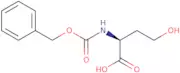
CAS:N-Cbz-L-homoserine is a synthetic amino acid that has been used in positron emission tomography (PET) studies to determine the uptake and utilisation of other amino acids by biological systems. It has also been used in biological studies to investigate the mechanism of nucleophilic attack by serine on Cbz-protected homoserine. N-Cbz-L-homoserine has been shown to have hepatotoxic effects and may be carcinogenic, but no evidence indicates it is mutagenic or teratogenic. It is highly reactive with acrylonitrile, which can cause it to produce hydrogen cyanide as a result of nitrile hydrolysis.
Formula:C12H15NO5Purezza:Min. 95%Colore e forma:PowderPeso molecolare:253.25 g/mol4-tert-Butyl-L-phenylalanine
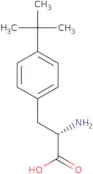
CAS:4-tert-Butyl-L-phenylalanine is a synthetically created antigen with the ability to interact with red blood cells. It has been shown to be a potent probe for the detection of P. falciparum, and can be used as an affinity reagent for the isolation and identification of mutations in the c-terminal region of this protein. 4-tert-Butyl-L-phenylalanine also interacts with P. falciparum apical membrane proteins, which are specific to this type of parasite. This interaction may play a role in its invasion into red blood cells, which is what causes malaria infection.Formula:C13H19NO2Purezza:Min. 95%Colore e forma:White PowderPeso molecolare:221.3 g/molFmoc-glycinol
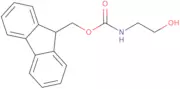
CAS:Fmoc-glycinol is a synthetase that is used to synthesize glycinol conjugates. It binds to the receptor on Gram-positive bacteria and blocks the synthesis of bacterial cell wall, leading to cell death. Fmoc-glycinol has been shown to have high binding constants with amines and an acyl chain, which allows it to bind with antigen. Fmoc-glycinol also has strong nucleophilic properties that allow it to react with chloride ions in water and other polar solvents. This reaction mechanism leads to the formation of a new bond between two molecules, which is called a glycinol linkage.Formula:C17H17NO3Purezza:Min. 95%Colore e forma:White PowderPeso molecolare:283.32 g/molBio acrylic resin
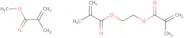
CAS:Bio acrylic resin is a dental material that is composed of a methacrylate-ethylene glycol dimethacrylate copolymer. It is used in the fabrication of dentures and other dental prosthetics. The resin particles are made up of a poly(ethylene glycol dimethacrylate-Methyl methacrylate) blend, which provides strength and durability to the final product. The particle size of the resin is approximately 50 micrometers, ensuring smooth and even application during the manufacturing process. Bio acrylic resin is commonly used in dental laboratories and research facilities for its reliable performance and consistent results.Formula:(C10H14O4)x(C5H8O2)yPurezza:Min. 95%Colore e forma:PowderPeso molecolare:298.33 g/molN6-(1-Deoxy-D-fructos-1-yl)-N2-[(phenylmethoxy)carbonyl]-L-lysine
CAS:Please enquire for more information about N6-(1-Deoxy-D-fructos-1-yl)-N2-[(phenylmethoxy)carbonyl]-L-lysine including the price, delivery time and more detailed product information at the technical inquiry form on this pageFormula:C20H30N2O9Purezza:Min. 95%Peso molecolare:442.46 g/mol2-Amino-3-(4-bromobenzoyl)benzoic acid
CAS:Please enquire for more information about 2-Amino-3-(4-bromobenzoyl)benzoic acid including the price, delivery time and more detailed product information at the technical inquiry form on this pageFormula:C14H10BrNO3Purezza:Min. 95%Peso molecolare:320.14 g/molFmoc-N-Me-Asn(Trt)-OH
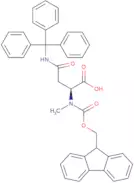
CAS:Fmoc-N-Me-Asn(Trt)-OH is a peptidomimetic that mimics the sequence of the serine protease. The Fmoc group on the N-terminal amino acid is used to protect against proteolytic degradation and its methyl ester group confers stability in biological fluids. The Fmoc-N-Me-Asn(Trt)-OH has been shown to have minimal effects on endogenous protein synthesis, while also being quantified with high sensitivity and specificity. This compound has been shown to inhibit protein-protein interactions by acting as a competitive inhibitor of serine proteases.Formula:C39H34N2O5Purezza:Min. 95%Colore e forma:PowderPeso molecolare:610.7 g/molFmoc-Val-Wang resin
CAS:Fmoc-Val-Wang resin is a versatile tool used in peptide synthesis. It is commonly employed in the production of peptides for various applications, including research and pharmaceutical development. This resin facilitates the attachment of amino acids to create peptide chains with high precision and efficiency.
Purezza:Min. 95%Colore e forma:Yellow PowderBoc-D-Tyr(tBu)-OH
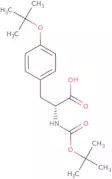
CAS:Boc-D-Tyr(tBu)-OH is a natural product that is an amphipathic molecule with a cyclic structure. It has been shown to be able to inhibit the growth of bacteria, such as Staphylococcus aureus and Escherichia coli, by acting as an antibiotic. Boc-D-Tyr(tBu)-OH inhibits the synthesis of peptides by binding to the ribosome and blocking peptide elongation. This molecule also inhibits peptide synthesis by interacting with the aminoacyl site on the ribosome and preventing it from binding with amino acids. Boc-D-Tyr(tBu)-OH is synthesized in two stages: solid phase peptide synthesis and nucleophilic activation. The decapeptides are then purified and characterized based on their function.Formula:C18H27NO5Purezza:Min. 95%Colore e forma:PowderPeso molecolare:337.41 g/molFmoc-N-methyl-O-tert-butyl-L-tyrosine
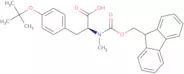
CAS:Fmoc-N-methyl-O-tert-butyl-L-tyrosine is a peptide that mimics the natural substrate serine protease. It has been used to study protein-protein interactions in proteases and their cleavage specificity. This peptide was designed as a peptidomimetic, which is an analog of a protein or peptide. The systematic synthesis of this molecule has been studied extensively and it has been shown that the maximum number of modifications occurs at the N terminus and the minimal number at the C terminus. The residue of this molecule is modified by proteolytic modification, which is a chemical modification that changes the amino acid sequence. Fmoc-N-methyl-O-tert-butyl-L-tyrosine has minimal quantified stability, which means that it can be quantified but not stable for long periods of time.Formula:C29H31NO5Purezza:Min. 95%Peso molecolare:473.56 g/molBoc-glu(OBzl)-OH
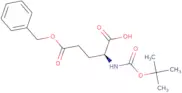
CAS:Boc-glu(OBzl)-OH is a small-molecule drug that binds to the glutamate receptor. It has been shown to have anticancer activity in vitro and in vivo, but does not affect normal cells. Boc-glu(OBzl)-OH has been used as a synthetic substrate for the preparation of conjugates containing an amide group. This chemical can also be used as an anticancer agent by inhibiting protease activity, which inhibits cancer cell growth. The uptake of Boc-glu(OBzl)-OH can be increased by making it more acidic or by using an efficient method such as ultrasound.Formula:C17H23NO6Purezza:Min. 98 Area-%Colore e forma:PowderPeso molecolare:337.37 g/mol