Silani
Sottocategorie di "Silani"
Trovati 1234 prodotti di "Silani"
3-[METHOXY(POLYETHYLENEOXY)6-9]PROPYLTRICHLOROSILANE, tech
CAS:Tipped PEG Silane (472-604 g/mol)
90% oligomersPEO, Trichlorosilane termination utilized for hydrophilic surface modificationPEGylation reagentHydrogen bonding hydrophilic silaneProvides protein antifouling surfaceFormula:CH3O(C2H4O)6-9(CH2)3Cl3SiColore e forma:Straw LiquidPeso molecolare:472-6041-[3-(2-AMINOETHYL)-3-AMINOISOBUTYL]-1,1,3,3,3-PENTAETHOXY-1,3-DISILAPROPANE, 95%
CAS:1-[3-(2-Aminoethyl)-3-aminoisobutyl]-1,1,3,3,3-pentaethoxy-1,3-disilapropane; 3-[2-(aminoethylamino-5-methyl)]-1,1,1,3,3-pentaethoxydisilahexane
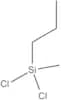
Diamine functional pendant dipodal silaneAdhesion promoter for metal substratesPrimary amine coupling agent for UV cure and epoxy systemsFormula:C17H42N2O5Si2Purezza:95%Peso molecolare:410.7n-PROPYLMETHYLDICHLOROSILANE
CAS:Alkyl Silane - Conventional Surface Bonding
Aliphatic, fluorinated aliphatic or substituted aromatic hydrocarbon substituents are the hydrophobic entities which enable silanes to induce surface hydrophobicity. The organic substitution of the silane must be non-polar. The hydrophobic effect of the organic substitution can be related to the free energy of transfer of hydrocarbon molecules from an aqueous phase to a homogeneous hydrocarbon phase. A successful hydrophobic coating must eliminate or mitigate hydrogen bonding and shield polar surfaces from interaction with water by creating a non-polar interphase. Although silane and silicone derived coatings are in general the most hydrophobic, they maintain a high degree of permeability to water vapor. This allows coatings to breathe and reduce deterioration at the coating interface associated with entrapped water. Since ions are not transported through non-polar silane and silicone coatings, they offer protection to composite structures ranging from pigmented coatings to rebar reinforced concrete. A selection guide for hydrophobic silanes can be found on pages 22-31 of the Hydrophobicity, Hydrophilicity and Silane Surface Modification brochure.
n-Propylmethyldichlorosilane; Dichloromethyl-n-propylsilane
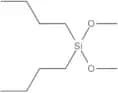
Viscosity, 20 °C: 0.8 cStFormula:C4H10Cl2SiPurezza:97%Colore e forma:LiquidPeso molecolare:157.11DI-n-BUTYLDIMETHOXYSILANE
CAS:Alkyl Silane - Conventional Surface Bonding
Aliphatic, fluorinated aliphatic or substituted aromatic hydrocarbon substituents are the hydrophobic entities which enable silanes to induce surface hydrophobicity. The organic substitution of the silane must be non-polar. The hydrophobic effect of the organic substitution can be related to the free energy of transfer of hydrocarbon molecules from an aqueous phase to a homogeneous hydrocarbon phase. A successful hydrophobic coating must eliminate or mitigate hydrogen bonding and shield polar surfaces from interaction with water by creating a non-polar interphase. Although silane and silicone derived coatings are in general the most hydrophobic, they maintain a high degree of permeability to water vapor. This allows coatings to breathe and reduce deterioration at the coating interface associated with entrapped water. Since ions are not transported through non-polar silane and silicone coatings, they offer protection to composite structures ranging from pigmented coatings to rebar reinforced concrete. A selection guide for hydrophobic silanes can be found on pages 22-31 of the Hydrophobicity, Hydrophilicity and Silane Surface Modification brochure.
Di-n-butyldimethoxysilane; Dimethoxydi-n-butylsilane
Dialkoxy silaneFormula:C10H24O2SiPurezza:97%Colore e forma:Straw LiquidPeso molecolare:204.392-CYANOETHYLTRIETHOXYSILANE
CAS:Formula:C9H19NO3SiPurezza:97%Colore e forma:Straw LiquidPeso molecolare:217.34DECAMETHYLCYCLOPENTASILOXANE
CAS:Formula:C10H30O5Si5Purezza:97%Colore e forma:LiquidPeso molecolare:370.77TRIMETHYLMETHOXYSILANE
CAS:Formula:C4H12OSiPurezza:97%Colore e forma:Straw LiquidPeso molecolare:104.22DIPHENYLDIETHOXYSILANE
CAS:Arylsilane Cross-Coupling Agent
The cross-coupling reaction is a highly useful methodology for the formation of carbon-carbon bonds. It involves two reagents, with one typically being a suitable organometallic reagent - the nucleophile - and the other a suitable organic substrate, normally an unsaturated halide, tosylate or similar - the electrophile.
Aromatic Silane - Conventional Surface Bonding
Aliphatic, fluorinated aliphatic or substituted aromatic hydrocarbon substituents are the hydrophobic entities which enable silanes to induce surface hydrophobicity. The organic substitution of the silane must be non-polar. The hydrophobic effect of the organic substitution can be related to the free energy of transfer of hydrocarbon molecules from an aqueous phase to a homogeneous hydrocarbon phase. A successful hydrophobic coating must eliminate or mitigate hydrogen bonding and shield polar surfaces from interaction with water by creating a non-polar interphase. Although silane and silicone derived coatings are in general the most hydrophobic, they maintain a high degree of permeability to water vapor. This allows coatings to breathe and reduce deterioration at the coating interface associated with entrapped water. Since ions are not transported through non-polar silane and silicone coatings, they offer protection to composite structures ranging from pigmented coatings to rebar reinforced concrete. A selection guide for hydrophobic silanes can be found on pages 22-31 of the Hydrophobicity, Hydrophilicity and Silane Surface Modification brochure.
Diphenyldiethoxysilane; Diethoxydiphenylsilane; 1,1'-(Diethoxysilylene)bis-benzene
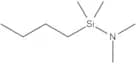
Vapor pressure, 125 °: 2 mmAlternative to phenyltriethoxysilane for the cross-coupling of a phenyl groupProvides hydrophobic coatings with good thermal and UV resistanceDialkoxy silaneFormula:C16H20O2SiPurezza:97%Colore e forma:Straw LiquidPeso molecolare:272.42n-BUTYLDIMETHYL(DIMETHYLAMINO)SILANE
CAS:Trialkylsilyl Blocking Agent
Used as a protecting group for reactive hydrogens in alcohols, amines, thiols, and carboxylic acids. Organosilanes are hydrogen-like, can be introduced in high yield, and can be removed under selective conditions. They are stable over a wide range of reaction conditions and can be removed in the presence of other functional groups, including other protecting groups. The tolerance of silylated alcohols to chemical transformations summary is presented in Table 1 of the Silicon-Based Blocking Agents brochure.
Alkyl Silane - Conventional Surface Bonding
Aliphatic, fluorinated aliphatic or substituted aromatic hydrocarbon substituents are the hydrophobic entities which enable silanes to induce surface hydrophobicity. The organic substitution of the silane must be non-polar. The hydrophobic effect of the organic substitution can be related to the free energy of transfer of hydrocarbon molecules from an aqueous phase to a homogeneous hydrocarbon phase. A successful hydrophobic coating must eliminate or mitigate hydrogen bonding and shield polar surfaces from interaction with water by creating a non-polar interphase. Although silane and silicone derived coatings are in general the most hydrophobic, they maintain a high degree of permeability to water vapor. This allows coatings to breathe and reduce deterioration at the coating interface associated with entrapped water. Since ions are not transported through non-polar silane and silicone coatings, they offer protection to composite structures ranging from pigmented coatings to rebar reinforced concrete. A selection guide for hydrophobic silanes can be found on pages 22-31 of the Hydrophobicity, Hydrophilicity and Silane Surface Modification brochure.
n-Butyldimethyl(dimethylamino)silane; Trimethylsilyldimethylamine
Reactive aminofunctional organosilaneHighly reactive reagent for bonded phases without acidic byproductSummary of selective deprotection conditions is provided in Table 7 through Table 20 of the Silicon-Based Blocking Agents brochureFormula:C8H21NSiPurezza:97%Colore e forma:Straw LiquidPeso molecolare:159.35TRIS(DIMETHYLAMINO)SILANE
CAS:ALD Material
Atomic layer deposition (ALD) is a chemically self-limiting deposition technique that is based on the sequential use of a gaseous chemical process. A thin film (as fine as -0.1 Å per cycle) results from repeating the deposition sequence as many times as needed to reach a certain thickness. The major characteristic of the films is the resulting conformality and the controlled deposition manner. Precursor selection is key in ALD processes, namely finding molecules which will have enough reactivity to produce the desired films yet are stable enough to be handled and safely delivered to the reaction chamber.
Tris(dimethylamino)silane; Tris(dimethylamido)silylhydride; N,N,N',N',N'',N''-Hexamethylsilanetriamine
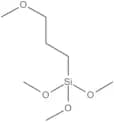
AIR TRANSPORT FORBIDDENVapor pressure, 4 °C: 1 6 mmHydrosilylates olefins in presence of Rh2Cl2(CO)4Reacts with ammonia to form silicon nitride prepolymersEmployed in low pressure CVD of silicon nitrideFormula:C6H19N3SiPurezza:97%Colore e forma:Straw LiquidPeso molecolare:161.323-METHOXYPROPYLTRIMETHOXYSILANE
CAS:Formula:C7H18O4SiPurezza:97%Colore e forma:Straw LiquidPeso molecolare:194.3DIMETHYLDICHLOROSILANE, 98%
CAS:Bridging Silicon-Based Blocking Agent
Used as a protecting group for reactive hydrogens in alcohols, amines, thiols, and carboxylic acids. Organosilanes are hydrogen-like, can be introduced in high yield, and can be removed under selective conditions. They are stable over a wide range of reaction conditions and can be removed in the presence of other functional groups, including other protecting groups. The tolerance of silylated alcohols to chemical transformations summary is presented in Table 1 of the Silicon-Based Blocking Agents brochure.
Alkyl Silane - Conventional Surface Bonding
Aliphatic, fluorinated aliphatic or substituted aromatic hydrocarbon substituents are the hydrophobic entities which enable silanes to induce surface hydrophobicity. The organic substitution of the silane must be non-polar. The hydrophobic effect of the organic substitution can be related to the free energy of transfer of hydrocarbon molecules from an aqueous phase to a homogeneous hydrocarbon phase. A successful hydrophobic coating must eliminate or mitigate hydrogen bonding and shield polar surfaces from interaction with water by creating a non-polar interphase. Although silane and silicone derived coatings are in general the most hydrophobic, they maintain a high degree of permeability to water vapor. This allows coatings to breathe and reduce deterioration at the coating interface associated with entrapped water. Since ions are not transported through non-polar silane and silicone coatings, they offer protection to composite structures ranging from pigmented coatings to rebar reinforced concrete. A selection guide for hydrophobic silanes can be found on pages 22-31 of the Hydrophobicity, Hydrophilicity and Silane Surface Modification brochure.
Dimethyldichlorosilane; Dichlorodimethylsilane; DMS
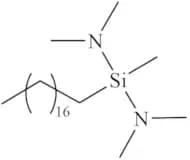
AIR TRANSPORT FORBIDDENViscosity: 0.47 cStVapor pressure, 17 °C: 100 mmSpecific heat: 0.92 J/g/°ΔHcomb: -2,055 kJ/molΔHvap: 33.5 kJ/molSurface tension: 20.1 mN/mCoefficient of thermal expansion: 1.3 x 10⁻³Critical temperature: 247.2 °CCritical pressure: 34.4 atmFundamental monomer for siliconesEmployed in the tethering of two olefins for the cross metathesis-coupling step in the synthesis of Attenol AAids in the intramolecular Pinacol reactionReacts with alcohols, diols, and hydroxy carboxylic acidsEmployed as a protecting group/template in C-glycoside synthesisHigher purity available as SID4120.1Summary of selective deprotection conditions is provided in Table 7 through Table 20 of the Silicon-Based Blocking Agents brochureFormula:C2H6Cl2SiPurezza:98%Colore e forma:Straw Amber LiquidPeso molecolare:129.06n-OCTADECYLMETHYLBIS(DIMETHYLAMINO)SILANE
Formula:C23H52N2SiPurezza:92%Colore e forma:Straw LiquidPeso molecolare:384.763-AMINOPROPYLTRIMETHOXYSILANE
CAS:Monoamine Functional Trialkoxy Silane
Silane coupling agents have the ability to form a durable bond between organic and inorganic materials to generate desired heterogeneous environments or to incorporate the bulk properties of different phases into a uniform composite structure. The general formula has two classes of functionality. The hydrolyzable group forms stable condensation products with siliceous surfaces and other oxides such as those of aluminum, zirconium, tin, titanium, and nickel. The organofunctional group alters the wetting or adhesion characteristics of the substrate, utilizes the substrate to catalyze chemical transformations at the heterogeneous interface, orders the interfacial region, or modifies its partition characteristics, and significantly effects the covalent bond between organic and inorganic materials.
3-Aminopropyltrimethoxysilane, Trimethoxysilylpropylamine, ?-Aminopropyltrimethoxysilane, APTES, AMEO, GAPS, A-1100
Higher purity material available as SIA0611.1Vapor pressure, 67 °: 5 mmSuperior reactivity in vapor phase and non-aqueous surface treatmentsPrimary amine coupling agent for UV cure and epoxy systemsHydrolysis rate vs SIA0610.0 : 6:1Used to immobilize Cu and Zn Schiff base precatalysts for formation of cyclic carbonatesUsed in microparticle surface modificationFormula:C6H17NO3SiPurezza:97%Colore e forma:Straw LiquidPeso molecolare:179.29VINYLTRIISOPROPENOXYSILANE, tech
CAS:Olefin Functional Trialkoxy Silane
Silane coupling agents have the ability to form a durable bond between organic and inorganic materials to generate desired heterogeneous environments or to incorporate the bulk properties of different phases into a uniform composite structure. The general formula has two classes of functionality. The hydrolyzable group forms stable condensation products with siliceous surfaces and other oxides such as those of aluminum, zirconium, tin, titanium, and nickel. The organofunctional group alters the wetting or adhesion characteristics of the substrate, utilizes the substrate to catalyze chemical transformations at the heterogeneous interface, orders the interfacial region, or modifies its partition characteristics, and significantly effects the covalent bond between organic and inorganic materials.
Vinyltriisopropenoxysilane; Triisopropenoxyethenylsilane; Tris(isopropenyloxy)vinylsilane; Triisopropenoxysilylethylene
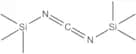
Employed as a cross-linker and in vapor phase derivatizationByproduct is acetoneNeutral crosslinker for high-speed moisture-cure (enoxy-cure) siliconesFormula:C11H18O3SiPurezza:97%Colore e forma:LiquidPeso molecolare:226.35BIS(TRIMETHYLSILYL)CARBODIIMIDE
CAS:Formula:C7H18N2Si2Purezza:97%Colore e forma:Straw LiquidPeso molecolare:186.4Ref: 3H-SIB1856.0
5gPrezzo su richiesta25gPrezzo su richiesta2kgPrezzo su richiesta14kgPrezzo su richiesta1,3-BIS(CYANOPROPYL)TETRAMETHYLDISILOXANE, 92%
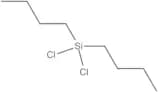
CAS:Formula:C12H24N2OSi2Purezza:92%Colore e forma:Straw LiquidPeso molecolare:268.51DI-n-BUTYLDICHLOROSILANE
CAS:Alkyl Silane - Conventional Surface Bonding
Aliphatic, fluorinated aliphatic or substituted aromatic hydrocarbon substituents are the hydrophobic entities which enable silanes to induce surface hydrophobicity. The organic substitution of the silane must be non-polar. The hydrophobic effect of the organic substitution can be related to the free energy of transfer of hydrocarbon molecules from an aqueous phase to a homogeneous hydrocarbon phase. A successful hydrophobic coating must eliminate or mitigate hydrogen bonding and shield polar surfaces from interaction with water by creating a non-polar interphase. Although silane and silicone derived coatings are in general the most hydrophobic, they maintain a high degree of permeability to water vapor. This allows coatings to breathe and reduce deterioration at the coating interface associated with entrapped water. Since ions are not transported through non-polar silane and silicone coatings, they offer protection to composite structures ranging from pigmented coatings to rebar reinforced concrete. A selection guide for hydrophobic silanes can be found on pages 22-31 of the Hydrophobicity, Hydrophilicity and Silane Surface Modification brochure.
Di-n-butyldichlorosilane; Dichlorodi-n-butylsilaneFormula:C8H18Cl2SiPurezza:96%Colore e forma:Straw LiquidPeso molecolare:213.22Ref: 3H-SID3203.0
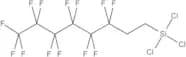
10gPrezzo su richiesta2kgPrezzo su richiesta50gPrezzo su richiesta18kgPrezzo su richiesta750gPrezzo su richiesta(TRIDECAFLUORO-1,1,2,2-TETRAHYDROOCTYL)TRICHLOROSILANE
CAS:Formula:C8H4Cl3F13SiPurezza:97%Colore e forma:Straw LiquidPeso molecolare:481.55N-(TRIMETHYLSILYL)IMIDAZOLE
CAS:Trimethylsilyl Blocking Agent
Used as a protecting group for reactive hydrogens in alcohols, amines, thiols, and carboxylic acids. Organosilanes are hydrogen-like, can be introduced in high yield, and can be removed under selective conditions. They are stable over a wide range of reaction conditions and can be removed in the presence of other functional groups, including other protecting groups. The tolerance of silylated alcohols to chemical transformations summary is presented in Table 1 of the Silicon-Based Blocking Agents brochure.
Trimethylsilylimidazole; TMSIM; 1-(Trimethylsilyl)imidazole
Powerful silylating agent for alcoholsDoes not react with aliphatic aminesNafion SAC-13 has been shown to be a recyclable catalyst for the trimethylsilylation of primary, secondary, and tertiary alcohols in excellent yields and short reaction timesSummary of selective deprotection conditions is provided in Table 7 through Table 20 of the Silicon-Based Blocking Agents brochureFormula:C6H12N2SiPurezza:97%Colore e forma:Straw LiquidPeso molecolare:140.26Ref: 3H-SIT8590.0
2kgPrezzo su richiesta100gPrezzo su richiesta14kgPrezzo su richiesta750gPrezzo su richiesta175kgPrezzo su richiesta
![3-[METHOXY(POLYETHYLENEOXY)6-9]PROPYLTRICHLOROSILANE, tech](/_next/image/?url=https%3A%2Fstatic.cymitquimica.com%2Fproducts%2F3H%2Fthumb-webp%2FSIM6492.66.webp&w=3840&q=75)

![1-[3-(2-AMINOETHYL)-3-AMINOISOBUTYL]-1,1,3,3,3-PENTAETHOXY-1,3-DISILAPROPANE, 95%](/_next/image/?url=https%3A%2Fstatic.cymitquimica.com%2Fproducts%2F3H%2Fthumb-webp%2FSIA0587.6.webp&w=3840&q=75)