Silani
Sottocategorie di "Silani"
Trovati 1234 prodotti di "Silani"
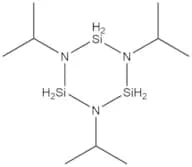
1,3,5-TRIISOPROPYLCYCLOTRISILAZANE
CAS:Formula:C9H27N3Si3Purezza:95%Colore e forma:LiquidPeso molecolare:261.59HEXYLTRIMETHOXYSILANE
CAS:Alkyl Silane - Conventional Surface Bonding
Aliphatic, fluorinated aliphatic or substituted aromatic hydrocarbon substituents are the hydrophobic entities which enable silanes to induce surface hydrophobicity. The organic substitution of the silane must be non-polar. The hydrophobic effect of the organic substitution can be related to the free energy of transfer of hydrocarbon molecules from an aqueous phase to a homogeneous hydrocarbon phase. A successful hydrophobic coating must eliminate or mitigate hydrogen bonding and shield polar surfaces from interaction with water by creating a non-polar interphase. Although silane and silicone derived coatings are in general the most hydrophobic, they maintain a high degree of permeability to water vapor. This allows coatings to breathe and reduce deterioration at the coating interface associated with entrapped water. Since ions are not transported through non-polar silane and silicone coatings, they offer protection to composite structures ranging from pigmented coatings to rebar reinforced concrete. A selection guide for hydrophobic silanes can be found on pages 22-31 of the Hydrophobicity, Hydrophilicity and Silane Surface Modification brochure.
Hexyltrimethoxysilane; Trimethoxyhexylsilane; Trimethoxysilylhexane
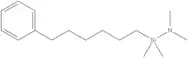
Surface modification of TiO2 pigments improves dispersionTrialkoxy silaneFormula:C9H22O3SiPurezza:97%Colore e forma:Straw LiquidPeso molecolare:206.356-PHENYLHEXYLDIMETHYL(DIMETHYLAMINO)SILANE
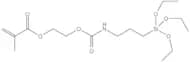
CAS:Formula:C16H29NSiPurezza:97%Colore e forma:Straw LiquidPeso molecolare:263.49O-(METHACRYLOXYETHYL)-N-(TRIETHOXYSILYLPROPYL)CARBAMATE, 90%
CAS:Methacrylate Functional Trialkoxy Silane
Silane coupling agents have the ability to form a durable bond between organic and inorganic materials to generate desired heterogeneous environments or to incorporate the bulk properties of different phases into a uniform composite structure. The general formula has two classes of functionality. The hydrolyzable group forms stable condensation products with siliceous surfaces and other oxides such as those of aluminum, zirconium, tin, titanium, and nickel. The organofunctional group alters the wetting or adhesion characteristics of the substrate, utilizes the substrate to catalyze chemical transformations at the heterogeneous interface, orders the interfacial region, or modifies its partition characteristics, and significantly effects the covalent bond between organic and inorganic materials.
O-(Methacryloxyethyl)-N-(triethoxysilylpropyl)carbamate
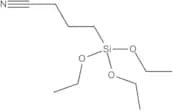
Coupling agent for UV cure systemsHydrophilic monomerUsed in microparticle surface modificationInhibited with MEHQFormula:C16H31NO7SiPurezza:90%Colore e forma:Straw LiquidPeso molecolare:377.513-CYANOPROPYLTRIETHOXYSILANE
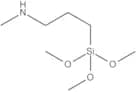
CAS:Formula:C10H21NO3SiPurezza:97%Colore e forma:Straw LiquidPeso molecolare:231.37N-METHYLAMINOPROPYLTRIMETHOXYSILANE
CAS:N-Methylaminopropyltrimethoxysilane, 3-(trimethoxysilyl)-n-methyl-1-propanamine
Secondary amino functional trialkoxy silaneγc of treated surfaces: 31 mN/mpKb 25H2O: 5.18Used in microparticle surface modificationCoupling agent for UV cure and epoxy systemsOrients liquid crystalsReacts with urethane prepolymers to form moisture-curable resinsFormula:C7H19NO3SiPurezza:97%Colore e forma:Straw LiquidPeso molecolare:193.32Ref: 3H-SIM6500.0
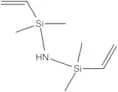
25gPrezzo su richiesta2kgPrezzo su richiesta15kgPrezzo su richiesta180kgPrezzo su richiesta1,3-DIVINYL-1,1,3,3-TETRAMETHYLDISILAZANE
CAS:Diolefin Functional Amino Silane
Silane coupling agents have the ability to form a durable bond between organic and inorganic materials to generate desired heterogeneous environments or to incorporate the bulk properties of different phases into a uniform composite structure. The general formula has two classes of functionality. The hydrolyzable group forms stable condensation products with siliceous surfaces and other oxides such as those of aluminum, zirconium, tin, titanium, and nickel. The organofunctional group alters the wetting or adhesion characteristics of the substrate, utilizes the substrate to catalyze chemical transformations at the heterogeneous interface, orders the interfacial region, or modifies its partition characteristics, and significantly effects the covalent bond between organic and inorganic materials.
DVTMDZ; Bis(vinyldimethylsilyl)amine; N-(Dimethylvinylsilyl)-1,1-dimethyl-1-vinylsilylamine; 1,1,3,3-Tetramethyl-1,3-divinyldisilazane
Adhesion promoter for negative photoresistsFor silylation of glass capillary columnsCopolymerizes with ethyleneFormula:C8H19NSi2Purezza:97%Colore e forma:LiquidPeso molecolare:185.42Ref: 3H-SID4612.0
2kgPrezzo su richiesta14kgPrezzo su richiesta250gPrezzo su richiesta170kgPrezzo su richiesta(N,N-DIMETHYLAMINO)TRIMETHYLSILANE
CAS:Trimethylsilyl Blocking Agent
Used as a protecting group for reactive hydrogens in alcohols, amines, thiols, and carboxylic acids. Organosilanes are hydrogen-like, can be introduced in high yield, and can be removed under selective conditions. They are stable over a wide range of reaction conditions and can be removed in the presence of other functional groups, including other protecting groups. The tolerance of silylated alcohols to chemical transformations summary is presented in Table 1 of the Silicon-Based Blocking Agents brochure.
Alkyl Silane - Conventional Surface Bonding
Aliphatic, fluorinated aliphatic or substituted aromatic hydrocarbon substituents are the hydrophobic entities which enable silanes to induce surface hydrophobicity. The organic substitution of the silane must be non-polar. The hydrophobic effect of the organic substitution can be related to the free energy of transfer of hydrocarbon molecules from an aqueous phase to a homogeneous hydrocarbon phase. A successful hydrophobic coating must eliminate or mitigate hydrogen bonding and shield polar surfaces from interaction with water by creating a non-polar interphase. Although silane and silicone derived coatings are in general the most hydrophobic, they maintain a high degree of permeability to water vapor. This allows coatings to breathe and reduce deterioration at the coating interface associated with entrapped water. Since ions are not transported through non-polar silane and silicone coatings, they offer protection to composite structures ranging from pigmented coatings to rebar reinforced concrete. A selection guide for hydrophobic silanes can be found on pages 22-31 of the Hydrophobicity, Hydrophilicity and Silane Surface Modification brochure.
Dimethylaminotrimethylsilane; Pentamethylsilanamine; Trimethylsilyldimethylamine; TMSDMA
ΔHvap: 31.8 kJ/molSelectively silylates equatorial hydroxyl groups in prostaglandin synthesisStronger silylation reagent than HMDS; silylates amino acidsDialkylaminotrimethylsilanes are used in the synthesis of pentamethinium saltsWith aryl aldehydes converts ketones to α,β-unsaturated ketonesSimilar to SID6110.0 and SID3398.0Liberates Me2NH upon reactionSilylates urea-formaldehyde polycondensatesSilylates phosphorous acidsNafion SAC-13 has been shown to be a recyclable catalyst for the trimethylsilylation of primary, secondary, and tertiary alcohols in excellent yields and short reaction timesSummary of selective deprotection conditions is provided in Table 7 through Table 20 of the Silicon-Based Blocking Agents brochureFormula:C5H15NSiPurezza:97%Colore e forma:Straw LiquidPeso molecolare:117.27Ref: 3H-SID3605.0
25gPrezzo su richiesta2kgPrezzo su richiesta100gPrezzo su richiesta13kgPrezzo su richiestaTRIETHOXYSILANE
CAS:Tri-substituted Silane Reducing Agent
Organosilanes are hydrocarbon-like and possess the ability to serve as both ionic and free-radical reducing agents. These reagents and their reaction by-products are safer and more easily handled and disposed than many other reducing agents. The metallic nature of silicon and its low electronegativity relative to hydrogen lead to polarization of the Si-H bond yielding a hydridic hydrogen and a milder reducing agent compared to aluminum-, boron-, and other metal-based hydrides. A summary of some key silane reductions are presented in Table 1 of the Silicon-Based Reducing Agents brochure.
Triethoxysilane; Silicon triethoxide; Triethoxysilylhydride
CAUTION: VAPORS CAUSE BLINDNESS — GOGGLES MUST BE WORNDISPROPORTIONATES IN PRESENCE OF BASE TO PYROPHORIC PRODUCTSContains trace Si–Cl for stabilityΔHcomb: -4,604 kJ/molΔHform: 925 kJ/molΔHvap: 175.4 kJ/molSurface tension: 22.3 mN/mVapor pressure, 20 °C: 20.2 mmCritical temperature: 244 °CDipole moment: 1.78 debyeHydrosilylates olefins in presence of PtUsed to convert alkynes to (E)–alkenes via hydrosilylation-desilylationReduces amides to amines in the presence of Zn(OAc)2Used in the reduction of phosphine oxides to phosphinesReduces esters in the presence of zinc hydride catalystReduces aldehydes and ketones to alcohols via the silyl ethers in presence of fluoride ionGives 1,2 reduction of enones to allyl alcoholsExtensive review of silicon based reducing agents: Larson, G.; Fry, J. L. "Ionic and Organometallic-Catalyzed Organosilane Reductions", Wipf, P., Ed.; Wiley, 2007Formula:C6H16O3SiPurezza:97%Colore e forma:LiquidPeso molecolare:164.282-CHLOROETHYLTRICHLOROSILANE, 95%
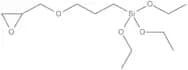
CAS:Formula:C2H4Cl4SiPurezza:95%Colore e forma:Straw LiquidPeso molecolare:197.95(3-GLYCIDOXYPROPYL)TRIETHOXYSILANE
CAS:(3-Glycidoxypropyl)triethoxysilane; triethoxy[3-(oxiranylmethoxy)propyl]-silane; 2-[[3- (triethoxysilyl)propoxy]methyl]-oxirane; triethoxy[3- (oxiranylmethoxy)propyl]silane; 3-(2,3- epoxypropoxypropyl)triethoxysilane
Epoxy functional trialkoxy silaneViscosity: 3 cSt Coupling agent for latex polymersUsed in microparticle surface modificationPrimer for aluminum and glass to epoxy coatings and adhesives when applied as a 1-2% solution in solventCoupling agent for UV cure and epoxy systemsEpoxy silane treated surfaces convert to hydrophilic-diols when exposed to moistureFormula:C12H26O5SiColore e forma:Straw LiquidPeso molecolare:278.42Ref: 3H-SIG5839.0
2kgPrezzo su richiesta100gPrezzo su richiesta18kgPrezzo su richiesta180kgPrezzo su richiestaVINYLDIMETHYLCHLOROSILANE
CAS:Formula:C4H9ClSiPurezza:97%Colore e forma:Straw LiquidPeso molecolare:120.65Ref: 3H-SIV9070.0
16kgPrezzo su richiesta250gPrezzo su richiesta750gPrezzo su richiesta150kgPrezzo su richiestan-OCTYLSILANE
CAS:Mono-substituted Silane Reducing Agent
Organosilanes are hydrocarbon-like and possess the ability to serve as both ionic and free-radical reducing agents. These reagents and their reaction by-products are safer and more easily handled and disposed than many other reducing agents. The metallic nature of silicon and its low electronegativity relative to hydrogen lead to polarization of the Si-H bond yielding a hydridic hydrogen and a milder reducing agent compared to aluminum-, boron-, and other metal-based hydrides. A summary of some key silane reductions are presented in Table 1 of the Silicon-Based Reducing Agents brochure.
Trihydridosilane
Silyl Hydrides are a distinct class of silanes that behave and react very differently than conventional silane coupling agents. They react with the liberation of byproduct hydrogen. Silyl hydrides can react with hydroxylic surfaces under both non-catalyzed and catalyzed conditions by a dehydrogenative coupling mechanism. Trihydridosilanes react with a variety of pure metal surfaces including gold, titanium, zirconium and amorphous silicon, by a dissociative adsorption mechanism. The reactions generally take place at room temperature and can be conducted in the vapor phase or with the pure silane or solutions of the silane in aprotic solvents. Deposition should not be conducted in water, alcohol or protic solvents.
n-Octylsilane; 1-Sila-nonane
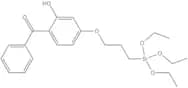
Fugitive inhibitor of hydrosilylationForms SAMs on titanium, gold and silicon surfacesExtensive review of silicon based reducing agents: Larson, G.; Fry, J. L. "Ionic and Organometallic-Catalyzed Organosilane Reductions", Wipf, P., Ed.; Wiley, 2007Formula:C8H20SiPurezza:97%Colore e forma:LiquidPeso molecolare:144.332-HYDROXY-4-(3-TRIETHOXYSILYLPROPOXY)DIPHENYLKETONE, tech
CAS:2-Hydroxy-4-(3-triethoxysilylpropoxy)diphenylketone; 4-(3-triethoxysilylpropoxy)-2-hydroxybenzophenone [2-hydroxy-4-[3-(triethoxysilyl)propoxy]phenyl]phenylmethanone
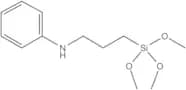
UV active trialkoxy silaneAmber liquidViscosity, 25 °C: 125-150 cStUV max: 230, 248, 296 (s), 336Strong UV blocking agent for optically clear coatings,Absorbs from 210-420 nmUsed in Bird-deterrent Glass CoatingsFormula:C22H30O6SiPurezza:95%Colore e forma:Straw To Amber LiquidPeso molecolare:418.56N-PHENYLAMINOPROPYLTRIMETHOXYSILANE
CAS:N-Phenylaminopropyltrimethoxysilane; N-[3-(trimethoxysilyl)propyl]aniline; [3-(trimethoxysilyl)propyl]aniline
Secondary amino functional trialkoxy silaneSpecific wetting surface: 307 m2/gCoupling agent for UV cure and epoxy systemsOxidatively stable coupling agent for polyimides, phenolics, epoxiesUsed in microparticle surface modificationFormula:C12H21NO3SiPurezza:92%Colore e forma:Straw Amber LiquidPeso molecolare:255.384-PHENYLBUTYLTRIMETHOXYSILANE
CAS:Formula:C13H22O3SiPurezza:97%Colore e forma:Straw LiquidPeso molecolare:254.43-[METHOXY(POLYETHYLENEOXY)9-12]PROPYLTRIMETHOXYSILANE, tech
CAS:Tipped PEG Silane (591-723 g/mol)
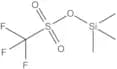
PEO, Trimethoxysilane termination utilized for hydrophilic surface modificationPEGylation reagentHydrogen bonding hydrophilic silaneFormula:CH3(C2H4O)9-12(CH2)3OSi(OCH3)3Colore e forma:Straw LiquidPeso molecolare:591-723TRIMETHYLSILYL TRIFLUOROMETHANESULFONATE CYLINDER
CAS:Trimethylsilyl Blocking Agent
Used as a protecting group for reactive hydrogens in alcohols, amines, thiols, and carboxylic acids. Organosilanes are hydrogen-like, can be introduced in high yield, and can be removed under selective conditions. They are stable over a wide range of reaction conditions and can be removed in the presence of other functional groups, including other protecting groups. The tolerance of silylated alcohols to chemical transformations summary is presented in Table 1 of the Silicon-Based Blocking Agents brochure.
Trimethylsilyltrifluoromethanesulfonate; Trimethylsilyltriflate; TMSOTf
Strong silylating agent for C- or O-silylationsReacts with nitroalkanes to give N,N-bis(trimethylsiloxy)enaminesNafion SAC-13 has been shown to be a recyclable catalyst for the trimethylsilylation of primary, secondary, and tertiary alcohols in excellent yields and short reaction timesSummary of selective deprotection conditions is provided in Table 7 through Table 20 of the Silicon-Based Blocking Agents brochureFormula:C4H9F3O3SSiColore e forma:Straw LiquidPeso molecolare:222.25Ref: 3H-SIT8620.0
drPrezzo su richiestacylPrezzo su richiesta20kgPrezzo su richiesta2.5kgPrezzo su richiesta225kgPrezzo su richiestat-BUTYLDIMETHYLCHLOROSILANE
CAS:Trialkylsilyl Blocking Agent
Used as a protecting group for reactive hydrogens in alcohols, amines, thiols, and carboxylic acids. Organosilanes are hydrogen-like, can be introduced in high yield, and can be removed under selective conditions. They are stable over a wide range of reaction conditions and can be removed in the presence of other functional groups, including other protecting groups. The tolerance of silylated alcohols to chemical transformations summary is presented in Table 1 of the Silicon-Based Blocking Agents brochure.
Alkyl Silane - Conventional Surface Bonding
Aliphatic, fluorinated aliphatic or substituted aromatic hydrocarbon substituents are the hydrophobic entities which enable silanes to induce surface hydrophobicity. The organic substitution of the silane must be non-polar. The hydrophobic effect of the organic substitution can be related to the free energy of transfer of hydrocarbon molecules from an aqueous phase to a homogeneous hydrocarbon phase. A successful hydrophobic coating must eliminate or mitigate hydrogen bonding and shield polar surfaces from interaction with water by creating a non-polar interphase. Although silane and silicone derived coatings are in general the most hydrophobic, they maintain a high degree of permeability to water vapor. This allows coatings to breathe and reduce deterioration at the coating interface associated with entrapped water. Since ions are not transported through non-polar silane and silicone coatings, they offer protection to composite structures ranging from pigmented coatings to rebar reinforced concrete. A selection guide for hydrophobic silanes can be found on pages 22-31 of the Hydrophobicity, Hydrophilicity and Silane Surface Modification brochure.
tert-Butyldimethylchlorosilane; TBS-Cl; Chlorodimethyl-t-butylsilane; tert-Butylchlorodimethylsilane; Chloro(1,1-dimethylethyl)dimethylsilane
Excellent for 1° and 2° alcoholsSilylation catalyzed by imidazoleBlocking agent widely used in prostaglandin synthesisStable to many reagentsCan be selectively cleaved in presence of acetate, THP and benzyl ethers among othersUsed for the protection of alcohols, amines, thiols, lactams, and carboxylic acidsClean NMR characteristics of protecting groupSilylation reagent - derivatives resistant to Grignards, alkyl lithium compounds, etcFacile removal with flouride ion sourcesSummary of selective deprotection conditions is provided in Table 7 through Table 20 of the Silicon-Based Blocking Agents brochureFormula:C6H15ClSiPurezza:97%Colore e forma:Translucent SolidPeso molecolare:150.72Ref: 3H-SIB1935.0
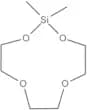
2kgPrezzo su richiesta100gPrezzo su richiesta10kgPrezzo su richiesta100kgPrezzo su richiestaDIMETHYLSILA-11-CROWN-4, 95%
CAS:Silacrown (206.31 g/mol)
1,1-Dimethyl-1,3,6,9,11-tetraoxa-1-silacycloundecaneCrown ether analogDual end protected PEGFormula:C8H18O4SiPurezza:95%Colore e forma:LiquidPeso molecolare:206.31







![3-[METHOXY(POLYETHYLENEOXY)9-12]PROPYLTRIMETHOXYSILANE, tech](/_next/image/?url=https%3A%2Fstatic.cymitquimica.com%2Fproducts%2F3H%2Fthumb-webp%2FSIM6492.72.webp&w=3840&q=75)