


Building Blocks
Questa sezione contiene prodotti fondamentali per la sintesi di composti organici e biologici. Building blocks sono i materiali di partenza essenziali utilizzati per costruire molecole complesse attraverso varie reazioni chimiche. Svolgono un ruolo critico nella scoperta di farmaci, nella scienza dei materiali e nella ricerca chimica. Presso CymitQuimica, offriamo una gamma diversificata di building blocks di alta qualità per supportare le tue ricerche innovative e progetti industriali, assicurandoti di avere i componenti essenziali per una sintesi di successo.
Sottocategorie di "Building Blocks"
- Acidi boronici e derivati dell'acido boronico(5.756 prodotti)
- Building Blocks Chirali(1.242 prodotti)
- Building Blocks Idrocarburici(6.093 prodotti)
- Building Blocks organici(60.532 prodotti)
Trovati 195533 prodotti di "Building Blocks"
Ordinare per
Purezza (%)
0
100
|
0
|
50
|
90
|
95
|
100
Heptylnonyl Adipate (so called) [Plasticizer]
CAS:Purezza:mixture of Heptylnonyl adipate, Diheptyl adipate, Dinonyl adipate(GC)Colore e forma:Colorless to Almost colorless clear liquid5-Iodo-2-furaldehyde
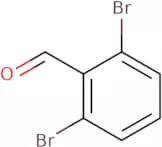
CAS:Formula:C5H3IO2Purezza:>98.0%(GC)Colore e forma:White to Yellow powder to crystalPeso molecolare:221.982,6-Dibromobenzaldehyde
CAS:<p>2,6-Dibromobenzaldehyde is an imidazole derivative that has been shown to be a potent inhibitor of tyrosine kinase. It has been shown to inhibit the replication of virus type-1 and is effective in the treatment of pain models. 2,6-Dibromobenzaldehyde also inhibits the activity of enzymes, such as phosphodiesterases and protein kinases. This compound has shown promising results in animal studies for the treatment of human immunodeficiency virus type 1 (HIV-1) infection. The pharmacokinetic properties of 2,6-dibromobenzaldehyde have been studied in rats and dogs with oral administration and found to be linear and rapid with high bioavailability.</p>Formula:C7H4Br2OPurezza:Min. 95%Colore e forma:PowderPeso molecolare:263.91 g/mol2-Acetylpyrazine
CAS:<p>2-Acetylpyrazine is a nitrogen containing compound that has been used in biological studies. 2-Acetylpyrazine has been shown to have inhibitory properties against the growth of prostate cancer cells and other cell lines. It also inhibits the production of fatty acids and epidermal growth factor, which are important for cellular proliferation. The inhibition is due to the photochemical properties of 2-acetylpyrazine, which cause the formation of reactive species that react with biological molecules. The reactive species may be generated by either a reaction mechanism or a reaction pathway that involve coordination geometry.<br>2-acetylpyrazine has also been used as a fluorescence probe for fatty acid detection in lipid bilayers and liposomes.</p>Formula:C6H6N2OPurezza:Min. 95%Colore e forma:PowderPeso molecolare:122.12 g/mol(αS)-α-[[2-(4-Morpholinyl)acetyl]amino]benzenebutanoyl-L-leucyl-L-phenylalanine phenylmethyl ester
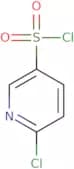
CAS:<p>Please enquire for more information about (αS)-α-[[2-(4-Morpholinyl)acetyl]amino]benzenebutanoyl-L-leucyl-L-phenylalanine phenylmethyl ester including the price, delivery time and more detailed product information at the technical inquiry form on this page</p>Formula:C38H48N4O6Purezza:Min. 95%Colore e forma:PowderPeso molecolare:656.81 g/mol6-Chloropyridine-3-sulfonyl chloride
CAS:<p>6-Chloropyridine-3-sulfonyl chloride is a synthetic compound that has been shown to be an inhibitor of the enzyme anhydrase, which is involved in the production of carbonic acid. This inhibition leads to a decrease in the pH of tissues and may inhibit the proliferation of malignant cancer cells. 6-Chloropyridine-3-sulfonyl chloride has also been shown to have anticancer activity against eukaryotes.</p>Formula:C5H3Cl2NO2SPurezza:Min. 95%Colore e forma:PowderPeso molecolare:212.05 g/mol2-(4-Methoxyphenyl)ethanol
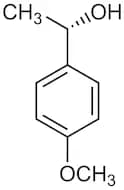
CAS:<p>2-(4-Methoxyphenyl)ethanol is a chemical compound that can be synthesized in an efficient method. It is a by-product of the reaction of fatty acids with hydroxyl compounds and has been shown to have synergistic effects when combined with chloride. 2-(4-Methoxyphenyl)ethanol is used as a synthetic intermediate for the production of methyl anthranilate, which is an important industrial chemical that is used as a flavor and fragrance additive. 2-(4-Methoxyphenyl)ethanol also has eugenol as one of its cleavage products, which can be found in plants such as clove oil, cinnamon bark, and nutmeg.</p>Formula:C9H12O2Purezza:Min. 98%Colore e forma:White PowderPeso molecolare:152.19 g/mol(S)-1-(4-Methoxyphenyl)ethanol
CAS:Formula:C9H12O2Purezza:>95.0%(GC)Colore e forma:Colorless to Light yellow clear liquidPeso molecolare:152.19Methyl 5-methoxy-2-methylindole-3-acetate
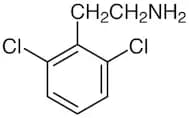
CAS:<p>Methyl 5-methoxy-2-methylindole-3-acetate is a versatile building block that can be used as a research chemical, reagent, or speciality chemical. It is also an intermediate in the synthesis of other compounds and has been shown to be useful in reactions involving nucleophilic substitution and electrophilic addition. This compound can be used as a scaffold for complex organic molecules. CAS No. 7588-36-5</p>Formula:C13H15NO3Purezza:Min. 95%Colore e forma:Beige SolidPeso molecolare:233.26 g/mol2-(2,6-Dichlorophenyl)ethylamine
CAS:Formula:C8H9Cl2NPurezza:>98.0%(GC)(T)Colore e forma:Colorless to Light orange to Yellow clear liquidPeso molecolare:190.075-Chloro-2-mercaptobenzothiazole
CAS:<p>5-Chloro-2-mercaptobenzothiazole (5CMB) is a thione that binds to hydrogen fluoride (HF) and sodium salts. 5CMB has been used in the synthesis of fluorinated drugs, such as 5-chloro-2-(4'-fluorophenylsulfonyl)benzothiazole, which is used for the treatment of cancer. 5CMB has also been shown to be a potential drug candidate for the treatment of Alzheimer's disease. The structure of 5CMB can be determined using crystallography techniques. Its binding constants with HF and sodium salts can be determined using matrix-assisted laser desorption ionization mass spectrometry (MALDI MS). The toxicity studies of 5CMB have been conducted on animals including mice and rats. These studies show that the LD50 value for 5CMB is 3200 mg/kg bodyweight.</p>Formula:C7H4ClNS2Purezza:Min. 98 Area-%Colore e forma:PowderPeso molecolare:201.7 g/molTrimethylsilylmethanethiol
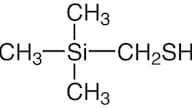
CAS:Formula:C4H12SSiPurezza:>97.0%(GC)Colore e forma:Colorless to Almost colorless clear liquidPeso molecolare:120.294-(3-Hydroxyphenyl)piperidine
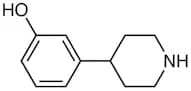
CAS:Formula:C11H15NOPurezza:>98.0%(GC)(T)Colore e forma:White to Orange to Green powder to crystalPeso molecolare:177.253-[Bis(phenylmethyl)amino]-5-fluoro-6-methyl-2-(phenylmethoxy)benzoic acid phenyl ester
CAS:<p>Building block in tetracycline antibiotic synthesis</p>Formula:C35H30FNO3Purezza:Min. 95%Colore e forma:PowderPeso molecolare:531.62 g/mol3,5-Dimethoxybenzamide
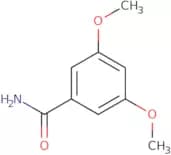
CAS:<p>3,5-Dimethoxybenzamide belongs to the class of quinolone drugs. It is a potentiator of nabilone, which is a synthetic cannabinoid similar to THC. 3,5-Dimethoxybenzamide has been shown to be an electron-deficient compound that reacts with 5-hydroxytryptamine (serotonin) in vitro. This reaction leads to the formation of hydrogen bonds and modifications in the structure of serotonin molecules. 3,5-Dimethoxybenzamide also has grignard reagent activity and can be used as a carboxyamide or amide precursor in organic synthesis.</p>Formula:C9H11NO3Purezza:Min. 95%Colore e forma:PowderPeso molecolare:181.19 g/mol4-Phenyl-2-butanol
CAS:<p>4-Phenyl-2-butanol is a monoclonal antibody that is used in the treatment of human immunodeficiency virus (HIV). It is an aromatic hydrocarbon that binds to amines and reacts with malonic acid, which has monophenolase activity. The resulting product, dimethyl malonate, reacts with unsaturated ketones to form diphenols. The reaction solution also contains chloride yields, which are generated by the conversion of amines to their corresponding chlorides. 4-Phenyl-2-butanol has been shown to have enantiopure properties for the synthesis of fatty acids and other compounds containing unsaturated ketones.</p>Formula:C10H14OPurezza:Min. 95%Colore e forma:Clear Colourless LiquidPeso molecolare:150.22 g/molSodium 4-Ethylbenzenesulfonate
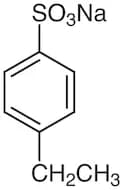
CAS:Formula:C8H9NaO3SPurezza:>98.0%(T)(HPLC)Colore e forma:White to Almost white powder to crystalPeso molecolare:208.214-Chloro-1H-imidazole
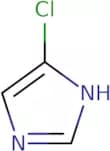
CAS:<p>4-Chloro-1H-imidazole is an organic chemical compound that contains a heterocyclic ring with one nitrogen and three carbons. It is classified as a weak acid. 4-Chloro-1H-imidazole can be found in hydrochloric acid, methyl ketones, and the acid conjugates of pyrazole rings. It has minimal toxicity. 4-Chloro-1H-imidazole binds to receptors in the body, which may account for its effects on blood pressure and heart rate. This drug also reacts with diazonium salts to form an intermediate that is then oxidized by chloride ions to form a reactive intermediate that can react with histidine or flavin (a type of vitamin B2) to form a fluorescent product that can be detected by light absorption or fluorescence emission spectroscopy.</p>Formula:C3H3ClN2Purezza:Min. 95%Colore e forma:White PowderPeso molecolare:102.52 g/mol3,7-Dibromodibenzo[b,d]thiophene
CAS:<p>3,7-Dibromodibenzo[b,d]thiophene is a polymerizable monomer that can be used for the synthesis of polymers with interesting optical properties. This material has been shown to undergo copolymerization with vinyl ethers and vinyl esters in the presence of sodium carbonate. The resulting copolymer has semiconducting properties and gel permeation chromatography showed a ring structure. Cross-coupling reactions have been used to synthesize 3,7-dibromodibenzo[b,d]thiophene from 2-bromo-1,3-dithiolane and 2-iodobenzene.</p>Formula:C12H6Br2SPurezza:Min. 95%Colore e forma:White PowderPeso molecolare:342.05 g/molPro-Gly-OH
CAS:<p>Pro-Gly-OH is a cyclic peptide that has been shown to have antimicrobial activity. Pro-Gly-OH has been shown to be an intramolecular hydrogen acceptor, which leads to the formation of a carbonyl group. This compound also has site specific interactions with the cell membrane and is taken up by cells. It is active at acidic pHs and can be activated by growth factors.<br>The conformational properties of Pro-Gly-OH are due to hydrogen bonding interactions and amide bond formation.</p>Formula:C7H12N2O3Purezza:Min. 95%Colore e forma:PowderPeso molecolare:172.18 g/mol
![Heptylnonyl Adipate (so called) [Plasticizer]](/_next/image/?url=https%3A%2Fstatic.cymitquimica.com%2Fproducts%2F3B%2Fthumb-webp%2FA1388.webp&w=3840&q=75)




![(αS)-α-[[2-(4-Morpholinyl)acetyl]amino]benzenebutanoyl-L-leucyl-L-phenylalanine phenylmethyl ester](/_next/image/?url=https%3A%2Fstatic.cymitquimica.com%2Fproducts%2F3D%2Fthumb-webp%2FFM183824.webp&w=3840&q=75)



![3-[Bis(phenylmethyl)amino]-5-fluoro-6-methyl-2-(phenylmethoxy)benzoic acid phenyl ester](/_next/image/?url=https%3A%2Fstatic.cymitquimica.com%2Fproducts%2F3D%2Fthumb-webp%2FFB101468.webp&w=3840&q=75)

![3,7-Dibromodibenzo[b,d]thiophene](/_next/image/?url=https%3A%2Fstatic.cymitquimica.com%2Fproducts%2F3D%2Fthumb-webp%2FFD62242.webp&w=3840&q=75)
