Building Blocks
Questa sezione contiene prodotti fondamentali per la sintesi di composti organici e biologici. Building blocks sono i materiali di partenza essenziali utilizzati per costruire molecole complesse attraverso varie reazioni chimiche. Svolgono un ruolo critico nella scoperta di farmaci, nella scienza dei materiali e nella ricerca chimica. Presso CymitQuimica, offriamo una gamma diversificata di building blocks di alta qualità per supportare le tue ricerche innovative e progetti industriali, assicurandoti di avere i componenti essenziali per una sintesi di successo.
Sottocategorie di "Building Blocks"
- Acidi boronici e derivati dell'acido boronico(5.756 prodotti)
- Building Blocks Chirali(1.242 prodotti)
- Building Blocks Idrocarburici(6.093 prodotti)
- Building Blocks organici(60.525 prodotti)
Trovati 195536 prodotti di "Building Blocks"
Ordinare per
Purezza (%)
0
100
|
0
|
50
|
90
|
95
|
100
2-(4-Methoxybenzoyl)thiophene
CAS:Formula:C12H10O2SPurezza:>98.0%(GC)Colore e forma:White to Gray to Brown powder to crystalPeso molecolare:218.276-Bromo-2-(4-bromophenyl)-indole
CAS:<p>6-Bromo-2-(4-bromophenyl)-indole is a fine chemical with CAS No. 28718-96-9 that can be used as a versatile building block for the synthesis of complex compounds, useful scaffold for research chemicals, and reaction component for speciality chemicals. This compound has high quality and is a reagent in the synthesis of other compounds.</p>Formula:C14H9Br2NPurezza:Min. 95%Colore e forma:Off white to pale yellow powder.Peso molecolare:351.04 g/mol3,4-Dichloro-2-methylpyridine
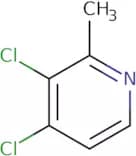
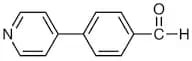
CAS:<p>3,4-Dichloro-2-methylpyridine is a novel sulfur analogue that has been shown to have significant antitumor activity in breast cancer xenografts. 3,4-Dichloro-2-methylpyridine inhibits the growth of tumor cells by binding to their DNA and inhibiting RNA synthesis. It also inhibits the production of reactive oxygen species and stabilizes cell membranes. 3,4-Dichloro-2-methylpyridine has been found to be active against human tumors in vivo and is a potential anticancer drug for human use.</p>Formula:C6H5Cl2NPurezza:Min. 95%Colore e forma:PowderPeso molecolare:162.02 g/mol4-(4-Pyridyl)benzaldehyde
CAS:Formula:C12H9NOPurezza:>98.0%(GC)Colore e forma:White to Orange to Green powder to crystalPeso molecolare:183.214'-Iodoacetophenone
CAS:<p>4'-Iodoacetophenone is a catalyst in organic synthesis. It is a cross-coupling agent that is used to catalyze reactions of alkyl halides with organometallic compounds. The reaction mechanism is the same as for other cross-coupling reactions and involves the formation of a palladium complex. 4'-Iodoacetophenone has been shown to be effective in asymmetric synthesis, where it can be used as a homogeneous catalyst. This compound has also been shown to be an efficient methylating agent and can be used in the methylation of various functional groups, such as amines, nitro groups, and phenols.</p>Formula:C8H7IOPurezza:Min. 95%Colore e forma:Yellow PowderPeso molecolare:246.05 g/mol7-Bromobenzo[b]thiophene-2-carboxylic acid
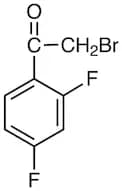
CAS:<p>7-Bromobenzo[b]thiophene-2-carboxylic acid is a fine chemical with CAS No. 19075-59-3. It is a useful building block for research chemicals, reagents, and speciality chemicals. It has high quality and can be used as a versatile building block for reactions. 7-Bromobenzo[b]thiophene-2-carboxylic acid can also be used as an intermediate or scaffold in synthesis of complex compounds.</p>Formula:C9H5BrO2SPurezza:Min. 95%Colore e forma:White PowderPeso molecolare:257.1 g/mol2-Bromo-2',4'-difluoroacetophenone
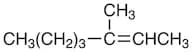
CAS:Formula:C8H5BrF2OPurezza:>98.0%(GC)Colore e forma:White or Colorless to Light yellow to Light orange powder to lump to clear liquidPeso molecolare:235.033-Methyl-2-heptene (cis- and trans- mixture)
CAS:Formula:C8H16Purezza:>95.0%(GC)Colore e forma:Colorless to Almost colorless clear liquidPeso molecolare:112.22Ethyl 4,4,4-Trifluoroacetoacetate
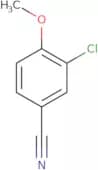
CAS:Formula:C6H7F3O3Purezza:>98.0%(GC)Colore e forma:Colorless to Almost colorless clear liquidPeso molecolare:184.113-Chloro-4-methoxybenzonitrile
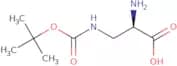
CAS:<p>3-Chloro-4-methoxybenzonitrile is a chemical compound that can be used as a reactant, reagent, or building block in the synthesis of other chemicals. It is an important intermediate for the production of pharmaceuticals, pesticides and dyes. 3-Chloro-4-methoxybenzonitrile is also being investigated for use in the manufacture of photoresists for semiconductor device fabrication. This chemical is listed on the Chemical Abstracts Service registry with CAS number 102151-33-7.</p>Formula:C8H6ClNOPurezza:Min. 95%Colore e forma:SolidPeso molecolare:167.59 g/molN-b-Boc-D-2,3-diaminopropionic acid
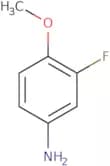
CAS:<p>N-b-Boc-D-2,3-diaminopropionic acid is a chemical compound that belongs to the group of polypeptides. It has been shown to act as a receptor activator in cell-based assays and is capable of binding to taste receptors. N-b-Boc-D-2,3-diaminopropionic acid has also been found to be an effective inhibitor of alpha amylase, which is an enzyme that breaks down starch into maltose and dextrin. This chemical compound could serve as a potential therapeutic agent for type 2 diabetes, obesity, and other metabolic disorders. NBDAPA has also been found in fossilized invertebrates such as squid and urchins.</p>Formula:C8H16N2O4Purezza:Min. 95%Colore e forma:White to off-white solid.Peso molecolare:204.22 g/mol3-Fluoro-4-methoxyaniline
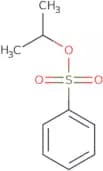
CAS:<p>3-Fluoro-4-methoxyaniline is a chemical intermediate. It is an aminopyridine that is used in the synthesis of bosutinib, an anticancer drug. 3-Fluoro-4-methoxyaniline binds to the ATP binding site of the cell's mitochondria and prevents the release of cytochrome c from the mitochondria, which leads to apoptosis. 3-Fluoro-4-methoxyaniline also has antimitotic effects and can inhibit the growth of tumor cells. 3-Fluoro-4-methoxyaniline has been shown to have poor cellular uptake, which may be due to its interaction with positron emission tomography (PET) agents such as cyanuric acid or glycopeptide. This chemical has also been shown to be a good surrogate for chloride ions in studies on transfected tumor cells.</p>Formula:C7H8FNOPurezza:Min. 98.5%Colore e forma:Off-White PowderPeso molecolare:141.14 g/molIsopropyl benzenesulfonate
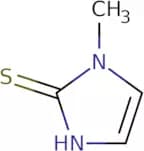
CAS:<p>Isopropyl benzenesulfonate is an ester compound that reacts with the chlorine atom to produce a sulfonic acid. It has antimicrobial properties and is used in the production of quinoline derivatives, which are aliphatic hydrocarbons that have been found to be effective in the treatment of cancer. Isopropyl benzenesulfonate also has potential as a cross-linking agent for ester compounds, due to its ability to react with both aromatic hydrocarbons and radiation. It can be synthesized by reacting a phase liquid chromatography solution with hydroxyl group or patterning with a solid catalyst. Isopropyl benzenesulfonate has carbonyl groups that are reactive with other chemicals and may be used as a reagent for storing reactive substances.</p>Formula:C9H12O3SPurezza:Min. 95%Colore e forma:Colorless Clear LiquidPeso molecolare:200.26 g/mol2-Mercapto-1-methylimidazole
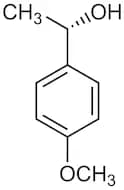
CAS:<p>Inhibitor of thyroid peroxidase; treatment for hyperthyroidism</p>Formula:C4H6N2SPurezza:Min. 95%Colore e forma:PowderPeso molecolare:114.17 g/mol(S)-1-(4-Methoxyphenyl)ethanol
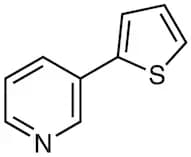
CAS:Formula:C9H12O2Purezza:>95.0%(GC)Colore e forma:Colorless to Light yellow clear liquidPeso molecolare:152.193-(2-Thienyl)pyridine
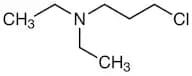
CAS:Formula:C9H7NSPurezza:>98.0%(GC)Colore e forma:White to Yellow to Green clear liquidPeso molecolare:161.223-Chloro-N,N-diethylpropan-1-amine
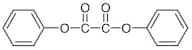
CAS:Formula:C7H16ClNPurezza:>98.0%(GC)(T)Colore e forma:Colorless to Almost colorless clear liquidPeso molecolare:149.66Diphenyl Oxalate
CAS:Formula:C14H10O4Purezza:>98.0%(GC)Colore e forma:White to Light yellow to Light orange powder to crystalPeso molecolare:242.23Pentadecane
CAS:Formula:C15H32Purezza:>99.0%(GC)Colore e forma:Colorless clear liquidPeso molecolare:212.425,6,7,8-Tetrahydronaphthalene-2-carbaldehyde
CAS:<p>5,6,7,8-Tetrahydronaphthalene-2-carbaldehyde is an indole derivative that is used as a precursor to produce other compounds. It is an inducers of enzymes (e.g., hydroxylase) and has been shown to increase the production of toxic metabolites such as cyclized products. 5,6,7,8-Tetrahydronaphthalene-2-carbaldehyde can be synthesized from anthracene by reacting it with acetone and hydrochloric acid. This compound can be converted into a variety of derivatives including esters and zoxazolamine. 5,6,7,8-Tetrahydronaphthalene-2-carbaldehyde also has carcinogenic properties and has been shown to cause cancer in rats when injected or orally administered in high doses.</p>Formula:C11H12OPurezza:Min. 95%Colore e forma:PowderPeso molecolare:160.21 g/mol





![7-Bromobenzo[b]thiophene-2-carboxylic acid](/_next/image/?url=https%3A%2Fstatic.cymitquimica.com%2Fproducts%2F3D%2Fthumb-webp%2FFB139377.webp&w=3840&q=75)