Building Blocks
Questa sezione contiene prodotti fondamentali per la sintesi di composti organici e biologici. Building blocks sono i materiali di partenza essenziali utilizzati per costruire molecole complesse attraverso varie reazioni chimiche. Svolgono un ruolo critico nella scoperta di farmaci, nella scienza dei materiali e nella ricerca chimica. Presso CymitQuimica, offriamo una gamma diversificata di building blocks di alta qualità per supportare le tue ricerche innovative e progetti industriali, assicurandoti di avere i componenti essenziali per una sintesi di successo.
Sottocategorie di "Building Blocks"
- Acidi boronici e derivati dell'acido boronico(5.756 prodotti)
- Building Blocks Chirali(1.242 prodotti)
- Building Blocks Idrocarburici(6.093 prodotti)
- Building Blocks organici(60.522 prodotti)
Trovati 195533 prodotti di "Building Blocks"
Ordinare per
Purezza (%)
0
100
|
0
|
50
|
90
|
95
|
100
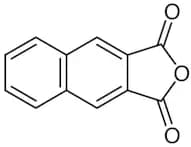
2,3-Naphthalenedicarboxylic Anhydride
CAS:Formula:C12H6O3Purezza:>95.0%(GC)(T)Colore e forma:White to Gray to Brown powder to crystalPeso molecolare:198.18(3-Trifluoromethylpyrid-2-yl)hydrazine
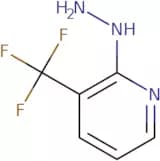
CAS:<p>Building block for preparation of heteroaryltriazole derivatives</p>Formula:C6H6F3N3Purezza:Min. 95%Colore e forma:PowderPeso molecolare:177.13 g/mol4-Chloro-6-iodoquinazoline
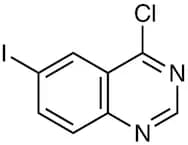
CAS:Formula:C8H4ClIN2Purezza:>98.0%(GC)Colore e forma:White to Yellow to Green powder to crystalPeso molecolare:290.492-Bromo-5-hydroxybenzaldehyde
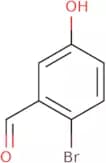
CAS:<p>Intermediate in the synthesis of crisaborole AN2728</p>Formula:C7H5BrO2Purezza:Min. 95%Colore e forma:White PowderPeso molecolare:201.02 g/molSodium 4-Ethylbenzenesulfonate
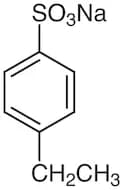
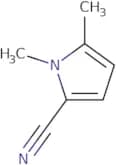
CAS:Formula:C8H9NaO3SPurezza:>98.0%(T)(HPLC)Colore e forma:White to Almost white powder to crystalPeso molecolare:208.212-Cyano-1,5-dimethylpyrrole
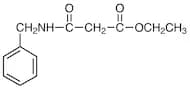
CAS:<p>2-Cyano-1,5-dimethylpyrrole is a quinone antibiotic. It has been shown to have antibacterial activity against organisms such as Staphylococcus, Streptococcus, and Pyogenes. This chemical has been shown to be active in the gaseous phase and against test organisms in alcohol extracts. 2-Cyano-1,5-dimethylpyrrole also exhibits flavonoid and saponin properties that may contribute to its antimicrobial activity.</p>Formula:C7H8N2Purezza:Min. 95%Colore e forma:PowderPeso molecolare:120.15 g/molEthyl 3-(Benzylamino)-3-oxopropionate
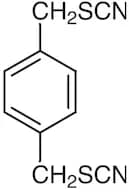
CAS:Formula:C12H15NO3Purezza:>98.0%(GC)Colore e forma:White to Light yellow powder to crystalPeso molecolare:221.26p-Xylylene Dithiocyanate
CAS:Formula:C10H8N2S2Purezza:>98.0%(GC)Colore e forma:White to Almost white powder to crystalinePeso molecolare:220.31Ethylenedithiobis(trimethylsilane) [Protecting Reagent for Aldehydes and Ketones]
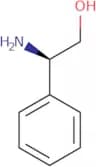
CAS:Formula:C8H22S2Si2Purezza:>97.0%(GC)Colore e forma:Colorless to Almost colorless clear liquidPeso molecolare:238.55(R)-(-)-2-Phenylglycinol
CAS:<p>(R)-(-)-2-Phenylglycinol is an enantiopure chiral compound that has been used in the synthesis of polymers. This polymerase chain reaction (PCR) inhibitor binds to the α subunit of DNA polymerase, preventing replication and transcription. The binding site for this inhibitor is located at the active site of the enzyme and is a hydroxyl group. The (S)-enantiomer of 2-phenylglycinol does not bind to the α subunit, so it can be used as a control in experiments. 2-Phenylglycinol is also known to have antiviral properties against HIV infection.</p>Formula:C8H11NOPurezza:Min. 97.5 Area-%Colore e forma:White PowderPeso molecolare:137.18 g/mol1,4-Diazabicyclo[3.2.2]nonane
CAS:<p>Diazepam (also known as Valium) is a benzodiazepine drug used to treat anxiety disorders, muscle spasms, alcohol withdrawal symptoms, and other conditions. Diazepam is a tranquilizer that works by slowing down the activity of the central nervous system. It may also be used to control seizures, prevent certain types of muscle spasms, treat insomnia and relieve anxiety before surgery. Diazepam has been shown to have an affinity for nicotinic acetylcholine receptors in rat brains. This drug can work by blocking these receptors and preventing the transmission of impulses between neurons. Diazepam is marketed in many countries as an anxiolytic agent under trade names such as Valium and Librium. The clinical use of diazepam should be limited because it has been shown to cause birth defects in animal studies when given at high doses or during pregnancy.</p>Formula:C7H14N2Purezza:Min. 95%Colore e forma:White PowderPeso molecolare:126.2 g/mol5-Iodo-2-furaldehyde
CAS:Formula:C5H3IO2Purezza:>98.0%(GC)Colore e forma:White to Yellow powder to crystalPeso molecolare:221.982-[(Phenylsulfonyl)amino]benzoic acid
CAS:<p>2-[(Phenylsulfonyl)amino]benzoic acid is a white crystalline solid that is soluble in water and ethanol. It has a melting point of 176°C and a boiling point of 280°C. 2-[(Phenylsulfonyl)amino]benzoic acid binds to DNA by an intercalative mechanism, forming covalent bonds with the bases on the DNA. This binding prevents the DNA from unwinding during replication and transcription, thus inhibiting the synthesis of RNA and protein. The dimers form between two molecules of 2-[(Phenylsulfonyl)amino]benzoic acid, due to hydrogen bonding between the carboxylic acid groups. The crystal structure has been determined for this compound as centrosymmetric with space group P2 1 /c. A benzene ring is found in the molecule, which can form a pyridine ring when exposed to heat or</p>Formula:C13H11NO4SPurezza:Min. 95%Colore e forma:White PowderPeso molecolare:277.3 g/mol1-Ethyl-1,2-dihydro-2,2,4-trimethyl-7-quinolinol hydrochloride
CAS:<p>Please enquire for more information about 1-Ethyl-1,2-dihydro-2,2,4-trimethyl-7-quinolinol hydrochloride including the price, delivery time and more detailed product information at the technical inquiry form on this page</p>Formula:C14H19NO•HClPurezza:Min. 95%Colore e forma:PowderPeso molecolare:253.77 g/mol7-Isopropyl-1,4-dimethylazulene-3-carboxaldehyde
CAS:Formula:C16H18OPurezza:>97.0%(GC)Colore e forma:Gray to Dark purple to Black powder to crystalPeso molecolare:226.323-Amino-N-(tert-butoxycarbonyl)benzylamine
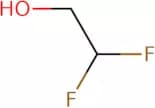
CAS:Formula:C12H18N2O2Purezza:>98.0%(GC)(T)Colore e forma:White to Light yellow powder to crystalPeso molecolare:222.292,2-Difluoroethanol
CAS:<p>2,2-Difluoroethanol is a chemical compound with the molecular formula C2H4F2O. It is a colorless liquid that has a distinctive odor and is highly flammable. 2,2-Difluoroethanol reacts in an electrophilic substitution reaction to replace chlorine atoms with hydrogen atoms from the ethyl formate molecule. This reaction can be described by the following equation:</p>Formula:C2H4OF2Purezza:Min. 95%Colore e forma:PowderPeso molecolare:82.05 g/mol3,3'-Diindolymethane (synthetic)
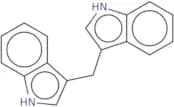
CAS:<p>3,3'-Diindolylmethane, also known as DIM, is natural compound derived from indole. In a recent study, DIM was evaluated as a potential agent for preventing biofilm formation by Streptococcus mutans, which is a major cause of dental caries. The researchers found that DIM significantly inhibited biofilm formation (by 92%) and reduced the production of extracellular polymeric substances (EPS), which are important for biofilm stability particularly under acidic conditions. The study suggests that 3,3'-diindolylmethane has anti-biofilm and anti-virulence properties against S. mutans, and it is a potential candidate for reducing biofilm formation and preventing dental caries.<br>It has been also reported that 3,3'-diindolymethane can act as a chemopreventive agent. DIM has estrogenic effects without interacting with the binding domain of the estrogen receptors. This study found that DIM could suppress cell growth and disrupt cell cycle progression of young adult mouse colonocytes (YAMCs) in vitro. Moreover, DIM altered gene expression associated with apoptosis and cell proliferation, and it induced transcriptional activity of the estrogen receptor (ER), which was inhibited by an ER antagonist.</p>Formula:C17H14N2Purezza:Min. 95%Colore e forma:PowderPeso molecolare:246.31 g/mol2,6-Dibromobenzoic acid
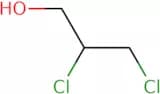
CAS:<p>2,6-Dibromobenzoic acid is a synthetic molecule that can be used to synthesize pyrrole derivatives in the presence of a base. It has been shown to react with a number of molecules, including halogens and chlorides. The active site of 2,6-dibromobenzoic acid is its bromine atom. The steric interactions between the 2,6-dibromobenzoic acid molecule and the substrate are strong enough to prevent other molecules from accessing the active site. Chlorides and diphenylmethane can also bind to 2,6-dibromobenzoic acid due to their similar properties. This molecule has also been shown to interact with aluminium and solvents such as ethanol or acetone.</p>Formula:C7H4Br2O2Purezza:Min. 95%Colore e forma:White PowderPeso molecolare:279.91 g/mol2,3-Dichloro-1-propanol
CAS:<p>2,3-Dichloro-1-propanol is a metabolic byproduct of chlorinated solvents. It has been shown to be toxic to mitochondria and can cause mitochondrial membrane potential disruption in rat liver cells. The chemical reacts with fatty acids to form a reactive carbonyl group that can react with the hydrogen bond of membrane phospholipids. This reaction disrupts the structure of the lipid bilayer, leading to mitochondrial degeneration. 2,3-Dichloro-1-propanol also reacts with glutathione and carbonic anhydrase, which leads to the formation of reactive intermediates that react with DNA or proteins. These reactions are responsible for the observed toxicity effects in animals.</p>Formula:C3H6Cl2OPurezza:Min. 95%Colore e forma:Clear LiquidPeso molecolare:128.98 g/mol


![Ethylenedithiobis(trimethylsilane) [Protecting Reagent for Aldehydes and Ketones]](/_next/image/?url=https%3A%2Fstatic.cymitquimica.com%2Fproducts%2F3B%2Fthumb-webp%2FE0479.webp&w=3840&q=75)
![1,4-Diazabicyclo[3.2.2]nonane](/_next/image/?url=https%3A%2Fstatic.cymitquimica.com%2Fproducts%2F3D%2Fthumb-webp%2FFD07111.webp&w=3840&q=75)

![2-[(Phenylsulfonyl)amino]benzoic acid](/_next/image/?url=https%3A%2Fstatic.cymitquimica.com%2Fproducts%2F3D%2Fthumb-webp%2FFP136709.webp&w=3840&q=75)