Building Blocks
Questa sezione contiene prodotti fondamentali per la sintesi di composti organici e biologici. Building blocks sono i materiali di partenza essenziali utilizzati per costruire molecole complesse attraverso varie reazioni chimiche. Svolgono un ruolo critico nella scoperta di farmaci, nella scienza dei materiali e nella ricerca chimica. Presso CymitQuimica, offriamo una gamma diversificata di building blocks di alta qualità per supportare le tue ricerche innovative e progetti industriali, assicurandoti di avere i componenti essenziali per una sintesi di successo.
Sottocategorie di "Building Blocks"
- Acidi boronici e derivati dell'acido boronico(5.756 prodotti)
- Building Blocks Chirali(1.242 prodotti)
- Building Blocks Idrocarburici(6.093 prodotti)
- Building Blocks organici(60.529 prodotti)
Trovati 195534 prodotti di "Building Blocks"
Ordinare per
Purezza (%)
0
100
|
0
|
50
|
90
|
95
|
100
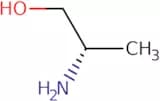
L-Alaninol
CAS:<p>L-Alaninol is a natural amino acid that can be synthesized in an asymmetric way. It has been used as a palladium complex catalyst to produce the inorganic acid, l-alaninol. L-Alaninol is biologically active and has shown antiviral and antimicrobial activities against mycobacterium avium and human lymphocytes. It also has been shown to have anticancer properties in animal models. In addition, it has been used as a model system for the study of organic chemistry reactions. L-Alaninol has also been shown to exhibit magnetic resonance spectroscopy properties that are similar to those of l-phenylalaninol.</p>Formula:C3H9NOColore e forma:Colorless Slightly Yellow Clear LiquidPeso molecolare:75.11 g/mol4-Amino-2,6-dichloro-3-nitropyridine
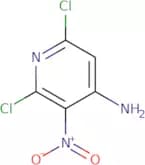
CAS:<p>4-Amino-2,6-dichloro-3-nitropyridine is a synthetic compound that inhibits tyrosine kinases. It is an isomer of 2,6-Dichloropyridine and has been shown to inhibit the growth of lymphoma cells in vitro. 4-Amino-2,6-dichloro-3-nitropyridine has three substitutions on the pyridine ring as compared to 2,6-Dichloropyridine. The substitutions are thought to be responsible for the increased hydrophilic properties of this compound. This may lead to increased cellular uptake and better bioavailability.</p>Formula:C5H3Cl2N3O2Purezza:Min. 95%Colore e forma:Slightly Yellow PowderPeso molecolare:208 g/mol2-Acetylthiazole
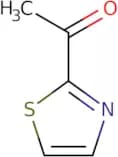
CAS:<p>2-Acetylthiazole is a heterocyclic compound that is a derivative of thiazole. It is used in the production of dyes, pharmaceuticals and other organic compounds. 2-Acetylthiazole can be synthesized by reacting glyoxal with an acid chloride or carboxylic acid to form the corresponding sulfonyl chloride, which can then be reacted with sodium acetate in ethanol to produce 2-acetylthiazole. This reaction was found to proceed efficiently at room temperature and without the need for strong acids or bases. The product has been shown to have anticancer activity in model systems, with carbonyl groups being suggested as a possible mechanism of action.<br>2-Acetylthiazole is also an intermediate in the synthesis of many other organic compounds and has been shown to react with d-arabinose, producing d-ribofuranose and water.</p>Formula:C5H5NOSPurezza:Min. 95%Colore e forma:Colorless Clear LiquidPeso molecolare:127.17 g/mol3-Hydroxy-2-pyridine carboxylic acid
CAS:<p>3-Hydroxy-2-pyridine carboxylic acid is a picolinic acid derivative. It is a ligand for the P2 site of ATP synthase, which it binds to by hydrogen bonding interactions. 3-Hydroxy-2-pyridine carboxylic acid has been shown to be an inhibitor of human immunoglobulin production. 3-Hydroxy-2-pyridine carboxylic acid has also been shown to inhibit matrix metalloproteinases (MMPs) and collagenases, which are enzymes that degrade extracellular matrix proteins in the tumor microenvironment.</p>Formula:C6H5NO3Purezza:Min. 95%Colore e forma:Off-White PowderPeso molecolare:139.11 g/mol2-Amino-5(6)-benzoylbenzimidazole
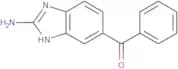
CAS:<p>2-Amino-5(6)-benzoylbenzimidazole is an antifilarial and anthelmintic drug that belongs to the benzimidazole class. It is used for the treatment of filarial infections in humans, including lymphatic filariasis, which is caused by worms transmitted by mosquitoes. 2-Amino-5(6)-benzoylbenzimidazole has low bioavailability due to its poor water solubility. The drug can be administered orally or topically and is metabolized in the liver. The metabolites are excreted in urine as glucuronides and sulfates.</p>Formula:C14H11N3OPurezza:Min. 95%Colore e forma:PowderPeso molecolare:237.26 g/mol2-Amino-5-methylthiazole
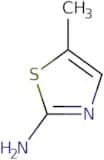
CAS:<p>2-Amino-5-methylthiazole is a nonsteroidal anti-inflammatory drug (NSAID) that inhibits the enzyme cyclooxygenase. It has been shown to inhibit the activity of two different types of cyclooxygenase, COX-1 and COX-2, in vitro. 2-Amino-5-methylthiazole also has shown antimicrobial activity against Escherichia coli and Staphylococcus aureus. This compound is stable in high salt concentrations and at high pH values. 2-Amino-5-methylthiazole does not contain any nitrogen atoms but does have an electron rich aromatic ring and a methyl group on the side chain. The redox potential for this molecule is -0.16 V vs SHE at pH 7.4, making it more likely to be oxidized than reduced, which may explain its low reactivity with hydrogen peroxide and its ability to be stable in</p>Formula:C4H6N2SPurezza:Min. 95%Colore e forma:Off-White PowderPeso molecolare:114.17 g/mol2-Amino-5-ureido-4,6-pyrimidinedione
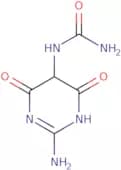
CAS:<p>2-Amino-5-ureido-4,6-pyrimidinedione is a chemical building block that can be used in research, as a reagent for the synthesis of other compounds, or as an intermediate. It is also a versatile building block and reaction component. 2-Amino-5-ureido-4,6-pyrimidinedione is a high purity compound with a CAS number of 21823-25-6.</p>Formula:C5H7N5O3Purezza:Min. 95%Colore e forma:PowderPeso molecolare:185.14 g/mol5-Amino-6-(methylamino)quinoline
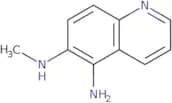
CAS:<p>5-Amino-6-(methylamino)quinoline is a molecule that inhibits the enzymatic activity of tyrosine phosphatases and has been shown to inhibit the growth of typhimurium ta98, which is resistant to quinoxaline. It has also been shown to be mutagenic in vitro. 5-Amino-6-(methylamino)quinoline has an imidazole ring and is synthesized from 2-methylbenzothiazole and N,N'-dimethylethylenediamine. The synthesis of this compound takes place in two steps with the first step being an oxidative cyclization followed by a reductive amination.</p>Formula:C10H11N3Purezza:Min. 95%Colore e forma:Green Brown To Brown SolidPeso molecolare:173.21 g/mol3-Hexylthiophene
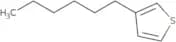
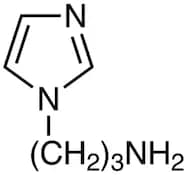
CAS:<p>Starting reagent for synthesis of P3HT; nanofibres used for preparation of OPTs</p>Formula:C10H16SPurezza:Min. 95%Colore e forma:Colorless Clear LiquidPeso molecolare:168.3 g/mol1-(3-Aminopropyl)imidazole
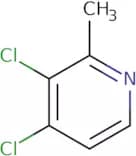
CAS:Formula:C6H11N3Purezza:>97.0%(GC)Colore e forma:Colorless to Almost colorless clear liquidPeso molecolare:125.183,4-Dichloro-2-methylpyridine
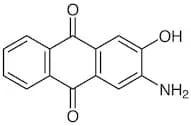
CAS:<p>3,4-Dichloro-2-methylpyridine is a novel sulfur analogue that has been shown to have significant antitumor activity in breast cancer xenografts. 3,4-Dichloro-2-methylpyridine inhibits the growth of tumor cells by binding to their DNA and inhibiting RNA synthesis. It also inhibits the production of reactive oxygen species and stabilizes cell membranes. 3,4-Dichloro-2-methylpyridine has been found to be active against human tumors in vivo and is a potential anticancer drug for human use.</p>Formula:C6H5Cl2NPurezza:Min. 95%Colore e forma:PowderPeso molecolare:162.02 g/mol2-Amino-3-hydroxyanthraquinone
CAS:Formula:C14H9NO3Purezza:>98.0%(T)Colore e forma:Orange to Amber to Dark red powder to crystalPeso molecolare:239.23(3R)-(-)-1-Benzyl-3-aminopyrrolidine
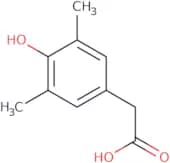
CAS:Formula:C11H16N2Purezza:>98.0%(GC)(T)Colore e forma:Colorless to Almost colorless clear liquidPeso molecolare:176.263,5-Dimethyl-4-hydroxyphenylacetic acid
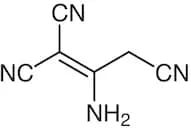
CAS:<p>3,5-Dimethyl-4-hydroxyphenylacetic acid (DHPA) is a fine chemical that can be used as a building block in the production of other chemicals. It is a useful intermediate in organic synthesis and has been used to produce pharmaceuticals, fragrances, and dyes. DHPA is also an important reagent for research purposes and can be used to synthesize other compounds.</p>Formula:C10H12O3Purezza:Min. 95%Colore e forma:Off-White PowderPeso molecolare:180.2 g/mol2-Amino-1,1,3-tricyano-1-propene
CAS:Formula:C6H4N4Purezza:>98.0%(T)Colore e forma:White to Gray to Brown powder to crystalPeso molecolare:132.13DL-Leucine
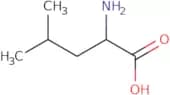
CAS:<p>DL-Leucine is an amino acid that is needed for the formation of proteins. It is also able to inhibit the activity of enzymes by hydrolyzing them. DL-Leucine has been shown to be a potent inhibitor of lysine hydrolases and can be used as an additive in the manufacture of animal feed. DL-Leucine has been shown to be stable in many environments, including those containing chlorine, hydrochloric acid, n-dimethyl formamide, and x-ray crystallography. The enantiomers of DL-leucine have different chemical stability; one form is more stable than the other in acidic environments.</p>Formula:C6H13NO2Purezza:Min. 95%Colore e forma:PowderPeso molecolare:131.17 g/mol3-Methoxy-5-(trifluoromethyl)aniline
CAS:Formula:C8H8F3NOPurezza:>98.0%(GC)(T)Colore e forma:Light yellow to Brown to Dark red powder to crystalPeso molecolare:191.156-Methyl-4-chromanone
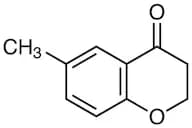
CAS:Formula:C10H10O2Purezza:>98.0%(GC)Colore e forma:White to Almost white powder to lumpPeso molecolare:162.19Sodium Dodecylbenzenesulfonate (soft type) (mixture)
CAS:<p>Sodium dodecylbenzenesulfonate is a surfactant that has been used in a wide variety of industrial and research applications. Sodium dodecylbenzenesulfonate is not considered to be toxicologically harmful, but it can produce byproducts that are hazardous. These byproducts are controlled by regulatory authorities and are removed during the manufacturing process. It can also absorb other chemicals, such as carbamates and silicone oils, from the atmosphere. The focus of its use is as an absorbent for water-based paints.</p>Formula:C18H29NaO3SPurezza:Min. 95%Colore e forma:PowderPeso molecolare:348.48 g/molMethyl 2-(Chloromethyl)benzoate
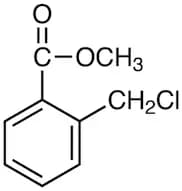
CAS:Formula:C9H9ClO2Purezza:>97.0%(GC)Colore e forma:Light yellow to Amber to Dark green clear liquidPeso molecolare:184.62