Building Blocks
Questa sezione contiene prodotti fondamentali per la sintesi di composti organici e biologici. Building blocks sono i materiali di partenza essenziali utilizzati per costruire molecole complesse attraverso varie reazioni chimiche. Svolgono un ruolo critico nella scoperta di farmaci, nella scienza dei materiali e nella ricerca chimica. Presso CymitQuimica, offriamo una gamma diversificata di building blocks di alta qualità per supportare le tue ricerche innovative e progetti industriali, assicurandoti di avere i componenti essenziali per una sintesi di successo.
Sottocategorie di "Building Blocks"
- Acidi boronici e derivati dell'acido boronico(5.756 prodotti)
- Building Blocks Chirali(1.242 prodotti)
- Building Blocks Idrocarburici(6.093 prodotti)
- Building Blocks organici(60.519 prodotti)
Trovati 195533 prodotti di "Building Blocks"
Ordinare per
Purezza (%)
0
100
|
0
|
50
|
90
|
95
|
100
Fmoc-Thr(tBu)-Ser(Psi(Me,Me)pro)-OBzl
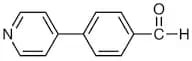
<p>Fmoc-Thr(tBu)-Ser(Psi(Me,Me)pro)-OBzl is a high quality, research chemical that is used as an intermediate in the synthesis of complex compounds. It is a useful building block and can be used to make speciality chemicals. This reagent has many uses including being a useful scaffold for organic synthesis and a reaction component in the production of other fine chemicals. Fmoc-Thr(tBu)-Ser(Psi(Me,Me)pro)-OBzl has CAS No. 7791-02-8 and may be found in the following chemical structure:</p>Formula:C36H42N2O7Purezza:Min. 95%Colore e forma:PowderPeso molecolare:614.73 g/mol4-(4-Pyridyl)benzaldehyde
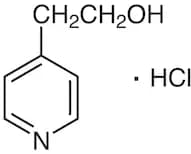
CAS:Formula:C12H9NOPurezza:>98.0%(GC)Colore e forma:White to Orange to Green powder to crystalPeso molecolare:183.214-Pyridineethanol Hydrochloride
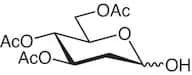
CAS:Formula:C7H9NO·HClPurezza:>98.0%(T)(HPLC)Colore e forma:White to Almost white powder to crystalPeso molecolare:159.613,4,6-Tri-O-acetyl-2-deoxy-D-glucopyranose
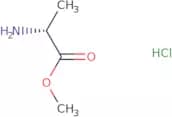
CAS:Formula:C12H18O8Purezza:>98.0%(GC)Colore e forma:White to Almost white powder to crystalPeso molecolare:290.27D-Alanine methyl ester HCl
CAS:<p>D-Alanine methyl ester HCl is a diamide with antimycobacterial activity. It was synthesized by the reaction of D-alanine and methyl acrylate in the presence of methanesulfonic acid. The chiral compound was obtained as a racemic mixture. Optical properties are not reported.</p>Formula:C4H9NO2HCIPurezza:Min. 95%Colore e forma:White To Off-White SolidPeso molecolare:243.04 g/mol(1S,2R,5S)-(+)-Menthol
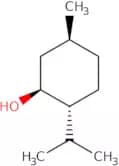
CAS:<p>(1S,2R,5S)-(+)-Menthol is a pharmacological agent that has been shown to have anti-inflammatory activity. It inhibits prostaglandin synthesis by competitively blocking cyclooxygenase-1 and cyclooxygenase-2. (1S,2R,5S)-(+)-Menthol has also been shown to have x-ray crystal structures of the complex with sodium citrate in solution. These structures provide information about how menthol reacts with sodium citrate and water vapor for its reaction mechanism. The thermodynamic data for this process are also available. Menthol was found to be most effective when used in cell lysis experiments at a concentration of 1.0 mM and at room temperature. This compound is a white crystalline solid that is soluble in ethanol or chloroform but insoluble in water.</p>Formula:C10H20OPurezza:Min. 98%Colore e forma:White PowderPeso molecolare:156.27 g/mol2-Phenylcyclohexanone
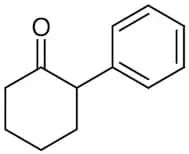
CAS:Formula:C12H14OPurezza:>98.0%(GC)Colore e forma:White to Orange to Green powder to crystalPeso molecolare:174.242-Mercapto-1-methylimidazole
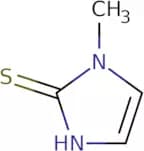
CAS:<p>Inhibitor of thyroid peroxidase; treatment for hyperthyroidism</p>Formula:C4H6N2SPurezza:Min. 95%Colore e forma:PowderPeso molecolare:114.17 g/mol2-Fluoro-4-methoxyaniline
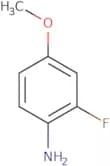
CAS:<p>2-Fluoro-4-methoxyaniline is a non-selective amide that forms in the presence of amines, aminobutyraldehyde, and fluorine. 2-Fluoro-4-methoxyaniline is a product of the industrial process for synthesizing acetylated products through the use of dichloroketene as an acetylating agent. This chemical compound has been used to produce five-membered heterocycles that are used in the manufacture of pharmaceuticals. Mechanistic studies have shown that this chemical reacts with oxygen, water, and halogens to form a variety of products.</p>Formula:C7H8FNOPurezza:Min. 95%Colore e forma:Yellow PowderPeso molecolare:141.14 g/mol2-Fluoro-4-iodo-5-methylpyridine
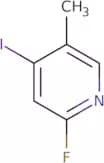
CAS:<p>2-Fluoro-4-iodo-5-methylpyridine is a versatile building block that can be used as a reagent or reaction component. It is an intermediate for the production of pharmaceuticals, pesticides, and other organic compounds. 2-Fluoro-4-iodo-5-methylpyridine is also used as a speciality chemical in research laboratories. 2-Fluoro-4-iodo-5-methylpyridine can be used as a building block to produce complex compounds with various functionalities.</p>Formula:C6H5FINPurezza:Min. 95%Colore e forma:White PowderPeso molecolare:237.01 g/mol4-Methoxybenzenesulfonyl chloride
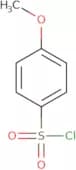
CAS:<p>4-Methoxybenzenesulfonyl chloride is a water-soluble and colorless solid that is used in the treatment of wastewater. It binds to hydroxyl groups and copper complexes, which are present in high concentrations in wastewater. 4-Methoxybenzenesulfonyl chloride can be used as an analytical reagent for determining binding constants, as well as for the separation of amyloid proteins. This compound has been shown to have anti-inflammatory properties by inhibiting the production of pro-inflammatory cytokines such as tumor necrosis factor (TNF) and interleukin (IL)-1β. 4-Methoxybenzenesulfonyl chloride also has activity against certain cancers such as L1210 leukemia cells in mice and diphenyl ethers.</p>Formula:C7H7ClO3SPurezza:Min. 97 Area-%Colore e forma:Brown Off-White PowderPeso molecolare:206.65 g/mol2,6-Dibromobenzoic acid
CAS:<p>2,6-Dibromobenzoic acid is a synthetic molecule that can be used to synthesize pyrrole derivatives in the presence of a base. It has been shown to react with a number of molecules, including halogens and chlorides. The active site of 2,6-dibromobenzoic acid is its bromine atom. The steric interactions between the 2,6-dibromobenzoic acid molecule and the substrate are strong enough to prevent other molecules from accessing the active site. Chlorides and diphenylmethane can also bind to 2,6-dibromobenzoic acid due to their similar properties. This molecule has also been shown to interact with aluminium and solvents such as ethanol or acetone.</p>Formula:C7H4Br2O2Purezza:Min. 95%Colore e forma:White PowderPeso molecolare:279.91 g/mol4-Phenyl-2-butanol
CAS:<p>4-Phenyl-2-butanol is a monoclonal antibody that is used in the treatment of human immunodeficiency virus (HIV). It is an aromatic hydrocarbon that binds to amines and reacts with malonic acid, which has monophenolase activity. The resulting product, dimethyl malonate, reacts with unsaturated ketones to form diphenols. The reaction solution also contains chloride yields, which are generated by the conversion of amines to their corresponding chlorides. 4-Phenyl-2-butanol has been shown to have enantiopure properties for the synthesis of fatty acids and other compounds containing unsaturated ketones.</p>Formula:C10H14OPurezza:Min. 95%Colore e forma:Clear Colourless LiquidPeso molecolare:150.22 g/mol3,3'-Diindolymethane (synthetic)
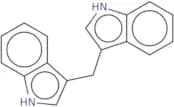
CAS:<p>3,3'-Diindolylmethane, also known as DIM, is natural compound derived from indole. In a recent study, DIM was evaluated as a potential agent for preventing biofilm formation by Streptococcus mutans, which is a major cause of dental caries. The researchers found that DIM significantly inhibited biofilm formation (by 92%) and reduced the production of extracellular polymeric substances (EPS), which are important for biofilm stability particularly under acidic conditions. The study suggests that 3,3'-diindolylmethane has anti-biofilm and anti-virulence properties against S. mutans, and it is a potential candidate for reducing biofilm formation and preventing dental caries.<br>It has been also reported that 3,3'-diindolymethane can act as a chemopreventive agent. DIM has estrogenic effects without interacting with the binding domain of the estrogen receptors. This study found that DIM could suppress cell growth and disrupt cell cycle progression of young adult mouse colonocytes (YAMCs) in vitro. Moreover, DIM altered gene expression associated with apoptosis and cell proliferation, and it induced transcriptional activity of the estrogen receptor (ER), which was inhibited by an ER antagonist.</p>Formula:C17H14N2Purezza:Min. 95%Colore e forma:PowderPeso molecolare:246.31 g/mol2,7-Dibromo-9-(2-ethylhexyl)carbazole
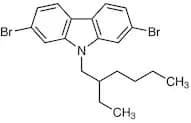
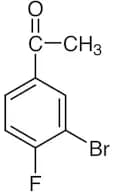
CAS:Formula:C20H23Br2NPurezza:>98.0%(GC)Colore e forma:White to Orange to Green powder to crystalPeso molecolare:437.223'-Bromo-4'-fluoroacetophenone
CAS:Formula:C8H6BrFOPurezza:>96.0%(GC)Colore e forma:White to Orange to Green powder to crystalPeso molecolare:217.044,4'-Dinonyl-2,2'-bithiazole
CAS:Formula:C24H40N2S2Purezza:>98.0%(GC)Colore e forma:White to Yellow to Green powder to crystalPeso molecolare:420.722-Methoxy-3-methylbenzaldehyde
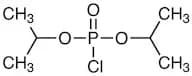
CAS:<p>2-Methoxy-3-methylbenzaldehyde is a natural product that belongs to the class of methoxymethyl. It has been shown to be synthesized by permethylation of methoxy, which is an important intermediate in the synthesis of many naturally occurring compounds such as terpenes and sterols. This compound exists in two enantiomers that can be separated chromatographically. The technique used for this separation is known as equivalence. The elution time for each enantiomer is different, and its spectroscopic properties are also different, making it possible to separate them by these means.</p>Formula:C9H10O2Purezza:Min. 95%Colore e forma:PowderPeso molecolare:150.17 g/molDiisopropyl Phosphorochloridate
CAS:Formula:C6H14ClO3PPurezza:>97.0%(GC)(T)Colore e forma:Colorless to Almost colorless clear liquidPeso molecolare:200.606-Hydroxy-2-naphtoic acid
CAS:<p>6-Hydroxy-2-naphtoic acid is an amide that is hydrolyzed to 6-hydroxybenzoic acid and formamide. It has been used as a viscosity modifier in the synthesis of polymers. 6-Hydroxy-2-naphtoic acid can be produced by a borane-tetrahydrofuran complex reaction with naphthalene. This reaction also produces p-hydroxybenzoic acid, which can then be converted to hydroxybenzoic acid with hydrochloric acid. The structural analysis of this compound has been performed using fluorescence probes and an inorganic acid.</p>Formula:C11H8O3Purezza:Min. 95%Colore e forma:Yellow PowderPeso molecolare:188.18 g/mol