Building Blocks
Questa sezione contiene prodotti fondamentali per la sintesi di composti organici e biologici. Building blocks sono i materiali di partenza essenziali utilizzati per costruire molecole complesse attraverso varie reazioni chimiche. Svolgono un ruolo critico nella scoperta di farmaci, nella scienza dei materiali e nella ricerca chimica. Presso CymitQuimica, offriamo una gamma diversificata di building blocks di alta qualità per supportare le tue ricerche innovative e progetti industriali, assicurandoti di avere i componenti essenziali per una sintesi di successo.
Sottocategorie di "Building Blocks"
- Acidi boronici e derivati dell'acido boronico(5.756 prodotti)
- Building Blocks Chirali(1.242 prodotti)
- Building Blocks Idrocarburici(6.093 prodotti)
- Building Blocks organici(60.529 prodotti)
Trovati 195534 prodotti di "Building Blocks"
Ordinare per
Purezza (%)
0
100
|
0
|
50
|
90
|
95
|
100
2-Amino-3-bromopyrazine
CAS:<p>2-Amino-3-bromopyrazine is a molecule that belongs to the class of pyrazoles. It has been synthesized and optimised for its diffraction properties. The active conformation of 2-amino-3-bromopyrazine has been determined by xanthate methylation and hydrobromide formation. This molecule has been synthesised using a variety of different methods, including an intramolecular hydrogen transfer reaction with methyl derivatives, as well as the use of xanthates. The physicochemical properties of this molecule have also been studied, yielding some interesting results.</p>Formula:C4H4BrN3Purezza:Min. 95%Colore e forma:PowderPeso molecolare:174.01 g/mol2-(Acetylamino)-1,3-benzothiazole-6-carboxylic acid
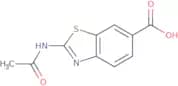
CAS:<p>2-(Acetylamino)-1,3-benzothiazole-6-carboxylic acid is a chemical intermediate that is used in organic synthesis as a reagent for the preparation of other compounds. It is a versatile building block and useful scaffold for the preparation of complex compounds. This compound can be used as a reaction component for research chemicals and speciality chemicals.</p>Formula:C10H8N2O3SPurezza:Min. 95%Colore e forma:PowderPeso molecolare:236.25 g/mol6-Amino-5-bromopyrimidine-2,4(1H,3H)-dione
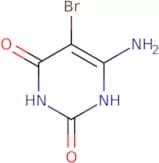
CAS:<p>6-Amino-5-bromopyrimidine-2,4(1H,3H)-dione (6ABPD) is a purine derivative that functions as an inhibitor of phosphorylase kinase. It has been shown to inhibit tumor growth in vivo and in vitro and is used as a therapeutic agent for the treatment of cancer. 6ABPD inhibits the production of phosphorylase kinase by binding to the enzyme's active site with noncompetitive inhibition. Inhibition of phosphorylase kinase leads to a decrease in the levels of ATP and thus decreases the availability of substrates for tumor cell growth and proliferation. 6ABPD also binds to thymidine kinase and inhibits its activity, which may account for some of its antitumor effects.</p>Formula:C4H4BrN3O2Purezza:Min. 95%Colore e forma:PowderPeso molecolare:206 g/mol2-Amino-3-methoxybenzoic acid
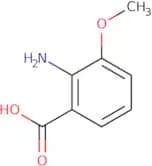
CAS:<p>2-Amino-3-methoxybenzoic acid is a chemical compound that is found in humans. It has antioxidative activity, and it inhibits the conversion of picolinic acid to kynurenine in vitro. 2-Amino-3-methoxybenzoic acid also significantly inhibits the formation of 3-hydroxyanthranilic acid and xanthurenic acid from anthranilic acid. This inhibition may be due to its ability to form hydrogen bonds with the substrate or competitive inhibition of enzymes such as quinoline reductase.<br>2-Amino-3-methoxybenzoic acid has been shown to have significant inhibitory effects on thermodynamic parameters for hydroxy group addition reactions involving quinoline derivatives, which may be due to its ability to bind covalently with these substrates.</p>Formula:C8H9NO3Purezza:Min. 95%Colore e forma:PowderPeso molecolare:167.16 g/mol4-Amino-2,6-dichloro-3-nitropyridine
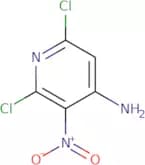
CAS:<p>4-Amino-2,6-dichloro-3-nitropyridine is a synthetic compound that inhibits tyrosine kinases. It is an isomer of 2,6-Dichloropyridine and has been shown to inhibit the growth of lymphoma cells in vitro. 4-Amino-2,6-dichloro-3-nitropyridine has three substitutions on the pyridine ring as compared to 2,6-Dichloropyridine. The substitutions are thought to be responsible for the increased hydrophilic properties of this compound. This may lead to increased cellular uptake and better bioavailability.</p>Formula:C5H3Cl2N3O2Purezza:Min. 95%Colore e forma:Slightly Yellow PowderPeso molecolare:208 g/mol2-Acetylthiazole
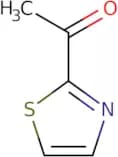
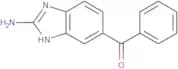
CAS:<p>2-Acetylthiazole is a heterocyclic compound that is a derivative of thiazole. It is used in the production of dyes, pharmaceuticals and other organic compounds. 2-Acetylthiazole can be synthesized by reacting glyoxal with an acid chloride or carboxylic acid to form the corresponding sulfonyl chloride, which can then be reacted with sodium acetate in ethanol to produce 2-acetylthiazole. This reaction was found to proceed efficiently at room temperature and without the need for strong acids or bases. The product has been shown to have anticancer activity in model systems, with carbonyl groups being suggested as a possible mechanism of action.<br>2-Acetylthiazole is also an intermediate in the synthesis of many other organic compounds and has been shown to react with d-arabinose, producing d-ribofuranose and water.</p>Formula:C5H5NOSPurezza:Min. 95%Colore e forma:Colorless Clear LiquidPeso molecolare:127.17 g/mol2-Amino-5(6)-benzoylbenzimidazole
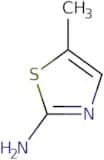
CAS:<p>2-Amino-5(6)-benzoylbenzimidazole is an antifilarial and anthelmintic drug that belongs to the benzimidazole class. It is used for the treatment of filarial infections in humans, including lymphatic filariasis, which is caused by worms transmitted by mosquitoes. 2-Amino-5(6)-benzoylbenzimidazole has low bioavailability due to its poor water solubility. The drug can be administered orally or topically and is metabolized in the liver. The metabolites are excreted in urine as glucuronides and sulfates.</p>Formula:C14H11N3OPurezza:Min. 95%Colore e forma:PowderPeso molecolare:237.26 g/mol2-Amino-5-methylthiazole
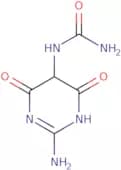
CAS:<p>2-Amino-5-methylthiazole is a nonsteroidal anti-inflammatory drug (NSAID) that inhibits the enzyme cyclooxygenase. It has been shown to inhibit the activity of two different types of cyclooxygenase, COX-1 and COX-2, in vitro. 2-Amino-5-methylthiazole also has shown antimicrobial activity against Escherichia coli and Staphylococcus aureus. This compound is stable in high salt concentrations and at high pH values. 2-Amino-5-methylthiazole does not contain any nitrogen atoms but does have an electron rich aromatic ring and a methyl group on the side chain. The redox potential for this molecule is -0.16 V vs SHE at pH 7.4, making it more likely to be oxidized than reduced, which may explain its low reactivity with hydrogen peroxide and its ability to be stable in</p>Formula:C4H6N2SPurezza:Min. 95%Colore e forma:Off-White PowderPeso molecolare:114.17 g/mol2-Amino-5-ureido-4,6-pyrimidinedione
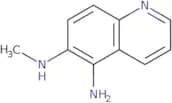
CAS:<p>2-Amino-5-ureido-4,6-pyrimidinedione is a chemical building block that can be used in research, as a reagent for the synthesis of other compounds, or as an intermediate. It is also a versatile building block and reaction component. 2-Amino-5-ureido-4,6-pyrimidinedione is a high purity compound with a CAS number of 21823-25-6.</p>Formula:C5H7N5O3Purezza:Min. 95%Colore e forma:PowderPeso molecolare:185.14 g/mol5-Amino-6-(methylamino)quinoline
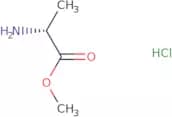
CAS:<p>5-Amino-6-(methylamino)quinoline is a molecule that inhibits the enzymatic activity of tyrosine phosphatases and has been shown to inhibit the growth of typhimurium ta98, which is resistant to quinoxaline. It has also been shown to be mutagenic in vitro. 5-Amino-6-(methylamino)quinoline has an imidazole ring and is synthesized from 2-methylbenzothiazole and N,N'-dimethylethylenediamine. The synthesis of this compound takes place in two steps with the first step being an oxidative cyclization followed by a reductive amination.</p>Formula:C10H11N3Purezza:Min. 95%Colore e forma:Green Brown To Brown SolidPeso molecolare:173.21 g/molD-Alanine methyl ester HCl
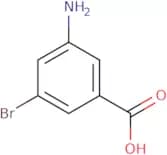
CAS:<p>D-Alanine methyl ester HCl is a diamide with antimycobacterial activity. It was synthesized by the reaction of D-alanine and methyl acrylate in the presence of methanesulfonic acid. The chiral compound was obtained as a racemic mixture. Optical properties are not reported.</p>Formula:C4H9NO2HCIPurezza:Min. 95%Colore e forma:White To Off-White SolidPeso molecolare:243.04 g/mol3-Amino-5-bromobenzoic acid
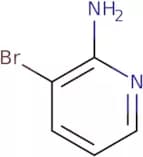
CAS:<p>3-Amino-5-bromobenzoic acid is a synthetic, water soluble anti-inflammatory agent. It is cytotoxic to macrophages in vitro and has significant efficacy in vivo. Its mechanism of action is to inhibit the synthesis of nucleotides in the cell. 3-Amino-5-bromobenzoic acid also inhibits inflammation by inhibiting prostaglandin synthesis and has been shown to be effective against seborrheic dermatitis. This drug has pharmacokinetic properties that are favourable for oral administration and is rapidly absorbed from the gastrointestinal tract with a half life of 2 hours. The drug is eliminated through the kidneys, with an elimination half life of 6 hours.</p>Formula:C7H6BrNO2Purezza:Min. 95%Colore e forma:PowderPeso molecolare:216.03 g/mol2-Amino-3-bromopyridine
CAS:<p>2-Amino-3-bromopyridine (2ABP) is a nucleoside analogue that is used as a photosensitizer for photodynamic therapy. It has been shown to be effective against the fungus Cryptococcus neoformans, which can cause cryptococcal meningitis. 2ABP is unstable when exposed to light and requires an acidic environment to maintain stability. It binds to the ribose ring of levulinate, forming hydrogen bonding interactions with the hydroxide group on C5 and C8. 2ABP has been shown to have high transport properties in cells. This drug also has photophysical properties that are sensitive to pH, requiring it to be dissolved in a solution of trifluoroacetic acid or acetonitrile at a neutral pH. The 2ABP molecule has been characterized by nuclear magnetic resonance spectroscopy (NMR). Aqueous solutions of sodium hydroxide have been used successfully for the preparation</p>Formula:C5H5BrN2Purezza:Min. 95%Colore e forma:White PowderPeso molecolare:173.01 g/mol2-Amino-5-(trifluoromethyl)benzoic acid methyl ester
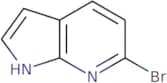
CAS:<p>2-Amino-5-(trifluoromethyl)benzoic acid methyl ester is a fine chemical that can be used in research and development. It is an intermediate for the synthesis of other compounds, such as pharmaceuticals and pesticides. This compound has a wide range of uses in various chemical reactions, including as a building block or reaction component.</p>Formula:C9H8F3NO2Purezza:Min. 95%Colore e forma:PowderPeso molecolare:219.16 g/mol6-Bromo-7-azaindole
CAS:<p>6-Bromo-7-azaindole is a homologous molecule. It is an electron deficient compound with a piperidine moiety at the 6 position and a nitrogen atom at the 7 position. The nitrogen atom substitutes for an oxygen atom, making this molecule reactive. The electron deficient nature of this molecule makes it suitable for use in transistors and other physicochemical devices. 6-Bromo-7-azaindole has been shown to be effective against carcinoma cells in vitro, as well as to inhibit tumor growth in vivo. This drug also causes homologous recombination by interacting with DNA in mammalian cells. 6-Bromo-7-azaindole binds to DNA, forming a covalent bond with the guanine base of DNA through the nitrogen atom, which is electron deficient.</p>Formula:C7H5BrN2Purezza:Min. 95%Colore e forma:Off-White To Beige To Yellow SolidPeso molecolare:197.03 g/mol7-Bromobenzo[b]thiophene-2-carboxylic acid
CAS:<p>7-Bromobenzo[b]thiophene-2-carboxylic acid is a fine chemical with CAS No. 19075-59-3. It is a useful building block for research chemicals, reagents, and speciality chemicals. It has high quality and can be used as a versatile building block for reactions. 7-Bromobenzo[b]thiophene-2-carboxylic acid can also be used as an intermediate or scaffold in synthesis of complex compounds.</p>Formula:C9H5BrO2SPurezza:Min. 95%Colore e forma:White PowderPeso molecolare:257.1 g/molBenzo[d]isoxazol-3-yl-methanesulfonyl chloride
CAS:<p>Benzo[d]isoxazol-3-yl-methanesulfonyl chloride is a synthetic intermediate that is used in the synthesis of zonisamide. This compound has a flow rate of 1.0 mL/min, monitored at 215 nm, and reproducible within 3% or 10%. It is manufactured to pharmaceutical standards and has impurities below 0.1%. Benzo[d]isoxazol-3-yl-methanesulfonyl chloride has been validated for use with liquid chromatography, and the elution time for this compound is 7 minutes. The chromatographic method for this substance consists of an acetonitrile and hydrogen phosphate mobile phase. Disodium hydrogen phosphate (DSP) can be used as an eluent modifier to reduce peak tailing and improve resolution.</p>Formula:C8H6ClNO3SPurezza:Min. 95%Colore e forma:Clear LiquidPeso molecolare:231.66 g/mol2-Butyl-4-chloro-1H-imidazole-5-carboxaldehyde
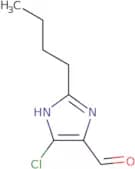
CAS:<p>Glyoxal is a chemical compound that has shown to have bactericidal activity against human pathogens such as Mycobacterium tuberculosis, Helicobacter pylori, and Staphylococcus aureus. It is used in the synthesis of heterocyclic amines and can be found as an impurity in imidazole derivatives. Glyoxal is a broad-spectrum antimicrobial that has been shown to inhibit the growth of fungi and bacteria by reacting with functional groups on the microorganisms' cell walls. It reacts with bacterial cell walls by forming an intermediate molecule, which reacts with other molecules present in the microorganism's environment to form carbon dioxide, water, and glyoxal. The reaction time for glyoxal depends on temperature; higher temperatures will result in faster reactions. Techniques used to synthesize glyoxal include dehydration of oximes or by reaction with phosphorus oxychloride.</p>Formula:C8H11ClN2OPurezza:Min. 95%Colore e forma:PowderPeso molecolare:186.64 g/molBoc-N-Ethylglycine
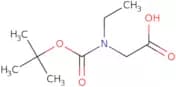
CAS:<p>Building block</p>Formula:C9H17NO4Purezza:Min. 95%Colore e forma:White PowderPeso molecolare:203.24 g/molBoc-Phe-Pro-OH
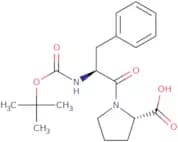
CAS:<p>Boc-Phe-Pro-OH is an opioid receptor agonist. It binds to the δ opioid receptors and activates them, which leads to analgesic effects. Boc-Phe-Pro-OH also has antibacterial properties and can be used for the treatment of bacterial infections. This compound may also have antiinflammatory properties that are mediated by its ability to inhibit prostaglandin synthesis. Boc-Phe-Pro-OH has been shown to possess a high affinity for the μ opioid receptor, but does not activate this receptor subtype.</p>Formula:C19H26N2O5Purezza:Min. 95%Colore e forma:White To Off-White SolidPeso molecolare:362.42 g/mol



![7-Bromobenzo[b]thiophene-2-carboxylic acid](/_next/image/?url=https%3A%2Fstatic.cymitquimica.com%2Fproducts%2F3D%2Fthumb-webp%2FFB139377.webp&w=3840&q=75)
![Benzo[d]isoxazol-3-yl-methanesulfonyl chloride](/_next/image/?url=https%3A%2Fstatic.cymitquimica.com%2Fproducts%2F3D%2Fthumb-webp%2FFB18205.webp&w=3840&q=75)