Building Blocks
Sottocategorie di "Building Blocks"
- Acidi boronici e derivati dell'acido boronico(5.784 prodotti)
- Building Blocks Chirali(1.244 prodotti)
- Building Blocks Idrocarburici(6.105 prodotti)
- Building Blocks organici(61.076 prodotti)
Trovati 205454 prodotti di "Building Blocks"
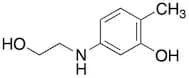
5-((2-Hydroxyethyl)amino)-2-methylphenol
CAS:Prodotto controllatoApplications 5-((2-Hydroxyethyl)amino)-2-methylphenol (cas# 55302-96-0) is a useful research chemical.
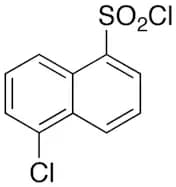
Formula:C9H13NO2Colore e forma:NeatPeso molecolare:167.25-Chloronaphthalene-1-sulfonyl Chloride
CAS:Prodotto controllatoApplications 5-Chloronaphthalene-1-sulfonyl Chloride (cas# 6291-07-2) is a compound useful in organic synthesis.
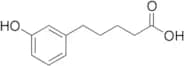
Formula:C10H6Cl2O2SColore e forma:NeatPeso molecolare:261.125-(3-hydroxyphenyl)pentanoic Acid
CAS:Applications 5-(3-hydroxyphenyl)pentanoic acid (cas# 31129-95-0) is a useful research chemical.
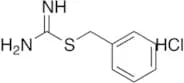
Formula:C11H14O3Colore e forma:NeatPeso molecolare:194.232-Benzyl-2-thiopseudourea Hydrochloride
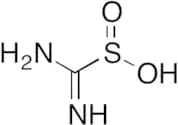
CAS:Prodotto controllatoFormula:C8H10N2S·HClColore e forma:NeatPeso molecolare:202.7Formamidinesulfinic Acid
CAS:Prodotto controllatoApplications Formamidine Sulfuric Acid is a reagent used in reduction and synthesis reactions.
Not a dangerous good if item is equal to or less than 1g/ml and there is less than 100g/ml in the package
References Ma, Q. et al.: Carbon, 54, 36 (2013);Formula:CH4N2O2SColore e forma:White To Off-WhitePeso molecolare:108.122-Azido-2-deoxy-D-glucose
CAS:Applications 2-Azido-2-deoxy-D-glucose is a glucose derivative that have been used to study the substrate specificity of galactokinase.
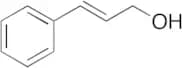
References Zou, W., et al.: Bioorg. Med. Chem. Lett., 22, 3540 (2012);Formula:C6H11N3O5Colore e forma:White PowderPeso molecolare:205.17Cinnamyl Alcohol
CAS:Prodotto controllatoStability Light Sensitive
Applications Cinnamyl alcohol is used as a fragrance ingredient and is a known a cause of allergic dermatitis in humans. Cinnamyl alcohol is also part of a group of cinnamic acid derivatives (for example: 4-Methoxycinnamic acid -M262150) that might be useful for the treatment of diabetes and obesity.
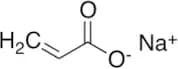
References Adisakwattana, S., et al.: J. Emzym. Inhib., 28, 1067, (2013); Basketter, D.: Acta-Derm.-Venereol., 72, 264 (1992); Letizia, C. S., et al.: Food Chem. Toxicol., 43, 837 (2005);Formula:C9H10OColore e forma:Light YellowPeso molecolare:134.18Sodium Acrylate
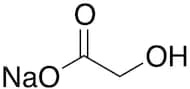
CAS:Applications Sodium Acrylate is the acid form of Acrylic Acid (A191350); which is an antibacterial agent.
References Kind, T., et al.: Anal. Biochem., 363, 185 (2007), Spratlin, J., et al.: Clin. Cancer Res., 15, 431 (2009),Formula:C3H3O2·NaColore e forma:NeatPeso molecolare:94.0448-Bromo-1-octene
CAS:Prodotto controllatoApplications 8-Bromo-1-octene, is a building block used for the synthesis of more complex pharmaceutical compounds, such as Dithienogermole (DTG) derivatives with varying alkyl chain lengths and pendant functionalities.
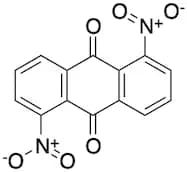
References Zong, K., et al.: Org. Lett., 15, 1032 (2013);Formula:C8H15BrColore e forma:NeatPeso molecolare:191.111,5-Dinitroanthraquinone
CAS:Prodotto controllatoApplications 1,5-Dinitroanthraquinone 97% (cas# 82-35-9) is a useful research chemical.
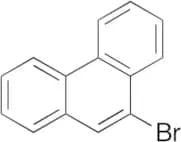
Formula:C14H6N2O6Purezza:97%Colore e forma:NeatPeso molecolare:298.219-Bromophenanthrene
CAS:Prodotto controllatoApplications 9-Bromophenanthrene is a halogenated polycyclic aromatic hydrocarbon that has been seen to have a room temperature phosphorescence that can be induced by β-cyclodextrin (β-CD) in the presence of cyclohexane; however, trace Fe(III) causes a decrease of the RTP emission.
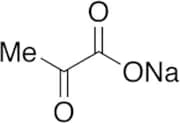
References Chai, H., et. al.: Anal. Lett., 43, 711 (2010)Formula:C14H9BrColore e forma:NeatPeso molecolare:257.13Pyruvic Acid Sodium Salt
CAS:Prodotto controllatoApplications Intermediate in sugar metabolism and in enzymatic carbohydrate degradation (alcoholic fermentation) where it is converted to acetaldehyde and CO2 by carboxylase. In muscle, Pyruvic acid (derived from glycogen) is reduced to lactic acid during exertion, which is reoxidized and partially retransformed to glycogen during rest. The liver can convert Pyruvic acid to alanine by amination. A diagnostic agent for Parkinson disease.
References Wenzel, A., et al.: J. Neurosci., 21, 53 (2001), Martinez., et al.: Development, 6, 851 (2002), Nakayama, K., et al.: J. Biochem., 146, 757 (2009), Tanaka, T., et al.: J. Pharmacol. Sci., 109, 24 (2009),Formula:C3H3O3·NaColore e forma:NeatPeso molecolare:110.04Salicylanilide
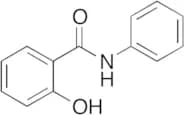
CAS:Prodotto controllatoApplications Salicylanilides are compounds of varying biological activity ranging from anti-inflammatory agents to antiviral and antimicrobial agents.
References Chen, C. et al.: J. Med. Chem., 57, 8072 (2014); Kratky, M. et al.: Bioorg. Med. Chem., 22, 4073 (2014);Formula:C13H11NO2Colore e forma:NeatPeso molecolare:213.232-Chloro-5-(chloromethyl)pyridine
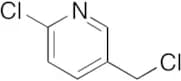
CAS:Prodotto controllatoApplications 2-Chloro-5-(chloromethyl)pyridine, is a building block used for the synthesis of various pharmaceutical compounds. It can also be used for the synthesis of new neonicotinoid compounds, having insecticidal activity.
Not a dangerous good if item is equal to or less than 1g/ml and there is less than 100g/ml in the package
References Deng, X., et al.: Jingxi Huagong Zhongjianti, 42, 23 (2012);Formula:C6H5Cl2NColore e forma:NeatPeso molecolare:162.02Cinacalcet-d4 Hydrochloride
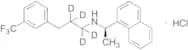
CAS:Prodotto controllatoApplications Cinacalcet-d4 Hydrochloride is a labeled analogue of Cinacalcet Hydrochloride (C441800), the (R) enantiomer of Cinacalcet which is used in clinical trial in secondary hyperparathyroidism.
References Franceschini N., et al.: Expert Opin. Invest. Drugs, 12, 1413 (2003); Block, G.A., et al.: N. Engl. J. Med. 350, 1516 (2004);Formula:C22H19D4ClF3NColore e forma:NeatPeso molecolare:397.9Pentafluorobenzoyl Chloride
CAS:Prodotto controllatoStability Moisture Sensitive
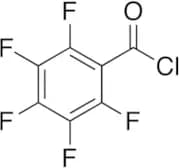
Applications Pentafluorobenzoyl Chloride is a useful analytical reagent in the derivatization amphetamines as well as other primary amines.
Not a dangerous good if item is equal to or less than 1g/ml and there is less than 100g/ml in the package
References Koster, E. et al.: Analyst, 127, 598 (2002);Formula:C7ClF5OColore e forma:NeatPeso molecolare:230.52