Building Blocks
Sottocategorie di "Building Blocks"
- Acidi boronici e derivati dell'acido boronico(5.784 prodotti)
- Building Blocks Chirali(1.242 prodotti)
- Building Blocks Idrocarburici(6.105 prodotti)
- Building Blocks organici(61.061 prodotti)
Trovati 205399 prodotti di "Building Blocks"
4-Chloro-7-azaindole
CAS:4-Chloro-7-azaindole (4CA) is a molecule that has been shown to have significant cytotoxicity against cancer cells in vitro. 4CA inhibits the growth of cancer cells by binding to their DNA, preventing the synthesis of new DNA strands and leading to cell death. The inhibitory effect of 4CA on cancer cells can be attributed to its ability to bind to nitrogen atoms in the molecule's skeleton. This binding prevents the formation of hydrogen bonds between the molecule and other molecules or proteins, which are necessary for the synthesis of new DNA strands. 4CA has been shown to be active against human ovarian carcinoma and carcinoma cell lines in vitro.Formula:C7H5N2ClPurezza:Min. 95 Area-%Colore e forma:PowderPeso molecolare:152.58 g/mol4-(Trifluoromethoxy)benzaldehyde
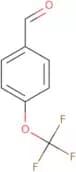
CAS:4-(Trifluoromethoxy)benzaldehyde is a chemical compound that is a substrate for tyrosinase and an inhibitor of the enzyme. It is also an anticancer compound that can be used to inhibit tumor growth by inhibiting protein synthesis. 4-(Trifluoromethoxy)benzaldehyde has been shown to have potent tyrosinase inhibition activity in vitro and in vivo, as well as binding activities with the CB2 receptor. This chemical has also been shown to inhibit virus replication, including HIV-1, and tuberculosis. 4-(Trifluoromethoxy)benzaldehyde can be used in assays to measure the potency of other compounds that are involved in tyrosinase activity or have anti-cancer properties. 4-(Trifluoromethoxy)benzaldehyde specifically binds to residues in the kinase domain of the enzyme tyrosinase, which is responsible for catalysis and regulation of this enzyme.Formula:C8H5F3O2Purezza:Min. 95%Colore e forma:Colorless Clear LiquidPeso molecolare:190.12 g/mol4H-Cyclopenta[2,1-b:3,4-b']dithiophene
CAS:4H-Cyclopenta[2,1-b:3,4-b']dithiophene is a molecule that has been shown to be photovoltaic. It has an optical absorption spectrum that peaks in the UV region and is able to absorb light from 300 to 400 nm. 4H-Cyclopenta[2,1-b:3,4-b']dithiophene can be fabricated into devices by means of cyclic voltammetry or other techniques. As a result of its high electron mobility and its ability to absorb visible light, this molecule may lead to high efficiency solar cells. Photovoltaic devices made with 4H-Cyclopenta[2,1-b:3,4-b']dithiophene have been shown to have efficiencies as high as 2%.Formula:C9H6S2Purezza:Min. 95%Colore e forma:PowderPeso molecolare:178.28 g/mol2-Chloroquinoline
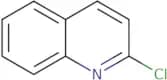
CAS:2-Chloroquinoline is a compound that has antimicrobial properties. It acts by inhibiting bacterial RNA synthesis and protein synthesis. 2-Chloroquinoline has been shown to have toxicological effects in animal studies, including cancer. It also inhibits the activity of the cb2 receptor and the CCR5 receptor, which are involved in tumor growth. The molecular docking analysis for this compound is available, which can be found on PubChem.Formula:C9H6ClNPurezza:Min. 98%Colore e forma:PowderPeso molecolare:163.6 g/mol2-Chloro-6-fluorobenzaldehyde
CAS:2-Chloro-6-fluorobenzaldehyde is an impurity that can be found in wastewater. It has been shown to be a reactive intermediate for the synthesis of streptochlorin, which is a natural product with potential antibiotic activity. 2-Chloro-6-fluorobenzaldehyde is produced by the reaction of chlorine and anhydrous sodium, with acid as catalyst. The molecule has two fluorine atoms and one chloride atom. This compound can also be used in the treatment of waste water due to its ability to react with hydroxyl ions and chloride ions in the presence of hydrogen chloride or hydrochloric acid. The pain model was evaluated using nmr spectra and optical properties.Formula:C7H4ClFOPurezza:Min. 95%Colore e forma:White PowderPeso molecolare:158.56 g/mol2',4',6'-Trihydroxyacetophenone monohydrate
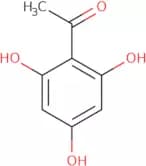
CAS:2',4',6'-Trihydroxyacetophenone monohydrate is a monosodium salt of 2,4,6-trihydroxyacetophenone. It has been shown to inhibit the production of leukemia inhibitory factor (LIF) in vitro. LIF is a cytokine that regulates cell differentiation and proliferation. The matrix effect of 2',4',6'-trihydroxyacetophenone monohydrate on polymerase chain reaction was also studied with the use of a matrix-assisted laser desorption ionization time-of-flight mass spectrometer. This study revealed that the matrix effect is due to the inhibition of cyclase activity by ptelefolia and structural analysis revealed that this inhibition may be due to an interaction with nitrite ion. Preparative high performance liquid chromatography (HPLC) was used for the separation and purification of coumarin derivatives from 2',4',6'-trihydroxyacetophenone monohydrate. The toxicological studiesFormula:C8H8O4·H2OColore e forma:Slightly Yellow PowderPeso molecolare:186.15 g/mol2'-Chloroacetophenone
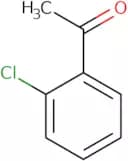
CAS:2'-Chloroacetophenone is an organic compound that has been used as a hydrogen donor in the synthesis of natural products. It is produced by the reaction of acetone with chlorine gas, and it can be isolated by distillation. 2'-Chloroacetophenone reacts with hexane to form 2-chlorohexane, which can be further reacted with methanol to form methoxybenzene. The optimum concentration for this reaction is 10% (w/v) at 25°C. This chemical also has reductase activities and may enhance the activity of other reductases. 2'-Chloroacetophenone is a colorless liquid that boils at 172°C and decomposes above 300°C. It has a molecular weight of 119.16 g/mol and a density of 1.037 g/cm3 at 20°C and 0.101 g/cm3 at 25°C. It also has an intram
Formula:C8H7ClOPurezza:Min. 96 Area-%Colore e forma:Colorless Clear LiquidPeso molecolare:154.59 g/molSuccinylsulfathiazole
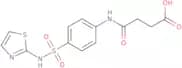
CAS:Succinylsulfathiazole is a sulfa drug that has antimicrobial activity. It is a structural analogue of sulfanilamide, which is an antibiotic used to treat infectious diseases. Sulfa drugs are structurally related to the amino acid pantothenic acid and have been shown to have beneficial effects in animal models for bowel disease, autoimmune diseases, and other conditions. Succinylsulfathiazole has been shown to inhibit the growth of Aerobacter aerogenes and other bacteria by binding to their cell wall and interfering with synthesis of DNA. Succinylsulfathiazole has been shown to inhibit the growth of Aerobacter aerogenes and other bacteria by binding to their cell wall and interfering with synthesis of DNA.Formula:C13H13N3O5S2Purezza:Min. 98 Area-%Colore e forma:PowderPeso molecolare:355.39 g/molSarcosine methyl ester hydrochloride
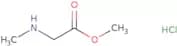
CAS:Sarcosine methyl ester hydrochloride is a pharmaceutical drug that inhibits the production of inosine monophosphate (IMP) and guanosine monophosphate (GMP). It is thought to work by interfering with the synthesis of nucleotides. Sarcosine methyl ester hydrochloride has been shown to inhibit tumour growth in solid tumours. It also has pharmacokinetic properties that include a low volume of distribution, high protein binding, and low clearance rate.Formula:C4H9NO2·HClColore e forma:White PowderPeso molecolare:139.58 g/molStyrene-divinylbenzene sulfonated copolymer
CAS:Styrene-divinylbenzene sulfonated copolymer also called Dowex 50W 8X hydrogen form, strongly acidic resin, is a fine mesh spherical ion exchange resin made from a microporous styrene / divinylbenzene (DVB) co-polymer with a sulfonic acid group. Styrene-divinylbenzene sulfonated copolymers are used in fine chemical and pharmaceutical column separations.Colore e forma:Powdero-Sulfobenzoic acid anhydride
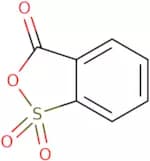
CAS:o-Sulfobenzoic acid anhydride is a chemical that belongs to the class of inorganic acids. It is a white crystalline solid with a melting point of 107°C and can be found in its pure form or as sodium salts. o-Sulfobenzoic acid anhydride is stable when exposed to light and can be used in detergent compositions. It also has pharmacokinetic properties, which are affected by the presence of cationic polymers. This chemical is metabolized by microorganisms through hydrogen bonding interactions and has been shown to have antimicrobial activity against infectious bacteria, such as erythromycin-resistant strains of Staphylococcus aureus and Mycobacterium tuberculosis.
Formula:C7H4O4SPurezza:Min 98%Colore e forma:Slightly Brown PowderPeso molecolare:184.17 g/mol2-(4'-Chlorobenzoyl)benzoic acid
CAS:2-(4'-Chlorobenzoyl)benzoic acid (2-CBA) is a sulfa drug that inhibits bacterial growth by blocking the synthesis of folic acid. It is also known to be luminescent and can be used in techniques such as luminescent probes. 2-CBA has antibacterial activity and can inhibit bacterial growth in a chromatographic method. 2-CBA is chemically stable and has been shown to have antibacterial properties against gram-positive bacteria, including Bacillus subtilis and Staphylococcus aureus. 2-CBA also has the ability to react with phthalazinone, an inhibitor of glutamine synthetase, which is involved in the production of ATP from ADP. This reaction results in the formation of an unstable intermediate which decomposes into CO2 and benzoic acid.
Formula:C14H9ClO3Purezza:Min. 95%Colore e forma:White PowderPeso molecolare:260.67 g/molCyclopentylmethanol
CAS:Cyclopentylmethanol is a chemical compound with the molecular formula CH3OH. It is a colorless liquid that is soluble in water and has a distinctive, sweet odor. Cyclopentylmethanol is used as an intermediate in organic synthesis and as a solvent for nitrocellulose, cellulose acetate, cellulose nitrate, and similar materials. It reacts with chlorine at high temperatures to form chlorinated cyclopentylmethanols. This reaction can be used to synthesize hydroxyapatite (a mineral) from calcium phosphate (a mineral). Cyclopentylmethanol also reacts with nicotinic acetylcholine receptors in the brain, causing them to desensitize. Hydroxyapatite can also be synthesized by reacting cyclopentylmethanol with dinucleotide phosphate and hydroxyl group containing compounds such as esters or soluble guanylate cyclase enzymes. The reactions produce hydrogenFormula:C6H12OPurezza:Min. 95%Colore e forma:Clear Colourless LiquidPeso molecolare:100.16 g/molS-acetyl-L-glutathione
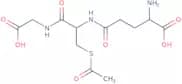
CAS:Acetylcysteine is a drug that inhibits the growth of bacteria and viruses. Acetylcysteine is a precursor to the amino acid cysteine and has been shown to have antiviral properties against herpes simplex virus. It also has protective effects on human liver cells by preventing lipid peroxidation, which may be due to its antioxidant activity. Acetylcysteine can be used as an analytical method for particle size, thermal expansion, and hydrogen chloride content in industrial processes. Its use in metabolic disorders and cancer therapy is limited because it does not cross the blood-brain barrier easily. Acetylcysteine has been shown to inhibit HIV infection by blocking reverse transcriptase activity, but it cannot cure HIV infection.Formula:C12H19N3O7SPurezza:Min. 96 Area-%Colore e forma:White Off-White PowderPeso molecolare:349.36 g/mol4,4'-Dihydroxy-2,2'-bipyridine
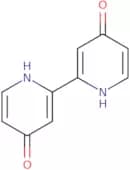
CAS:4,4'-Dihydroxy-2,2'-bipyridine is a metallo-organic compound that can be used as a homogeneous catalyst for the oxidation of hydroxyl groups. It is also used in cancer research because it has been shown to inhibit tumor cell proliferation and induce apoptosis. 4,4'-Dihydroxy-2,2'-bipyridine is an activated form of 2,2'-bipyridyl with a hydroxyl group on its ortho position. It can be prepared by reacting bromine with the metal salt of 2-hydroxybenzaldehyde in the presence of sodium hydroxide. This reaction produces two products: 4,4'-dihydroxy-2,2'-bipyridine and 2-bromoethanol. The deuterium isotope is used for nuclear magnetic resonance spectroscopy studies because it has a spin quantum number of one and does not cause chemical shift
Formula:C10H8N2O2Purezza:Min. 98 Area-%Colore e forma:White PowderPeso molecolare:188.18 g/molSar-Gly-OH
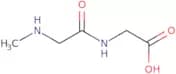
CAS:Sar-Gly-OH is a high quality, reagent chemical that is a useful intermediate in the production of complex compounds. It has CAS No. 38082-72-3 and can be used as a fine chemical, speciality chemical, or research chemical. Sar-Gly-OH is also a versatile building block that can be used in the production of many different types of compounds. It has been shown to be an important reaction component in the synthesis of several types of pharmaceuticals and other organic materials.Formula:C5H10N2O3Purezza:Min. 95%Colore e forma:PowderPeso molecolare:146.14 g/molL-Seleno-L-methionine
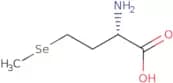
CAS:L-Seleno-L-methionine is a selenium-containing amino acid that is found in the proteins of some plants and animals. It functions as an enzyme cofactor and aids in energy metabolism, protein synthesis, and other biochemical processes. Seleno-L-methionine has been shown to have a protective effect against oxidative damage by scavenging free radicals. It also increases mitochondrial membrane potential and prevents the release of proapoptotic factors from mitochondria into the cytosol. Seleno-L-methionine has been used for analytical purposes as well as to evaluate changes in cell signaling pathways due to chemiluminescence methods or chemical inhibitors. Seleno-L-methionine also has an antioxidant activity that reduces the production of reactive oxygen species (ROS) by reacting with hydroxyl radicals, hydrogen peroxide, nitric oxide, singlet oxygen, and peroxynitrite. Seleno-L-m
Formula:C5H11NO2SePurezza:(Hplc) Min. 98%Colore e forma:White PowderPeso molecolare:196.11 g/molSodium pyruvate
CAS:Pyruvate is an intermediary organic acid metabolite in glycolysis and the first of the Embden Meyerhoff pathways that can pass readily in or out of the cell. Thus, the addition of sodium pyruvate to tissue culture medium provides both an energy source and a carbon skeleton for anabolic processes. Furthermore, it assists with maintaining certain specialized cells, is useful when cloning, and may be necessary when the serum concentration is reduced in the medium.Formula:C3H3O3NaPurezza:Min. 95%Colore e forma:Crystalline PowderPeso molecolare:110.04 g/mol1,2,5,6-Diepoxycyclooctane
CAS:1,2,5,6-Diepoxycyclooctane is a chemical compound that has been used as a crosslinking agent for the polymerization of epoxies. It is also used as a reactive intermediate in organic synthesis. 1,2,5,6-Diepoxycyclooctane can be prepared by reacting epichlorohydrin with ethylene oxide and then hydrogenation. This chemical compound is stable to ultraviolet light and does not react with cationic surfactants. 1,2,5,6-Diepoxycyclooctane can form monoadducts or diploid adducts when it reacts with chemicals such as dioxane and benzene. The nmr spectra of 1,2,5,6-diepoxycyclooctane show signals characteristic of epoxides.Formula:C8H12O2Purezza:Min. 95%Colore e forma:PowderPeso molecolare:140.18 g/molSalicylic acid
CAS:Salicylic acid is a weak organic acid that is used as a plant hormone. It has been shown to have enzyme activities that may be involved in the regulation of glycol ether metabolism, photosynthetic activity, p-hydroxybenzoic acid biosynthesis and nutrient solution. Salicylic acid also inhibits nitrite ion production by reacting with acetylsalicylic, which is an inhibitor of the enzyme nitric oxide synthase. Salicylic acid may inhibit transcriptional regulation by steric interactions with DNA or by binding to regulatory proteins. The structural analysis of salicylic acid shows an intramolecular hydrogen bond between the hydroxyl group and carbonyl group which could lead to enzyme inhibition.Formula:C7H6O3Purezza:Min. 95%Colore e forma:White Off-White PowderPeso molecolare:138.12 g/mol


![4H-Cyclopenta[2,1-b:3,4-b']dithiophene](/_next/image/?url=https%3A%2Fstatic.cymitquimica.com%2Fproducts%2F3D%2Fthumb-webp%2FFC13994.webp&w=3840&q=75)