Building Blocks
Questa sezione contiene prodotti fondamentali per la sintesi di composti organici e biologici. Building blocks sono i materiali di partenza essenziali utilizzati per costruire molecole complesse attraverso varie reazioni chimiche. Svolgono un ruolo critico nella scoperta di farmaci, nella scienza dei materiali e nella ricerca chimica. Presso CymitQuimica, offriamo una gamma diversificata di building blocks di alta qualità per supportare le tue ricerche innovative e progetti industriali, assicurandoti di avere i componenti essenziali per una sintesi di successo.
Sottocategorie di "Building Blocks"
- Acidi boronici e derivati dell'acido boronico(5.778 prodotti)
- Building Blocks Chirali(1.243 prodotti)
- Building Blocks Idrocarburici(6.098 prodotti)
- Building Blocks organici(61.057 prodotti)
Trovati 200716 prodotti di "Building Blocks"
Ordinare per
Purezza (%)
0
100
|
0
|
50
|
90
|
95
|
100
4-chloro-1-(2-fluorophenyl)-1h-pyrazolo[3,4-d]pyrimidine
CAS:Versatile small molecule scaffoldFormula:C11H6ClFN4Purezza:Min. 95%Peso molecolare:248.65 g/mol5-Amino-1-(pyrimidin-2-yl)-1H-pyrazole-4-carboxamide
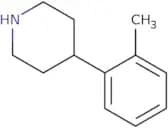
CAS:<p>Versatile small molecule scaffold</p>Formula:C8H8N6OPurezza:Min. 95%Peso molecolare:204.19 g/mol4-(o-Tolyl)piperidine
CAS:<p>4-(o-Tolyl)piperidine is a competitive antagonist of acetylcholine at muscarinic receptor sites. It has been shown to be an orally active, nonselective, and selective inhibitor of the muscarinic receptors. 4-(o-Tolyl)piperidine interacts with the ligand binding domain of the muscarinic receptor, blocking its ability to bind acetylcholine. This drug has been shown to have anticholinergic effects in a number of animal studies.</p>Formula:C12H17NPurezza:Min. 95%Peso molecolare:175.27 g/mol2-{[2-(Trifluoromethyl)phenyl]formamido}acetic acid
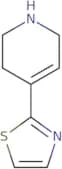
CAS:<p>Versatile small molecule scaffold</p>Formula:C10H8F3NO3Purezza:Min. 95%Peso molecolare:247.17 g/mol4-(1,3-Thiazol-2-yl)-1,2,3,6-tetrahydropyridine
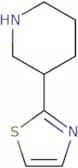
CAS:Versatile small molecule scaffoldFormula:C8H10N2SPurezza:Min. 95%Peso molecolare:166.25 g/mol2-(Piperidin-3-yl)thiazole
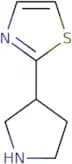
CAS:<p>Versatile small molecule scaffold</p>Formula:C8H12N2SPurezza:Min. 95%Peso molecolare:168.26 g/mol2-(Pyrrolidin-3-yl)-1,3-thiazole
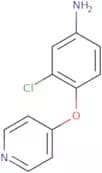
CAS:<p>Versatile small molecule scaffold</p>Formula:C7H10N2SPurezza:Min. 95%Peso molecolare:154.24 g/mol3-Chloro-4-(pyridin-4-yloxy)aniline
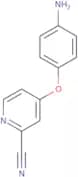
CAS:<p>Versatile small molecule scaffold</p>Formula:C11H9ClN2OPurezza:Min. 95%Peso molecolare:220.65 g/mol4-(4-Aminophenoxy)pyridine-2-carbonitrile
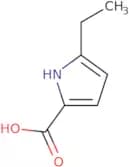
CAS:<p>Versatile small molecule scaffold</p>Formula:C12H9N3OPurezza:Min. 95%Peso molecolare:211.22 g/mol5-Ethyl-1H-pyrrole-2-carboxylic acid
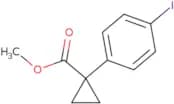
CAS:<p>Versatile small molecule scaffold</p>Formula:C7H9NO2Purezza:Min. 95%Peso molecolare:139.15 g/molMethyl 1-(4-iodophenyl)cyclopropanecarboxylate
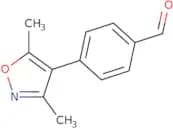
CAS:Versatile small molecule scaffoldFormula:C11H11IO2Purezza:Min. 95%Peso molecolare:302.11 g/mol4-(3,5-Dimethylisoxazol-4-yl)benzaldehyde
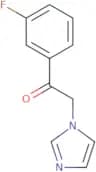
CAS:<p>Versatile small molecule scaffold</p>Formula:C12H11NO2Purezza:Min. 95%Peso molecolare:201.22 g/mol1-(3-Fluorophenyl)-2-(1H-imidazol-1-yl)ethan-1-one
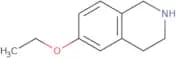
CAS:<p>Versatile small molecule scaffold</p>Formula:C11H9FN2OPurezza:Min. 95%Peso molecolare:204.2 g/mol6-Ethoxy-1,2,3,4-tetrahydroisoquinoline
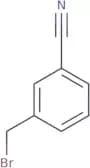
CAS:Versatile small molecule scaffoldFormula:C11H15NOPurezza:Min. 95%Peso molecolare:177.24 g/molalpha-Bromo-m-tolunitrile
CAS:<p>Silver trifluoromethanesulfonate (AgOTf) is a precursor in the synthesis of alpha-bromo-m-tolunitrile. It is a colorless, odorless solid that can be prepared by the reaction of silver ions with bromine and toluene in an aqueous medium. The profile of AgOTf has been studied by titration method and it has been shown to have an oxadiazole group. This molecule also has anticancer activity against cancer cells. Alpha-Bromo-m-tolunitrile is currently being investigated for its potential use as a drug candidate for the treatment of cancer, with particular interest in the inhibition of angiogenesis and metastasis.</p>Formula:C8H6BrNPurezza:Min. 95%Colore e forma:PowderPeso molecolare:196.04 g/molBis(ethylamino)-1,3,5-triazin-2-ol hydrochloride
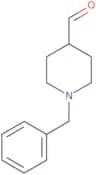
CAS:<p>Please enquire for more information about Bis(ethylamino)-1,3,5-triazin-2-ol hydrochloride including the price, delivery time and more detailed product information at the technical inquiry form on this page</p>Formula:C7H13N5O•HClPurezza:Min. 95%Peso molecolare:219.67 g/mol1-Benzyl-4-piperidine-carboxaldehyde
CAS:<p>1-Benzyl-4-piperidine-carboxaldehyde is a polymorphic compound with two crystalline forms: the α form and β form. The α form has a molecular weight of 174.2 g/mol and the β form has a molecular weight of 178.3 g/mol. Both forms are soluble in organic solvents but not in water. It is insoluble in hydrochloric acid, n-hexane, and acetonitrile. It is stable at room temperature but unstable at temperatures above 60°C. 1-Benzyl-4-piperidinecarboxaldehyde is an inhibitor of liver function, which may be due to its inhibition of CYP450 enzymes or other unknown mechanisms that lead to haemodynamic effects such as hypotension and tachycardia.</p>Formula:C13H17NOPurezza:Min. 95%Colore e forma:Yellow PowderPeso molecolare:203.28 g/moltrans-1-Boc-4-amino-piperidine-3-carboxylic acid ethyl ester hydrochloride
CAS:Please enquire for more information about trans-1-Boc-4-amino-piperidine-3-carboxylic acid ethyl ester hydrochloride including the price, delivery time and more detailed product information at the technical inquiry form on this pageFormula:C13H24N2O4•HClPurezza:Min. 95%Peso molecolare:308.8 g/molN-[(2-Bromo-4,5-dimethoxyphenyl)methyl]-N-(2-chloroethyl)morpholine bromide
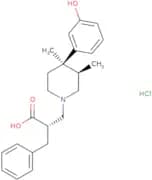
<p>Please enquire for more information about N-[(2-Bromo-4,5-dimethoxyphenyl)methyl]-N-(2-chloroethyl)morpholine bromide including the price, delivery time and more detailed product information at the technical inquiry form on this page</p>Formula:C15H22Br2ClNO3Purezza:Min. 95%Peso molecolare:459.6 g/mol(3R,4R)-1-((2S)-2-Benzyl-2-carboxyethyl)-4-(3-hydroxyphenyl)-3,4-dimethylpiperidine hydrochloride
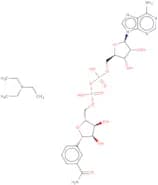
CAS:Please enquire for more information about (3R,4R)-1-((2S)-2-Benzyl-2-carboxyethyl)-4-(3-hydroxyphenyl)-3,4-dimethylpiperidine hydrochloride including the price, delivery time and more detailed product information at the technical inquiry form on this pageFormula:C23H29NO3•HClPurezza:Min. 95%Peso molecolare:403.94 g/molBenzamide adenine dinucleotide triethylamine
CAS:<p>Please enquire for more information about Benzamide adenine dinucleotide triethylamine including the price, delivery time and more detailed product information at the technical inquiry form on this page</p>Formula:C22H28N6O14P2•C6H15NPurezza:Min. 95%Peso molecolare:763.63 g/molBromoacetaldehyde diethyl acetal
CAS:<p>Bromoacetaldehyde diethyl acetal (BDAE) is an organic compound that has been shown to have receptor binding activity. BDAE binds to the ethylene diamine receptor and competes with ethylene diamine for binding sites. It also forms acid from sodium carbonate and hydrochloric acid, which may be due to its ability to act as a solid catalyst. BDAE has shown activity in hiv infection, with a potency comparable to that of dimethyl fumarate. The synthesis of BDAE can be accomplished by reacting monosodium malonate ester hydrochloride with adenine nucleotide and malonic acid. The reaction solution is heated until the desired product crystallizes out of solution.</p>Formula:C6H13BrO2Purezza:Min. 95%Peso molecolare:197.07 g/mol2-Bromoethanol
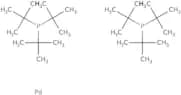
CAS:<p>2-Bromoethanol is a chemical used in the manufacture of sodium salts and ethylene. It has been shown to inhibit the enzyme activity of wild-type strains of E. coli, but not resistant mutants. 2-Bromoethanol was found to cause cell lysis, which may be due to its hydroxyl group reacting with argon, forming reactive oxygen species. The reaction mechanism for 2-bromoethanol is as follows: 2-bromoethanol + H2O → 2-(hydroxyethyl) bromide + HBr + heat</p>Formula:C2H5BrOPurezza:Min. 95%Colore e forma:Colorless Clear LiquidPeso molecolare:124.96 g/molBis(tri-tert-butylphosphine)palladium(0)
CAS:Bis(tri-tert-butylphosphine)palladium(0) is a chemical compound, insoluble in organic solvents. It has been used as a catalyst for cross-coupling reactions in organic chemistry. Bis(tri-tert-butylphosphine)palladium(0) reacts with sodium salts and palladium-catalyzed cross-coupling to form an insoluble complex in the presence of hexane, which is soluble in organic solvents. The reaction proceeds through reductive elimination, yielding a trisubstituted product. This process can be used for the synthesis of halides and transmetallation.Formula:C24H54P2PdPurezza:Min. 95%Colore e forma:White PowderPeso molecolare:511.05 g/mol5-Bromobenzo[d]oxazol-2-amine
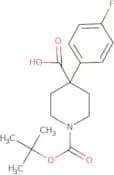
CAS:5-Bromobenzo[d]oxazol-2-amine is a chemical that is used in the treatment of cancer. It is synthesized from benzoic acid and bromoacetonitrile. 5-Bromobenzo[d]oxazol-2-amine is an anticancer agent that has been shown to have a depressant activity on animal tissues, which may be due to its ability to neutralize cyanogen chloride, a chemical that reacts with organic solvents and produces toxic gases such as hydrogen cyanide. This drug also binds to DNA, preventing cell growth and causing cell death. 5-Bromobenzo[d]oxazol-2-amine can be used to treat cancer cells in mice and has been shown to inhibit the proliferation of MCT7 cells. It also inhibits the growth of human breast cancer cells by blocking protein synthesis at the ribosome level.Formula:C7H5BrN2OPurezza:Min. 95%Peso molecolare:213.03 g/molBoc-4-(4-fluorophenyl)-piperidine-4-carboxylic acid
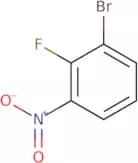
CAS:<p>Please enquire for more information about Boc-4-(4-fluorophenyl)-piperidine-4-carboxylic acid including the price, delivery time and more detailed product information at the technical inquiry form on this page</p>Formula:C17H22FNO4Purezza:Min. 95%Peso molecolare:323.36 g/mol1-Bromo-2-fluoro-3-nitrobenzene
CAS:1-Bromo-2-fluoro-3-nitrobenzene is a synthetic chemical that is used as an intermediate in the synthesis of various dyes. It can be obtained by the diazotization of acetyl nitrite and acetonitrile, followed by acetylation with acetic anhydride and hydrolysis with sodium hydroxide. The bromoaniline formed after this reaction is then converted to 1-bromo-2-fluoro-3-nitrobenzene by refluxing it with nitric acid. This chemical can also be synthesized from bromines and chloride in the presence of a diazo salt. It reacts with fluoride or halogens to produce fluorobenzene derivatives, which are used as intermediates for other organic compounds.Formula:C6H3BrFNO2Purezza:Min. 95%Colore e forma:Yellow PowderPeso molecolare:220 g/molBis[2-(perfluorohexyl)ethyl]phosphate
CAS:Bis[2-(perfluorohexyl)ethyl] Phosphate is a perfluorinated, fluorinated chemical that is used in wastewater treatment. It is also found in human serum and organisms, as well as in the drinking water of some communities. Bis[2-(perfluorohexyl)ethyl] Phosphate has been detected in the maternal serum and urine of women who are pregnant or breast-feeding. It may be associated with adverse effects on neurodevelopmental outcomes in children. Bis[2-(perfluorohexyl)ethyl] Phosphate can be removed from drinking water by using an ultrasonic extraction system. This method uses sound waves to extract the chemical from water and other liquids and is effective at removing small amounts (less than 10 parts per billion). The analytical method for this compound is low detection, which means that it can only detect concentrations of up to 0.1 part per billion (ppb). However, this methodFormula:C16H9F26O4PPurezza:Min. 95%Colore e forma:PowderPeso molecolare:790.17 g/mol4-Chloropyrimidine HCl
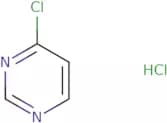
CAS:<p>4-Chloropyrimidine HCl is a covalent molecule that contains 4-chloropyridine and hydrogen chloride. It exists as two tautomers, the enol form and the keto form. The protonation of the proton on nitrogen will determine which tautomer it will exist in. When there is no proton present, the molecule will exist in its enol form. Resonance is also an important factor with this molecule because it can have a variety of resonance forms. Resonance spectrometry has been used to identify 4-chloropyrimidine HCl because it produces a specific resonance pattern when exposed to magnetic fields. 4-Chloropyridinium trifluoroacetate is another name for this compound that is formed when the chlorine atom bonds with trifluoroacetic acid. This chemical does not have any interactions with azide but can react with tetrazole to produce a stable compound, which can be easily</p>Formula:C4H3ClN2·HClPurezza:Min. 95%Colore e forma:PowderPeso molecolare:150.99 g/mol3-(Chlorosulfonyl)benzoic acid
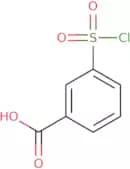
CAS:<p>3-(Chlorosulfonyl)benzoic acid is a synthetic compound that inhibits histone lysine methylation. It has been shown to protect against neuronal injury and cognitive impairment. 3-(Chlorosulfonyl)benzoic acid also has an inhibitory effect on the activation of Sirt2, which is an enzyme involved in cellular processes such as cancer, diabetes, inflammation, and aging. 3-(Chlorosulfonyl)benzoic acid has low potency and is not very soluble in water. It can be used to treat metabolic disorders by increasing the amount of insulin released from the pancreas and lowering blood glucose levels.</p>Formula:C7H5ClO4SPurezza:Min. 95%Peso molecolare:220.63 g/mol3-Chloro-2-methylaniline
CAS:3-Chloro-2-methylaniline is an organic chemical that is used as a raw material in the production of pesticides and pharmaceuticals. 3-Chloro-2-methylaniline is generated by the reaction of hydrochloric acid with isobutyl chloride, which produces a mixture of chloroalkylcarbinols. This product can be activated to form chloromethylketones or chloromethylcarbonyls by reacting it with sodium hypochlorite or hydrogen peroxide. The impurities found in 3-Chloro-2-methylaniline are mainly carbon sources and inorganic compounds such as chloride and strain. It can be synthesized from other chemicals and also through chromatographic science.Formula:C7H8ClNPurezza:Min. 95%Colore e forma:Clear LiquidPeso molecolare:141.6 g/molCinnoline
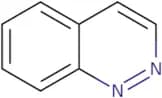
CAS:<p>Cinnoline is a chemical compound that is structurally similar to phenol, containing a hydroxyl group, two nitrogen atoms and a cyclic structure. Cinnoline has been shown to have anti-inflammatory activity in rats with adjuvant-induced arthritis. The mechanism of the anti-inflammatory effect of cinnoline is not fully understood, but it may be due to its stability and ability to bind to biological molecules or its conformational properties. Cinnoline does not react with nitric acid, making it a good candidate for use in infectious diseases such as tuberculosis. It has also been shown to be stable in human serum and has low pharmacokinetic properties. The fluorescence intensity of cinnoline was found to increase when exposed to an electrochemical potential and can be used as a probe molecule for pharmacokinetics studies.</p>Formula:C8H6N2Purezza:Min. 95%Colore e forma:PowderPeso molecolare:130.15 g/mol6-Chloro-3,4-dihydro-3-(a-methylbenzyl)-2H-1,2,4-benzothiadiazine-7-sulfonamide 1,1-dioxide
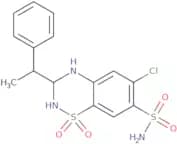
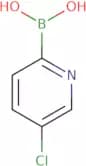
CAS:6-Chloro-3,4-dihydro-3-(a-methylbenzyl)-2H-1,2,4-benzothiadiazine-7-sulfonamide 1,1-dioxide is an active metabolite of the drug benzbromarone. It is primarily administered as a diuretic to treat high blood pressure and congestive heart failure. The pharmacodynamics of this drug are related to its ability to inhibit the activity of sodium channels in vascular smooth muscle cells and thereby reduce the force of contraction and relax the vessel wall. 6CBDMTD has shown an increase in glomerular filtration rate in patients with congestive heart failure. This drug also decreases the plasma concentration of fatty acids by inhibiting the formation of lipoprotein particles. 6CBDMTD has been shown to be effective at lowering diastolic and systolic blood pressure levels in patients with hypertension.Formula:C15H16ClN3O4S2Purezza:Min. 95%Peso molecolare:401.89 g/mol5-Chloropyridine-2-boronicacid
CAS:Please enquire for more information about 5-Chloropyridine-2-boronicacid including the price, delivery time and more detailed product information at the technical inquiry form on this pageFormula:C5H5BClNO2Purezza:Min. 95%Peso molecolare:157.36 g/molN-Chlorosuccinimide
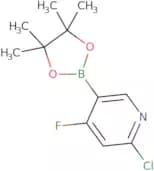
CAS:Chlorinating agents are used in the production of pharmaceutical preparations and other chemical products. They react with amines to form diazonium salts, which can then be reduced to azo compounds. N-Chlorosuccinimide is a chlorinating agent that reacts with amines to form diazonium salts. It is used primarily as an injection solution for the treatment of trichomoniasis and other sexually transmitted diseases, but it also has been used in the preparation of pharmaceutical preparations. The reaction mechanism for N-chlorosuccinimide is not well understood, but it may involve a free radical intermediate or electron transfer from the chlorine atom to the carbon atom. Diazonium salts are formed by the reaction between an amine and an acid chloride. The addition of sodium hydroxide produces the corresponding azo compound. The reaction mechanism for N-chlorosuccinimide is not well understood, but it may involve a free radical intermediate orFormula:C4H4ClNO2Purezza:Min. 95%Colore e forma:White PowderPeso molecolare:133.53 g/mol2-Chloro-4-fluoropyridine-5-boronic acid, pinacol ester
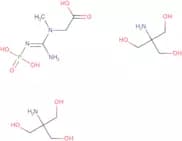
CAS:Please enquire for more information about 2-Chloro-4-fluoropyridine-5-boronic acid, pinacol ester including the price, delivery time and more detailed product information at the technical inquiry form on this pageFormula:C11H14BClFNO2Purezza:Min. 95%Peso molecolare:257.5 g/molCreatine phosphate di(tris) salt
CAS:<p>Creatine phosphate di(tris) salt is a cyclase and rectifier of potassium ion channels. It is a potent activator of calcium ion channels, expressed in the cells of the ng108-15 mouse neuroblastoma line. Creatine phosphate di(tris) salt also potently activates guanylate cyclase and l-type calcium ion channels. This drug has been shown to stimulate prostaglandin synthesis and inhibit the production of prostaglandin E1 in biological chemistry studies. Creatine phosphate di(tris) salt is a cyclase and rectifier of potassium ion channels. It is a potent activator of calcium ion channels, expressed in the cells of the ng108-15 mouse neuroblastoma line. Creatine phosphate di(tris) salt also potently activates guanylate cyclase and l-type calcium ion channels. This drug has been shown to stimulate prostaglandin synthesis and inhibit the production of prostaglandin E1 in</p>Formula:C12H32N5O11PPurezza:Min. 95%Peso molecolare:453.38 g/mol1-[(4-Chlorophenyl)phenylmethyl]piperazine
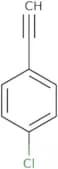
CAS:Prodotto controllato<p>1-[(4-Chlorophenyl)phenylmethyl]piperazine is an analytical reagent that is used in the determination of meclozine, a drug used for the treatment of nausea and vomiting. 1-[(4-Chlorophenyl)phenylmethyl]piperazine is a nucleophile, which means that it can donate electrons to other molecules. It can be used as a catalyst to increase the rate of chemical reactions. 1-[(4-Chlorophenyl)phenylmethyl]piperazine may also be used in wastewater treatment because it has been shown to have phospholipidosis inhibiting properties. The levorotatory form (1R-enantiomer) of this compound has been shown to inhibit protein synthesis in vitro and is an amine oxidase inhibitor that binds to proteins with nitrogen atoms. This nucleophilic compound may also be converted into an n-oxide or dinucleotide phosphate by hydrochloric acid and</p>Formula:C17H19ClN2Purezza:Min. 95%Peso molecolare:286.8 g/mol4-Chlorophenylacetylene
CAS:4-Chlorophenylacetylene is a compound that is created by the reaction of chloroform and acetylene. The reaction yield can be increased by using a catalytic amount of silicon, which increases the rate of hydration. Terminal alkynes react with 4-chlorophenylacetylene to form polymers, which are insoluble in most solvents. 4-Chlorophenylacetylene has been shown to have inhibitory activity against the growth of bacteria and fungi when tested in model species such as Escherichia coli and Saccharomyces cerevisiae.Formula:C8H5ClPurezza:Min. 95%Colore e forma:PowderPeso molecolare:136.58 g/mol2-Cyanobenzaldehyde
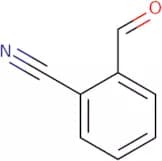
CAS:<p>2-Cyanobenzaldehyde is an aldehyde that reacts with nucleophiles such as trifluoromethanesulfonic acid to form a molecule. 2-Cyanobenzaldehyde has potent inhibitory activity against the kinase glycogen synthase kinase 3 (GSK3) and can be used to treat autoimmune diseases. It also reacts with hydrochloric acid in solution to form an intermediate, which is then reacted with glycine and ATP to produce a chiral compound. The product of this reaction has been shown to be active methylene, which was synthesized by asymmetric synthesis.</p>Formula:C8H5NOPurezza:Min. 95%Colore e forma:PowderPeso molecolare:131.13 g/mol4-Chloro-1H-imidazo[4,5-c]pyridine
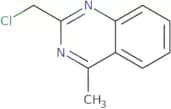
CAS:<p>4-Chloro-1H-imidazo[4,5-c]pyridine (4CI) is a nucleoside analog that inhibits the replication of RNA and DNA. It has significant inhibitory activity against herpes simplex virus type 1 and human immunodeficiency virus type 1 (HIV-1). 4CI inhibits the synthesis of adenosine, an important component in the synthesis of RNA and DNA. This drug also has antiviral properties against influenza A and B viruses. 4CI's effect on plasma cholesterol levels is thought to be due to inhibition of 3-hydroxy-3-methylglutaryl coenzyme A reductase.</p>Formula:C6H4ClN3Purezza:Min. 95%Colore e forma:Off-White SolidPeso molecolare:153.57 g/mol2-(Chloromethyl)-4-methylquinazoline
CAS:<p>Inhibitor of SIRT1 deacetylase</p>Formula:C10H9ClN2Purezza:Min. 95%Colore e forma:Off-White To Yellow SolidPeso molecolare:192.64 g/molCarboprost tromethamine
CAS:Carboprost tromethamine is a synthetic prostaglandin analogue that is used to induce labor in pregnant women. Carboprost tromethamine has minimal toxicity and can be combined with other drugs to improve efficacy. This drug has been shown to be effective in combination therapy groups, with minimal side effects. Carboprost tromethamine inhibits the activity of the enzyme phospholipase A2, which is responsible for the breakdown of fatty acids and production of inflammatory mediators. It also has anti-inflammatory properties and can be used as a treatment for metabolic disorders such as bladder dysfunction. Carboprost tromethamine is not active against bacteria or fungi, but it does have some antibacterial properties that may come from its ability to inhibit bacterial rRNA synthesis at high concentrations. Carboprost tromethamine should not be used during pregnancy or breastfeeding due to its potential risk of uterine contractions after childbirth, which can interfere with placentalFormula:C25H47NO8Purezza:Min. 95%Colore e forma:SolidPeso molecolare:489.64 g/molCyclopentyl methyl ether - stabilized with BHT
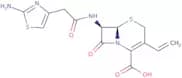
CAS:Cyclopentyl methyl ether is a chemical compound that belongs to the group of ethers. It has been shown to be a human skin carcinogen in animal studies. Cyclopentyl methyl ether is stable against transfer reactions, such as oxidation and reduction, with metal ions and enzymes. In addition, it does not react with BHT (butylated hydroxytoluene) or human serum at physiological pH. This chemical compound can be used in the synthesis of pharmaceutical products, such as esters and amides.Formula:C6H12OPurezza:Min. 95%Colore e forma:Clear LiquidPeso molecolare:100.16 g/molCefdinir related compound B
CAS:Please enquire for more information about Cefdinir related compound B including the price, delivery time and more detailed product information at the technical inquiry form on this pageFormula:C14H14N4O4S2Purezza:Min. 95%Peso molecolare:366.42 g/mol1-(2,4,5-Trifluorophenyl)propan-2-one
CAS:Versatile small molecule scaffoldFormula:C9H7F3OPurezza:Min. 95%Peso molecolare:188.15 g/mol1-(4-Chloro-2-fluorophenyl)propan-2-one
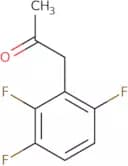
CAS:Versatile small molecule scaffoldFormula:C9H8ClFOPurezza:Min. 95%Peso molecolare:186.61 g/mol1-(2,3,6-Trifluorophenyl)propan-2-one
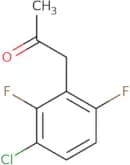
CAS:Versatile small molecule scaffoldFormula:C9H7F3OPurezza:Min. 95%Peso molecolare:188.15 g/mol1-(3-Chloro-2,6-difluorophenyl)propan-2-one
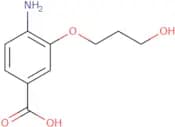
CAS:<p>Versatile small molecule scaffold</p>Formula:C9H7ClF2OPurezza:Min. 95%Peso molecolare:204.6 g/mol4-Amino-3-(3-hydroxypropoxy)benzoic acid
CAS:<p>Versatile small molecule scaffold</p>Formula:C10H13NO4Purezza:Min. 95%Peso molecolare:211.21 g/mol
![4-chloro-1-(2-fluorophenyl)-1h-pyrazolo[3,4-d]pyrimidine](/_next/image/?url=https%3A%2Fstatic.cymitquimica.com%2Fproducts%2F3D%2Fthumb-webp%2FFAB10783.webp&w=3840&q=75)


![2-{[2-(Trifluoromethyl)phenyl]formamido}acetic acid](/_next/image/?url=https%3A%2Fstatic.cymitquimica.com%2Fproducts%2F3D%2Fthumb-webp%2FFAB11794.webp&w=3840&q=75)

![N-[(2-Bromo-4,5-dimethoxyphenyl)methyl]-N-(2-chloroethyl)morpholine bromide](/_next/image/?url=https%3A%2Fstatic.cymitquimica.com%2Fproducts%2F3D%2Fthumb-webp%2FFB183793.webp&w=3840&q=75)


![5-Bromobenzo[d]oxazol-2-amine](/_next/image/?url=https%3A%2Fstatic.cymitquimica.com%2Fproducts%2F3D%2Fthumb-webp%2FFB32511.webp&w=3840&q=75)
![Bis[2-(perfluorohexyl)ethyl]phosphate](/_next/image/?url=https%3A%2Fstatic.cymitquimica.com%2Fproducts%2F3D%2Fthumb-webp%2FFB84246.webp&w=3840&q=75)


![1-[(4-Chlorophenyl)phenylmethyl]piperazine](/_next/image/?url=https%3A%2Fstatic.cymitquimica.com%2Fproducts%2F3D%2Fthumb-webp%2FFC20350.webp&w=3840&q=75)
![4-Chloro-1H-imidazo[4,5-c]pyridine](/_next/image/?url=https%3A%2Fstatic.cymitquimica.com%2Fproducts%2F3D%2Fthumb-webp%2FFC32403.webp&w=3840&q=75)