Building Blocks
Sottocategorie di "Building Blocks"
- Acidi boronici e derivati dell'acido boronico(5.784 prodotti)
- Building Blocks Chirali(1.242 prodotti)
- Building Blocks Idrocarburici(6.105 prodotti)
- Building Blocks organici(61.065 prodotti)
Trovati 205418 prodotti di "Building Blocks"
tert-Butyl N-[2-(4-phenylbutanamido)ethyl]carbamate
CAS:Versatile small molecule scaffoldFormula:C17H26N2O3Purezza:Min. 95%Peso molecolare:306.4 g/molBenzyl N-({[(cyclopropylcarbamoyl)methyl](methyl)carbamoyl}methyl)carbamate
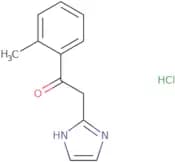
CAS:Versatile small molecule scaffoldFormula:C16H21N3O4Purezza:Min. 95%Peso molecolare:319.36 g/mol2-(1H-Imidazol-2-yl)-1-(2-methylphenyl)ethan-1-one hydrochloride
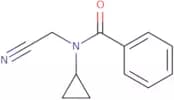
CAS:Versatile small molecule scaffoldFormula:C12H13ClN2OPurezza:Min. 95%Peso molecolare:236.7 g/molN-(Cyanomethyl)-N-cyclopropylbenzamide
CAS:Versatile small molecule scaffold
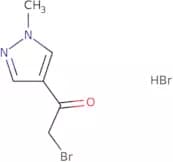
Formula:C12H12N2OPurezza:Min. 95%Peso molecolare:200.24 g/mol2-Bromo-1-(1-methyl-1H-pyrazol-4-yl)ethan-1-one hydrobromide
CAS:Versatile small molecule scaffoldFormula:C6H8Br2N2OPurezza:Min. 95%Peso molecolare:283.95 g/molAcetic acid, benzyl(1-cyclopropylethyl)amine
CAS:Prodotto controllatoAcetic acid, benzyl(1-cyclopropylethyl)amine (ABE) is a new drug candidate for the treatment of type II diabetes. ABE has been shown to inhibit the growth of Candida glabrata at a concentration of 0.5 mM and to be effective against c. albicans at a concentration of 1 mM. ABE also exhibits an optimum concentration in the range of 0.25-0.5 M, which can be achieved by diluting it with 50% ethanol or water for injection and then filtering the solution before administration, as well as through pretreatment with cerevisiae or Saccharomyces cerevisiae (a yeast). ABE has been shown to have hypoglycemic effects in both yeast and mouse models of type II diabetes, although it has not yet been tested on humans.
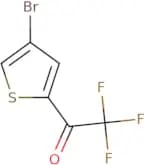
Formula:C14H21NO2Purezza:Min. 95%Peso molecolare:235.3 g/mol1-(4-Bromo-thiophen-2-yl)-2,2,2-trifluoro-ethanone
CAS:Versatile small molecule scaffoldFormula:C6H2BrF3OSPurezza:Min. 95%Peso molecolare:259.05 g/mol4-[4-(Benzyloxy)phenyl]pyridine
CAS:Versatile small molecule scaffoldFormula:C18H15NOPurezza:Min. 95%Peso molecolare:261.3 g/mol2-[(2-Methoxyethyl)sulfanyl]acetic acid
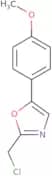
CAS:Versatile small molecule scaffoldFormula:C5H10O3SPurezza:Min. 95%Peso molecolare:150.2 g/mol2-(Chloromethyl)-5-(4-methoxyphenyl)-1,3-oxazole
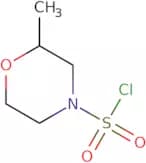
CAS:Versatile small molecule scaffoldFormula:C11H10ClNO2Purezza:Min. 95%Peso molecolare:223.65 g/mol2-Methylmorpholine-4-sulfonyl chloride
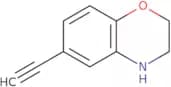
CAS:Versatile small molecule scaffoldFormula:C5H10ClNO3SPurezza:Min. 95%Peso molecolare:199.66 g/mol6-Ethynyl-3,4-dihydro-2H-1,4-benzoxazine
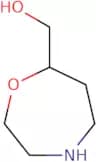
CAS:Versatile small molecule scaffoldFormula:C10H9NOPurezza:Min. 95%Peso molecolare:159.18 g/mol1,4-Oxazepan-7-ylmethanol
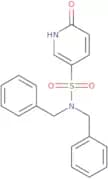
CAS:Versatile small molecule scaffoldFormula:C6H13NO2Purezza:Min. 95%Peso molecolare:131.17 g/molN,N-Dibenzyl-6-oxo-1,6-dihydropyridine-3-sulfonamide
CAS:Versatile small molecule scaffold
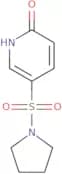
Formula:C19H18N2O3SPurezza:Min. 95%Peso molecolare:354.4 g/mol5-(Pyrrolidine-1-sulfonyl)-1,2-dihydropyridin-2-one
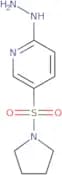
CAS:Versatile small molecule scaffoldFormula:C9H12N2O3SPurezza:Min. 95%Peso molecolare:228.27 g/mol2-Hydrazinyl-5-(pyrrolidine-1-sulfonyl)pyridine
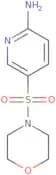
CAS:Versatile small molecule scaffoldFormula:C9H14N4O2SPurezza:Min. 95%Peso molecolare:242.3 g/mol5-(Morpholine-4-sulfonyl)pyridin-2-amine
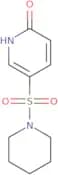
CAS:Versatile small molecule scaffoldFormula:C9H13N3O3SPurezza:Min. 95%Peso molecolare:243.29 g/mol5-(Piperidine-1-sulfonyl)-1,2-dihydropyridin-2-one
CAS:Versatile small molecule scaffold
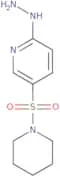
Formula:C10H14N2O3SPurezza:Min. 95%Peso molecolare:242.3 g/mol2-Hydrazinyl-5-(piperidine-1-sulfonyl)pyridine
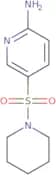
CAS:Versatile small molecule scaffoldFormula:C10H16N4O2SPurezza:Min. 95%Peso molecolare:256.33 g/mol5-(Piperidine-1-sulfonyl)pyridin-2-amine
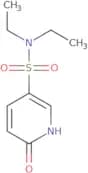
CAS:Versatile small molecule scaffoldFormula:C10H15N3O2SPurezza:Min. 95%Peso molecolare:241.31 g/molN,N-Diethyl-6-oxo-1,6-dihydropyridine-3-sulfonamide
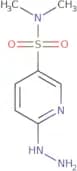
CAS:Versatile small molecule scaffoldFormula:C9H14N2O3SPurezza:Min. 95%Peso molecolare:230.29 g/mol6-Hydrazinyl-N,N-dimethylpyridine-3-sulfonamide
CAS:Versatile small molecule scaffoldFormula:C7H12N4O2SPurezza:Min. 95%Peso molecolare:216.26 g/mol5-[(3-Fluorophenyl)methyl]-1H-1,2,4-triazol-3-amine
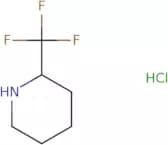
CAS:Versatile small molecule scaffoldFormula:C9H9FN4Purezza:Min. 95%Peso molecolare:192.19 g/mol2-(Trifluoromethyl)piperidine hydrochloride
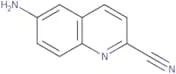
CAS:Versatile small molecule scaffoldFormula:C6H10F3N·HClPurezza:Min. 95%Peso molecolare:189.61 g/mol6-Aminoquinoline-2-carbonitrile
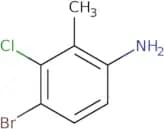
CAS:Versatile small molecule scaffoldFormula:C10H7N3Purezza:Min. 95%Peso molecolare:169.18 g/mol4-Bromo-3-chloro-2-methylaniline
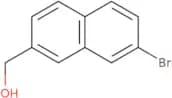
CAS:4-Bromo-3-chloro-2-methylaniline is a heterocyclic compound that is used in organic synthesis. It is a precursor in the preparation of saccharin, indoxyls and other heterocycles, as well as glycosylations. 4-Bromo-3-chloro-2-methylaniline can be prepared by the transfer of chlorine from chlorosulfonic acid to an alkene with bromine. The reaction yields a mixture of products, including glycosylations. This process can be monitored using thin layer chromatography or by enzymatic hydrolysis. The yield of this reaction is low, so it may need to be scaled up for industrial applications. 4-Bromo-3-chloro-2-methylaniline can also be prepared from indoxyls using halides. This process is mediated by sodium methoxide and potassium tetrachFormula:C7H7BrClNPurezza:Min. 95%Peso molecolare:220.49 g/mol(7-Bromonaphthalen-2-yl)methanol
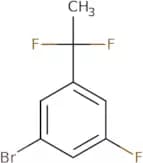
CAS:Versatile small molecule scaffoldFormula:C11H9BrOPurezza:Min. 95%Peso molecolare:237.09 g/mol1-Bromo-3-(1,1-difluoroethyl)-5-fluorobenzene
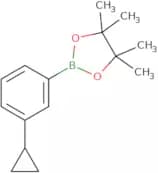
CAS:Versatile small molecule scaffoldFormula:C8H6BrF3Purezza:Min. 95%Peso molecolare:239.03 g/mol2-(3-Cyclopropylphenyl)-4,4,5,5-tetramethyl-1,3,2-dioxaborolane
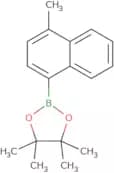
CAS:Versatile small molecule scaffoldFormula:C15H21BO2Purezza:Min. 95%Peso molecolare:244.14 g/mol4-Methylnaphthalene-1-boronic acid pinacol ester
CAS:Versatile small molecule scaffoldFormula:C17H21BO2Purezza:Min. 95%Peso molecolare:268.16 g/mol2-[2-Fluoro-3-(trifluoromethyl)phenyl]-4,4,5,5-tetramethyl-1,3,2-dioxaborolane
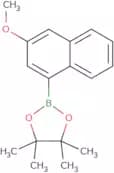
CAS:Versatile small molecule scaffoldFormula:C13H15BF4O2Purezza:Min. 95%Peso molecolare:290.06 g/mol2-(3-Methoxynaphthalen-1-yl)-4,4,5,5-tetramethyl-1,3,2-dioxaborolane
CAS:Versatile small molecule scaffoldFormula:C17H21BO3Purezza:Min. 95%Peso molecolare:284.2 g/mol2-[3-(Difluoromethyl)-5-fluorophenyl]-4,4,5,5-tetramethyl-1,3,2-dioxaborolane
CAS:Versatile small molecule scaffoldFormula:C13H16BF3O2Purezza:Min. 95%Peso molecolare:272.07 g/mol2-[3-(Difluoromethyl)phenyl]-4,4,5,5-tetramethyl-1,3,2-dioxaborolane
CAS:Versatile small molecule scaffoldFormula:C13H17BF2O2Purezza:Min. 95%Peso molecolare:254.08 g/mol3-(Trifluoromethyl)-5-fluorophenylboronic acid pinacol ester
CAS:Versatile small molecule scaffold
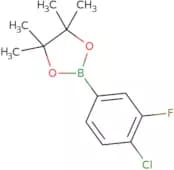
Formula:C13H15BF4O2Purezza:Min. 95%Peso molecolare:290.06 g/mol2-(4-Chloro-3-fluorophenyl)-4,4,5,5-tetramethyl-1,3,2-dioxaborolane
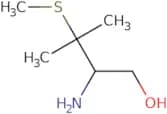
CAS:Versatile small molecule scaffoldFormula:C12H15BClFO2Purezza:Min. 95%Peso molecolare:256.51 g/mol(2S)-2-Amino-3-methyl-3-(methylsulfanyl)butan-1-ol
CAS:Versatile small molecule scaffoldFormula:C6H15NOSPurezza:Min. 95%Peso molecolare:149.3 g/mol(6-Aminohexyl)(methyl)amine
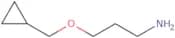
CAS:Versatile small molecule scaffoldFormula:C7H18N2Purezza:Min. 95%Peso molecolare:130.23 g/mol3-(Cyclopropylmethoxy)propan-1-amine
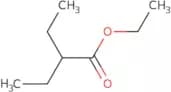
CAS:Versatile small molecule scaffoldFormula:C7H15NOPurezza:Min. 95%Peso molecolare:129.2 g/molEthyl 2-Ethylbutyrate
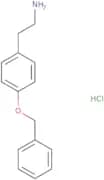
CAS:Ethyl 2-ethylbutyrate is a fatty acid ester that is synthesized from butyric acid and ethanol. It has been shown to have anti-inflammatory properties, which may be due to its ability to suppress pro-inflammatory cytokines such as IL-6 and TNF-α. This compound also suppresses the production of IL-10, an anti-inflammatory cytokine. The activity index of this product is 1.5.Formula:C8H16O2Purezza:Min. 95%Peso molecolare:144.21 g/mol4-Benzyloxy-Phenethylamine hydrochloride
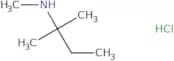
CAS:Versatile small molecule scaffoldFormula:C15H18ClNOPurezza:Min. 95%Peso molecolare:263.77 g/molMethyl(2-methylbutan-2-yl)amine hydrochloride
CAS:Versatile small molecule scaffoldFormula:C6H16ClNPurezza:Min. 95%Peso molecolare:137.65 g/mol2,2-Dimethylpent-4-enenitrile
CAS:2,2-Dimethylpent-4-enenitrile is an organic compound that can be synthesized by the reaction of bromomethyl cyclopropane with a Grignard reagent. It is a useful synthetic intermediate for the synthesis of imines and carbonitriles. Grignard reagents are nucleophilic and react with alkenes to form addition products called imines. 2,2-Dimethylpent-4-enenitrile is a cyclic molecule that reacts with nucleophiles such as Grignard reagents in a nucleophilic substitution reaction. The addition product formed is known as an imine.Formula:C7H11NPurezza:Min. 95%Peso molecolare:109.17 g/mol2,2-Dimethyl-3,4-dihydronaphthalen-1-one
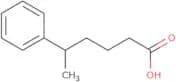
CAS:Versatile small molecule scaffoldFormula:C12H14OPurezza:Min. 95%Peso molecolare:174.24 g/mol5-Phenylhexanoic acid
CAS:5-Phenylhexanoic acid is an organic compound that belongs to the group of alcohols. It can be synthesised by a two-step process, which involves oxidation of benzylic alcohols and fission of the resulting aldehydes. The kinetic analysis of this reaction has shown that it proceeds with a rate law that follows first order kinetics. The analyses have also shown that 5-phenylhexanoic acid is oxidised in the presence of cobaltic perchlorate, which leads to the formation of cyanide as well as alkyl bromides and hydrocarbons.Formula:C12H16O2Purezza:Min. 95%Peso molecolare:192.25 g/mol2-(Dimethylamino)-1-(4-methoxyphenyl)ethanol
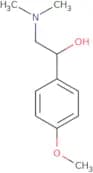
CAS:Versatile small molecule scaffold
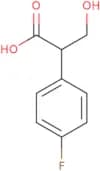
Formula:C11H17NO2Purezza:Min. 95%Peso molecolare:195.26 g/mol2-(4-Fluorophenyl)-3-hydroxypropanoic acid
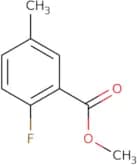
CAS:Versatile small molecule scaffoldFormula:C9H9FO3Purezza:Min. 95%Peso molecolare:184.16 g/molMethyl 2-Fluoro-5-methylbenzoate
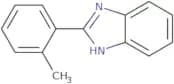
CAS:Versatile small molecule scaffoldFormula:C9H9FO2Purezza:Min. 95%Peso molecolare:168.17 g/mol2-(2-Methylphenyl)-1H-1,3-benzodiazole
CAS:Versatile small molecule scaffold
Formula:C14H12N2Purezza:Min. 95%Peso molecolare:208.26 g/mol2-Phenylglutaric anhydride
CAS:2-Phenylglutaric anhydride is a chemical compound that is used in organic chemistry as a phase-transfer reagent, because of its ability to exchange between the organic and aqueous phases. It has been shown to be a useful modifier for preparative high performance liquid chromatography (prep HPLC) due to its low solubility in water and non-volatility. 2-Phenylglutaric anhydride can be used as a sample preparation technique for the separation of carboxylic acid derivatives by preparative HPLC. The use of this chemical has allowed for advances in the field of preparative chromatography, including the development of new strategies and techniques.
2-Phenylglutaric anhydride is also known to have thermodynamic properties that are favorable for column chromatography. This compound has been shown to be stable at higher temperatures, which allows for optimization of column packing materials with supercritical fluids.Formula:C11H10O3Purezza:Min. 95%Peso molecolare:190.19 g/mol
![tert-Butyl N-[2-(4-phenylbutanamido)ethyl]carbamate](/_next/image/?url=https%3A%2Fstatic.cymitquimica.com%2Fproducts%2F3D%2Fthumb-webp%2FCAC27668.webp&w=3840&q=75)

carbamoyl}methyl)carbamate](/_next/image/?url=https%3A%2Fstatic.cymitquimica.com%2Fproducts%2F3D%2Fthumb-webp%2FCAC27280.webp&w=3840&q=75)
![4-[4-(Benzyloxy)phenyl]pyridine](/_next/image/?url=https%3A%2Fstatic.cymitquimica.com%2Fproducts%2F3D%2Fthumb-webp%2FCAB90666.webp&w=3840&q=75)
![2-[(2-Methoxyethyl)sulfanyl]acetic acid](/_next/image/?url=https%3A%2Fstatic.cymitquimica.com%2Fproducts%2F3D%2Fthumb-webp%2FCAB90236.webp&w=3840&q=75)
![5-[(3-Fluorophenyl)methyl]-1H-1,2,4-triazol-3-amine](/_next/image/?url=https%3A%2Fstatic.cymitquimica.com%2Fproducts%2F3D%2Fthumb-webp%2FCAB54497.webp&w=3840&q=75)
![2-[2-Fluoro-3-(trifluoromethyl)phenyl]-4,4,5,5-tetramethyl-1,3,2-dioxaborolane](/_next/image/?url=https%3A%2Fstatic.cymitquimica.com%2Fproducts%2F3D%2Fthumb-webp%2FCAB52648.webp&w=3840&q=75)
![2-[3-(Difluoromethyl)-5-fluorophenyl]-4,4,5,5-tetramethyl-1,3,2-dioxaborolane](/_next/image/?url=https%3A%2Fstatic.cymitquimica.com%2Fproducts%2F3D%2Fthumb-webp%2FCAB52604.webp&w=3840&q=75)
![2-[3-(Difluoromethyl)phenyl]-4,4,5,5-tetramethyl-1,3,2-dioxaborolane](/_next/image/?url=https%3A%2Fstatic.cymitquimica.com%2Fproducts%2F3D%2Fthumb-webp%2FCAB52589.webp&w=3840&q=75)