Building Blocks
Sottocategorie di "Building Blocks"
- Acidi boronici e derivati dell'acido boronico(5.780 prodotti)
- Building Blocks Chirali(1.239 prodotti)
- Building Blocks Idrocarburici(6.100 prodotti)
- Building Blocks organici(61.005 prodotti)
Trovati 205234 prodotti di "Building Blocks"
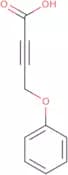
4-Phenoxybut-2-ynoic acid
CAS:Versatile small molecule scaffold
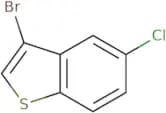
Formula:C10H8O3Purezza:Min. 95%Peso molecolare:176.17 g/mol3-bromo-5-chloro-1-benzothiophene
CAS:Versatile small molecule scaffold
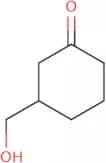
Formula:C8H4BrClSPurezza:Min. 95%Peso molecolare:247.53 g/mol3-(Hydroxymethyl)cyclohexanone
CAS:Versatile small molecule scaffold
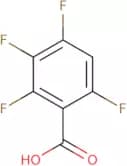
Formula:C7H12O2Purezza:Min. 95%Peso molecolare:128.17 g/mol2,3,4,6-Tetrafluorobenzoic acid
CAS:2,3,4,6-Tetrafluorobenzoic acid is a synthetic chemical that is used as a growth regulator in plants. It is often found in the form of its sodium salt. 2,3,4,6-Tetrafluorobenzoic acid regulates plant growth by inhibiting the production of auxins and other hormones. This compound has been shown to inhibit the synthesis of chlorophyll and disrupt plant metabolism at high concentrations. 2,3,4,6-Tetrafluorobenzoic acid also has been shown to be an effective insecticide when applied to plants.
Formula:C7H2F4O2Purezza:Min. 95%Peso molecolare:194.08 g/mol5,5-Dimethyldihydrothiophen-3(2H)-one
CAS:Versatile small molecule scaffold
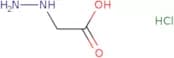
Formula:C6H10OSPurezza:Min. 95%Peso molecolare:130.21 g/mol2-Hydrazinylacetic acid hydrochloride
CAS:2-Hydrazinylacetic acid hydrochloride is a nitro compound that is used as an intermediate in organic synthesis and as a pharmaceutical agent. This drug has antiviral activity, and has been shown to inhibit the replication of both influenza virus and human immunodeficiency virus. It also inhibits angiotensin-converting enzyme, which is involved in the regulation of blood pressure and blood volume. In addition, 2-hydrazinylacetic acid hydrochloride inhibits the production of hepatitis B virus surface antigen (HBsAg) in infected cells and inhibits the growth of cultured hepatoma cells. This drug also has anti-inflammatory properties and can be used to treat inflammatory diseases such as rheumatoid arthritis. 2-Hydrazinylacetic acid hydrochloride is absorbed by the skin when topically applied, but not through oral administration.Formula:C2H7ClN2O2Purezza:Min. 95%Peso molecolare:126.54 g/mol1-[4-(Propan-2-yl)phenyl]propan-2-amine
CAS:Prodotto controllatoVersatile small molecule scaffold
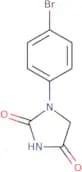
Formula:C12H19NPurezza:Min. 95%Peso molecolare:177.29 g/mol1-(4-Bromophenyl)imidazolidine-2,4-dione
CAS:Versatile small molecule scaffold
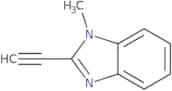
Formula:C9H7BrN2O2Purezza:Min. 95%Peso molecolare:255.07 g/mol2-Ethynyl-1-methyl-1H-1,3-benzodiazole
CAS:2-Ethynyl-1-methyl-1H-1,3-benzodiazole is a fluorescent compound that has been shown to emit light in the visible region of the spectrum. The emission of light from this compound is due to its alkynyl group, which contains an electron with a high degree of reactivity. This chemical also has inorganic functionalities and optical properties that make it useful for inorganic chemistry and luminescent or optical devices.
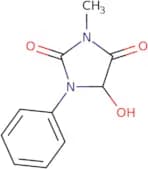
Formula:C10H8N2Purezza:Min. 95%Peso molecolare:156.18 g/mol5-Hydroxy-3-methyl-1-phenylimidazolidine-2,4-dione
CAS:5-Hydroxy-3-methyl-1-phenylimidazolidine-2,4-dione is a phenylcarbamate that is used as a herbicide and fungicide. The compound is transformed into glyoxylic acid by the action of sodium ethoxide in the presence of prototropic acid. It has been shown that this transformation occurs at a faster rate when it is added to water than when it is added to an organic solvent. The glyoxylic acid derivatives are then formed by adding an organic solvent such as isopropyl alcohol to the solution. This reaction produces various compounds depending on the type of alcohol used and its concentration.Formula:C10H10N2O3Purezza:Min. 95%Peso molecolare:206.2 g/mol1H-Pyrrolo[3,2-b]pyridin-2(3H)-one
CAS:1H-Pyrrolo[3,2-b]pyridin-2(3H)-one belongs to a class of heterocyclic compounds that are structurally related to the pyridine ring. It has been shown to inhibit the activity of b-raf and may be used as an anticancer agent. 1H-Pyrrolo[3,2-b]pyridin-2(3H)-one is synthesized from formamide and ammonium acetate by a two step process involving nucleophilic substitution and elimination reactions. It is hypothesized that 1H-Pyrrolo[3,2-b]pyridin-2(3H)-one may have an effect on cancer due to its ability to inhibit protein synthesis.
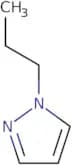
Formula:C7H6N2OPurezza:Min. 95%Peso molecolare:134.14 g/mol1-Propylpyrazole
CAS:1-Propylpyrazole is a non-classical inhibitor of aldehyde oxidase that has been shown to have an inhibitory effect on pentane. 1-Propylpyrazole has peroxidase-like activity, which means it can bind to lipid hydroperoxides in the presence of hydrogen peroxide or peroxidase. It has also been shown to be an effective inhibitor of dehydrogenase, which is an enzyme that catalyzes the oxidation of aldehydes and ketones to carboxylic acids. This drug is not active against classical aldehyde oxidases such as alcohol dehydrogenase, but it does inhibit polyunsaturated fatty acid synthesis by binding with cytochrome P450 enzymes.
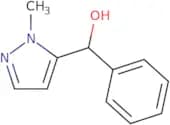
Formula:C6H10N2Purezza:Min. 95%Peso molecolare:110.16 g/mol(1-Methyl-1H-pyrazol-5-yl)(phenyl)methanol
CAS:Versatile small molecule scaffold
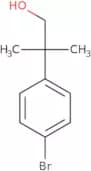
Formula:C11H12N2OPurezza:Min. 95%Peso molecolare:188.23 g/mol2-(4-Bromophenyl)-2-methylpropan-1-ol
CAS:Versatile small molecule scaffold
Formula:C10H13BrOPurezza:Min. 95%Peso molecolare:229.11 g/mol3-Nitro-6,7,8,9-tetrahydro-5H-benzo[7]annulen-5-one
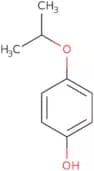
CAS:Versatile small molecule scaffoldFormula:C11H11NO3Purezza:Min. 95%Peso molecolare:205.21 g/mol4-Isopropoxyphenol
CAS:4-Isopropoxyphenol is a reactive molecule that can undergo nucleophilic attack. It is an intermediate in the reaction mechanism of phenolic antioxidants, such as salicylaldoxime and mequinol. 4-Isopropoxyphenol is synthesized by the condensation of anilines with phenols, followed by acid hydrolysis. The nature of 4-isopropoxyphenol is primarily nucleophilic, making it a potential candidate for optimization or predictive modelling.
Formula:C9H12O2Purezza:Min. 95%Peso molecolare:152.19 g/molN-[3-(Dimethylamino)phenyl]acetamide
CAS:Versatile small molecule scaffold
Formula:C10H14N2OPurezza:Min. 95%Peso molecolare:178.23 g/molDiaminophosphoryloxybenzene
CAS:Diaminophosphoryloxybenzene (DAPOB) is a chemical that can be used to measure the uptake of creatine kinase in human serum. It has been shown to form a complex with the enzyme, which is then transported into cells. The uptake of creatine kinase in the cells can be measured by measuring the amount of DAPOB that is released from the inside of the cells and into the surrounding medium. In order to use this technique, a collagen gel needs to be prepared and placed around the sample containing DAPOB. The kinetic properties of DAPOB are determined by observing how quickly it reacts with other chemicals in solution. DAPOB also forms intramolecular hydrogen bonds with itself, which may affect its ability to react with other compounds. X-ray crystal structures have revealed that DAPOB binds to protein synthesis enzymes such as polymerase chain reaction (PCR). These interactions are thought to be important for understanding how DAPOB affects protein
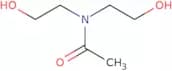
Formula:C6H9N2O2PPurezza:Min. 95%Colore e forma:PowderPeso molecolare:172.12 g/molN,N-Bis(2-hydroxyethyl)acetamide
CAS:N,N-Bis(2-hydroxyethyl)acetamide is a nonionic surfactant which is used as an emulsifier and dispersing agent. It is often used in detergents, textile processing, papermaking, and for the production of cosmetics. N,N-Bis(2-hydroxyethyl)acetamide has been shown to suppress the growth of Candida parapsilosis and other microbial strains. It also inhibits the production of fluconazole by wild-type Candida albicans. N,N-Bis(2-hydroxyethyl)acetamide may be used in conjunction with benzyl alcohol as an antifungal agent for topical application.br>br>NMR spectra have shown that this molecule has acetal groups that can copolymerize with other molecules. These acetal groups are resistant to degradation by enzymes such as beta-glucosidase and alpha-amylase.
Formula:C6H13NO3Purezza:Min. 95%Peso molecolare:147.17 g/mol2-(Diethylamino)acetamide
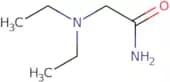
CAS:2-(Diethylamino)acetamide is an aliphatic hydrocarbon that inhibits the replication of viruses. It also has anti-inflammatory activity and can be used to treat respiratory allergies, such as asthma and hay fever. 2-(Diethylamino)acetamide may be used as a scrubbing agent in the removal of pollutants from industrial emissions. The compound is stable at high temperatures and has been shown to inhibit the growth of bacteria by interfering with their respiration process. 2-(Diethylamino)acetamide also inhibits the production of monocarboxylic acids such as formic acid, acetic acid, and lactic acid in bacteria, which are important for their survival.
Formula:C6H14N2OPurezza:Min. 95%Peso molecolare:130.19 g/mol


![1-[4-(Propan-2-yl)phenyl]propan-2-amine](/_next/image/?url=https%3A%2Fstatic.cymitquimica.com%2Fproducts%2F3D%2Fthumb-webp%2FHBA56062.webp&w=3840&q=75)
![1H-Pyrrolo[3,2-b]pyridin-2(3H)-one](/_next/image/?url=https%3A%2Fstatic.cymitquimica.com%2Fproducts%2F3D%2Fthumb-webp%2FHBA50105.webp&w=3840&q=75)
![3-Nitro-6,7,8,9-tetrahydro-5H-benzo[7]annulen-5-one](/_next/image/?url=https%3A%2Fstatic.cymitquimica.com%2Fproducts%2F3D%2Fthumb-webp%2FHAA50793.webp&w=3840&q=75)
![N-[3-(Dimethylamino)phenyl]acetamide](/_next/image/?url=https%3A%2Fstatic.cymitquimica.com%2Fproducts%2F3D%2Fthumb-webp%2FHAA47495.webp&w=3840&q=75)