Building Blocks
Sottocategorie di "Building Blocks"
- Acidi boronici e derivati dell'acido boronico(5.778 prodotti)
- Building Blocks Chirali(1.243 prodotti)
- Building Blocks Idrocarburici(6.099 prodotti)
- Building Blocks organici(61.038 prodotti)
Trovati 205376 prodotti di "Building Blocks"
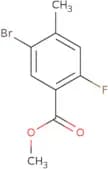
Methyl 5-bromo-2-fluoro-4-methylbenzoate
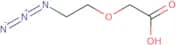
CAS:Versatile small molecule scaffoldFormula:C9H8BrFO2Purezza:Min. 95%Peso molecolare:247.06 g/mol2-(2-Azidoethoxy)acetic Acid
CAS:2-(2-Azidoethoxy)acetic Acid is a hydrophobic antibacterial agent that can be used to inhibit bacterial growth by disrupting the cell membrane. It has been shown to inhibit the growth of Staphylococcus aureus and Escherichia coli, which may be due to its ability to bind to the glutathione moiety in the bacterial cell membrane. 2-(2-Azidoethoxy)acetic Acid has been shown to have antimicrobial activity against both Gram-positive and Gram-negative bacteria in vitro. This compound is also able to cross the cell membrane, inhibiting bacterial replication in vivo.
Formula:C4H7N3O3Purezza:Min. 95%Peso molecolare:145.12 g/mol(2,2-Difluoroethyl)hydrazine hydrochloride
CAS:Versatile small molecule scaffoldFormula:C2H7ClF2N2Purezza:Min. 95%Peso molecolare:132.54 g/mol(R)-(-)-3-Amino-3-phenylpropionic acid
CAS:(R)-(-)-3-Amino-3-phenylpropionic acid is a hydrogenated, stereoselective β-amino acid that is involved in the biosynthesis of animal health. The enzyme acylase catalyzes this reaction by binding with chiral pyridoxal phosphate to form an acylation product. The stereospecificity of the reaction is determined by whether the enzyme has a preference for L or D amino acids. Acylases are found in organisms such as mammals and bacteria.Formula:C9H11NO2Purezza:Min. 95%Colore e forma:PowderPeso molecolare:165.19 g/mol2-Amino-4-hydroxypyridine
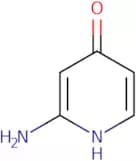
CAS:2-Amino-4-hydroxypyridine (2AH) is a synthetic, isomeric compound that has been synthesized in two different forms: 3-bromo-5-hydroxypyridine and hydroxy group. 2AH has been shown to be chemically stable at room temperature and pH levels of less than 7. It also withstands the loss of membrane fluidity induced by amides, such as 3-amino-2-bromopyridine. 2AH can be used to synthesize oxindole derivatives, which are found in natural gas, and piperidines. This chemical can also be used for aminations with pyrrole or 2 amino 4 hydroxypyridine.Formula:C5H6N2OPurezza:Min. 95%Colore e forma:PowderPeso molecolare:110.11 g/moltert-Butyl 4-(5-aminoisoxazol-3-yl)piperidine-1-carboxylate
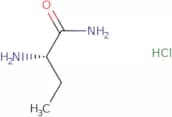
CAS:Versatile small molecule scaffoldFormula:C13H21N3O3Purezza:Min. 95%Peso molecolare:267.32 g/mol(S)-2-Aminobutyramide hydrochloride
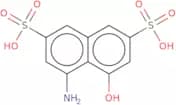
CAS:(S)-2-Aminobutyramide hydrochloride is a chiral amide compound, which is utilized primarily in scientific research settings. This compound is typically synthesized through the resolution of racemic mixtures or other specialized chemical processes that ensure the purity and stereospecificity required for research purposes.The mode of action of (S)-2-Aminobutyramide hydrochloride revolves around its role as an intermediate in chemical synthesis, serving as a building block for the production of more complex molecules. It has a noteworthy chiral configuration, which makes it an essential component in the formation of enantiomerically pure substances. This aspect is crucial in fields like pharmaceuticals, where stereochemistry can significantly impact biological activity.Its applications extend to various domains such as the synthesis of therapeutic agents, biochemical research, and the development of novel materials. Researchers value it for its ability to contribute to the fine-tuning of molecular assemblies, making it indispensable in studies focused on the interaction and function of chiral molecules. The hydrochloride form aids in its stability and solubility, which are important attributes for laboratory manipulation and experimentation.Formula:C4H10N2O•HClPurezza:Min. 95%Colore e forma:White PowderPeso molecolare:138.6 g/mol4-Amino-5-hydroxy-2,7-naphthalenedisulfonic acid
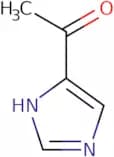
CAS:4-Amino-5-hydroxy-2,7-naphthalenedisulfonic acid (4-AHNDS) is a hydroxyl group and nitrogen containing molecule. It is a reactive compound that can be used to extract anions from water. 4-AHNDS has been shown to react with sodium ions in the presence of water, forming a salt that is soluble in water. This chemical also reacts with organic molecules and forms stable complexes. The reaction mechanism of 4-AHNDS has been studied by kinetic analysis and surface methodology measurements.Formula:C10H9NO7S2Purezza:Min. 95%Colore e forma:PowderPeso molecolare:319.31 g/mol4-Acetylimidazole
CAS:4-Acetylimidazole is a histidine analogue that has been shown to have anticancer activity in breast cancer cells. It can react with amines and form imidazoles. The hydroxyl group on the 4-position of the imidazole ring is able to undergo dehydration, which leads to the formation of a chloride ion. This reaction mechanism is reversible and can be used in organic synthesis. 4-Acetylimidazole can also act as an h2 receptor antagonist, although it does not bind to the zwitterionic site of the h2 receptor. NMR spectra show that 4-acetylimidazole exists as a zwitterion in water solution, but becomes a monovalent ion when dissolved in an organic solvent such as methanol or acetone. 4-Acetylimidazole is chemically stable and does not react with poloxamer.
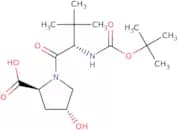
Formula:C5H6N2OPurezza:Min. 95%Colore e forma:Yellow PowderPeso molecolare:110.11 g/mol1-(Boc-L-tert-leucinyl)-(4R)-4-hydroxy-L-proline
CAS:Versatile small molecule scaffoldFormula:C16H28N2O6Purezza:Min. 95%Peso molecolare:344.4 g/mol1-[(tert-butoxy)carbonyl]-5,5-difluoropiperidine-3-carboxylic acid
CAS:Versatile small molecule scaffold
Formula:C11H17F2NO4Purezza:Min. 95%Peso molecolare:265.3 g/mol3-Bromo-2-fluoro-6-methylpyridine
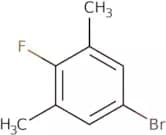
CAS:Please enquire for more information about 3-Bromo-2-fluoro-6-methylpyridine including the price, delivery time and more detailed product information at the technical inquiry form on this pageFormula:C6H5BrFNPurezza:Min. 95%Peso molecolare:190.01 g/mol5-Bromo-2-fluoro-1,3-dimethylbenzene
CAS:Please enquire for more information about 5-Bromo-2-fluoro-1,3-dimethylbenzene including the price, delivery time and more detailed product information at the technical inquiry form on this pageFormula:C8H8BrFPurezza:Min. 95%Colore e forma:Clear Colourless To Yellow LiquidPeso molecolare:203.05 g/molBenzophenone-4-carboxylic acid
CAS:Organic intermediate
Formula:C14H10O3Purezza:Min. 98 Area-%Colore e forma:White PowderPeso molecolare:226.23 g/mol4-Bromobenzaldehyde
CAS:4-Bromobenzaldehyde is a chemical compound that belongs to the group of aromatic compounds. It has been shown to have a potent stimulatory effect on locomotor activity in mice, which may be due to its ability to increase levels of epidermal growth factor and gamma-aminobutyric acid in the brain. 4-Bromobenzaldehyde can be synthesized from 2,4-dibromophenol and anhydrous copper chloride in the presence of sodium hydroxide. The reaction mechanism for this synthesis is believed to involve an intermediate enamine form of 4-bromobenzaldehyde, which can then undergo hydrolysis into 2,4-dibromophenol and benzaldehyde. This product is used as a reagent in organic synthesis because it can be used to form esters with trifluoroacetic acid or hydrochloric acid in high yield.
Formula:C7H5BrOPurezza:Min. 90 Area-%Colore e forma:White PowderPeso molecolare:185.02 g/mol1-Benzofuran-5-carbaldehyde
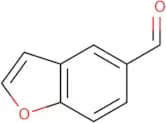
CAS:1-Benzofuran-5-carbaldehyde is a synthetic compound that inhibits the enzyme ido1. It has been shown to have potent cytotoxicity, potent inhibition, and neurotrophic properties in a number of cell lines. 1-Benzofuran-5-carbaldehyde also exhibits inhibitory effects on the enzymes hydrolyzing dopamine, which is involved in the synthesis of norepinephrine and epinephrine. The chemical structure of 1-benzofuran-5-carbaldehyde closely resembles that of dopamine and its derivatives, and can be used for the treatment of neurodegenerative diseases such as Parkinson's disease.Formula:C9H6O2Purezza:Min. 95%Colore e forma:Yellow To Brown SolidPeso molecolare:146.14 g/mol3-Bromo-4-nitropyridine
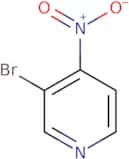
CAS:3-Bromo-4-nitropyridine is a pyridine compound that has been identified as an environmental contaminant. It is used to synthesize other compounds, such as 4-(3-bromopyridin-2-yl)morpholine, which is used in the synthesis of acetonitrile. 3-Bromo-4-nitropyridine undergoes nucleophilic substitution reactions with amines, leading to homoconjugation and bond cleavage. This reaction may be followed by nitration to give 3-(3'-nitro)pyridine. 3-Bromo-4-nitropyridine can be converted into its n-oxide form or into the ionic form by treatment with acetonitrile.Formula:C5H3BrN2O2Purezza:Min. 95%Colore e forma:Yellow PowderPeso molecolare:202.99 g/mol4-Bromo-2,3-difluoropyridine
CAS:Versatile small molecule scaffold
Formula:C5H2BrF2NPurezza:Min. 95%Peso molecolare:193.98 g/mol2-Bromo-5-hydroxypyridine
CAS:2-Bromo-5-hydroxypyridine is an aromatic compound that is used in the synthesis of a variety of pharmaceuticals and other organic compounds. It can be synthesized by the Suzuki coupling reaction from 2-bromobenzaldehyde and 5-aminopyridine. 2-Bromo-5-hydroxypyridine has been shown to be a hepatotoxin in humans, with possible carcinogenic activity. It also has cholinergic properties, as well as being able to cause fluorescence when exposed to halogens. The carbon next to the hydroxyl group is a stereocenter, so there are two different configurations for this molecule. The configuration shown above (R) is the more stable form of this molecule due to its electron withdrawing power on the neighboring oxygen atom.Formula:C5H4BrNOPurezza:Min. 95%Colore e forma:White PowderPeso molecolare:174 g/mol4-Bromo-3-(trifluoromethoxy)pyridine hydrobromide
CAS:Please enquire for more information about 4-Bromo-3-(trifluoromethoxy)pyridine hydrobromide including the price, delivery time and more detailed product information at the technical inquiry form on this pageFormula:C6H3BrF3NO•BrHPurezza:Min. 95%Peso molecolare:322.91 g/mol




![1-[(tert-butoxy)carbonyl]-5,5-difluoropiperidine-3-carboxylic acid](/_next/image/?url=https%3A%2Fstatic.cymitquimica.com%2Fproducts%2F3D%2Fthumb-webp%2FFAC66686.webp&w=3840&q=75)