Building Blocks
Sottocategorie di "Building Blocks"
- Acidi boronici e derivati dell'acido boronico(5.778 prodotti)
- Building Blocks Chirali(1.243 prodotti)
- Building Blocks Idrocarburici(6.099 prodotti)
- Building Blocks organici(61.038 prodotti)
Trovati 205376 prodotti di "Building Blocks"
tert-Butyl 3-(trifluoromethyl)piperazine-1-carboxylate
CAS:Versatile small molecule scaffold
Formula:C10H17F3N2O2Purezza:Min. 95%Peso molecolare:254.25 g/molFmoc-b-Ala-Ala-Pro-OH
CAS:Fmoc-b-Ala-Ala-Pro-OH is a reaction component that can be used in the synthesis of peptides and other compounds. It is a building block for the preparation of complex compounds, such as small molecules, polymers and natural products. Fmoc-b-Ala-Ala-Pro-OH has been shown to be useful in the synthesis of various types of reagents, including antibiotics and pharmaceuticals. This chemical has been reported as a useful scaffold for the preparation of high quality research chemicals. Fmoc-b-Ala-Ala-Pro is also an intermediate in the synthesis of speciality chemicals and fine chemicals.Formula:C26H29N3O6Purezza:Min. 95%Colore e forma:White PowderPeso molecolare:479.53 g/molTert-Butyl 2-(Trifluoromethyl)Piperazine-1-Carboxylate
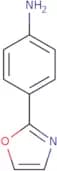
CAS:Versatile small molecule scaffoldFormula:C10H17N2O2F3Purezza:Min. 95%Peso molecolare:254.24 g/mol4-(Oxazol-2-yl)aniline
CAS:Versatile small molecule scaffold
Formula:C9H8N2OPurezza:Min. 95%Peso molecolare:160.17 g/molGlycine - EP
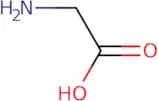
CAS:Glycine is a buffering agent that can be used in electrophoresis for protein samples. It has an optimal pH range of 2.2-3.6 and a pKa of 2.35.
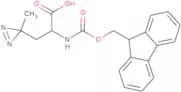
Formula:NH2CH2COOHPurezza:Min. 95%Peso molecolare:75.07 g/molFmoc-L-photo-leucine
CAS:Versatile small molecule scaffoldFormula:C20H19N3O4Purezza:Min. 95%Peso molecolare:365.4 g/molMethyl 4-(2-Bromoethyl)benzoate
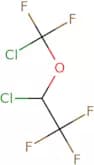
CAS:Methyl 4-(2-bromoethyl)benzoate is a potent HDAC6 inhibitor. It has been shown to inhibit cancer cell growth and induce apoptosis in vitro and in vivo. Methyl 4-(2-Bromoethyl)benzoate is also an anti-cancer agent that inhibits the histone deacetylase enzyme, which then prevents the transcription of genes involved in cancer development. In addition, this agent inhibits the production of prostaglandin E2, which may contribute to its anti-cancer activity. The most common side effects are nausea and vomiting.Formula:C10H11BrO2Purezza:Min. 95%Peso molecolare:243.1 g/mol2-Chloro-2-(chlorodifluoromethoxy)-1,1,1-trifluoroethane
CAS:2-Chloro-2-(chlorodifluoromethoxy)-1,1,1-trifluoroethane (HFC-152a) is a chemical compound that belongs to the group of chlorofluorocarbons. It has been used as a refrigerant and aerosol propellant. HFC-152a is an azeotrope with methyl ethyl ketone and ethyl ketone. It has also been reported to have properties as an ether, acetone, and difluoromethyl.
Formula:C3HCl2F5OPurezza:Min. 95%Peso molecolare:218.94 g/mol1H-[1,2,3]Triazolo[4,5-d]pyrimidin-5-amine
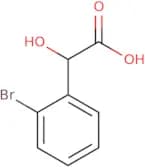
CAS:1H-[1,2,3]Triazolo[4,5-d]pyrimidin-5-amine is a nitro compound that binds to the receptor binding sites of certain inflammatory bowel disease and cancer cells. It also inhibits the production of adenosine in these cells. 1H-[1,2,3]Triazolo[4,5-d]pyrimidin-5-amine has been shown to be effective against bowel disease and cancer by inhibiting cyclic AMP (cAMP) degradation. This drug has also been shown to be an irreversible inhibitor of ischemia reperfusion injury in animal models. 1H-[1,2,3]Triazolo[4,5-d]pyrimidin-5-amine is a nitro compound that binds to the receptor binding sites of certain inflammatory bowel disease and cancer cells. It also inhibits the production of adenosine in these cells. 1HFormula:C4H4N6Purezza:Min. 95%Peso molecolare:136.12 g/mol2-(2-Bromophenyl)-2-hydroxyacetic acid
CAS:2-Bromophenyl-2-hydroxyacetic acid is a ligand that binds to the ethylene receptor in plants and can be used as a monomer for the polymerization of polyethylene. It has been shown that 2-bromophenyl-2-hydroxyacetic acid can also be used as an initiator for the polymerization of β-cyclodextrin. This compound has also been shown to be an analyte in gas chromatography, which is used to separate compounds based on their chemical properties. The use of this compound as a tethering agent has also been investigated with copolymerization reactions in order to create more stable polymers. 2-Bromophenyl-2-hydroxyacetic acid has been found to inhibit nonsteroidal antiinflammatory drugs and may have potential applications for chiral synthesis, such as mandelic acid production.
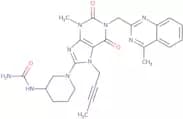
Formula:C8H7BrO3Purezza:Min. 95%Peso molecolare:231.04 g/molN-Carbamoyl linagliptin
CAS:N-Carbamoyl linagliptin is a synthetic drug that is a selective, reversible inhibitor of dipeptidyl peptidase-4 (DPP-4), an enzyme that breaks down the incretin hormones GLP-1 and GIP. This drug has been shown to help control blood glucose levels in patients with type 2 diabetes. It binds to the active site of DPP-4 and prevents it from breaking down GLP-1 and GIP, which leads to increased levels of these hormones in the body. N-Carbamoyl linagliptin has a long half life, making it suitable for once daily administration. It also lacks any significant interactions with other drugs or foods.Formula:C26H29N9O3Purezza:Min. 95%Peso molecolare:515.6 g/mol2-Fluoropyridine-5-carboxaldehyde
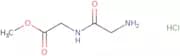
CAS:2-Fluoropyridine-5-carboxaldehyde is a reactive chemical that can be used as an acceptor in organic synthesis. It has been shown to have antibacterial properties, and is also a synthon for the production of prosthetic groups. 2-Fluoropyridine-5-carboxaldehyde reacts with dopamine to form diphenyl ethers, which are used as labels for immunoassays. This chemical can be catalysed and has been shown to be resistant to catalysis. 2-Fluoropyridine-5-carboxaldehyde can also be used in the synthesis of cycloalkanes.Formula:C6H4FNOPurezza:Min. 95%Peso molecolare:125.1 g/molGly-Gly-OMe·HCl
CAS:Gly-Gly-OMe·HCl is a diagnostic agent that can be used to diagnose atherosclerotic lesions. It is conjugated to an organic molecule and then radiolabeled. The conjugate can be detected by cyclopentadienyl, which emits gamma rays when it decays. This conjugate has been shown to selectively accumulate in atherosclerotic lesions of the coronary arteries, where it accumulates with a higher concentration than in the surrounding tissue. This product also has gastroprotective effects on the stomach and liver and can reduce lipid levels in hyperlipidaemic patients.Formula:C5H10N2O3•HClPurezza:Min. 95 Area-%Colore e forma:Slightly Rose PowderPeso molecolare:182.61 g/mol3-Boc-3-azabicyclo[3.2.1]octan-8-amine
CAS:Versatile small molecule scaffoldFormula:C12H22N2O2Purezza:Min. 95%Peso molecolare:226.32 g/mol2-(7-Amino-4-methyl-2-oxo-2H-chromen-3-yl)acetic acid
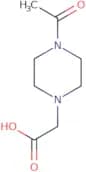
CAS:2-(7-Amino-4-methyl-2-oxo-2H-chromen-3-yl)acetic acid is a monoclonal antibody that recognizes basic proteins. It is used to study the receptor binding of these proteins and their role in inflammatory diseases. 2-(7-Amino-4-methyl-2-oxo-2H-chromen-3,6-)acetic acid is an amino function that enhances the localization of cholinergic receptors at the apical membrane of epithelial cells. It also inhibits the efflux pump activity of bacteria, which may be useful for treating bacterial infections.Formula:C12H11NO4Purezza:Min. 95%Peso molecolare:233.22 g/mol(4-Acetylpiperazin-1-yl)acetic acid
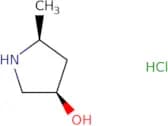
CAS:Versatile small molecule scaffoldFormula:C8H14N2O3Purezza:Min. 95%Peso molecolare:186.21 g/mol(3R,5S)-5-Methylpyrrolidin-3-ol HCl
CAS:Versatile small molecule scaffoldFormula:C5H12ClNOPurezza:Min. 95%Peso molecolare:137.61 g/mol1,4-Cubanedicarboxylic acid
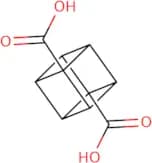
CAS:1,4-Cubanedicarboxylic acid is an organic compound that is a diacid. It has been shown to be an inhibitor of chloride secretion in the intestine, and can also decrease the rate at which hydrogen ions are released into the intestinal lumen. 1,4-Cubanedicarboxylic acid is also a cross-linking agent that can be used in organic solvents for large-scale synthesis. The optical properties of 1,4-cubanedicarboxylic acid have been studied using FTIR spectroscopy. This agent has been found to react with intramolecular hydrogen to form a six membered ring.Formula:C10H8O4Purezza:Min. 95%Peso molecolare:192.17 g/mol(2S,3S)-2-Methylpyrrolidin-3-ol hydrochloride
CAS:Versatile small molecule scaffoldFormula:C5H12ClNOPurezza:Min. 95%Peso molecolare:137.61 g/mol2-Fluoro-3-pyridineboronic acid
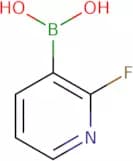
CAS:2-Fluoro-3-pyridineboronic acid is an amide that can be used as a catalyst for transfer reactions. It forms a complex with copper chloride and isohexane, which is then heated to produce the desired product. 2-Fluoro-3-pyridineboronic acid has been used in analytical methods such as constant pressure and methyl ethyl method. This compound also has high resistance to water vapor, hexane, and organic solvents. 2-Fluoro-3-pyridineboronic acid has been shown to inhibit the MCL-1 protein, which plays a role in regulating apoptosis. It can be used as a potential therapeutic agent against infectious diseases such as tuberculosis and HIV/AIDS due to its ability to inhibit MCL-1 protein expression.
Formula:C5H5NO2BFPurezza:Min. 95%Colore e forma:White PowderPeso molecolare:140.91 g/mol



![1H-[1,2,3]Triazolo[4,5-d]pyrimidin-5-amine](/_next/image/?url=https%3A%2Fstatic.cymitquimica.com%2Fproducts%2F3D%2Fthumb-webp%2FKAA17984.webp&w=3840&q=75)

![3-Boc-3-azabicyclo[3.2.1]octan-8-amine](/_next/image/?url=https%3A%2Fstatic.cymitquimica.com%2Fproducts%2F3D%2Fthumb-webp%2FFDC76351.webp&w=3840&q=75)