Building Blocks
Sottocategorie di "Building Blocks"
- Acidi boronici e derivati dell'acido boronico(5.778 prodotti)
- Building Blocks Chirali(1.243 prodotti)
- Building Blocks Idrocarburici(6.099 prodotti)
- Building Blocks organici(61.038 prodotti)
Trovati 205376 prodotti di "Building Blocks"
BocNH-PEG3-CH2CH2NH2
CAS:BocNH-PEG3-CH2CH2NH2 is a PEG compound with two different functional groups (also known as heterobifunctional). Unlike homobifunctional PEG compounds (same functional group on both ends), this type of compounds are more versatile as have two different anchor points. BocNH-PEG3-CH2CH2NH2 is used as a linker and spacer to add a PEG moiety, via pegylation (a bioconjugation technique) to proteins, peptides, oligonucleotides, small molecules and nanoparticles.Formula:C13H28N2O5Purezza:Min. 95%Colore e forma:Clear LiquidPeso molecolare:292.37 g/mol(R)-4-Boc-2-methylpiperazine
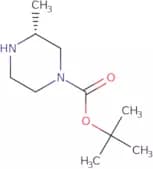
CAS:(R)-4-Boc-2-methylpiperazine is a picolinamide dehydrogenase inhibitor that is used to treat type 2 diabetes. It has been shown to reduce blood glucose levels in animal models and human subjects with type 2 diabetes mellitus. The mechanism of action is thought to be via inhibition of the 11β-hydroxysteroid dehydrogenase, which increases insulin sensitivity. This drug also has good oral bioavailability, does not cause weight gain, and has an acceptable safety profile.
Formula:C10H20N2O2Purezza:Min. 95%Colore e forma:White PowderPeso molecolare:200.28 g/mol4-tert-Butoxybenzaldehyde
CAS:4-tert-Butoxybenzaldehyde is a colorless liquid that has a viscosity of 0.3 mm2/s at 25 °C. It can be synthesized by reacting pyridine with hydrochloric acid in the presence of a Grignard reagent. 4-tert-Butoxybenzaldehyde reacts with phenolic antioxidants to form an ester, which can be used as an industrial solvent. The crystal x-ray diffraction pattern of 4-tert-Butoxybenzaldehyde exhibits peaks at 2θ = 8.0, 11.5, and 18.5° corresponding to the (100), (200), and (220) planes, respectively. This chemical can also undergo reactions that lead to termination or transfer reactions, including diethyl ketomalonate formation with diethyl malonate in the presence of water as a solvent and potassium hydroxide as a catalyst for transfer reactions.END>Formula:C11H14O2Purezza:Min. 95%Colore e forma:PowderPeso molecolare:178.23 g/mol4-(Boc-amino)pyridine
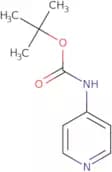
CAS:4-(Boc-amino)pyridine is a pyridine derivative that exhibits magnetic properties. It can be used to study the luminescence properties of pyridine rings. 4-(Boc-amino)pyridine inhibits cell proliferation and growth by binding to the kinase receptor in the cytoplasm, which blocks phosphorylation of proteins in the cell. This compound inhibits hCT-116 cells, which are human colorectal carcinoma cells, and has shown promising results in xenograft studies. 4-(Boc-amino)pyridine is an anionic molecule that can be used as a starting material for synthesis of other compounds. It was first synthesized by reacting 2-aminopyridine with boron trichloride in acetonitrile.Formula:C10H14N2O2Purezza:Min. 95%Colore e forma:White/Off-White SolidPeso molecolare:194.23 g/molBenzophenone-4,4'-dicarboxylic acid
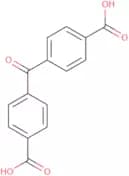
CAS:Benzophenone-4,4'-dicarboxylic acid is a reactive compound that can form ethylene. It has been shown to be an ultrafast encapsulation material for organic molecules and metal ions. Benzophenone-4,4'-dicarboxylic acid can be used in simulations to study the molecule's surface properties and densities. The linker also plays an important role in determining the diffraction of the molecule. This compound is susceptible to delamination when exposed to silicon surfaces.Formula:C15H10O5Purezza:Min. 95%Colore e forma:White PowderPeso molecolare:270.24 g/mol1,2-Bis(chlorodimethylsilyl)ethane
CAS:1,2-Bis(chlorodimethylsilyl)ethane is a reactive chemical that is synthesized from hydroxychloroformates and hydrogen chloride. It reacts with silicon to form chlorosilanes, which are then used in the polymerization of siloxanes. 1,2-Bis(chlorodimethylsilyl)ethane has been shown to be an effective initiator for the polymerization of methyl methacrylate and ethylene glycol dimethacrylate. 1,2-Bis(chlorodimethylsilyl)ethane is also used as a hydroxyl group donor in organic reactions.
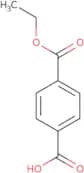
Formula:C6H16Cl2Si2Purezza:Min. 95 Area-%Colore e forma:PowderPeso molecolare:215.27 g/mol1,4-Benzenedicarboxylic acid, monoethyl ester
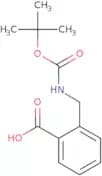
CAS:1,4-Benzenedicarboxylic acid, monoethyl ester (1,4-BDE) is a monomer that is used in the manufacture of polycarbonates and other plastics. 1,4-BDE is also used as a solvent for xylene and butanol. It has been shown to be useful in the production of polyester fibers. The monomer can be synthesized by reacting ethylene with terephthalic acid or dimethyl terephthalate (DMT). This reaction produces 1,4-BDE and methanol as byproducts. The process is carried out at temperatures of 250 °C to 300 °C and under atmospheric pressure. The purified product can be isolated using distillation or extraction with organic solvents such as benzene or butanol. The reaction can be carried out in the presence of ruthenium, which acts as a catalyst.Formula:C10H10O4Purezza:Min. 95%Colore e forma:White PowderPeso molecolare:194.18 g/mol2-(Boc-aminomethyl)benzoic acid
CAS:2-(Boc-aminomethyl)benzoic acid is a versatile building block with a wide range of applications in the field of organic chemistry. It has been shown to be useful as a reagent in the synthesis of complex compounds and fine chemicals, as well as a reaction component for the preparation of pharmaceuticals. 2-(Boc-aminomethyl)benzoic acid can also be used as an intermediate in the synthesis of speciality chemicals such as herbicides, pesticides, and fungicides.
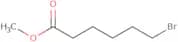
Formula:C13H17NO4Purezza:Min. 95%Colore e forma:PowderPeso molecolare:251.28 g/mol6-Bromohexanoic acid methyl ester
CAS:6-Bromohexanoic acid methyl ester is a linker that can be used in the synthesis of amides. This compound is synthesized by reaction between 2-bromobutyric acid and malonic acid, followed by hydrolysis with sodium hydroxide. 6-Bromohexanoic acid methyl ester is an efficient method for the preparation of amides. It is biologically active and has been shown to have anti-inflammatory properties in biological studies.
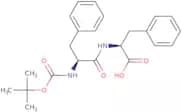
Formula:C7H13BrO2Purezza:Min. 95%Colore e forma:Clear LiquidPeso molecolare:209.08 g/molBoc-Phe-Phe-OH
CAS:Boc-Phe-Phe-OH is a linker that is used to create homologues. It has been shown to be able to form supramolecular structures and encapsulate biomolecules, such as amino acids. The ester linkage of Boc-Phe-Phe-OH can be modified by the addition of a carboxylic acid, which can lead to changes in its fluorescence and magnetic properties. Boc-Phe-Phe-OH is primarily used as an intermediate for fluorescent probes or other molecules.
Formula:C23H28N2O5Purezza:Min. 95%Peso molecolare:412.48 g/molN,N-bis(Hydroxyethyl)-2-aminoethanesulfonic acid sodium salt
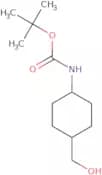
CAS:N,N-bis(Hydroxyethyl)-2-aminoethanesulfonic acid sodium salt is a cross-linking agent for polymers. It has been shown to react with dimethylol propionic acid to form a hydroxyl group and a carboxylate. This reaction yields the product of bis(hydroxyethyl) aminosulfonic acid sodium salt. N,N-bis(Hydroxyethyl)-2-aminoethanesulfonic acid sodium salt can be used as a cross-linking agent in the manufacture of biodegradable polymers that are environmentally friendly and biocompatible. The viscosity of the reaction solution increases with an increase in temperature, which is due to the hydrophobic interaction between molecules.Formula:C6H14NO5SNaPurezza:Min. 95%Colore e forma:PowderPeso molecolare:235.23 g/moltert-Butyl trans-4-(hydroxymethyl)cyclohexylcarbamate
CAS:Please enquire for more information about tert-Butyl trans-4-(hydroxymethyl)cyclohexylcarbamate including the price, delivery time and more detailed product information at the technical inquiry form on this pageFormula:C12H23NO3Purezza:Min. 95%Peso molecolare:229.32 g/mol(1S,4S)-tert-Butyl 2,5-diazabicyclo[2.2.1]heptane-2-carboxylate
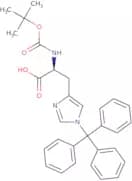
CAS:Please enquire for more information about (1S,4S)-tert-Butyl 2,5-diazabicyclo[2.2.1]heptane-2-carboxylate including the price, delivery time and more detailed product information at the technical inquiry form on this pagePurezza:Min. 95%Boc-His(Trt)-OH
CAS:Boc-His(Trt)-OH is a chemical compound that has been used in the laboratory to study uptake and binding of compounds. It is stable in complex with albumin, which has led to its use as a model system for studying hepatic steatosis. This chemical can be synthesized by solid-phase synthesis with trifluoroacetic acid and polypeptide synthesis. FT-IR spectroscopy has been used to characterize Boc-His(Trt)-OH, revealing its chemical diversity.
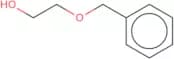
Formula:C30H31N3O4Purezza:Min. 95%Colore e forma:PowderPeso molecolare:497.58 g/mol2-Benzyloxyethanol
CAS:Please enquire for more information about 2-Benzyloxyethanol including the price, delivery time and more detailed product information at the technical inquiry form on this page
Formula:C9H12O2Purezza:Min. 95%Colore e forma:Colorless Clear LiquidPeso molecolare:152.19 g/mol1-Bromo-4-iodobenzene
CAS:1-Bromo-4-iodobenzene is an aryl halide that can be synthesized by the cross coupling of ethyl formate and hydrochloric acid. This compound is useful in analytical applications, such as chromatographic methods, due to its high solubility in organic solvents. It is also used in synthetic procedures for the preparation of other aryl halides. 1-Bromo-4-iodobenzene has been used to synthesize calcium carbonate via the Suzuki coupling reaction with sodium salts, which are nucleophiles. The carbonyl group on this molecule reacts with the nucleophile, forming an alkyl group and a metal salt. Transfer reactions involving these salts can produce other products with different functional groups.
Formula:C6H4BrIPurezza:Min. 95%Colore e forma:PowderPeso molecolare:282.9 g/molBenzophenone hydrazone
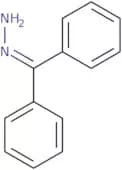
CAS:Benzophenone hydrazone is a benzophenone derivative that belongs to the group of pharmaceutical preparations. It is a hydrazone compound that contains one nitrogen atom and one phosphorus pentoxide group. The reaction mechanism of this molecule involves oxidation catalyzed by a radiation or light source. The diphenylmethanone, which acts as an electron donor, reacts with the benzophenone compound to produce the benzophenone hydrazone product. This reaction has been shown in solution and in solid form by reacting with potassium dichromate and hydrogen peroxide in the presence of hydrochloric acid.Purezza:Min. 95%Boc-Tyr(tBu)-OH
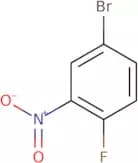
CAS:Boc-Tyr(tBu)-OH is a chemical compound that is part of the class of lactams. It has been shown to have antitumor activity in vitro and in vivo, but it has not yet been tested for its cytotoxicity. This compound is synthesized by solid-phase synthesis and contains a disulfide bond, which may contribute to its cytotoxicity. Boc-Tyr(tBu)-OH has also been shown to have high affinity for the alpha 2A adrenergic receptor subtype and other receptors with an isosteric carbonyl group.Formula:C18H27NO5Purezza:Min. 95%Colore e forma:PowderPeso molecolare:337.41 g/mol4-Bromo-1-fluoro-2-nitrobenzene
CAS:4-Bromo-1-fluoro-2-nitrobenzene is a boron trifluoride compound that reacts with sulfuric acid to form the target product, 4-bromo-2-fluorobenzenesulfonic acid. It is used in the production of dyes and pharmaceuticals. The reaction is conducted at a temperature of 60°C in a reaction time of 8 hours. The repeatability of this process was found to be high, with a relative standard deviation (RSD) of 2.5% and an RSD for peak area of 3%. Experiments have been conducted to optimize the reaction conditions and determine the optimum reaction time and target product yield. A sulfuric acid concentration of 1M has been found to produce the highest yield, while maintaining the lowest RSD values.Formula:C6H3BrFNO2Purezza:Min. 98%Peso molecolare:220 g/mol5'-Bromo-2'-hydroxyacetophenone
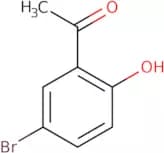
CAS:5'-Bromo-2'-hydroxyacetophenone is a chemical that is used as a substrate in the preparation of other chemicals. The reaction solution contains 5'-bromo-2'-hydroxyacetophenone, nitrogen atoms, and a biological sample. This substrate reacts with trifluoroacetic acid to form an intramolecular hydrogen bond. The magnetic resonance spectrum of this product reveals the presence of two carbon atoms, three hydrogen atoms, and one oxygen atom. The resulting chemical structure is that of 2-Aminobenzamide.Formula:C8H7BrO2Purezza:Min. 95%Colore e forma:White PowderPeso molecolare:215.04 g/mol





![(1S,4S)-tert-Butyl 2,5-diazabicyclo[2.2.1]heptane-2-carboxylate](/_next/image/?url=https%3A%2Fstatic.cymitquimica.com%2Fproducts%2F3D%2Fthumb-webp%2FFB45380.webp&w=3840&q=75)