Building Blocks
Sottocategorie di "Building Blocks"
- Acidi boronici e derivati dell'acido boronico(5.778 prodotti)
- Building Blocks Chirali(1.243 prodotti)
- Building Blocks Idrocarburici(6.099 prodotti)
- Building Blocks organici(61.038 prodotti)
Trovati 205376 prodotti di "Building Blocks"
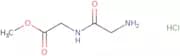
Gly-Gly-OMe·HCl
CAS:Gly-Gly-OMe·HCl is a diagnostic agent that can be used to diagnose atherosclerotic lesions. It is conjugated to an organic molecule and then radiolabeled. The conjugate can be detected by cyclopentadienyl, which emits gamma rays when it decays. This conjugate has been shown to selectively accumulate in atherosclerotic lesions of the coronary arteries, where it accumulates with a higher concentration than in the surrounding tissue. This product also has gastroprotective effects on the stomach and liver and can reduce lipid levels in hyperlipidaemic patients.Formula:C5H10N2O3•HClPurezza:Min. 95 Area-%Colore e forma:Slightly Rose PowderPeso molecolare:182.61 g/mol5-Fluoro-2-hydrazinopyridine
CAS:Please enquire for more information about 5-Fluoro-2-hydrazinopyridine including the price, delivery time and more detailed product information at the technical inquiry form on this pageFormula:C5H6FN3Purezza:Min. 95%Peso molecolare:127.12 g/mol5-Bromo-1,3-oxazole hydrochloride
CAS:Versatile small molecule scaffoldFormula:C3H3BrClNOPurezza:Min. 95%Peso molecolare:184.42 g/mol1-(piperazin-1-yl)butan-1-one
CAS:1-(Piperazin-1-yl)butan-1-one is a neoplastic cell growth inhibitor that inhibits the proliferation of myeloid, k562 and HL60 cells. It has been shown to inhibit the growth of tumor cells in vitro. 1-(Piperazin-1-yl)butan-1-one is an analog of piperazine, which is known to be a cytotoxic agent with anticancer activity. The mechanism of action is not known, but it may be due to its ability to inhibit DNA synthesis or its inhibition of protein synthesis.Formula:C8H16N2OPurezza:Min. 95%Peso molecolare:156.23 g/moltert-Butyl (2S)-2-formylmorpholine-4-carboxylate
CAS:Versatile small molecule scaffoldFormula:C10H17NO4Purezza:Min. 95%Peso molecolare:215.25 g/molTimonacic
CAS:Timonacic is an analog of nicotinamide that has been shown to be an effective inhibitor of energy metabolism in the mitochondria. It has antioxidative properties and can protect against the development of heart disease by inhibiting the production of reactive oxygen species. Timonacic's anti-inflammatory properties may be due to its ability to inhibit prostaglandin synthesis. It also has a high affinity for fatty acids, which may contribute to its inhibitory effects on lipid peroxidation. This drug has a carboxy terminal and is used as a sodium salt, which may play a role in its enzyme inhibition activity. Timonacic inhibits the activities of enzymes such as carnitine acetyltransferase and pyruvate dehydrogenase kinase, which are involved in the biosynthesis of fatty acids. The intramolecular hydrogen bonds formed with timonacic may contribute to its inhibitory effect on these enzymes.
Formula:C4H7NO2SPurezza:Min. 95%Peso molecolare:133.17 g/mol3,5-Dibromopyridin-4-ol
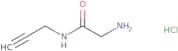
CAS:Versatile small molecule scaffoldFormula:C5H3Br2NOPurezza:Min. 95%Peso molecolare:252.89 g/mol2-Amino-N-(prop-2-yn-1-yl)acetamide hydrochloride
CAS:Versatile small molecule scaffold
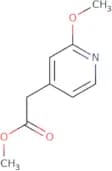
Formula:C5H9ClN2OPurezza:Min. 95%Peso molecolare:148.59 g/molMethyl 2-(2-methoxypyridin-4-yl)acetate
CAS:Versatile small molecule scaffold
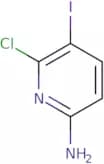
Formula:C9H11NO3Purezza:Min. 95%Peso molecolare:181.19 g/mol6-Chloro-5-iodopyridin-2-amine
CAS:Versatile small molecule scaffold
Formula:C5H4ClIN2Purezza:Min. 95%Peso molecolare:254.46 g/mol4(4,4,5,5-Tetramethyl-1,3,2-dioxaborolan-2-yl)-2,3-dihydro-1H-inden-1-one
CAS:Versatile small molecule scaffold
Formula:C15H19BO3Purezza:Min. 95%Peso molecolare:258.12 g/mol2-(tert-Butyl)-5-chloroisothiazol-3(2H)-one
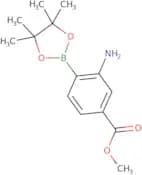
CAS:Versatile small molecule scaffoldFormula:C7H10ClNOSPurezza:Min. 95%Peso molecolare:191.68 g/molMethyl 3-amino-4-(tetramethyl-1,3,2-dioxaborolan-2-yl)benzoate
CAS:Versatile small molecule scaffold
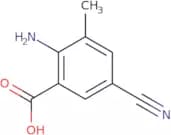
Formula:C14H20BNO4Purezza:Min. 95%Peso molecolare:277.13 g/mol2-amino-5-cyano-3-methylbenzoic acid
CAS:2-Amino-5-cyano-3-methylbenzoic acid is a diester of methylamine. It is an acid ester that has been used in the synthesis of other compounds. 2-Amino-5-cyano-3-methylbenzoic acid is an intermediate in the synthesis of some pharmaceuticals, such as carbamazepine and methylphenidate. This compound has not been shown to have any biological activity.Formula:C9H8N2O2Purezza:Min. 95%Peso molecolare:176.18 g/moltert-Butyl 4-amino-4-(aminomethyl)piperidine-1-carboxylate
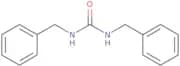
CAS:Versatile small molecule scaffoldFormula:C11H23N3O2Purezza:Min. 95%Peso molecolare:229.32 g/mol1,3-Dibenzylurea
CAS:1,3-Dibenzylurea is an organic molecule that has been used as a model system for the study of chemical reactions. This compound has been shown to have inhibitory properties against pain in animal studies and has been used to treat bowel disease. 1,3-Dibenzylurea can inhibit the inflammatory response by preventing the oxidative carbonylation of proteins. It also inhibits the production of inflammatory cytokines and chemokines in vitro. Nucleophilic attack by amines on the carbonyl group is a possible reaction pathway for this molecule.
Formula:C15H16N2OPurezza:Min. 95%Peso molecolare:240.3 g/mol2-Bromocyclopentanone
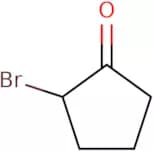
CAS:2-Bromocyclopentanone is an organic molecule that is used in the synthesis of epoxides. It is also a potential precursor for the synthesis of polymers, dyes, and pharmaceuticals. 2-Bromocyclopentanone has been shown to undergo photolysis when irradiated with ultraviolet light or through chemical reaction with acetonitrile. This product has two conformers with different rotational barriers and corresponding spectral properties. The two conformers can be distinguished by their ultraviolet spectra. The synthetic methods for 2-bromocyclopentanone involve halogenation followed by hydrolysis to yield bromoacetic acid, which is then converted to the desired product by acylation or alkylation.
Formula:C5H7BrOPurezza:Min. 95%Peso molecolare:163.01 g/mol1-[4-(Propan-2-yl)phenyl]ethan-1-ol
CAS:Versatile small molecule scaffold
Formula:C11H16OPurezza:Min. 95%Peso molecolare:164.24 g/molMonomethyl Glutarate
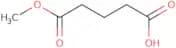
CAS:Monomethyl glutarate is a monomer for the synthesis of polymers. It has been used in the past as a precursor for the production of polyacrylic acid and its copolymers. Monomethyl glutarate is synthesized by the reaction of hydrochloric acid, high salt, and an expression plasmid containing glutarate dehydrogenase. This compound is also used as a reagent in kinetic studies of fatty acids and glutaric acid. Monomethyl glutarate is an acidic compound with a pKa value of 3.5 at 25°C. It is rapidly hydrolyzed in water to form monomethyl glutarate acid, which has a pKa value of 2.4 at 25°C. Monomethyl glutarate can be ingested orally or applied topically due to its low energy requirements for hydrolysis in water.
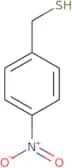
Formula:C6H10O4Purezza:Min. 95%Peso molecolare:146.14 g/mol(4-Nitrophenyl)methanethiol
CAS:4-Nitrophenylmethanethiol is a reactive molecule that reacts with dopamine D3, an important cytosolic protein, to form a stable covalent bond. This reaction was shown to be pH-dependent and the products were identified by x-ray diffraction data. The disulfide bond formed by this reaction is then reduced to the corresponding sulfhydryl group with sodium borohydride or hydroxide solution. 4-Nitrophenylmethanethiol also reacts with inorganic acid and sodium carbonate to form a molecule containing carbapenem, which is a model protein used in research on chemical reactions. 4-Nitrophenylmethanethiol reacts with chloride ions and phenyl groups to yield hydrochloric acid as the final product of the chemical reaction.Formula:C7H7NO2SPurezza:Min. 95%Peso molecolare:169.2 g/mol





![1-[4-(Propan-2-yl)phenyl]ethan-1-ol](/_next/image/?url=https%3A%2Fstatic.cymitquimica.com%2Fproducts%2F3D%2Fthumb-webp%2FBAA47510.webp&w=3840&q=75)