Building Blocks
Sottocategorie di "Building Blocks"
- Acidi boronici e derivati dell'acido boronico(5.780 prodotti)
- Building Blocks Chirali(1.241 prodotti)
- Building Blocks Idrocarburici(6.100 prodotti)
- Building Blocks organici(61.010 prodotti)
Trovati 205258 prodotti di "Building Blocks"
2-Cyclopentyloxy-benzaldehyde
CAS:2-Cyclopentyloxy-benzaldehyde has potent inhibitory activity against inflammatory diseases. It is a chemical compound that contains an amido group and two cyclopentyloxy groups. 2-Cyclopentyloxy-benzaldehyde inhibits the activation of glycogen synthase kinase-3, which is a protein that regulates inflammation in the body. This substance can be used to inhibit the spread of HIV or viral infections by inhibiting protein synthesis in these viruses. 2-Cyclopentyloxy-benzaldehyde also has an inhibitory effect on cachexia, which is a condition characterized by weight loss, muscle wasting, and fatigue.
Formula:C12H14O2Purezza:Min. 95%Peso molecolare:190.24 g/molN-{4-[(4-Oxopiperidin-1-yl)sulfonyl]phenyl}acetamide
CAS:Versatile small molecule scaffold
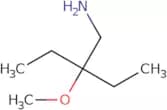
Formula:C13H16N2O4SPurezza:Min. 95%Peso molecolare:296.34 g/mol3-(Aminomethyl)-3-methoxypentane
CAS:Versatile small molecule scaffold
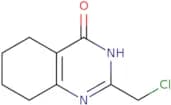
Formula:C7H17NOPurezza:Min. 95%Peso molecolare:131.22 g/mol2-(Chloromethyl)-5,6,7,8-tetrahydroquinazolin-4(3H)-one
CAS:Versatile small molecule scaffold
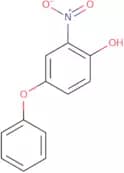
Formula:C9H11ClN2OPurezza:Min. 95%Peso molecolare:198.65 g/mol2-Nitro-4-phenoxyphenol
CAS:2-Nitro-4-phenoxyphenol is an organic compound that can be synthesized by nitrating 2-nitrophenol with nitrous acid. 2-Nitro-4-phenoxyphenol is a colorless liquid that reacts with oxygen to form nitrogen, nitrous oxide, and benzoquinone. The compound can also be prepared by the reaction of phenols with sodium or potassium nitrite in an acidic solution. The product is then purified by recrystallization or distillation and reacts with oxygen to form nitrogen, nitrous oxide, and benzoquinone.
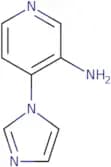
Formula:C12H9NO4Purezza:Min. 95%Peso molecolare:231.2 g/mol4-(1H-Imidazol-1-yl)pyridin-3-amine
CAS:Versatile small molecule scaffold
Formula:C8H8N4Purezza:Min. 95%Peso molecolare:160.18 g/molEthyl 1-amino-1-cyclobutanecarboxylate monohydrochloride
CAS:Ethyl 1-amino-1-cyclobutanecarboxylate monohydrochloride is a cyclic carbonyl compound that is used as a building block in organic synthesis. It has been used to synthesize a number of natural products, such as piperarborenine and cyclobutanes. This compound can be synthesized by reacting ethyl chloroformate with cyclobutanecarbaldehyde in the presence of an acid or base catalyst. The steric and geometric properties of this molecule are highlighted below.
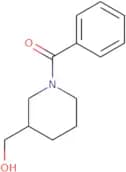
Formula:C2H5O2CC4H6NH2·HClPurezza:Min. 95%Peso molecolare:179.64 g/mol(1-Benzoylpiperidin-3-yl)methanol
CAS:Versatile small molecule scaffold
Formula:C13H17NO2Purezza:Min. 95%Peso molecolare:219.28 g/mol6-[3-(3-Chlorophenyl)-1,2,4-oxadiazol-5-yl]-2,3-dihydropyridazin-3-one
CAS:Versatile small molecule scaffold
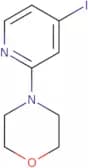
Formula:C12H7ClN4O2Purezza:Min. 95%Peso molecolare:274.66 g/mol4-(4-Iodopyridin-2-yl)morpholine
CAS:Versatile small molecule scaffold
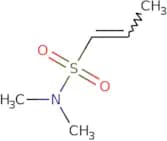
Formula:C9H11IN2OPurezza:Min. 95%Peso molecolare:290.1 g/molN,N-Dimethylprop-1-ene-1-sulfonamide
CAS:Versatile small molecule scaffold
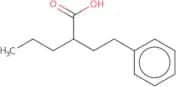
Formula:C5H11NO2SPurezza:Min. 95%Peso molecolare:149.2 g/mol2-(2-Phenylethyl)pentanoic acid
CAS:Versatile small molecule scaffold
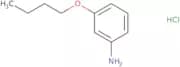
Formula:C13H18O2Purezza:Min. 95%Peso molecolare:206.3 g/mol3-Butoxyaniline hydrochloride
CAS:Versatile small molecule scaffold
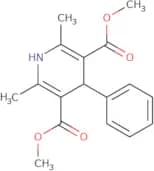
Formula:C10H16ClNOPurezza:Min. 95%Peso molecolare:201.69 g/molDimethyl 2,6-dimethyl-4-phenyl-1,4-dihydropyridine-3,5-dicarboxylate
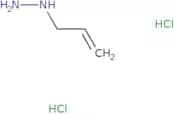
CAS:Dimethyl 2,6-dimethyl-4-phenyl-1,4-dihydropyridine-3,5-dicarboxylate is a radioligand that binds to calcium channels. It is used as a radioligand in binding studies to determine the affinity of various drugs for specific types of calcium channels. Dimethyl 2,6-dimethyl-4-phenyl-1,4-dihydropyridine 3,5 dicarboxylate has been shown to bind specifically to a particular class of calcium channel antagonists (i.e., monosubstituted) and can be used as a pharmacological probe for the study of these compounds.Formula:C17H19NO4Purezza:Min. 95%Peso molecolare:301.34 g/molAllylhydrazine Dihydrochloride
CAS:Prodotto controllatoAllylhydrazine is a chemical compound that is used as an inhibitor of cellular kinases. It has been shown to inhibit the growth of colon and prostate cancer cells, as well as breast and lung cancer cells. Allylhydrazine is a disubstituted imidazole with two amino groups and one hydrazine group. This product also inhibits angiogenesis and has been shown to prevent the formation of new blood vessels in solid tumors. Allylhydrazine has been synthesized from allyl alcohol in the presence of acidified hydrogen chloride gas, providing a yield of about 50%.
Formula:C3H10Cl2N2Purezza:Min. 95%Peso molecolare:145.03 g/mol2-[3-(4-Methoxyphenyl)-1-phenyl-1H-pyrazol-4-yl]acetic acid
CAS:Versatile small molecule scaffoldFormula:C18H16N2O3Purezza:Min. 95%Peso molecolare:308.3 g/mol2,4-Dichloropyridine-3-carboxamide
CAS:Versatile small molecule scaffold
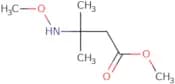
Formula:C6H4Cl2N2OPurezza:Min. 95%Peso molecolare:191.02 g/molMethyl 3-(methoxyamino)-3-methylbutanoate
CAS:Versatile small molecule scaffold
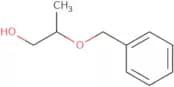
Formula:C7H15NO3Purezza:Min. 95%Peso molecolare:161.2 g/mol2-(Benzyloxy)-1-propanol
CAS:2-(Benzyloxy)-1-propanol (2-BP) is a glycidol derivative that can be used to produce propanol. 2-BP reacts with Tenofovir, an antiviral drug, in the presence of enolate and organometallic catalysts to form acetaldehyde. 2-BP also reacts with chloride to form alkoxides, which are useful in the synthesis of adenine derivatives. In addition, 2-BP has been shown to react with vinyl ethers and alcohols in the presence of catalysis to form benzyl derivatives.
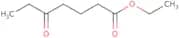
Formula:C10H14O2Purezza:Min. 95%Peso molecolare:166.22 g/molEthyl 5-oxoheptanoate
CAS:Ethyl 5-oxoheptanoate is a clear, colorless liquid that can be synthesized by reacting benzene with acetone. The synthesis of ethyl 5-oxoheptanoate is an example of a Friedel-Crafts reaction. This chemical is soluble in organic solvents such as acetone and cyclohexane and has low toxicity. It can be used as a reagent for the preparation of esters from alcohols, phenols, or carboxylic acids. Ethyl 5-oxoheptanoate can also be used to prepare resorcinol, which is a precursor to polymers and dyes, by hydrogenation of the molecule. Preparative methods are often used to produce this product because it has limited solubility in water.
Formula:C9H16O3Purezza:Min. 95%Peso molecolare:172.22 g/mol


![N-{4-[(4-Oxopiperidin-1-yl)sulfonyl]phenyl}acetamide](/_next/image/?url=https%3A%2Fstatic.cymitquimica.com%2Fproducts%2F3D%2Fthumb-webp%2FVFA72915.webp&w=3840&q=75)

![6-[3-(3-Chlorophenyl)-1,2,4-oxadiazol-5-yl]-2,3-dihydropyridazin-3-one](/_next/image/?url=https%3A%2Fstatic.cymitquimica.com%2Fproducts%2F3D%2Fthumb-webp%2FVEC59761.webp&w=3840&q=75)
![2-[3-(4-Methoxyphenyl)-1-phenyl-1H-pyrazol-4-yl]acetic acid](/_next/image/?url=https%3A%2Fstatic.cymitquimica.com%2Fproducts%2F3D%2Fthumb-webp%2FVCA59813.webp&w=3840&q=75)