Building Blocks
Sottocategorie di "Building Blocks"
- Acidi boronici e derivati dell'acido boronico(5.774 prodotti)
- Building Blocks Chirali(1.237 prodotti)
- Building Blocks Idrocarburici(6.098 prodotti)
- Building Blocks organici(60.969 prodotti)
Trovati 205134 prodotti di "Building Blocks"
1H,4H,5H,6H,7H,8H-Pyrrolo[3,2-c]azepine
CAS:1H,4H,5H,6H,7H,8H-Pyrrolo[3,2-c]azepine is a tranquilizer that is chemically related to piperazine. It has no analgesic properties and is used as a tranquilizer.
Formula:C8H12N2Purezza:Min. 95%Peso molecolare:136.19 g/mol2-Methoxyoxan-3-one
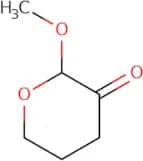
CAS:Versatile small molecule scaffold
Formula:C6H10O3Purezza:Min. 95%Peso molecolare:130.14 g/molCyclopentane-1,2-dicarboxylic acid
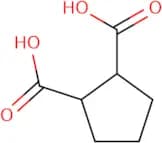
CAS:Cyclopentane-1,2-dicarboxylic acid is a bioactive chemical that contains nitrogen atoms. It has a structural formula of C5H8O4 and an x-ray structure with antibacterial properties. Cyclopentane-1,2-dicarboxylic acid can be found in cocatalyst preparations for organic solvents such as benzene, toluene, and xylene. This compound has been shown to inhibit the growth of bacteria by binding to amines and forming coordination complexes with carboxylate groups on the surface of bacterial cells. The crystal structures of cyclopentane-1,2-dicarboxylic acid have not yet been determined due to its alicyclic nature.
Formula:C7H10O4Purezza:Min. 95%Peso molecolare:158.15 g/mol4-Iodo-N-(pyrazin-2-yl)benzamide
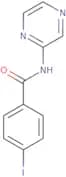
CAS:Versatile small molecule scaffold
Formula:C11H8IN3OPurezza:Min. 95%Peso molecolare:325.1 g/mol1-(2-Chlorophenyl)piperidin-3-amine
CAS:Versatile small molecule scaffold
Formula:C11H15ClN2Purezza:Min. 95%Peso molecolare:210.7 g/mol4-(1H-Pyrazol-1-yl)butan-2-ol
CAS:Versatile small molecule scaffold
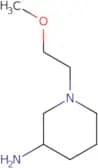
Formula:C7H12N2OPurezza:Min. 95%Peso molecolare:140.18 g/mol1-(2-Methoxyethyl)piperidin-3-amine
CAS:Versatile small molecule scaffold
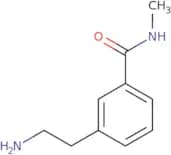
Formula:C8H18N2OPurezza:Min. 95%Peso molecolare:158.24 g/mol3-(2-Aminoethyl)-N-methylbenzamide
CAS:Versatile small molecule scaffold
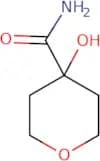
Formula:C10H14N2OPurezza:Min. 95%Peso molecolare:178.23 g/mol4-Hydroxyoxane-4-carboxamide
CAS:Versatile small molecule scaffold
Formula:C6H11NO3Purezza:Min. 95%Peso molecolare:145.16 g/molMethyl 2-Octynoate
CAS:Methyl 2-octynoate is a chemical that has been shown to bind to the nicotinic acetylcholine receptor. Methyl 2-octynoate has been shown to have antitumor activity in various types of cancer cells, including breast, prostate, and lung cancer cells. This chemical is not known to be chemically stable or film-forming. It also disrupts mitochondrial membrane potential and reduces the endpoints of oxidative phosphorylation. Methyl 2-octynoate was found to have low potency against cancer cells in vitro and in vivo.
Formula:C9H14O2Purezza:Min. 95%Peso molecolare:154.21 g/mol3-Methylpentanoic-d11 acid
CAS:3-Methylpentanoic-d11 acid is an organic compound. It is a fatty acid that is produced by the fermentation of yeast. 3-Methylpentanoic-d11 acid can be used as a carbon source for protein synthesis and has been shown to have antifungal activity in vitro against Candida albicans, Saccharomyces cerevisiae, and Aspergillus niger. 3-Methylpentanoic-d11 acid also has radical scavenging activities, which inhibit lipid peroxide formation. This compound does not have any known metabolites or reactions.
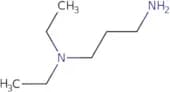
Formula:C6HD11O2Purezza:Min. 95%Peso molecolare:127.23 g/molN,N-Diethyl-1,3-diaminopropane
CAS:N,N-Diethyl-1,3-diaminopropane (DEET) is a compound that has been used as an insect repellent. It is a low molecular weight aliphatic amine, with two amino groups and two ethylene diamine groups. The transport properties of DEET are due to its high solubility in aromatic solvents and its lack of reactivity. It is highly soluble in water and glycol ethers. DEET's reaction mechanism begins with the nucleophilic attack of the amine on the carbonyl carbon atom in trifluoroacetic acid, forming an intermediate tautomeric form. The nucleophilic attack by the amine on the carbonyl carbon atom in trifluoroacetic acid leads to a tetrahedral intermediate which undergoes a second nucleophilic attack by hydroxide ion from hydrochloric acid, forming an intermediate tautomeric form. This
Formula:C7H18N2Purezza:Min. 95%Peso molecolare:130.24 g/mol3-Chloro-N,N-diethylpropan-1-amine
CAS:3-Chloro-N,N-diethylpropan-1-amine is a reactive molecule that binds to the active site of tuberculostatic activity and is used in chemotherapy. It has been shown to have inhibitory properties against human placental alkaline phosphatase, an enzyme present in large quantities in the placenta. The 3-chloro-N,N-diethylpropan-1-amine is a synthetic compound with antineoplastic properties. It can be used as a chemotherapeutic agent for cancer and gastrocnemius muscle cancer. The molecular structure of 3-chloro-N,N-diethylpropan-1-amine contains oxindole and hydroxyl group.
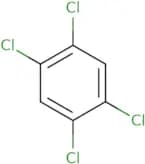
Formula:C7H16ClNPurezza:Min. 95%Peso molecolare:149.66 g/mol1,2,4,5-Tetrachlorobenzene
CAS:1,2,4,5-Tetrachlorobenzene is a chlorinated aromatic compound that is used as an industrial chemical and in wastewater treatment. It has been detected in the atmosphere at low levels and is present in small quantities in some food products. The toxicity of 1,2,4,5-tetrachlorobenzene to animals has been studied by observing the effects on aminotransferase activity after oral exposure. Acute toxicity studies have shown that 1,2,4,5-tetrachlorobenzene causes dose-dependent inhibition of enzyme activity following administration. It has also been found to be toxic to plants with a half-maximal inhibitory concentration (IC50) of 0.32 mg/L.
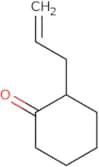
Formula:C6H2Cl4Purezza:Min. 95%Peso molecolare:215.89 g/mol2-Allylcyclohexanone
CAS:2-Allylcyclohexanone is an unsaturated ketone that is synthesized by the ring-opening of allyl cyclohexane carboxylate with sodium hydroxide. It can be used as a chemical intermediate for the synthesis of other compounds. 2-Allylcyclohexanone can also be used to react with hydroxide solution to produce a salt and an alcohol. The hydroxide solution can act as a base, reducing the carbonyl group in the presence of an acid to form the corresponding alcohol. This reaction is stereoselective because it only occurs when there are two different groups on adjacent carbons.
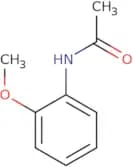
2-Allylcyclohexanone has been shown to inhibit non-nucleoside reverse transcriptase inhibitors (NNRTIs) such as nevirapine, efavirenz, and delavirdine. In addition, it has been found to have functional groups that are capable of reactingFormula:C9H14OPurezza:Min. 95%Peso molecolare:138.21 g/molN-(2-Methoxyphenyl)acetamide
CAS:N-(2-Methoxyphenyl)acetamide is a dietary supplement that is used to treat nasal congestion and high blood pressure. It is an amide with a hydrogen bond that reacts with water in the presence of oxygen to form an acylation reaction with nitrogen atoms. This reaction has been shown to be selective, as it does not react with other types of amides. N-(2-Methoxyphenyl)acetamide can also be used to diagnose edrophonium chloride and oxindole reactions.
Formula:CH3CONHC6H4OCH3Purezza:Min. 95%Peso molecolare:165.19 g/mol6-[(Pyrrolidin-3-ylmethyl)amino]pyridine-3-carbonitrile hydrochloride
CAS:Versatile small molecule scaffold
Formula:C11H15ClN4Purezza:Min. 95%Peso molecolare:238.72 g/mol(4-Chloro-3-fluorophenyl)urea
CAS:Versatile small molecule scaffold
Formula:C7H6ClFN2OPurezza:Min. 95%Peso molecolare:188.59 g/mol[1-(3-Bromophenyl)ethyl](ethoxy)amine
CAS:Versatile small molecule scaffold
Formula:C10H14BrNOPurezza:Min. 95%Peso molecolare:244.13 g/mol9H-Carbazole-4-carbaldehyde
CAS:Versatile small molecule scaffold
Formula:C13H9NOPurezza:Min. 95%Peso molecolare:195.22 g/mol
![1H,4H,5H,6H,7H,8H-Pyrrolo[3,2-c]azepine](/_next/image/?url=https%3A%2Fstatic.cymitquimica.com%2Fproducts%2F3D%2Fthumb-webp%2FACA61514.webp&w=3840&q=75)






![6-[(Pyrrolidin-3-ylmethyl)amino]pyridine-3-carbonitrile hydrochloride](/_next/image/?url=https%3A%2Fstatic.cymitquimica.com%2Fproducts%2F3D%2Fthumb-webp%2FIAC65016.webp&w=3840&q=75)
amine](/_next/image/?url=https%3A%2Fstatic.cymitquimica.com%2Fproducts%2F3D%2Fthumb-webp%2FZLC73697.webp&w=3840&q=75)