Building Blocks
Sottocategorie di "Building Blocks"
- Acidi boronici e derivati dell'acido boronico(5.780 prodotti)
- Building Blocks Chirali(1.240 prodotti)
- Building Blocks Idrocarburici(6.100 prodotti)
- Building Blocks organici(61.009 prodotti)
Trovati 205248 prodotti di "Building Blocks"
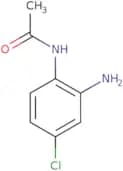
N-(2-Amino-4-chlorophenyl)acetamide
CAS:Versatile small molecule scaffold
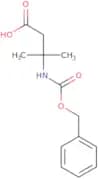
Formula:C8H9ClN2OPurezza:Min. 95%Peso molecolare:184.62 g/mol3-(((Benzyloxy)carbonyl)amino)-3-methylbutanoic acid
CAS:3-(((Benzyloxy)carbonyl)amino)-3-methylbutanoic acid (BMAA) is a quaternary ammonium compound that has antimicrobial activities. BMAA is active against Gram-positive and Gram-negative bacteria, including some strains of Staphylococcus aureus and Escherichia coli. It also has antimicrobial activity against yeast and fungi. BMAA exhibits stability in the presence of organic solvents, detergents, and water. This product is used as an antimicrobial agent in industrial processes such as wastewater treatment, oil exploration, pulp milling, and food processing. It can be used as a substitute for other quaternary ammonium compounds such as benzalkonium chloride or cetrimide, which are toxic to aquatic life. There are no known analogs to this chemical compound.
Formula:C13H17NO4Purezza:Min. 95%Peso molecolare:251.28 g/mol[4-(Prop-2-yn-1-yl)phenyl]methanol
CAS:Allylbromide is an organic compound that has a cyclic, allenyl ring structure. It is produced by the reaction of magnesium and ethylene glycol with bromobenzene in the presence of tetrahydrofuran. Allylbronide is used as an insecticide and has been shown to be effective against mosquitoes, fleas, and ticks. Allylbronide also has a strong anticholinesterase activity which makes it useful for the treatment of acute organophosphate poisoning. It binds to the active site of acetylcholinesterase and blocks its function, leading to accumulation of acetylcholine at nerve endings.
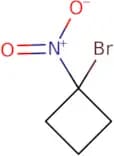
Formula:C10H10OPurezza:Min. 95%Peso molecolare:146.19 g/mol1-Bromo-1-nitrocyclobutane
CAS:Versatile small molecule scaffold
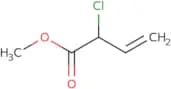
Formula:C4H6BrNO2Purezza:Min. 95%Peso molecolare:180 g/molMethyl 2-chlorobut-3-enoate
CAS:Methyl 2-chlorobut-3-enoate is a benzyl functionalized cyclization product. It is synthesized from homoallylamines by a diastereoselective synthesis in the presence of carbamates. The cyclization reaction is induced by a transition metal or stereochemical change, which provides the desired stereochemistry in high yield and diastereoselectivity. Methyl 2-chlorobut-3-enoate has been used in biologically significant reactions such as the synthesis of homoallylic amines, which are important intermediates for pharmaceuticals, pesticides, and herbicides.
Formula:C5H7ClO2Purezza:Min. 95%Peso molecolare:134.56 g/mol2-Amino-6-isopropyl-4,5,6,7-tetrahydrothieno[2,3-c]pyridine-3-carbonitrile
CAS:Versatile small molecule scaffold
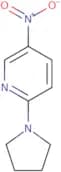
Formula:C11H15N3SPurezza:Min. 95%Peso molecolare:221.33 g/mol5-Nitro-2-pyrrolidinopyridine
CAS:Versatile small molecule scaffold
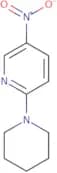
Formula:C9H11N3O2Purezza:Min. 95%Peso molecolare:193.21 g/mol5-Nitro-2-(piperidine-1-yl)pyridine
CAS:5-Nitro-2-(piperidine-1-yl)pyridine is a product that is formed by the nucleophilic addition of nitric acid to 1,3-diketones. It has been used in the synthesis of phenyl and isoxazole derivatives. The reaction was rationalized using amines as nucleophiles, which attack the electrophilic carbon atom in the ketone. This product has also been shown to be an effective nucleophile for attacking other molecules, such as azides and nitrates. In the Australian outback, 5-Nitro-2-(piperidine-1-yl)pyridine can be found in soils and plants.
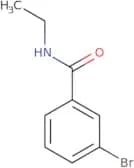
Formula:C10H13N3O2Purezza:Min. 95%Peso molecolare:207.23 g/mol3-Bromo-N-ethylbenzamide
CAS:Versatile small molecule scaffold
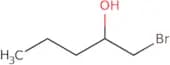
Formula:C9H10BrNOPurezza:Min. 95%Peso molecolare:228.09 g/mol1-Bromopentan-2-ol
CAS:1-Bromopentan-2-ol is an additive that is used in lubricating preparations, as well as a solvent in spectroscopy. It has been shown to have antimicrobial properties against fungi and bacteria. 1-Bromopentan-2-ol's antimicrobial effects are due to its ability to inhibit the growth of bacteria by binding to amine groups on proteins and preventing the formation of new cell walls. 1-Bromopentan-2-ol also has the ability to react with formaldehyde, generating formaldehyde gas which inhibits microbial growth.
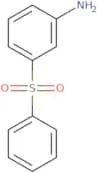
Formula:C5H11BrOPurezza:Min. 95%Peso molecolare:167.04 g/mol3-(Benzenesulfonyl)aniline
CAS:Versatile small molecule scaffold
Formula:C12H11NO2SPurezza:Min. 95%Peso molecolare:233.29 g/molethyl 3-hydroxybicyclo[3.1.0]hexane-6-carboxylate
CAS:Versatile small molecule scaffold
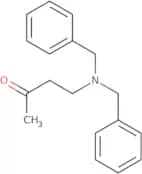
Formula:C9H14O3Purezza:Min. 95%Peso molecolare:170.21 g/mol4-(dibenzylamino)butan-2-one
CAS:Versatile small molecule scaffold
Formula:C18H21NOPurezza:Min. 95%Peso molecolare:267.37 g/mol1-Bromo-4-[(2-chloroethane)sulfonyl]benzene
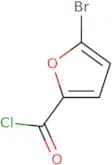
CAS:Versatile small molecule scaffoldFormula:C8H8BrClO2SPurezza:Min. 95%Peso molecolare:283.57 g/mol5-Bromo-furan-2-carbonyl chloride
CAS:5-Bromo-furan-2-carbonyl chloride is a colorless liquid that is soluble in organic solvents. It has a thionyl, polymerized odor and can be used as a feedstock for the production of amines, cyclopentadienyl, and chloride. 5-Bromo-furan-2-carbonyl chloride also has radiation damage properties and can be used in radiochemical synthesis of pyrrole. This chemical has been used to produce glycosides by reacting with diluents such as methanol and ethanol.
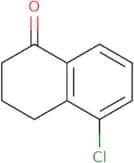
Formula:C5H2BrClO2Purezza:Min. 95%Peso molecolare:209.42 g/mol5-Chloro-1-tetralone
CAS:5-Chloro-1-tetralone is an oxime that is used as a topical agent for the treatment of staphylococcal infections. It acts by inhibiting bacterial cell wall synthesis, preventing the formation of cross-links between the peptidoglycan chains. 5-Chloro-1-tetralone has potent antibacterial activity against many bacteria and fungi. This compound has shown to be effective against escherichia coli, pneumoniae, and imidazole derivatives. The mechanism of action is not well understood, but it may involve inhibition of protein synthesis or DNA replication by binding to enzymes involved in these processes.
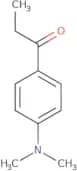
Formula:C10H9ClOPurezza:Min. 95%Peso molecolare:180.63 g/mol1-(4-(Dimethylamino)phenyl)propan-1-one
CAS:1-(4-(Dimethylamino)phenyl)propan-1-one is a planar molecule with a molecular formula of C9H11NO. It has been synthesized in Australia from pyrazine and ammonium acetate. The molecule has the potential for rearrangement to form an ionic intermediate, which is similar in structure to the starting material. The mechanism of this reaction involves a transfer of hydrogen atoms from the hydroxyl group on the pyrazine to the amine group on the 1-(4-(dimethylamino)phenyl)propan-1-one. This process also results in quaternary carbon atoms that are coplanar with one another.
Formula:C11H15NOPurezza:Min. 95%Peso molecolare:177.24 g/mol1-Methyl-3-nitro-1H-1,2,4-triazole
CAS:1-Methyl-3-nitro-1H-1,2,4-triazole is a potential chemical warfare agent. Its chemical formula is C6H5N3O2. It has an experimental frequency of 607.8 MHz and a vibrational constant of 0.038 (cm). This molecule has two potential energy levels for vibration:
Formula:C3H4N4O2Purezza:Min. 95%Peso molecolare:128.09 g/mol1-azabicyclo[2.2.2]octan-4-ylmethanol
CAS:Sinensetin is an anti-inflammatory compound that belongs to the chromones class of compounds. Sinensetin has been shown to have anti-inflammatory properties at high temperatures in experimental models. The mechanism of action for sinensetin is not well understood, but it may be due to the inhibition of prostaglandin synthesis or by direct interaction with TNF-α. Sinensetin also has antioxidant and antifungal properties, which are attributed to its ability to scavenge free radicals and inhibit lipid peroxidation. Sinensetin was found in a variety of plants from China, including Acanthopanax senticosus and Eurycoma longifolia.
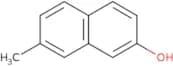
Formula:C8H15NOPurezza:Min. 95%Peso molecolare:141.21 g/mol7-Methylnaphthalen-2-ol
CAS:Versatile small molecule scaffold
Formula:C11H10OPurezza:Min. 95%Peso molecolare:158.2 g/mol

![[4-(Prop-2-yn-1-yl)phenyl]methanol](/_next/image/?url=https%3A%2Fstatic.cymitquimica.com%2Fproducts%2F3D%2Fthumb-webp%2FBCA17648.webp&w=3840&q=75)
![2-Amino-6-isopropyl-4,5,6,7-tetrahydrothieno[2,3-c]pyridine-3-carbonitrile](/_next/image/?url=https%3A%2Fstatic.cymitquimica.com%2Fproducts%2F3D%2Fthumb-webp%2FBBA83040.webp&w=3840&q=75)
![ethyl 3-hydroxybicyclo[3.1.0]hexane-6-carboxylate](/_next/image/?url=https%3A%2Fstatic.cymitquimica.com%2Fproducts%2F3D%2Fthumb-webp%2FBBA78636.webp&w=3840&q=75)
![1-Bromo-4-[(2-chloroethane)sulfonyl]benzene](/_next/image/?url=https%3A%2Fstatic.cymitquimica.com%2Fproducts%2F3D%2Fthumb-webp%2FBBA73225.webp&w=3840&q=75)

![1-azabicyclo[2.2.2]octan-4-ylmethanol](/_next/image/?url=https%3A%2Fstatic.cymitquimica.com%2Fproducts%2F3D%2Fthumb-webp%2FBBA60858.webp&w=3840&q=75)