Building Blocks
Sottocategorie di "Building Blocks"
- Acidi boronici e derivati dell'acido boronico(5.780 prodotti)
- Building Blocks Chirali(1.240 prodotti)
- Building Blocks Idrocarburici(6.100 prodotti)
- Building Blocks organici(61.009 prodotti)
Trovati 205248 prodotti di "Building Blocks"
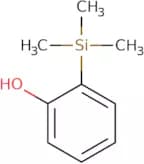
2-(Trimethylsilyl)phenol
CAS:2-(Trimethylsilyl)phenol is an inorganic compound that is used as a reagent to cleave bonds, which can be achieved by the addition of sodium sulfide or ultrasonic extraction. It also reacts with o-glycosylations and fatty acids. 2-(Trimethylsilyl)phenol is used to prepare samples for analysis by gas chromatography, mass spectrometry, or nuclear magnetic resonance spectroscopy.
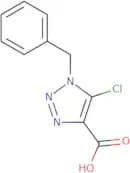
2- (Trimethylsilyl)phenol is an analytical method that has been developed for the determination of chloride in water samples. This method is based on the protonation of chloride ions followed by bond cleavage reactions with protonated trimethylsilyl phenols and sodium sulfide. The reaction products are then analyzed using gas chromatography or infrared spectroscopy.Formula:C9H14OSiPurezza:Min. 95%Peso molecolare:166.29 g/mol1-Benzyl-5-chloro-1H-1,2,3-triazole-4-carboxylic acid
CAS:Versatile small molecule scaffold
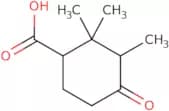
Formula:C10H8ClN3O2Purezza:Min. 95%Peso molecolare:237.64 g/mol2,2,3-Trimethyl-4-oxocyclohexane-1-carboxylic acid
CAS:Versatile small molecule scaffold
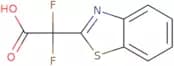
Formula:C10H16O3Purezza:Min. 95%Peso molecolare:184.23 g/mol2-(1,3-Benzothiazol-2-yl)-2,2-difluoroacetic acid
CAS:Versatile small molecule scaffoldFormula:C9H5F2NO2SPurezza:Min. 95%Peso molecolare:229.21 g/mol3-[4-(2-Cyanoethyl)phenyl]propanenitrile
CAS:Versatile small molecule scaffold
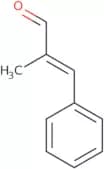
Formula:C12H12N2Purezza:Min. 95%Peso molecolare:184.2 g/mol(e)-2-methyl-3-phenylacrylaldehyde
CAS:(e)-2-Methyl-3-phenylacrylaldehyde (E2PAA) is a tyrosinase inhibitor that has been shown to inhibit the production of melanin in vitro using human skin cells. E2PAA has been immobilized on magnesium oxide, which prevents it from being washed away by the buffer solution and allows for its use as a reusable catalyst. The uptake of E2PAA was found to be higher when compared to other compounds, such as cis-ddp (1,4-dihydroxynaphthalene), due to its hydrophobic nature. The molecular electrostatic potentials have been calculated for both cis-ddp and E2PAA, which showed that E2PAA has a slightly lower value than cis-ddp. These results indicate that E2PAA is more lipophilic than cis-ddp, which may explain its higher uptake in the skin cells. Structural studies have also
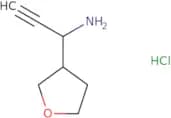
Formula:C10H10OPurezza:Min. 95%Peso molecolare:146.19 g/mol1-(Oxolan-3-yl)prop-2-yn-1-amine hydrochloride
CAS:Versatile small molecule scaffoldFormula:C7H12ClNOPurezza:Min. 95%Peso molecolare:161.63 g/mol4,4-Dimethyl-3-oxabicyclo[3.1.0]hexan-2-one
CAS:Versatile small molecule scaffoldFormula:C7H10O2Purezza:Min. 95%Peso molecolare:126.15 g/molrac-(1R,2S)-2-Cyclopropylcyclopropane-1-carboxylic acid
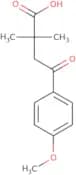
CAS:Versatile small molecule scaffoldFormula:C7H10O2Purezza:Min. 95%Peso molecolare:126.15 g/mol4-(4-Methoxyphenyl)-2,2-dimethyl-4-oxobutanoic acid
CAS:Versatile small molecule scaffold
Formula:C13H16O4Purezza:Min. 95%Peso molecolare:236.26 g/mol4-[(4-Bromophenyl)sulfanyl]butanoic acid
CAS:Versatile small molecule scaffold
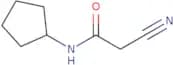
Formula:C10H11BrO2SPurezza:Min. 95%Peso molecolare:275.16 g/mol2-Cyano-N-cyclopentyl-acetamide
CAS:Versatile small molecule scaffold
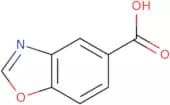
Formula:C8H12N2OPurezza:Min. 95%Peso molecolare:152.2 g/mol1,3-benzoxazole-5-carboxylic acid
CAS:1,3-Benzoxazole-5-carboxylic acid is a benzoate derivative that has been shown to have anticancer activity. It inhibits the growth of cancer cells in culture and has been shown to be active against leukemia cells in mice. This compound is synthesized by reacting salicylaldehyde with chloride and amide. 1,3-Benzoxazole-5-carboxylic acid is also fluorescent and can be detected using magnetic resonance spectroscopy.
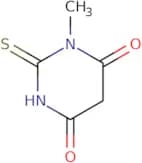
Formula:C8H5NO3Purezza:Min. 95%Peso molecolare:163.13 g/mol1-Methyl-2-sulfanylidene-1,3-diazinane-4,6-dione
CAS:Versatile small molecule scaffold
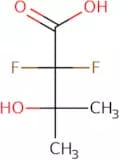
Formula:C5H6N2O2SPurezza:Min. 95%Peso molecolare:158.18 g/mol2,2-Difluoro-3-hydroxy-3-methylbutanoic acid
CAS:Versatile small molecule scaffold
Formula:C5H8F2O3Purezza:Min. 95%Peso molecolare:154.11 g/mol2,4-Dimethylfuran-3-carboxylic acid
CAS:2,4-Dimethylfuran-3-carboxylic acid is a dianion that is used as a fungicide. It has been shown to be effective against many plant diseases, including powdery mildews, rusts, and sooty molds. The methyl ester of 2,4-dimethylfuran-3-carboxylic acid can be synthesized in the laboratory from cyclohexanone and methylamine. The reactive methyl group of the dianion catalyzes the reaction with hydroxyl groups on other molecules, forming an amide or alkylating agent. This reaction occurs stereoselectively when one of the hydrogens on the carbon adjacent to the carboxylate group is also replaced by a methyl group.
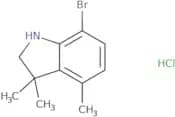
Formula:C7H8O3Purezza:Min. 95%Peso molecolare:140.14 g/mol7-Bromo-3,3,4-trimethyl-2,3-dihydro-1H-indole hydrochloride
CAS:Versatile small molecule scaffold
Formula:C11H15BrClNPurezza:Min. 95%Peso molecolare:276.6 g/mol6-Ethyl-1,2,3,4-tetrahydropyrimidine-2,4-dione
CAS:Prodotto controllatoVersatile small molecule scaffold
Formula:C6H8N2O2Purezza:Min. 95%Peso molecolare:140.14 g/mol2-Cyano-N-[2-(dimethylamino)ethyl]acetamide
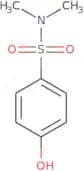
CAS:Versatile small molecule scaffoldFormula:C7H13N3OPurezza:Min. 95%Peso molecolare:155.2 g/mol4-Hydroxy-N,N-dimethylbenzene-1-sulfonamide
CAS:4-Hydroxy-N,N-dimethylbenzene-1-sulfonamide is a compound with diverse applications in various industries. It is commonly used as a benzyl halide for brominating reactions and in the synthesis of pyrazoles. However, due to its low bioavailability, it is primarily used as a research chemical.Formula:C8H11NO3SPurezza:Min. 95%Peso molecolare:201.25 g/mol

![3-[4-(2-Cyanoethyl)phenyl]propanenitrile](/_next/image/?url=https%3A%2Fstatic.cymitquimica.com%2Fproducts%2F3D%2Fthumb-webp%2FQAA20141.webp&w=3840&q=75)
![4,4-Dimethyl-3-oxabicyclo[3.1.0]hexan-2-one](/_next/image/?url=https%3A%2Fstatic.cymitquimica.com%2Fproducts%2F3D%2Fthumb-webp%2FQAA14362.webp&w=3840&q=75)

![4-[(4-Bromophenyl)sulfanyl]butanoic acid](/_next/image/?url=https%3A%2Fstatic.cymitquimica.com%2Fproducts%2F3D%2Fthumb-webp%2FQAA11576.webp&w=3840&q=75)

![2-Cyano-N-[2-(dimethylamino)ethyl]acetamide](/_next/image/?url=https%3A%2Fstatic.cymitquimica.com%2Fproducts%2F3D%2Fthumb-webp%2FQAA02955.webp&w=3840&q=75)