Building Blocks
Sottocategorie di "Building Blocks"
- Acidi boronici e derivati dell'acido boronico(5.780 prodotti)
- Building Blocks Chirali(1.239 prodotti)
- Building Blocks Idrocarburici(6.100 prodotti)
- Building Blocks organici(61.005 prodotti)
Trovati 205234 prodotti di "Building Blocks"
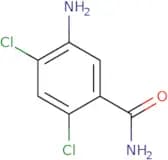
5-Amino-2,4-dichlorobenzamide
CAS:Versatile small molecule scaffold
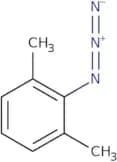
Formula:C7H6Cl2N2OPurezza:Min. 95%Peso molecolare:205.04 g/mol2-Azido-1,3-dimethylbenzene
CAS:2-Azido-1,3-dimethylbenzene is a compound with the molecular formula of C6H5N3O. It is a colorless liquid that has a melting point of -8°C, boiling point of 165°C, and density of 1.1 g/mL. The compound belongs to the group of phenyl compounds and has a depolarization value of 0.037 cm1M in an ortho position. This compound has shown to have vibrational and vibrational spectra that are very similar to those found in the deuterated molecule (C6D6)2N3O.
Formula:C8H9N3Purezza:Min. 95%Peso molecolare:147.18 g/mol2,2-Bis(chloromethyl)-1,3-dioxolane
CAS:2,2-Bis(chloromethyl)-1,3-dioxolane is a chemical intermediate that can be used in the production of polyester resins. It is a colorless liquid with an unpleasant odor. 2,2-Bis(chloromethyl)-1,3-dioxolane reacts with ethylene and glycol to produce polyester resins. This reaction occurs at high temperatures and produces a mixture of products such as diols and triols. When heated in acidic conditions, the compound hydrolyzes to form dihydroxyacetone and p-toluenesulfonic acid. The compound is also used as an industrial solvent for acidic materials. Recrystallizing the product from ethylene glycol results in a white crystalline powder that can be used in the manufacture of other chemicals such as sulfate salts.
Formula:C5H8Cl2O2Purezza:Min. 95%Peso molecolare:171.02 g/mol3,4-Dihydro-2H-pyrano[2,3-b]pyridine
CAS:Versatile small molecule scaffold
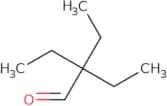
Formula:C8H9NOPurezza:Min. 95%Peso molecolare:135.17 g/mol2,2-Diethylbutanal
CAS:2,2-Diethylbutanal is a chemical that is used as an antineoplastic drug. It has been shown to have affinity for the mineral sulfide and oxidizers. 2,2-Diethylbutanal has also been shown to be a long-term maternal toxicant in animals, with effects on the fetus and newborns. It has also been shown to cause problems for infants by reducing their serum levels of thyroxine and triiodothyronine (thyroid hormones). This chemical causes genetic mutations in isolates of organisms such as E coli and S cerevisiae. 2,2-Diethylbutanal may have adverse effects on the conformation of proteins or interfere with protein synthesis.
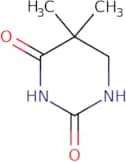
Formula:C8H16OPurezza:85%MinColore e forma:Clear LiquidPeso molecolare:128.21 g/mol5,5-Dimethyl-1,3-diazinane-2,4-dione
CAS:5,5-Dimethyl-1,3-diazinane-2,4-dione is a hydrophobic molecule that regulates gene expression. It binds to the transcription factor TFEB and inhibits its activity. 5,5-Dimethyl-1,3-diazinane-2,4-dione also interacts with the transcription factor E2F and inhibits its activity. This agent is able to increase erythroid differentiation and inhibit hematopoietic differentiation. 5,5-Dimethyl-1,3-diazinane-2,4-dione has been shown to activate apoptosis by binding to DNA and inhibiting transcription of genes necessary for cell division. The affinity of this agent for DNA may be due to methyl groups on its structure.
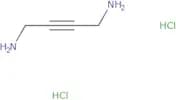
Formula:C6H10N2O2Purezza:Min. 95%Peso molecolare:142.16 g/molBut-2-yne-1,4-diamine dihydrochloride
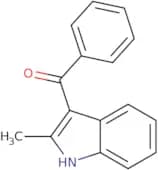
CAS:Versatile small molecule scaffoldFormula:C4H10Cl2N2Purezza:Min. 95%Peso molecolare:157.04 g/mol3-Benzoyl-2-methyl-1H-indole
CAS:Prodotto controllato3-Benzoyl-2-methyl-1H-indole is an isomer of tetrahydrocarbazole. It has a high yield and optical purity. 3-Benzoyl-2-methyl-1H indole can be synthesized from β-unsaturated aldehydes, such as 2-(4,4,5,5-tetramethyl-[1,3,2]dioxaborolan-2yl)-3,5,6,-trimethylphenol. The compound has been shown to react with alkali metals to form a salt in the presence of dehydrogenative conditions. This reaction proceeds via an iminium intermediate that reacts with the metal salt to produce the product. 3BzIMeI can also react with alcohols or amines in the presence of heterocycles such as mesitylene to form substituted benzimidazoles.
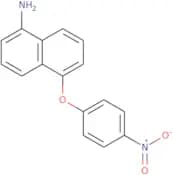
Formula:C16H13NOPurezza:Min. 95%Peso molecolare:235.28 g/mol5-(4-Nitrophenoxy)naphthalen-1-amine
CAS:Versatile small molecule scaffold
Formula:C16H12N2O3Purezza:Min. 95%Peso molecolare:280.28 g/mol3-(Hydrazinecarbonyl)benzoic acid
CAS:Versatile small molecule scaffold
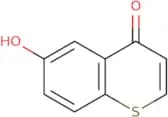
Formula:C8H8N2O3Purezza:Min. 95%Peso molecolare:180.16 g/mol6-Hydroxy-4H-thiochromen-4-one
CAS:Versatile small molecule scaffold
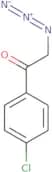
Formula:C9H6O2SPurezza:Min. 95%Peso molecolare:178.21 g/mol2-Azido-1-(4-chlorophenyl)ethan-1-one
CAS:Versatile small molecule scaffold
Formula:C8H6ClN3OPurezza:Min. 95%Peso molecolare:195.6 g/molTricyclo[3.3.1.13,7]decane-2-acetic acid
CAS:Tricyclo[3.3.1.13,7]decane-2-acetic acid is a catalyst that can be used in the reduction of 2-adamantanone to butyric acid by aluminium. This compound has also been used as an analog for other catalytic systems such as lactams and monoamides. Tricyclo[3.3.1.13,7]decane-2-acetic acid has been shown to have an affinity for 11β-hydroxysteroid dehydrogenase (11βHSD). This enzyme is involved in the conversion of cortisone to cortisol and is critical for the regulation of glucocorticoid hormones and mineralocorticoids in humans and other mammals. It has also been shown to inhibit chloride ion transport, which increases sodium ion uptake by cells and leads to a decrease in blood pressure when combined with sodium hypochlorite (bleach) treatment.br>br
Formula:C12H18O2Purezza:Min. 95%Peso molecolare:194.27 g/mol3-iso-Propoxybenzyl alcohol
CAS:3-iso-Propoxybenzyl alcohol is an insect repellent used to prevent insect bites. It is a screening agent that can be used as a solution in ethanol to test for the presence of insects. 3-iso-Propoxybenzyl alcohol is added to a solution and then sprayed onto plants or animals. The solution will turn yellow if it comes into contact with an insect. This product should be stored in a cool, dry place away from direct sunlight and out of reach of children.
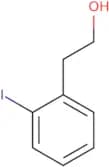
Formula:C10H14O2Purezza:Min. 95%Peso molecolare:166.22 g/mol2-(2-iodophenyl)ethanol
CAS:2-(2-iodophenyl)ethanol is a ketone that can be made by refluxing benzene with phosphite and halides. It can also be synthesized from 2-phenylethanol, which is obtained from the reaction of acetone with sodium hydroxide. 2-(2-Iodophenyl)ethanol has been used as a precursor to other compounds in organic chemistry. This compound has been shown to react with dichlorophosphite or sulphonium to form organopalladium intermediates. Carbonylation reactions are another method for synthesizing this compound.
Formula:C8H9IOPurezza:Min. 95%Peso molecolare:248.06 g/mol1-(Trifluoromethyl)isoquinoline
CAS:1-(Trifluoromethyl)isoquinoline is an organic compound that is made from a photoredox reaction, which involves the use of a metal catalyst and light to produce reactive species. This chemical can be used in the synthesis of vinyl compounds, such as styrene, by regiospecifically adding an isocyanide. 1-(Trifluoromethyl)isoquinoline has been shown to be a useful reagent for experiments involving regiospecific reactions.
Formula:C10H6F3NPurezza:Min. 95%Peso molecolare:197.16 g/mol2,4-Dichloro-6-phenylpyrimidine
CAS:2,4-Dichloro-6-phenylpyrimidine is a nucleophilic reagent that has been used to synthesize pyrimidine derivatives. It has been shown to react with cyanoacetic acid and malononitrile in the presence of an organolithium reagent to form 2,6-dichloro-2,4-dihydroxypyrimidine. This compound reacts with chlorine gas to give 2,4-dichloro-6-(chloromethyl)pyrimidine. This reaction is regioselective and does not affect the other substituents on the ring. The reaction proceeds via a nucleophilic attack on the carbon atom adjacent to the nitrogen atom.
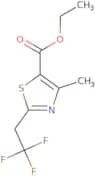
Formula:C10H6Cl2N2Purezza:Min. 95%Peso molecolare:225.07 g/molEthyl 4-methyl-2-(2,2,2-trifluoroethyl)-1,3-thiazole-5-carboxylate
CAS:Versatile small molecule scaffoldFormula:C9H10F3NO2SPurezza:Min. 95%Peso molecolare:253.24 g/mol3-Phenyl-2-azaspiro[3.4]octan-1-one
CAS:Versatile small molecule scaffold
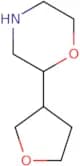
Formula:C13H15NOPurezza:Min. 95%Peso molecolare:201.26 g/mol2-(Oxolan-3-yl)morpholine
CAS:Versatile small molecule scaffold
Formula:C8H15NO2Purezza:Min. 95%Peso molecolare:157.21 g/mol


![3,4-Dihydro-2H-pyrano[2,3-b]pyridine](/_next/image/?url=https%3A%2Fstatic.cymitquimica.com%2Fproducts%2F3D%2Fthumb-webp%2FBBA26789.webp&w=3840&q=75)

![Tricyclo[3.3.1.13,7]decane-2-acetic acid](/_next/image/?url=https%3A%2Fstatic.cymitquimica.com%2Fproducts%2F3D%2Fthumb-webp%2FBBA08222.webp&w=3840&q=75)



![3-Phenyl-2-azaspiro[3.4]octan-1-one](/_next/image/?url=https%3A%2Fstatic.cymitquimica.com%2Fproducts%2F3D%2Fthumb-webp%2FBAD22720.webp&w=3840&q=75)